Archive for the ‘Uncategorized’ category

Palin on Prosperity – God Help Us.

February 14, 2010

In Chilapa, Mexico

Started out today (Valentine’s Day) intending to write and draw about love and its objects.  With and without elephants.

One object of my love is tea.   My first cup, drunk while reading Frank Rich of the New York Times, unfortunately brought me to ‘tea party’.  And tea party, elephants, Frank Rich, and Valentines (as in who can be as cutesy, hokey, and reductive, as a Hallmark card–sorry, Hallmark!)–brought me to Sarah Palin.

I confess to having a hard time listening to Palin’s Tea Party speech (I had to read the transcript).  There is a teasing artifice that is deeper than the teased hair.   She zings out one-liners which she must know are not true;  she presents herself as  a spokesperson for the “little guy,” while keeping a continual eye on the nontransparent ball of personal enrichment and aggrandizement.

(One of the personally most aggravating inconsistencies is her castigation of government programs while touting herself as the protector of those with special needs.  Who pays for the lifetime care of most people with special needs, Sarah?

Her “solutions” are also one-liners:  on the war against terrorism:  “Bottom line, we win, they lose. We do all that we can to win.”  (Gee, amazing that no one else thought of that.)

One would think that Sarah’s highly-paid exhortations towards an un-fact-based, if strident, agenda would cause her pause, maybe even a little guilt.  But Sarah seems to bypass all those concerns by a pink cloud of religious faith:  as in ‘if we Godly people can only get into power, God will swoop down and save us.’

Palin’s actual words: “you know, we don’t have all the answers as fallible men and women.  So it would be wise of us to start seeking some divine intervention again in this country so that we can be safe and secure and prosperous again.”

I don’t doubt Sarah’s faith.  I understand people (including myself)  seeking divine support and guidance in times of trouble and not.

But what’s worrisome is Sarah’s casual equation between the search for divine intervention with safeness, security and prosperity; as if hard, fact-based, complex, boring, analysis, could be bypassed.

Putting aside some of the more philosophical questions–didn’t George W. try that?

Secondly, well, is God really that interested in the the bank bail-out?

Third, Sarah, how can be so sure that you have a better pipeline to God than Obama?   (BTW, didn’t your demi-idol Ronald Reagan consult an astrologer more frequently than a pastor? )  (And isn’t this an awfully lot like the type of things that the Taliban preach?)

Finally, aren’t there a lot of religious, even Christian, people who are not particularly safe, secure or prosperous?   (Don’t, in other words, bad things happen to good people?)

She makes me think about a trip to Mexico a couple of years ago.  Mexico is an extremely religious country;  in the small town where we stayed there were fiestas every week in which the “Cristianos” conquered the “Moros” on the paving stones in front of the local cathedral.  At one fiesta, depicted above, a man dressed in satin swaddling clothes was hung from a cross on the back of a truck.

The Mexicans, in short, are not afraid to show, even to parade, their religiousity.   And yet that country suffers from poverty, unemployment and underemployment, terrible drug violence.   Yes, it’s true that abortion, long illegal there, has very recently had a slightly greater allowance in a few Mexican states.   However, anti-abortion rules are on the rise again  (and Mexico’s economic and social problems long preceded any loosening of abortion laws.)

Sarah, please  explain.


Heart In A Box – A Simple Proposal

February 13, 2010

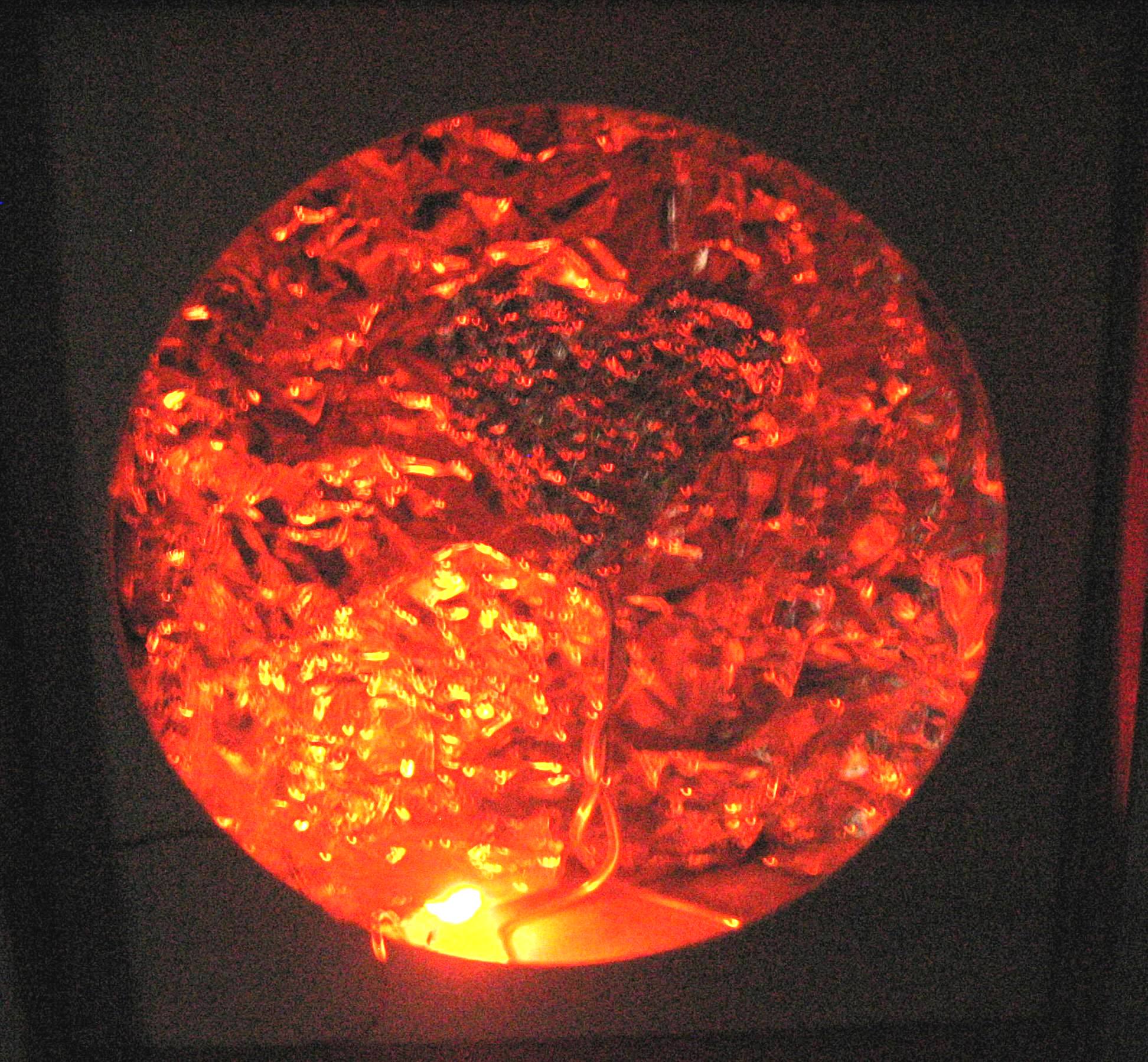
Heart In Box (by Jason Martin)

The photo above is a bit unusual at Valentine’s.  Typically there are boxes in the shape of hearts rather than hearts in plain old boxes.

Looking at the picture made me think about hearts that are out of the box. And that (wierdly enough) brought up the trend towards increasingly elaborate proposals of marriage.   (By elaborately planned proposals, I do not mean the scheme of Andy Bellefleur in one of the Sookie Stackhouse novels in which he enlists Sookie’s help in putting an engagement ring in a basket of fried chicken fingers.  Yes, they were greasy.)

I refer to the proposals that are the work of an entire business, a special “events team”.

I tend towards the spartan, but the marriage proposal business seems crazily excessive to me,  the commercialization of the personal,  the overwhelming of the heartfelt with artifice, the exchange of the truly grand for the grandiose.

I understand that people want to try to ensure the perfect moment, the perfect memory.  Perhaps they also hope that the perfect proposal will ensure the perfect marriage.  But, as two famous sages, Gautama Buddha and Mick Jagger, separately said, “You can’t always get what you want.”

Okay, okay, Buddha’s saying was more along the lines that ‘desire is the root of all suffering’, which is somewhat broader than Jagger’s pronouncement.  Buddha’s truth, after all, encompasses the idea that even if you do get what you want (such as the perfect marriage proposal), it will not ensure happiness.  (Desire and desire and desire leads to desire and desire and desire.)

Jagger’s saying, in my teenage mind, was always followed with”mumble mumble mumble…YOU GET WHAT YOU NEED,” as if basic satisfaction was a bit on the automatic, if shouted, side.

But today, when I really thought about the lyrics, and actually looked them up, I saw that they were more complex:

“You can’t always get what you want
But if you try sometimes you just might find

You get what you need.”

What does the “trying” here mean?  Or for that matter getting what you need?  Trying to get enough so that you might not get off, but at least you won’t go into withdrawal?

Maybe.  But my semi-Lutheran, semi-Buddhist, admirer-of- Mick-Jagger, self prefers to think of it as trying to find acceptance of what you already have,  trying to discover that, at least occasionally, you have enough in what is available.

Which brings me back to the heart in the box.    Creativity, memorability, glow, glimmer, really do not require so very much:  tin foil, a  discarded box, a hole cut in some white paper, a very small battery, a teeny light, darkness.

Heart In A Box (Jason Martin)

In Honor Of Unromantic Love – Pre-Valentine’s Day Poem

February 12, 2010

Valentine Sweetie

For kids, Valentine’s Day is not a completely romantic holiday (at least it wasn’t back in the stone age when I was a child.)   In the spirit of total inclusion, little Valentine’s Day cards were given to every member of one’s elementary school class by every other member.   (They weren’t exactly cards, more like little pieces of paper filled with hearts and silly slogans.)  A more elegant heart (of chocolate) was given to the elementary school teacher, and those little chalky fortune-cookie message candy hearts, the ones with the red print embedded in their pastel sides, were eaten (or saved and studied)  by everyone else.   I say fortune-cookie message hearts in that their messages, like fortunes, were sometimes a bit difficult to understand.  “Be Mine” was obvious.  But “Sure Thing” seemed a little odd to a six-year old.

(Apologies for the heart candy painted above, by the way.  I’m not sure those chalk hearts had punctuation.)

The point of all this is that Valentine’s Day was about love and not just romantic love.  In that spirit, I’m posting a non-romantic love poem.

Going in to look at my daughter asleep

When I walk into your room
I try to sneak
beneath your soft
small breaths like
hiding inside the
lilac bush, trying not to laugh, like
the dreams in which I
sit with my dead
grandmother, so happy to
have her back.  It’s a rebirth
each time I see you after
not seeing you, it’s
as if you had made
the dead rise.

All rights reserved.

Pre-Valentine’s (Maybe Post-Valentine’s) Villanelle

February 11, 2010

"He Talked" (Villanelle)

I have to confess that this is not 0ne of my best villanelles, but it’s fun for the season.  (Note that it has been edited for public consumption!)

For instructions on writing a villanelle, click here for the gist, here for the specific mechanics.

He talked

He talked in ways I’d never heard before,
huskiness clustered around “ma’am” and “sir.”
I thought I knew a lot, till he taught more,

which was great, at first–school’d become a bore–
his Georgian sweetness an exotic lure–
he talked in ways I’d never heard before.

Buckskin oxfords too, that he truly wore–
a suede white, yes, still white they were.
(I thought I knew so much till he taught more.)

Soon every night would find him at my door,
I’d pull him in, mind blushing, face a blur,
as he talked in ways I’d never heard before.

With skin, with hands, but, above all, speech, he swore
such love to my parts, oh so cocksure.
I thought I knew a lot, till he taught more,

and could not hear enough, till new words bore
down hard—”visiting,” “girlfriend,” a nameless “her.”
He talked in ways I’d never heard before.
I thought I knew a lot, till he taught more.

All rights reserved.

The Twilight Zone – Lessons Obama Might Learn From Stephanie Meyer

February 10, 2010

I’m still reacting to the news that Stephenie Meyer has sold over 45 million Twilight Saga books.  To put this into a bit of perspective, Barack Obama only got about 69 million votes when he was elected President in 2008. 

Granted, 69 million is substantially more than 45 million, and, of course, that 69 million only consisted of U.S. citizens.  (I believe Stephanie’s tally is worldwide.)   But, on the other hand, Obama’s voters were not paying more than $10 per shot. 

These figures have led me to think that if Obama is looking to “up his numbers”, he might consider some lessons in popularity from Stephenie Meyer, and her prime male Twilight character, Edward Cullen.

 (Note: these are not my lessons.  But popularity is, unfortunately, not my strong point.)    

Here are some I’ve gleaned: 

1.  Make the trappings of wealth–big house, fast car, great clothes–seem easily attainable;  do not gloat after these trappings yourself, but do not poohpooh the pleasure they give others.  

2.  Abolish speed limits.

3.    Make it very clear (a la Edward)  that you are subject to murderous rages which you hold back through iron (but imperfect) self-control.

4.  Always tell the American voter (we’re your Bella) that we’re beautiful.   (Even if we’re fat.) 

5.   Make us feel (a la Stephanie here) that magical thinking really does work, i.e. that if we truly want something, we will get it.  Yes, there may be a bit of dramatic bustle along the way, but no significant trade-offs, sacrifices, or even analysis, will be required.   (Sarah Palin seems to have mastered this one.)

6.    Keep it sweet.  Simple.   No big words.  

7.  Think about change, sure.  But use paradigms that are familiar, instantly understood.  (Don’t worry about inconsistencies.)

8.  Don’t worry too much about those that can’t keep up or get caught in the cross-fire.  Think of them as the tourists who are the victims of the Voluturi while Edward saves  Bella.   Yes, it’s too bad.   But hey, Edward and Bella are back together again.  

9.  If all else fails, hire Robert Pattinson.

Bella and Sookie, Edward Cullen, Bill Compton- The Lines Are Drawn

February 9, 2010

Read yesterday about the upcoming first run publication of 350,000 copies of the new Twilight graphic novel.  “The characters and settings are very close to what I was imagining while writing the series,” Stephanie Meyers, the author of the original Twilight series has said of the graphic novel.  (Does this mean that Ms. Meyers always pictured the characters and settings as cartoonish?)

Okay. Stop.  Guilty confession time.  As followers of this blog know, I wallowed in the Twlight series.  I have also, more recently, wallowed in another vampire series—The Southern Vampire Series by Charlaine Harris, also known as the Sookie Stackhouse Mysteries.

(What can I say?  I get tired, manic, depressed.)

Which brings up another question.  Why is the Twilight Saga (whose collective sales have now reached 45 million) so much more popular than the Southern Vampire Sookie Stackhouse Series?

(Don’t get me wrong.   Charlene Harris is unlikely to live in a garret.  Still, 45 million!)

What makes the difference especially remarkable is that the two series have enough in common to make a vampiric copyright lawyer lick his blood-stained chops.  Both focus on a human-vampire love story; both share telepathy, characters whose minds cannot be permeated by telepathy, super-handsome, super-sexy vampires (well, Edward Cullen is sexy in principal at least), shape-shifters/werewolves, love triangles,  heroinic (as in both addictive and held by the heroine) special blood, attempted suicide through sun-stepping, a ruthless vampire hierarchy, controlling and hyper-jealous male lovers, and fast, fancy cars.   Most importantly, both series have spawned commercially-successful screen versions.

So what makes for the phenomenon? (Other than the casting of Robsten.)

First, there’s the teen factor.  Perhaps (believe or not) tweens and teens simply read more.  After all, they have parents who tell them to turn off the TV and the internet, and they usually don’t have full time jobs.

Then there’s the identification factor.  Bella Swan, the Twilight heroine, is herself a teenager. (Sookie’s in her early twenties.)

More importantly, Bella is presented as Every Girl—Every Girl who is cute enough but clumsy, and who also happens to have some nearly magical qualities (not even known to herself) which, in turn, attract a consummately handsome, devoted, rich, strong, elegant, vampire; a vampire, who, although insistently male (at least he insists he’s male), loves her for her essence, not her body; a body which he adores,  but which he heroically resists (sigh), both to protect her soul and safety.

Sookie is harder to identify with.  She is very much not Every Girl, but a cocktail waitress specifically based in Northern Louisiana.    She introduces herself in the first book Dead Until Dark as someone suffering from a deformity.   She’s also super-attractive.     (The way her mental abilities cause human suitors to lose interest in her well-built body is a bit like the pre-feminist tales of women who were told to hide their smarts if they wanted to hold onto a man.)

Sookie’s vampires, unlike Edward Cullen, have little high-minded hesitancy about sex (or about manipulation and violence.)   Moreover, Sookie’s vampires (i) don’t just lust after her blood but frequently bite her, and (ii) spend about half of every day actually dead.  (These qualities may well be confusing to a young adult reader.)

So maybe here’s the distinction:  Twilight characters are good.  Good.  GOOD.   Except when they are bad.  Bad.  BAD.

Hmm…  Is it possible that the qualities which  seem to make Twilight so popular are the same qualities that make it adaptable to graphic novel form?  (A world that can be drawn in black and white lines.)

Teenage girls, it seems, are idealists after all.  Idealists and Every Girl and lovers of the fantastical.

Meditation on the Subway – Ripple Effect – Not Quite Tulipomania

February 8, 2010


Subway Stillness

This morning as I sat on the subway I shut my eyes and focused on my breath.  I listened to the inhalation, then the exhalation; I felt the air creep up and down my nostrils.

I did not read; I did not write in my notebook; I did not check my Blackberry.

I felt my forehead loosen, my brain relax.  It was a bit like a too-tight ponytail gently being untied.  I felt too, or at least imagined, my newly-acquired peace radiating out to the entire train car.  (Miraculously, I did not check to see if this feeling was accurate.)

When I walked from my subway to my office, I kept quiet, still not checking my Blackberry, not talking on my cell, smiling in the cold February sunlight, conscious of the lines of granite against sky, the lines of spindly trees against sky, sky.   When I got to my building, I greeted people with genuine attention, catching the eye of the security guards I know without groaning about Monday, joking with my co-workers.  Later in the day, that same joking mood came back my way again.

I did all this because my eldest daughter has recently returned from her first meditation retreat.  Although I believe, at least on a theoretical level, in the benefits of meditation, I have not actually put these beliefs into practice for some time.

(Relaxation?  A glass of wine in the evening in so much easier.  Self-awareness?  Multi-tasking is so much less painful.)

But my daughter recently returned from her first meditation retreat with face fresh, eyes glowing, and an extended radius of appreciative awareness.  And so I went “hmmm…” (if not “om”), and tried for some stillness.

This is called the ripple effect.  Granted in my case, it was a pretty small ripple, still the water shifted.

We all know about word-of-month, trends, Tulipomania.   The transformation of ripples into waves is faster than ever in our computer age (although frankly some of the virtual waves are a bit on the shallow side.)  Word of mouth used to require one person to talk to another and then another and then another in a combination that was exponential but still essentially sequential; but the internet allows for word of mouth times ten.  Click, click, click, and soon thousands of people may be reached.  (Hopefully, not in one of those chain letters.)

At the same time, one’s voice can feel dwarfed by all the chatter.  And if one’s voice is dwarfed, one’s silence is absolutely crushed.  All that buzz makes what’s beneath the buzz both unheard and unhearable.  You can literally not hear yourself think; or worse, all you can hear is yourself think; and all you can think about amounts to so much twittering, so many pip-tweets.

And in the midst of the clicking, the thinking, the tweeting, one can also forget the power of the personal ripple effect; the wonderful contagion of face-to-face quiet, listening, smiles.

Jon Stewart On O’Reilly – Fending Off the Rudeness and Hypocrisy Factor

February 6, 2010

Energized by anger today.  Well, anger, a good weekend night’s sleep, four or five cups of strong tea, and chocolate rice cakes.

Part of this comes from the recent Jon Stewart interview on Bill O’Reilly’s the O’Reilly Factor.   (Note—you have to pay to watch it on O’Reilly’s website, but it’s free on the Fox News site.)

I don’t much like Bill O’Reilly.  I don’t much like any news opinion show.  To tell the truth, I don’t much like TV news.  (Make that TV.)   So, it’s difficult for me to watch these things.

Part of the problem is that I’m not used to so much rudeness.  Stewart, the ex-stand up comedian, is the one you would expect to be profane or interrupting, but he is polite, amicable.  Although he’s certainly not a pushover, he does not lower himself to O’Reilly’s barrage of dismissive and reductive ridicule.

The other part of my problem with watching is my own rudeness.  I have a nearly uncontrollable urge to hiss things like ‘a——————‘ every time O’Reilly opens his mouth.

I did stay quiet enough to focus, however.  This is partly because Stewart clear, as well as engaging, made points which have not been adequately stressed by the more mainstream, and less comically-gifted, powers-that-be.  (Caveat– I’ve modified Stewart’s points somewhat while trying to stay within their spirit.)

First, Stewart noted the issue of hypocrisy–all the conservative commentators (and politicians) who screamed treason at any criticism of George W. Bush, while commander in chief of a nation at war, who now treat Obama as if he were not even a true U.S. citizen.

Secondly, there’s the issue of hypocrisy:  all of the conservative commentators (and politicians) who allowed Bush to spend and untax the country into the biggest deficit in history who now call themselves fiscal conservatives.

Third, there’s the issue of hypocrisy:  all of the conservative commentators (and politicians) who allowed Bush to spend, untax, deregulate, and ignore, the onset of the biggest financial crisis since the Great Depression, and now blame it on Obama.

Fourth, well, you know, hypocrisy—all the conservative commentators (and politicians) complaining about a lack of bipartisanship who filibuster even relatively low level appointments.

(There is a ton more that could be said about hypocrisy and O’Reilly personallybut I won’t go into that here.)

The American people, unfortunately, seem to expect miracles.  They seem to believe that Obama should be able to undo years of damage, in a few swift strokes.  Fox news encourages this view, while at the same time making a huge outcry when Obama undertakes any stroke at all.

The conservative media feeds a notion that only one basic change is necessary—the poof! disappearance of our problems. They foster the notion that this change could happen by, as Obama put it in the State of the Union, simply continuing the same policies that got us into this mess;  they (crazily) imply that Obama caused the damage.  (I would remind them that Lehman Brothers fell in September 2009.)

A repair with no actually fixing involved.  Wouldn’t that be nice? It’s sort of like the idea of a country waging two expensive wars while cutting taxes.

BackStroke Books was founded in 2009 by Karin Gustafson. Karin lives in downtown Manhattan, with a dog, husband and, occasionally, two grown daughters and a variety of nephews. They all give her lots of ideas, especially the dog.

Karin writes poetry, fiction and the ManicDDaily blog. She also draws pictures. These are, currently, mainly of elephants, but Karin is slowly branching out to other species. (Her dog thinks that’s a very good idea.)

In Honor of Trusting (And Smiling) Dogs

February 4, 2010

Pearl (Photo By Theodosia B. Martin)

The last couple of days I’ve been writing and thinking about the deficit of trust in government.  In the midst of this, I somehow got onto the topic of the trust shared between my dog, Pearl, and myself.

One reason that Pearl trusts me so much is that I was not the one to put goggles on her (above) and photograph her.   (That’s a joke, photographer Theo Martin!)

One reason that I trust Pearl so much is that she is cheerful and loving even when wearing silly goggles.

Some scientists refuse to attribute a complex emotional life to animals.  These, it seems to me, are very dogmatic scientists, and not very good observers of the natural world.

On the other hand (and there’s always another hand), some animal owners attribute a complicated array of human strategems to animals which, frankly, trivialize the animals’ specific and particularized intelligence.

Those are topics for another ManicDDay.   This post is really just a human strategem for posting Pearl’s picture, above, and the video link here, which was received by me in a moment when it was hard to trust in the goodness this day would bring, but which made me smile.

Dogs can do that.

Deficit of Trust in Government – The Difference Between Coke and Pepsi

February 4, 2010

Continuing to think about the deficit of trust in government.    (See prior post.)

Part of the problem (aside from a pusillanimous, self-interested congress, the unfettered flood of special interest moneys, and periodic out-and-out scandals) is that many people’s day-to-day interactions with governmental institutions have an unpleasant aspect–taxes; speeding tickets; waiting at one of those blinking yellow lights for an endless road repair; the Post Office, which, if not exactly unpleasant, often involves lines, and a high background level of frustration.  (The phrase “going postal” did not arise out of a void.) 

Then too, there’s seeming arbitrariness of government — the perception that some people unfairly get benefits while others are denied. 

Which brings us to the judicial system.   I happen to be someone with faith in the U.S. court and justice system.  I believe that it is (more or less, fundamentally, at least in principal) sound (certainly compared to many other countries.)    But its high costs combined with its power and political underpinnings can make its verdicts both terrifying and burdensome.   When they are eventually delivered.  It tends to have a velocity equivalent to molasses in a snow storm.   (Extremely expensive molasses, a very long snow storm.)   A  friend of mine living in Queens has recently spent over eight months and thousands of dollars in legal bills evicting a tenant who never paid a single dollar’s rent.  

I’m not writing here about judicial reform, or nuisance suits, or even unscrupulous lawyers.  I understand that many landlords perpetrate horrible abuses on tenants.  (I’m a tenant.) 

The point is that these factors engender an instinctive distrust for all government, not simply the difficult parts.

Unlike corporate brands, which people readily differentiate, with clear preferences for either Coke or Pepsi, Burger King or MacDonalds, Toyota (oops!) or Ford, many seem to conflate different levels and types of government–federal and local government (where money has especially undue influence), the  executive, and judicial branches, the state trooper and the FEMA social worker, the random INS or TSA worker and Obama himself. 

It’s a problem that can only be solved by individual effort; all involved (both workers and citizens) genuinely trying to do better.  

I’m not holding my breath.