Archive for the ‘Uncategorized’ category

Scoring Yoga (The Fug of Comparison and Nag Champa)

November 21, 2009

I am a bit amazed that anyone would question whether the “spirit of competition is in the soul of yoga.”  (See New York Times article, of November 18, 2009, by Sara Eckel.)

I have done yoga for more years than I like to confess (brownie point 1); many years at famous yoga studios (brownie point 2), with celebrated teachers (all true, also Brownie point 3.)

I have also practiced yoga for the last several years on my own, without aid of teacher or studio (points 4, 5, 6, and an extra .5 for the word “practice.”)

(I just realized that I could have gotten a whole extra point on that last sentence if I’d used the word “shala” instead of studio.  Darn.)

Part of the reason I made the jump to self-practice (7.5) was to get away from the atmosphere of competition and comparison that fogs the atmosphere of most yoga centers as effectively as that sweet fug of Nag Champa and sweat.  (8.5 for use of specific incense name.)  Practicing in a center all the time also got extremely expensive.  (High fees seem to mesh with yoga’s soul just fine.)

I loved my teachers dearly.   As a yoga student, you have a very special relationship with your teachers.  They lie on top of you, they stand on your knees (8.5, 9.5); they place their hands, firmly, on your inner thighs, your shoulder blades, the small of your back, your sternum;  sometimes they even poke around your bum, trying to show you the exact location of mula bandha, a genital-anal muscle lock.  (Brief pause in the brownie points.)

In a physically demanding form of yoga like my practice, Ashtanga (10.5), your teacher will wear you down to a level of intense emotional vulnerability;  to continue in this practice, you need to extend the teacher an immense amount of trust.   If the gift of this trust does not end in orthopedic surgery, you will reap amazing rewards.  With your teacher’s help, you will feel super-human, doing handstanding flips and intertwining parts of your body that had had no previous acquaintance.  (11.5, 12.5.)

Soon, you begin competing with other students for the attention of your beloved teacher (who also happens to be, or at least seem, physically attractive).  You are cheek by jowl with these fellow students in most  NYC studios.  You can’t help but be aware of every touch they receive;  when the teacher seems to give them extra tummy rubs, you feel sick to your stomach.  (Subtle downward dog joke 13.5.)

You begin to hate your yoga teacher’s “favorites” in a way that is distinctly unyogic.  If you manage, mindfully, to let go of that hatred, you still try to be better than those students in whatever way is physically possible if only an earnest facial expression).

Comparison, and its side-kick, competition, sneak in even when you don’t much like the teacher.  Asanas (14.5) are sometimes held for a long time;  the teacher drones on.  Bodies are stripped down, clothing-wise; your third eye roves. (15.5)

If you are like me, you can’t help but get a little irritated at the snazzy people who, despite narrow hips, feel hip in their sleek purple body suits.   When they look around the room, they seem to see right through you (the distinctly unhip).  Again, you try to cast off the feeling of resentment (Om), and then you notice that one of those same purple body suits, who chants with closed-eyed fervor, and (you saw in the dressing room) has a nipple ring, cannot support a jump into crow pose.

You breathe deeply/heavily as you balance in your not perfect, but adequate, jumped-into crow.  (17.5)     As your slightly saggy arms shake, you concentrate on the pose (18.5),  and the Higher Self. (19.5) , and the Unity of All Beings.  (20.5), but you also notice that you are suddenly visible to purple body suit, and that, when you jump back into chataranga (21.5), purple body suit even looks impressed.

All of which does not convince me that yoga should be an Olympic sport, but does make me think it was probably wise for me to start practicing in the privacy of my own room.


Vampire Elephant Only Above “New Moon” In Terms of Height!

November 18, 2009

Vampire Elephant Contemplating Movie Ad

Vampire elephants getting pumped.

(All rights reserved, Karin Gustafson)

Politeness Rules. The Brusqueness of Etiquette Enforcers.

November 16, 2009

We’ve all heard it—a misunderstood or misheard “excuse me” transmuting into an indignant “you’re welcome.”  What this kind of “you’re welcome” usually means is that the you, who, in fact, is not welcome, has somehow dropped the ball. You failed to thank, take the requested step to the side, or most importantly, prostrate yourself at the foot of your self-excuser.  And that same self-excuser has now turned into a you-accuser,  while you have shifted from person who’s owed civility to person who deserves rebuff; a person, in other words, who’s on the absolute wrong end of the politeness stick.

How dare you, you?

Maybe I should say ‘how dare I?’  Because I worry that I run into this sort of treatment more than most.  Perhaps I go about the street in a fog.  (Since I sometimes write this blog while I walk, I suspect this may be so.)  Despite my general will towards politeness, my great propensity towards the words “sir” and “ma’am” and “please” and “thank you,” I probably do miss verbal cues.

The whole experience, which always results from some completely inadvertent error on my part, makes me feel terrible–the “excuse ME,” the “thank YOU,” the “YOU’RE welcome” truly distress me.  (Somehow, people who are trying to force politeness seem to emphasize pronouns.)

Aside from my personal discomfort, I also feel upset on behalf of society. (I’m getting my own back now!)  Because the sudden brusqueness of the oh-so-polite really does seem to lower, rather than raise, the level of civility in the culture:  two rudes simply don’t make a polite, as the etiquette experts, including George Washington, conclude in Douglas Quenqua’s November 13 New York Times article “As the Rudes Get Ruder, the Scolds Get Scoldier.”

My point is that if you believe in politeness, then be truly, consistently, polite.  Don’t take turns at it, meting it out, retracting it, converting it into an opportunity for aggression.   Be like the proverbial queen, almost any true queen (this is a true pea-beneath-the-mattress-test), who, when entertaining a guest who drinks from the fingerbowl, promptly gulps hers down as well.

You do that, and I’ll watch my step while I blog.

Surefire Dog-Training Tips From the Dog Mumbler

November 14, 2009

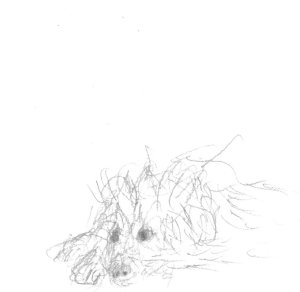
Well-trained dog. (It helps that she's old.)

As some of you may know, my family has a very highly trained dog.  This is amazing to me, especially given the fact that we have watched only a couple of short clips of Cesar Millan’s wonderful show, the Dog Whisperer.  As a result, virtually all of our dog’s training has been undertaken pursuant to our own individualized methods.

Here are some of the commands which I have found to be most successful:

1.  Lie Down!  (Works best when dog is already in prone position.)

2.  Stay!  (Ideally follows “Lie Down!”command above.)

3.  Roll Over!  (This should be combined with a hand gesture indicating that you are about to rub dog’s tummy.)

4.  Stretch!

5.  Yawn!

6.   Close eyes!  (Slowly, slowly, slowly….  Ah….)

7.  Doze!  (Sometimes this command is mistaken for the command “Laze!”  as many dogs, through no fault of their owners, have a difficult time distinguishing the different vowel sounds.)

With proper training, the above tricks can be performed by most dogs at any time of day.   Amazingly, some dogs will even adapt awkward, oversized, props for use in performing such tricks  (for example, a queen-sized bed.)

The commands set forth below are best given at mealtimes.  With the proper incentives (cheese works well), most dogs will soon learn to  respond even before the command is uttered:

1.  Beg!

2.  Whine!

3.  Whimper!

4.  Gobble!

5.  Yes, yes, lick your cute little doggy chops!

6.  Again!

Try any of the above commands, and, if you get the timing right, you’ll be amazed at how obedient even the most wayward dog can be, canine putty in your tummy-rubbing hands.

Lie Down!

Lie Down!

(Sorry–this is reposting of an earlier drawing since I’m away from my normal technical devices this weekend.  Have a nice weekend!)

If you like elephants as well as dogs, check out 1 Mississippi by Karin Gustafson at Amazon.com or at link from ManicDDaily home page.

Crazy Day Nights, Bed Tea

November 12, 2009

Crazy days, no nights.  Yes, the sun sets.  Quite early, in fact.  But you know those weeks when, even after darkness falls (which, okay, never completely happens in the City), and all the lights are off in your apartment (except for the little green and red ones in the various cable boxes), and the down blanket is tucked softly around your shoulder (unless it suddenly feels too hot), and your sleeping socks are comfortably on feet that would otherwise be too cold or too dry to relax (yes, it would be better if one was not a footie while the other a knee sock)– but you know what I mean–those hours when you should sleep but your mind still churns through numbers, conversations, projected conversations, or worse, if you do drift off briefly, images of the back of a computer, torn open so that wires and tubes protrude, the same wires and tubes that hold the only copies of your most dear and precious files.

My husband dreams of things like flying; Mao Tse Tung floating down the Yangtze in an inner tube; himself, naked, except for a pickaxe slung across his back, scaling the wall of a garden party where all other males are strapped into spats and morning coats.  As a result, perhaps, he is always promoting the virtue of many hours of sleep, or, at least, the prescribed eight.

He doesn’t understand that this prescription is not appealing to those who dream, if at all, about the backs of their laptops torn open.

I, on the other hand, am a great believer in sitting in bed for long periods,  propped up by pillows, awake, but feeling both mindless and blissfully guilt-free because (a) it’s either too early or too late for the overdrive to control; (b) I really am pretty tired after all the nights of torn-open computer backs; and (c) that mindless part I mentioned earlier in this sentence.   All the while drinking bed tea, which, for these purposes, I will define as virtually any steaming hot beverage, preferably with a bit of milk in it; and happily reading, re-reading, re-re-reading, or, in the last few months, blogging (haha!),  writing to anyone else out there who also craves some slightly mindless rest.

I wish I could pour you a cuppa….

Ah….

Suggestion

November 11, 2009

It’s Veteran’s Day.

To regular readers of this blog, I  suggest that you might skip the last post.  (It was done just past midnight this morning,  yes, about Robsten, I couldn’t resist.)

Go instead to the post immediately before about Fort Hood and the internal distance from the military felt especially in those formed by the 60s/early 70’s:   https://manicddaily.wordpress.com/2009/11/10/somehow-less-f…fter-fort-hood/

Thanks for reading.

Somehow Less Far After Fort Hood

November 10, 2009

Listening to Obama at Ford Hood, I am struck by his praise for all those soldiers who willingly put themselves in harm’s way.   Of course, I’ve heard it before, but the tragedy and the sheer length of our continuing conflicts, put it in a different light.

I am a child of the 60s (even more than Obama.  He was simply born in the 60’s;  I could walk and talk throughout that whole decade.)  I was a teen of the 70’s.  I remember Kent State well.  I was actually present when Nixon’s helicopter took off from the South Lawn.  My brother had a lottery number and, though my father was a veteran of two wars, Sweden was not an absolutely unthinkable option.

As a result of these factors, and despite spending a significant and very pleasant part of my childhood recreational life at officer’s club pools, a discomfort with the military runs deep in me.

I’ll add, in my personal defense, (i) that I’ve frequently been impressed by individual soldiers;  (ii) that I deeply loved the stiff attention of  checkpoint guards at air force bases, and the guards at the Tomb of the Unknown Soldier.  I also feel great sympathy for the economic and human strain felt by military families.

But there’s always been this 60’s thing going on in the back of my head.  Distance.  Discomfort.   The praise of politicians for our men and women in uniform sounded artificial to me.  I’ve felt, or imagined, the distance in many of those politicians too, both conservative and liberal ones.

Reading and thinking about the Fort Hood victims has brought me up short.

For one thing, it’s made me remember a couple of busloads of GIs we ran into in Chinatown (NYC) a few months after 9/11.  It was late on a Friday night, and a great line of very young men and women in combat fatigues, with a large automatic weapon slung on each back, trooped down the stairs of each bus, and continued on down the stairwell of the Canal Street subway stop.

We had been about to say good night to a ninth grade friend of my daughter’s who had planned to take the train at that same station.  But, hey, I’m a New Yorker.   So I  stopped one of the soldiers, and asked why they were there.

“We’re here to keep you safe,” she said, without missing a beat.

We walked our young friend to the next station on that line.  Not exactly because I doubted the soldiers, but because I didn’t feel great about putting our young friend in a train car in which every other passenger carried an M-16.   But what I worry that I truly wanted was to put more distance between him and them, between me and them.

I’m still not convinced of the helpfulness of a bunch of M-16s on a subway car.  But tonight I feel a much more present and intense gratitude to those soldiers.  I doubt if many were New Yorkers;  the subway system alone must have felt alien to them, and, after both 9/11 and the anthrax scare,  threatening.

But there they were, trooping earnestly down the stairs.  Some, I’m sure, trooped on to Afghanistan, Iraq.  Some may still be there; or some remnant of them may be.

Putting aside questions of policy—it makes me sorely regret my distance, and theirs.

Blocking Writer’s Block – Part IX – An Exile of One’s Own

November 8, 2009

I’ve been thinking today about writer’s block in the context of both Virginia Woolf and James Joyce.  This is, in part, due to the stress inherent in a bifurcated modern life (that is, a life of both struggling writer and struggling person), and, in part, to one daughter telling me about a paper on Dubliners and another,  a course on Woolf.

While, to my mind, the work of each of Woolf and Joyce is incomparably great, both seemed to have difficulties with blocks of a sort–Woolf sinking into terrible depressions, Joyce into (some would say) incomprehensibility.  But I don’t want to write about their blocks today; what I’ve been thinking of were their specific devices for freeing blocks, devices for which they are respectively emblematic.

In Woolf’s case, I refer to the idea of having a room of one’s own; that is, space, time, and the confidence to work from.  She wrote about the particular need of women writers for these resources, and, while I believe women still have a harder time than men (women having to fight with themselves, as well as the outside world), getting a “room of one’s own” is hard for any struggling writer.

When I think of a writing tool important to Joyce, I think of self-imposed exile; Stephen Dedelus, leaving home, family, Ireland.    Exile represents freedom–from the bosom of the status quo, from one’s accepted identity, from responsibility to, and for, the feelings and well-being of loved ones, freedom even from the background noise and clutter of loved ones.

Exile also represents action, the conscious making of a commitment to one’s work.

I am probably not the best advisor on these points, as I (i) have rarely had a room of my own in my adult life; and (ii) can’t even bear imagining leaving my family.  I do think it is important to keep some form of these tools in mind, however, if you are a struggling writer or artist.

First, re Woolf:   A physical space of your own may not be possible,especially if you live in New York City, or some other high rent district.  Your private “room”, as it were,  may need to be on your laptop, in a notebook, in the simple habit of writing.  Strangely, this interior space may best be initially framed in public. It may be easier to block out the noises and antics of strangers than of loved ones (for example, music in a café may bother you considerably less than the TV in your living room.)

Don’t be picky.   Try making a room out of any quiet moment–a relatively uncrowded subway car, a bench in a museum, a wait for an appointment.

Carry your room with you.   Get a notebook of a size and shape that you like, buy a large number of good pens, and keep them in an easy-to-access spot—your purse or coat pocket rather than backpack.

Once you have your room (your writing habit),  go into it frequently, like a child for whom you’ve just built a fort or teepee.  Take delight in how easily you can enter, then exit, then enter again.   Enjoy the view, looking both in and out.   Don’t bother to wipe your feet.

“Exile” comes in the form of realism.  Know when you are simply not going to be able to work at home, and get your computer or notebook and drag them and yourself somewhere else.  Treat yourself to a cab if your computer is heavy, or, better yet, treat yourself to a lighter computer.  If you just can’t stand to leave home, pay family members to go to a sports bar.  (Hey!  It’s cheaper than moving to Paris.)  Don’t be afraid to be a little openly irritable, if, inside, you are extremely frustrated.

The point is that it’s possible to get micro-versions of Woolf’s room and Joyce’s exile.  And frankly, a micro-version may be all you are truly able to stomach.

Finally–if your “room” or your “exile” is on your laptop, then keep it truly private, truly remote–i.e. write when you are writing, don’t go online.  (Other than to ManicDDaily!)

Blocking Writer’s Block – Part VIII (at least) – Ignore Insignificance

November 7, 2009

One of the side effects of a tragedy like the shooting at Fort Hood is its overshadowing of so many other concerns.  The event is just so sad that it makes much else seem, at least, temporarily, insignificant.  (I say, temporarily, because, attention spans are short in our media-drenched culture.)

Such overshadowing can be especially problematic for a writer or artist suffering from writer/artist’s block.  One feels idiotic to even mention such an issue, but there it is–one more reason why one’s work feels stupid, not worth the trouble.   This is especially true if you are a writer or artist whose work doesn’t deal with these kinds of violent tragic impulses, this extent of sudden loss.

This reaction sounds terribly narcissistic.   But usually the struggling writer/artist feels the national tragedy deeply.  He/she may want to respond in some helpful, articulate, way, but can only come up with platitudes.  Writing well about politics and despair may simply not be one’s cup of tea.  However, in the midst of such events, writing about anything else may feel idiotic.

Don’t be driven into inaction because you feel insignificant.  Go on.  You are who you are.  You do the work you do.

This is not to say that you shouldn’t stretch yourself.  You absolutely should.  (Especially if you’re someone prone to blocks or avoidance.)   But don’t give up on something because you feel that it seems silly, inconsequential.

Think about (i)  Dutch interior paintings (Vermeer); and (ii) still lives (Cezanne, Braque, Picasso).

Think  about (i) Charlotte’s Web, (just about the most brilliant children’s book every written – about a pig, spider, and barn);  (ii) Ulysses (a day, mainly, in the life of humdrum Leopold Bloom, (iii) To the Lighthouse (which has, to my mind, one of the most heartbreaking descriptions of the changes in England wrought by World War I, told mainly by the wind rushing through an abandoned house, (iv) The Importance of Being Earnest, (v)  A Midsummer’s Night’s Dream; (vi) almost any poem by Robert Frost, William Carlos Williams, lots of  Chinese poets, (vii) too many others to name.

Don’t judge yourself so much.  If you are someone that writes about Columbine, or 9/11, or Fort Hood, that’s wonderful–our world needs help understanding these horrible events.    But don’t worry if you do not directly work on these things;  everything you are and know and think about is in the core, or texture, or background of what you do.  So just do it;  it will do.

PS – check out my many other posts re writer’s block, and writing, and writing exercises, by checking those categories.  Also, check out 1 Mississippi by Karin Gustafson at Amazon, or at link from home page.

Come On Yankees (From 7th inning)

November 4, 2009
Elephant Baseball

Go Yankees!

Here’s hoping for luck.  (Yes, I’ve posted this before, but it sometimes works.)