Posted tagged ‘http://withrealtoads.blogspot.com’

Subway Window

November 21, 2014

IMG_0653

Subway Window

Old as a large lizard
and more cold, poverty
stalks the subway, careful
of the closing doors.

Older than a large lizard–
but it does not mind
the new bare-fangled, the evolved
shoddy.

So, the person whose body humps
like a triceratops turned on its side
just across from me
wears fake Crocs,
rimmed by the gaudy with which
manufacturers often brand
the cheap;

track pants of some newly-minted
fabric that, like the still-gilled climbing out
from undersea, doesn’t breathe right,
nor armor against the whip of wind chill,
at least a heavy coat, rumpled thick
as a hide;

but then protruding from khaki cuffs, I see nails
painted navy, and something about
their clasp of the bunched creases
of knuckle, lets me know she’s a woman.

And though she never turns
her head, lets anyone see
what’s beneath the ruffed hood–
still, the face of the face I trace,
a side of cheek roughed
by metal salt skies,
shows telltale softness.

I’d like to share something–
a smile, shrug, some complaint
about the crush, but she stays resolutely squared
towards the back of the car,

I try to see if she looks out
its bleared window, about
a foot away, out
to the flashes of darkness we flee
as we speed into
new darkness,
but what she sees
is very hard to tell
from where I’m sitting.

**************************

Here’s a belated draft poem for Kerry O’ Connor’s prompt on With Real Toads about Age and Youth, and also Bjorn Brudberg’s prompt on dVerse Poets Pub about de-familiarization.   The pic doesn’t really go, but there you have it!  
 

Love in a Time of Thyme

November 15, 2014

IMG_2526.JPG


Love in a Time of Thyme

She recited Prufrock as they walked a lawn
made purple by more
than twilight, each believing
that the mermaids would sing
to him (or her). Oh, they
would eat a peach, which incidentally
was the shade of her cheeks
that summer, the tenor of the bristle
garnishing his.

Not focusing either
on the fact that they talked (unstoppingly)
against a backdrop
of trout rather than mer–
(speckled, not wreathed,
in brown)–
a place where those
who’d drowned
had names like Rube that were passed
to the offending deep stream pools
and were probably drunk rather than waking
from a trance of unattempted
artistry–

But they, speaking in Prufock,
did not categorize the sodden
as tragic, and after the grass grew damp
about their ankles, moved to Burroughs–because who,
he shook his head, could beat
the Beats
–then on to line and shape–how even
the Abstract Expressionists
were all washed up–

and, with the willful absorption
of the young, clung
to not being understood
and, sort of,
to each other,
purple tilting their vision even with eyes
half-open, the equinoctial light taking
to skin not used to being bared–

purple radiating
from the clouds overhead
or in their heads–
they never seemed to stoop
to what lay underfoot, not

until years later, and then
it was just her, and a peach was just
a peach and a drowned man was known
to leave at least one love behind, who, most likely
had to move to a trailer,
and the curls of mermaids
could only be traced
in limestone,
and she would reach down
to the violet clusters
that more than speckled
the green expanse, crushing one gently
to release its savory scent, and wonder
as she found it again on her fingertips
how it was all just there,
free for the taking–thyme,
thyme,
thyme.


***********************************

Here’s a sort of draft poem for Kerry O’Connor’s “In Other Words” prompt on With Real Toads to make a poem using a variation of a title from a novel designated by her, in this case Love in the Time of Cholera by Gabriel Garcia Marquez.   My poem has nothing to do with Marquez’s book.

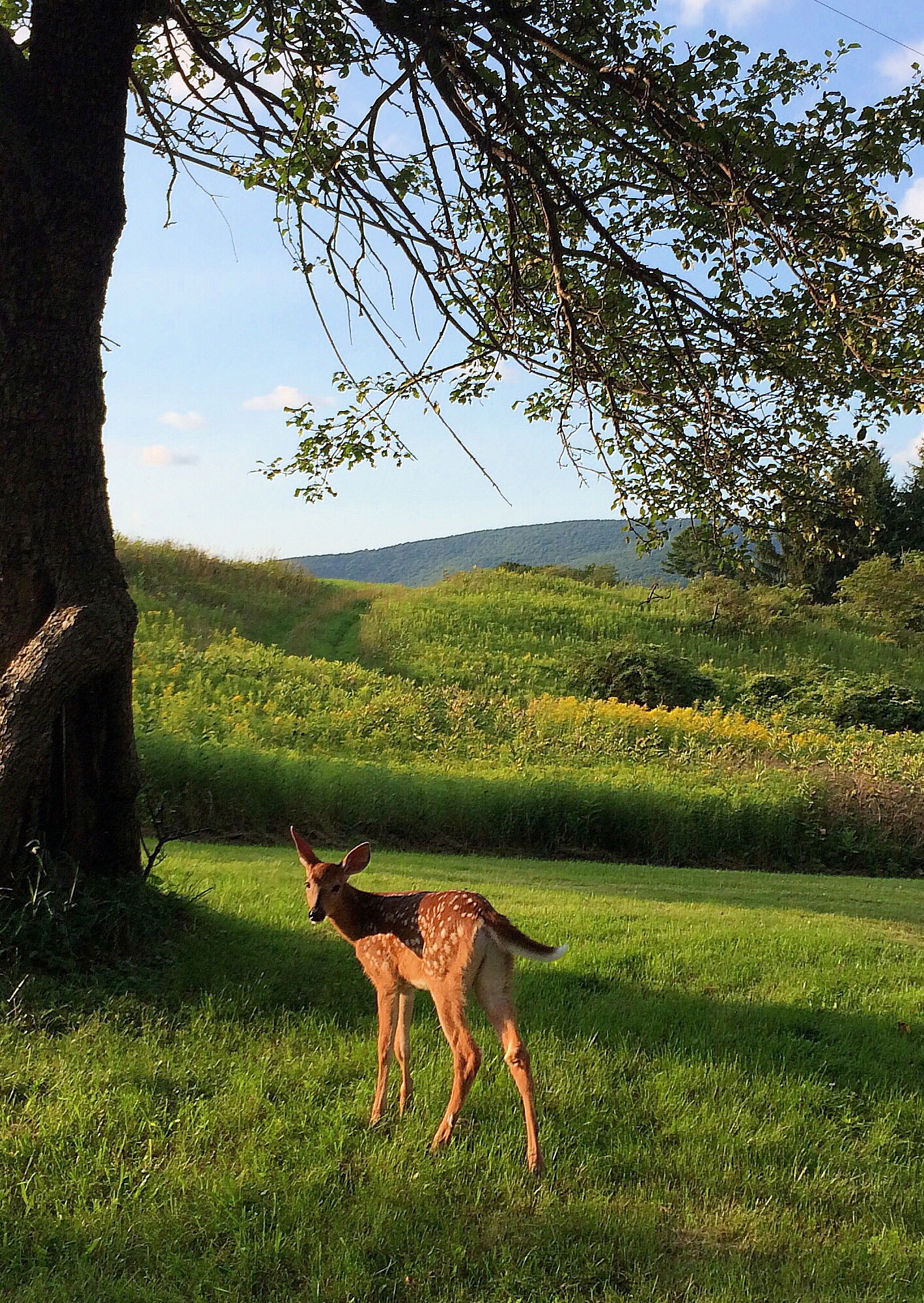
I could not find a photograph I had taken of thyme, which grows wild rampantly and has a beautiful little purple flower, so used this picture of a fawn taken last summer.  I am positive, knowing the lawn upon which the fawn stands, that there is a great deal of thyme beneath and around the deer’s hooves. 

Process notes–the poem has several references to “The Love Song of J. Alfred Prufrock,” by T.S. Eliot.  The Burroughs mentioned is intended to be William Burroughs, author of Naked Lunch and others.   Also, note this has been edited slightly since first posting, a work in progress.  (Ha!)

For Once

November 14, 2014

IMG_5084
For Once

We drove into the driving snow,
the night a sea,
the flakes a wake of anemone,
pale tails pulling ahead,
as we trailed, so fast,
from the deep,
as they rushed, even faster,
past reach.

You had to try hard, you said,
not to look at it or you’d
be mesmerized;

yes, I said, eyes trying to scry
the fleeing neon–
mind trying to fit
on metaphor–
it was as if, I thought, time
had let down her hair,
let blow in the wind
a stranded invitation, as if we following
too could be wild and wet
and headlong–

But maybe turn off
the brights,
I said, me the one who has always failed
to take risks
in life–

But–said you who
would mingle with fate in a moment
if it held beauty
on its arm–they actually help me
see the sides of the road better, see
if there are deer–

True, I said, as if you were, in fact, looking out
to the sides of the road.

Then you said nothing,
and I said nothing,
and so, you drove on
into the snow,
the sea,
the vast leading
anemone,
and me, I rode
along.

*************************

Hi All!  Here’s a poem for Marian’s prompt on With Real Toads about the love of one’s life.

Sorry for missed visits and for long absence.  I have been trying, ostensibly, to work on a novel, but in truth, have been taken up with job and family matters, and doing a huge amount of escapist reading–which has been very informative on the novel front!  (So, I tell myself.)   In the meantime, I’ve missed you all much and hope all has been well!

P.S. The photo above is not of the phenomenon I was trying to describe–the snow on a windshield on a dark night–I did not get a photo of it–but I also like this photo, so put it up.  (It is one I took a couple of years ago–all rights reserved.)  

Not Nightingale

October 31, 2014


631136

Edith Cavell, British Nurse Executed in German- Occupied Belgium, 1915

[WARNING– OVERLY LONG POEM AHEAD}

Not Nightingale

When I was little, I read biography–
for the young seek heroes–books about women
especially–a hagiography
of possibilities, of those who were bent

like me, who might too have been raised to please.
There was an astronomer from Nantucket–
no joke–Maria Mitchell–and so I squeezed
a telescope out of Christmas, and stuck it

on our front sidewalk, trying for satellites.
Then Clara Barton, Edith Cavell–not
Florence Nightingale–except to the extent
that any nurse from a then-past war seemed a lot

like Florence Nightingale, and was subject
to confusion with her, none having a name
so apt–itself a balm, a cool compress–
Florence–on a bandaged head–and for the lame.

the grievous–Nightingale–a wing.  But the book
on Cavell was favorite, its cover dark
and lamplit, a woman cloaked in the look
of the secret and stalwart—nothing of the lark,

no, the nightingale, disguised perhaps as wren,
swallow–I know I read it thoroughly
and, on a trip to Brussels, searched on end
for Cavell’s alleged statue, but found only,

with my folks, the little peeing boy–
urinal fountain–I pretended to laugh
but stared hard.  (I was eight.) But what so
amazes me is that yesterday, years past

my crush on Cavell, I first read of her death
in front of a German firing squad.
World War I.  How in the world had that left
me blank?  My aging brain’s mockingbird

crows that I must have forgotten, but how
forget her last night’s words–”Patriotism
is not enough.  I must have no
hatred or bitterness towards anyone.”

Surely, my young mind would have clung to her
figure backed against a wall, would have looked
at that imagined stance from every angle;
Could I really let that go?  Or did the book

protect me, a young reader, undoubtedly
female, offering only episodic
Cavell?  And, if so–  if so–  what else in me,
my learned-scape, has been bowdlerized, picked

over?  I need, I tell myself, to learn more.
About everything.  I don’t want mown
facts, trimmed truths==let me read myself sore,
and those gaps that I still hide–let them be sown–

And let me remember what’s read–if I can’t,
let me read it again, re-catching light
from page and vow to illuminate the slant
of now, telescoping (better) the bright

flares that have lit so many dark trails,
but also, the dimmer lamps, for we old
seek heroes too; and though I love Nightingales,
brave Cavells, though I too would love to be bold–

those who simply have no hatred, bitterness
also fit a pantheon, their song,
whether caroled by day or night no less
sweet–something (while reading) to sing along.
*****************************

Agh!  This is an absolute torturous draft poem for Susie Clevenger’s prompt on With Real Toads to write about a nightingale.    Edith Cavell was a British nurse who, when working in German occupied Belgium during World War I, nursed both allied and German soldiers, and helped some allied soldiers to escape.  She was tried and sentenced to death and, though many diplomatic efforts were made to save her, was shot by a German firing squad on October 12, 1915. 

Chemical Make-up

October 26, 2014

IMG_2502.JPG

Chemical Make-up

Let the kids curl
around Heny Swarzfigger, who could pull
a nickel from his ear,
rolling the r’s in his
cadabras.

He knew that magic words
ended in -ide or -ate,
even -ic (hydrochloric), – ium (potassium),
and, okay, sometimes -ur–(only sulfur
he laughed with that squashed grin
that masked the jokes no one else
ever got, was more of a
curse–)
(peuw)

and that the shine on his brown basement
bottles, his beakers (mason jars)
and the true test tubes–three had come
with his first set and only one
had exploded–was brighter than even a coin
made out of gold (Au), though nickel (Ni)
was pretty neat stuff–good
for alloys and sea green–and he pushed up
the wire bridge of his glasses, and, for a moment,
the small round lenses were portholes
through which he could see waves
of mounded nickel compound, crystalline
aquamarine, though actually
more granulated–

and he’d been a sh–sh–shy boy
even before the TB took him so long away,
blanketing him, the only child, in a far cold place,
its windows flung open
even to snow–
it was the froth he liked especially,
that free-form fizz that sometimes whizzed
beyond prediction, a lava let loose,
that could, he knew, if he made a single
mistake, burn more
than his remaining
eyebrows, that might even
curl up the planked stairwell,
engulf the still upstairs, dissolving everything
in its place up there, the irrefutable proof
that all came down to atoms
colliding with
his mother’s firm tidiness, till the bubbling roar
pushed its way outdoors–

Oh, then, the kids would have something to see, he thought,
now squinting in the halo of bunsen burner,
the blue glow of incipient reaction.

******************************

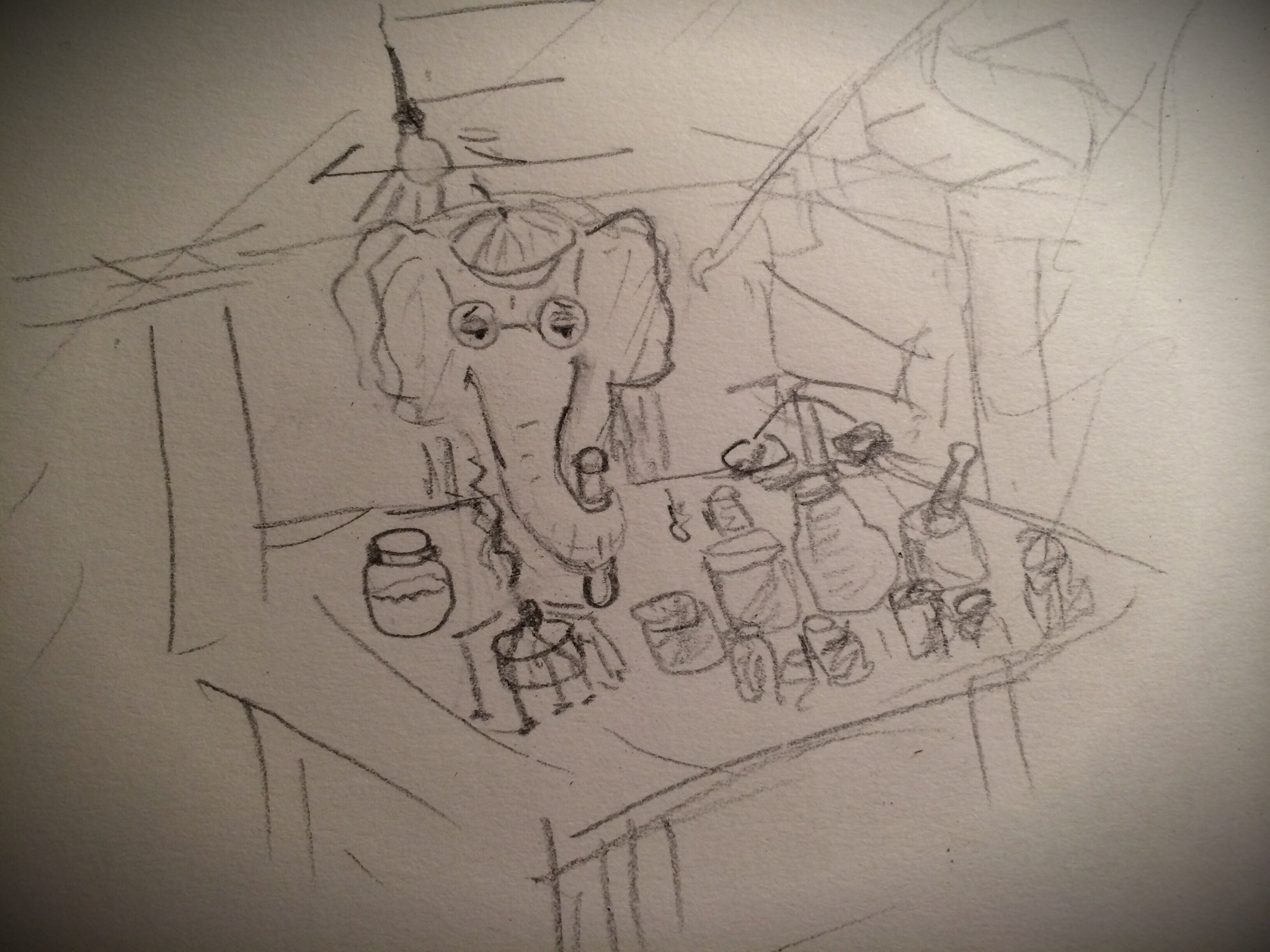
Another draftish too-long sort of poem. This one is for Herotomost’s lovely prompt on “mah thing” when young, posted on With Real Toads.  In this case, I chose to write about my dad’s thing, chemistry  My dad was a very shy child, intensely devoted to his lab.  This may have come from being an only child, who had tuberculosis at age 7, which required him to spend two years away from home in a sanatorium.  The drawing as is the case with most on this blog is mine.  All rights reserved. 

Survivor

October 22, 2014

IMG_2499.JPG

Survivor

They visit me
when my skin feasts
on yours.

It’s become a ritual,
a habitual trick of the brain; some might call it
a glitch.

It’s as if the brain
had two hands,
but endless smoke and mirrors,
and no matter how I pick the grasp
I’m sure this time is right,
I’m left with wrong,
the wrong being
that they are gone. 

Their hair looks beautiful–so much more body
than mine–lifting off a rueful forehead–
and the flowers that draped the coffin of the one
who was buried
could not be more real, the glow of the gladioli softer
than the hue of pearls,
the green baize a flat glisten veiling
the ochre of riven clay.

You hold me
close as it gets, but they close in
in an instant and I say, “please,”
and they say, “please,” and the problem
is that we each still want
to please each other;
we were that kind of people–

but all pleasure is sacrificed–our pleasure
was sacrifice–we were, you see,
mothers, daughters, wives–

and though you hold me still,
close as it gets,
still I weep for them, one of me,
who doesn’t get to have you, their you,
still holding them;
so the brain instead grasps tightly
with both hands,
though the brain doesn’t actually
have
hands.

********************************

Very much of a draft poem for Grapeling’s prompt on With Real Toads to write a ghost story based on a list of words. 

 (Yes, I’m not sure about the enjambement at the end or throughout.) 

A Grain of Sky

October 19, 2014

IMG_2496.JPG

A Grain Of Sky

It was grey and hard as a pebble
in the back, but when they let her sit up front,
the grey turned blue and shone like everything
up there, even her father’s head as he turned
from the steering wheel–”you feeling better now?”
face moist with being human too long
in a car–

she pushed the kernal about her mouth, but gently,
like she’d prodded her first loose tooth–amazed then too
to find that the malleability of life so specifically
included her, excited somehow,
even when nudging the sore spots–

And she did feel better, perhaps because the front seat
did not in fact swerve so much,
and because a need had been noticed, noticed by
her folks–

She kept the kernal in her mouth then
for years–it had lodged there
even before she’d gotten into that car, to tell the truth–
a stupid place to carry it, she sometimes thought,
but girls’ clothes did not
have very good pockets–

and became so used to its wedge
at the side of a molar, lodged between
gum and cheek, that she could breathe, chew, swallow,
without even tasting
it,  without feeling the weight
of its expanse, except maybe upon a glance
out city glass,
when she felt a call of like-to-like
from the space above the cornices,
or on a sudden look up, walking.

Why couldn’t she just swallow it–
let the cerulean pump through her arteries,
lighten the whole dark lot?

Maybe because she only ever felt that blue groat hers
when she could run a tongue over its hull–

Or because she wanted to keep the grain whole
for further study, or, after a quick boil,
to pass it on–

Of course, more were always available–
should, at least, be available–if she could only
breathe them in–
the way you need to breath in sky
to reap its seed, lungs scything.

But she found herself able only
to take small sips,
not understanding
that you could not choke on sky,
overdose on sky, even shake loose
that grain you had already
been granted–

***********************

Here’s a prosish poem of sorts for Kerry O’Connor’s very cool prompt “In Other Words” on With Real Toads.

Computer problems all day, but fixed now!  If you have a chance, check out my new novel, Nice, which also describes kids on car trips and maybe even the search for grains of sky.  PP Native Cover_4696546_Front Cover

What Those Who Believed in Purgatory Maybe Knew

October 15, 2014

IMG_2492.JPG

What Those Who Believed in Purgatory Maybe Knew

That there were dry spaces, in-between places,
where one must step through slews of shriveled souls
like so many fallen leaves–the faces,
crimped at the curves as old potatoes,

yet, still eyed–  where one would mute one’s gait
to cause no crackling, slide to not break a spine
(nor crush the dun spine once had backed). No, the game
was to walk as one walked through clover, thyme,

to schuss the crinkling wince, as if they were bees
that buzzed beneath, bees that didn’t truly
wish to sting, but needed warning of lithe feet;
to walk the freeze as one might walk July–

except with mourning pace, with low-bowed head–
just in case they traced your gaze, these waiting dead–

*****************************************

Here’s a poem that’s gone through many iterations, in part because this is one of those I read to someone else (my husband) when still in draft, and he kept telling me he liked some earlier no-longer-quite-intact version better.  This is not one of the earlier, allegedly better, versions.  The only claim I can make is that it’s a sonnet–and it’s unintentionally Halloweeny–I am posting it belatedly for With Real Toads, hosted by Magaly Guerrero.  I am also going to hazard posting this for Izy Gruye’s “out of standard” prompt re zombies, since this may be the closest to zombies, I can get today (without looking into a mirror.)

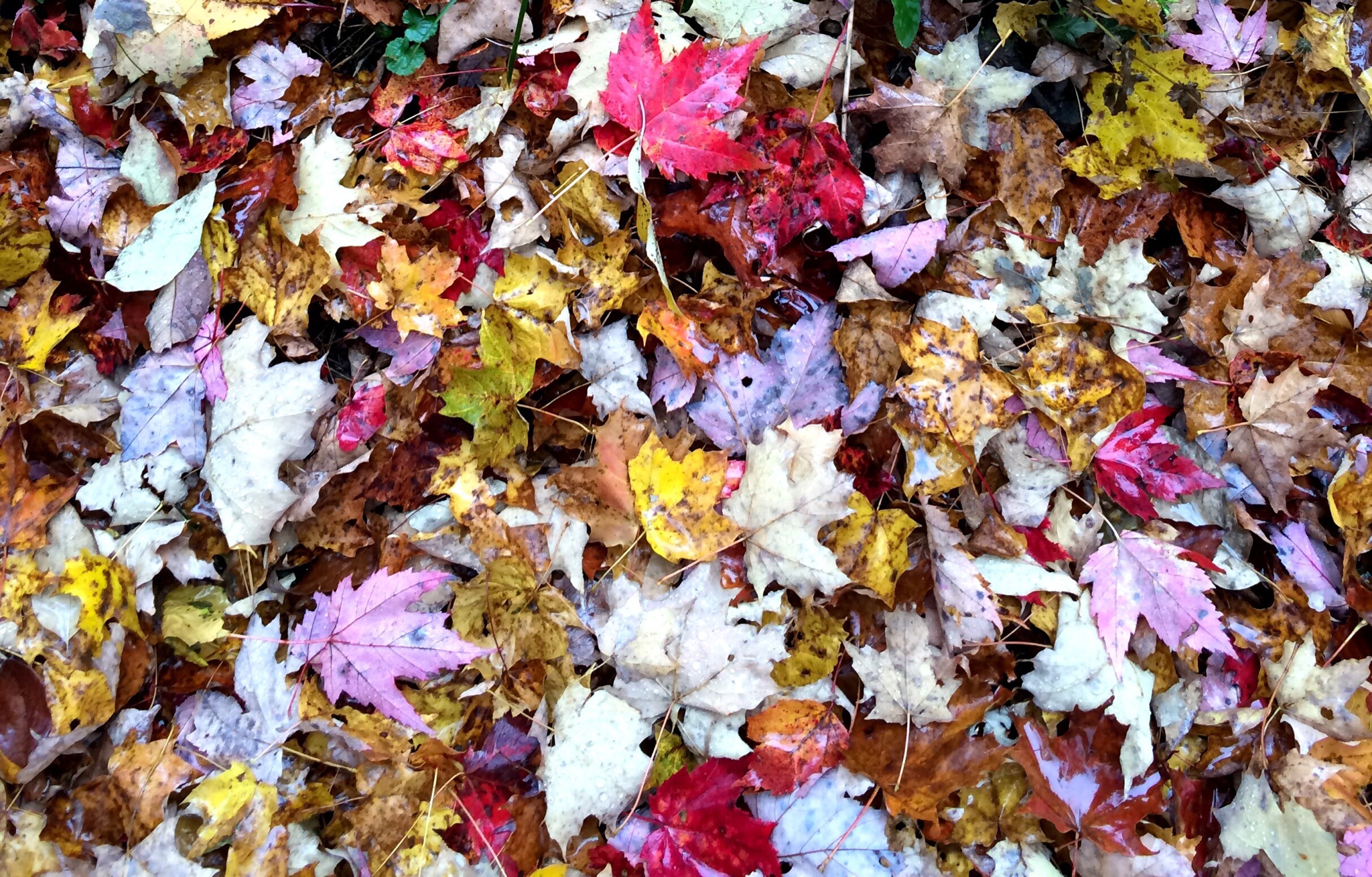
Yes, it gets a little rhyme-y there at the end.  And the pic (mine) should really be browner leaves, which in fact is the case in upstate New York where I live–but I am in Manhattan just now, where the leaves are still pretty green!  

***********************************


A Round of Cloud

October 12, 2014

IMG_2490.JPG

IMG_2491.JPG
A Round of Cloud

The moon’s a round of cloud this morning,
the milkweed cloud strands–
what’s rock is wisp; what’s fine immense;
everything becomes its other–frost sparking
the fields–everything being
what it truly is, sometimes.

It tells me
that what I think is big is small; that what I discount, counts,
and I can’t help but notice, that even on this calmest of days,
stalks shift, spores waft, the clouds traverse
with footless continuity the blue,
and there, at the farthest edge
of my hearing, a stream
runs on.

It tells me, I tell myself,
that I must change my life.

But immediately after this telling,
I despair–
knowing that the moon, the grass, the milkweed,
don’t really care what I will or not–
they won’t pat some special spot
upon my head, send me particular caresses
of even breezy encouragement,
and change–the idea
that I can–feels
like my own cloud puff.

I sit down, slightly slumped,
when  a crow caws, raucous,
and me, being thoroughly human,
find commentary, a taunt–
but also something to hold to–
hope–
as if nature, in its kindness,
were sending me a sign,
knowing that I speak squawk
so much better than
moon, cloud, milkweed,
knowing that I may need
dark wings.

***********************************

Here’s a second poem written thinking about Eugenio Montale after Grace’s prompt on With Real Toads.  I don’t know if I can post two for the prompt, so may link it up to Real Toads Open Link Night. 


I’ve actually been writing a lot this weekend!  (And may end up posting more than I should.)   Trying to avoid all the things I am supposed to be doing!  Thanks as always for your support and encouragement.  Also, please, if you have time, consider checking out my new book Nice or any of my old books.  


Tasked

October 11, 2014

IMG_2486.JPG

Tasked

There are small children
in my brain tasked
as whipping boys.
They take it and take it
and take it,
while I stand by, increasingly
mortified.

We have, you see, been educated together
from birth, which has created
a strong emotional attachment
between us–these small children
and all of me,
or rather, the rest of me,
or rather, Queen Me.

A part of that part of me cries
when they are punished,
as if, in my stead,
but educated from birth,
I’ve learned to keep it
in my head.

But these, my whipping boys,
grow into smaller and smaller children
as I age,
and now, unable to keep to one place, pained,
leap from brain to limb
from chest to face,
and my feet trip
and my hands mistake–
all because they refuse
to just sit still, take it.

**********************************

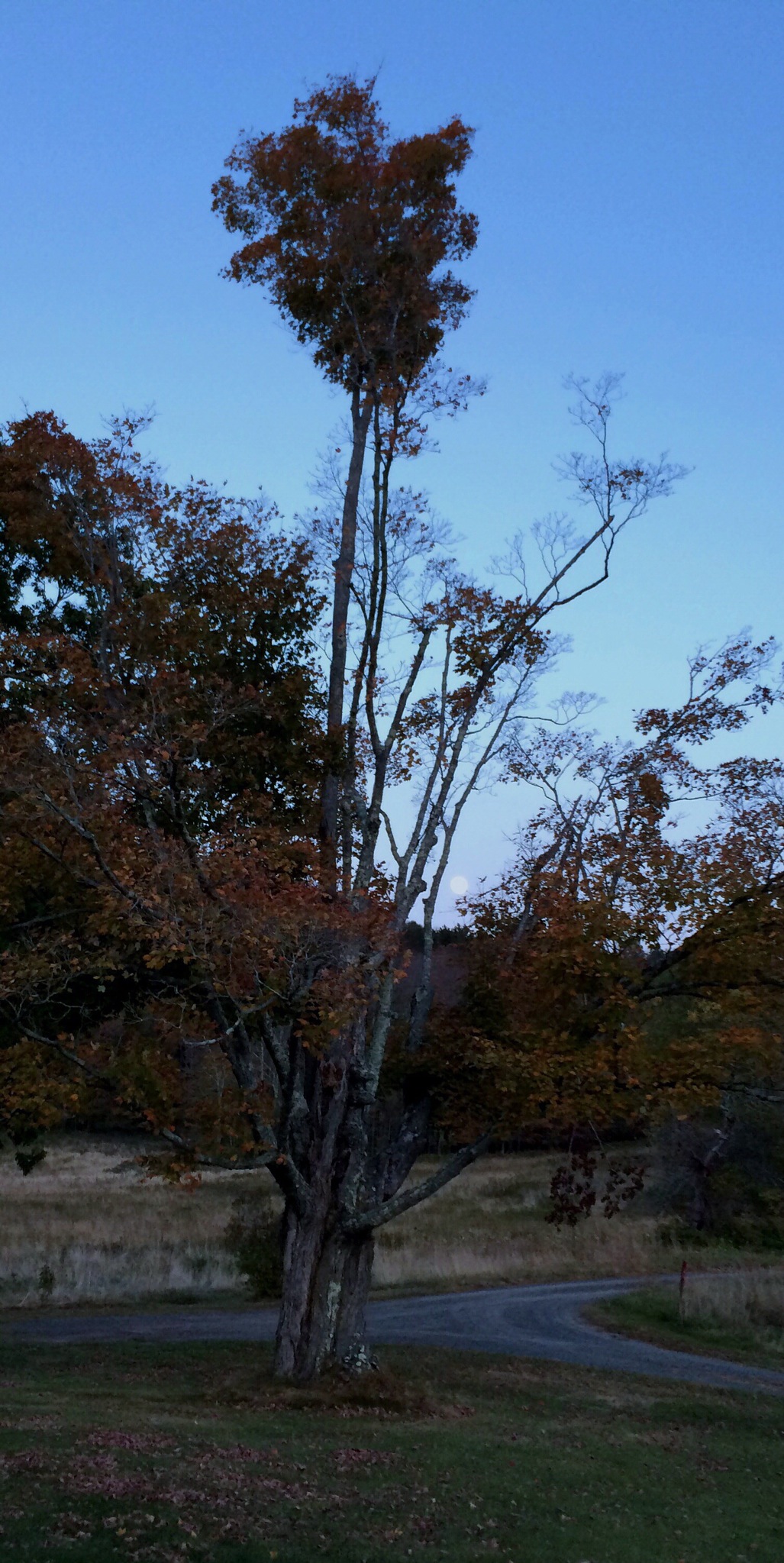
Here’s a very draft poem for Grace’s prompt on With Real Toads to write a poem inspired by Eugenio Montale.  I love Montale;  I’ve not read enough, and I can’t say how this poem was inspired by him–only that I read Grace’s prompt and struck by his poem about a well and this was what I wrote shortly after.  Whipping boys were used in the English court, when young princes were basically unpunishable by their tutors–the whipping boy was punished in place of the prince; the idea to teach a lesson  to the prince through the punishment of what was sometimes an only friend.  

I’ve not had much time for drawing lately so using photos I have!  I like this one though (taken in the beautiful Catskill Mountains.)