Archive for the ‘poetry’ category

Poem in my October

October 27, 2014

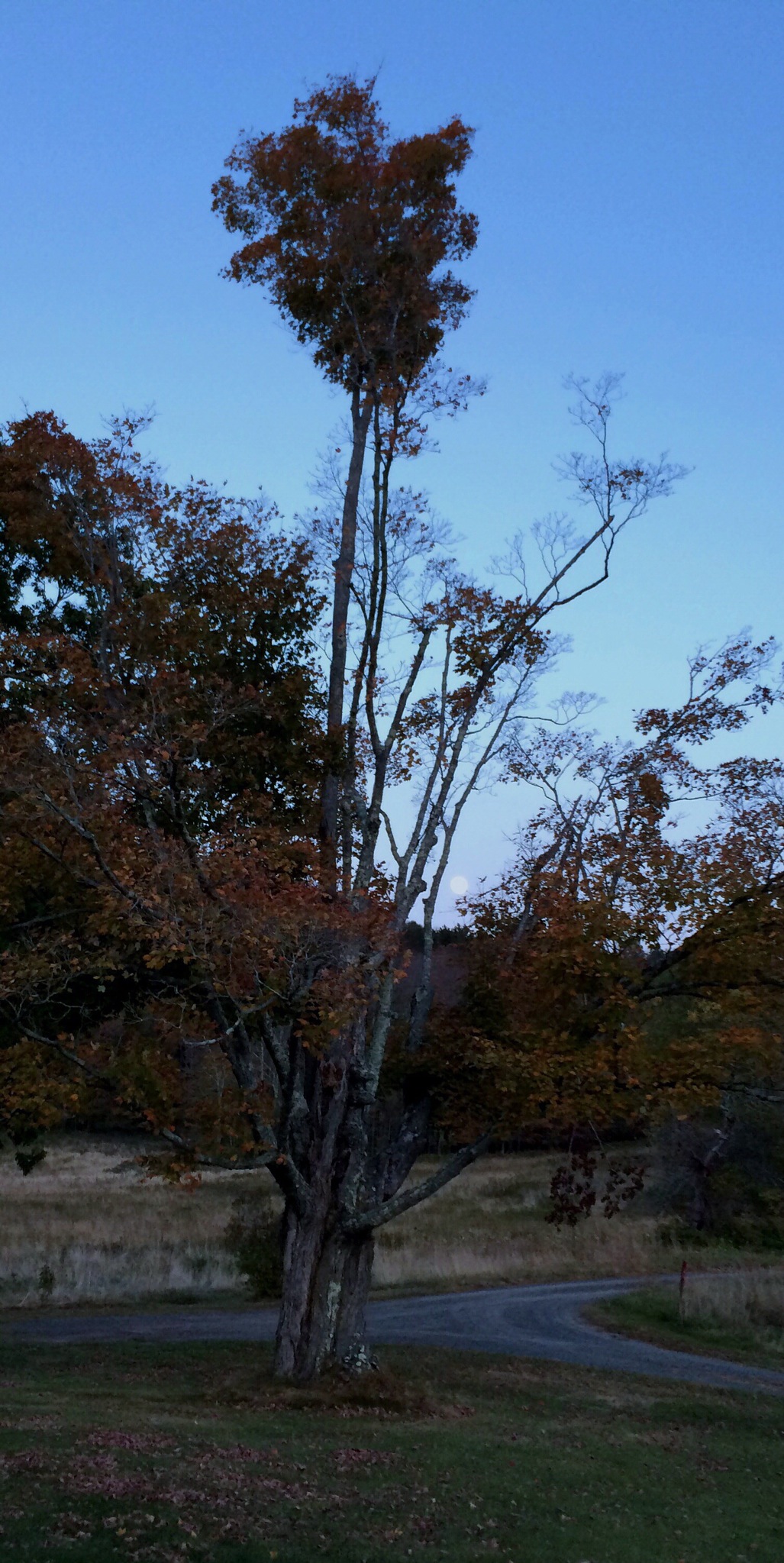
IMG_2507.JPG

Poem in my October

The apple trees, they radiate green light,
though the day itself is grey and all else brown,
and green they still will shine as day turns night

if you stand below their boughs, your own eyes bright,
if slips of smiles, like leaves, spin darkness round,
the apple trees, they’ll radiate green light.

But if, like me, you hold your head skin-tight,
a fruit that is all pit, its flesh all stone,
then green will find you still, as day turns night,

unripened, offering only bark to bite,
rind-footed through the autumn fields that ground
the apple trees they radiate.  “Green light,”

says every fear we face–if we look right
at it–for when these leaves will fall, they’ll make no sound,
even though their green now shines as day turns night

and they swim wind’s sea like fish with all their might
heedless of how they’re hooked from stem to mouth–
the apple trees, they radiate green light,
a green that steels all shine as day turns night.

**********************************************

Here’s a draft villanelle for Margaret Bednar’s Play It Again Sam prompt on With Real Toads, which recycles older prompts.  The specific prompt that inspired this poem was Kerry O’Connor’s wonderful essay on Dylan Thomas (and particularly on his poem “Poem in October.” )  Thomas would be 100 years old today. 

I’m not so sure about the last line, the entire last stanza–or the others either, come to think of it–but am facing a  jammed day so wanted to get this up before I lost track of Thomas’s birthday and all other poetic enterprises.   I also would frankly prefer the title “Poem in October,” but feel strange taking Thomas’s title!  (Though it is a bit generic) 
 

Newsprint Past

October 26, 2014

Junk News Speak

Newsprint Past

There were times and places
when what you purchased
came wrapped in old newspaper
folded as neatly around–let’s say–
your nubby mandarins
as a steam-pressed collar buttoned
over an Adam’s apple,
only tied with a string
and covering everything.

At the end of shopping,
you might carry a stacked jam
like so many ironed shirts
tailored for people with trapezoidal
torsos, or if you lived in Great Britain,
fish and chips.

As you unwrapped
your fine print sacks, sitting at a table bare but for
peel curls, chip chips, you could, between whiffs
of orange or vinegar, peruse
an origami of ads, articles,
the snipped obits of those who some time recently
had died
and the whom they were
survived by,
phrases that kept
you company, quiet companions with interesting
asides,
while from outside,
came muted cries–
for those were also times and places
of open windows–not of anguish typically,
or not of extreme anguish–the crows of children
over rules, the hawking
of other vendors,
the banter of true bird, the
hum of machines
on the fly,

sweat nestling at the back
of your neck and inner arms, and,
if you were eating fish and chips,
probably also
your upper lip.

And, believe me, I am not in any way touting
those times –I am pretty sure
that while you were sitting there eating, some woman
in the background
was scrubbing pots, and some person of color
mopping stairs, and while there’s nothing wrong
with pots or stairs, scrubbing  and mopping,
they are not so great
as ultimate options, not to mention the fear stored in
closet shadows,
along with the broom handles, buckets, lye.

I’m just saying that newsprint seems a
helluva lot better to me
than plastic, no matter how
it’s used, and by plastic I don’t just mean
what now wraps all we buy,
but also what we see–that transfixed hair
upon the screen, the fake smiles,
smirks, the scooped pronouncements passing
as some synopsis of
the world’s long day, so much shiny
cheap, thin,
packaging, so much
to throw away.

*******************************

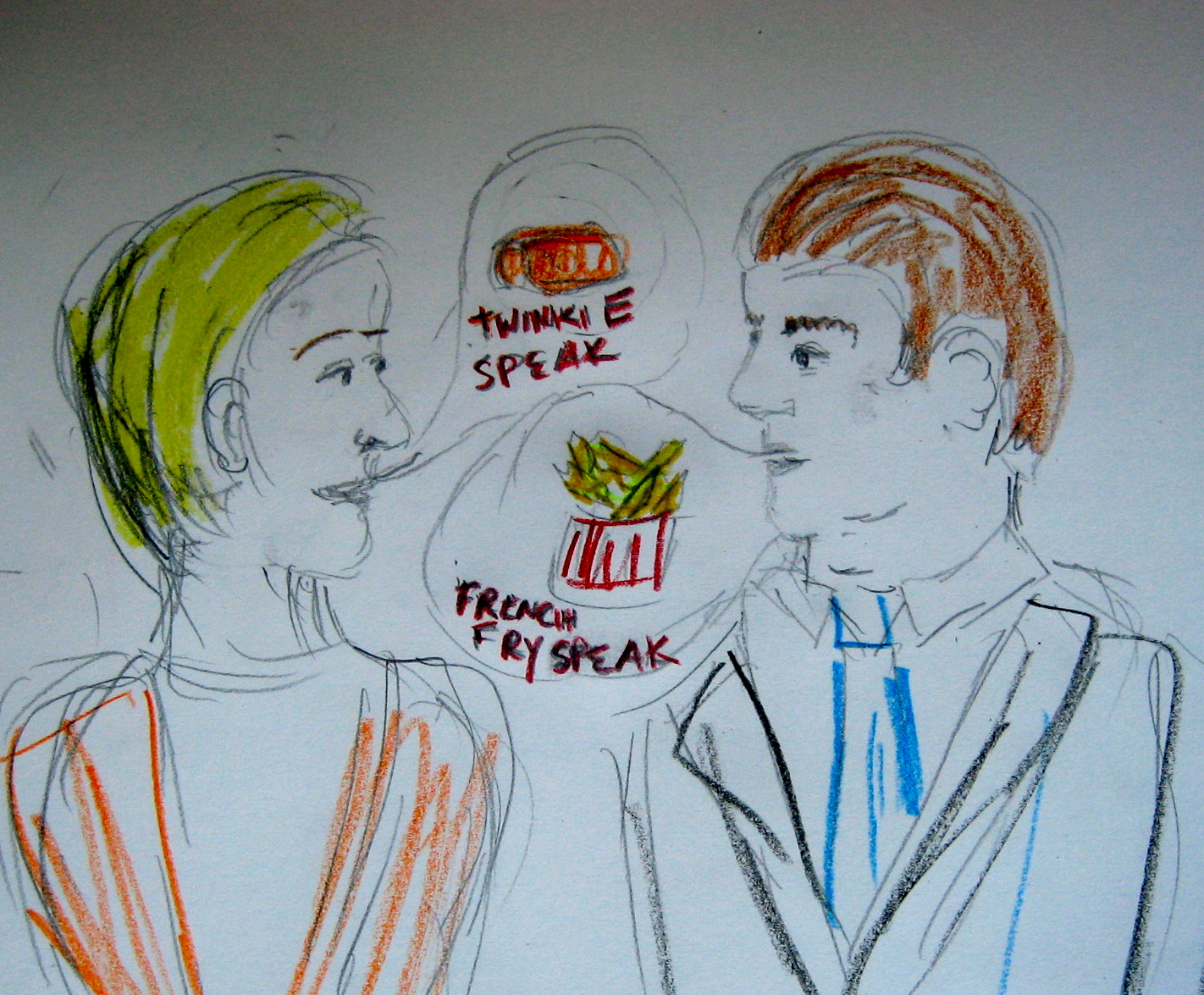
This isn’t so much a poem as a rant.  I wrote it originally for Mary’s prompt on dVerse Poets to write about news – and am posting it on dVerse’s Open LInk Night

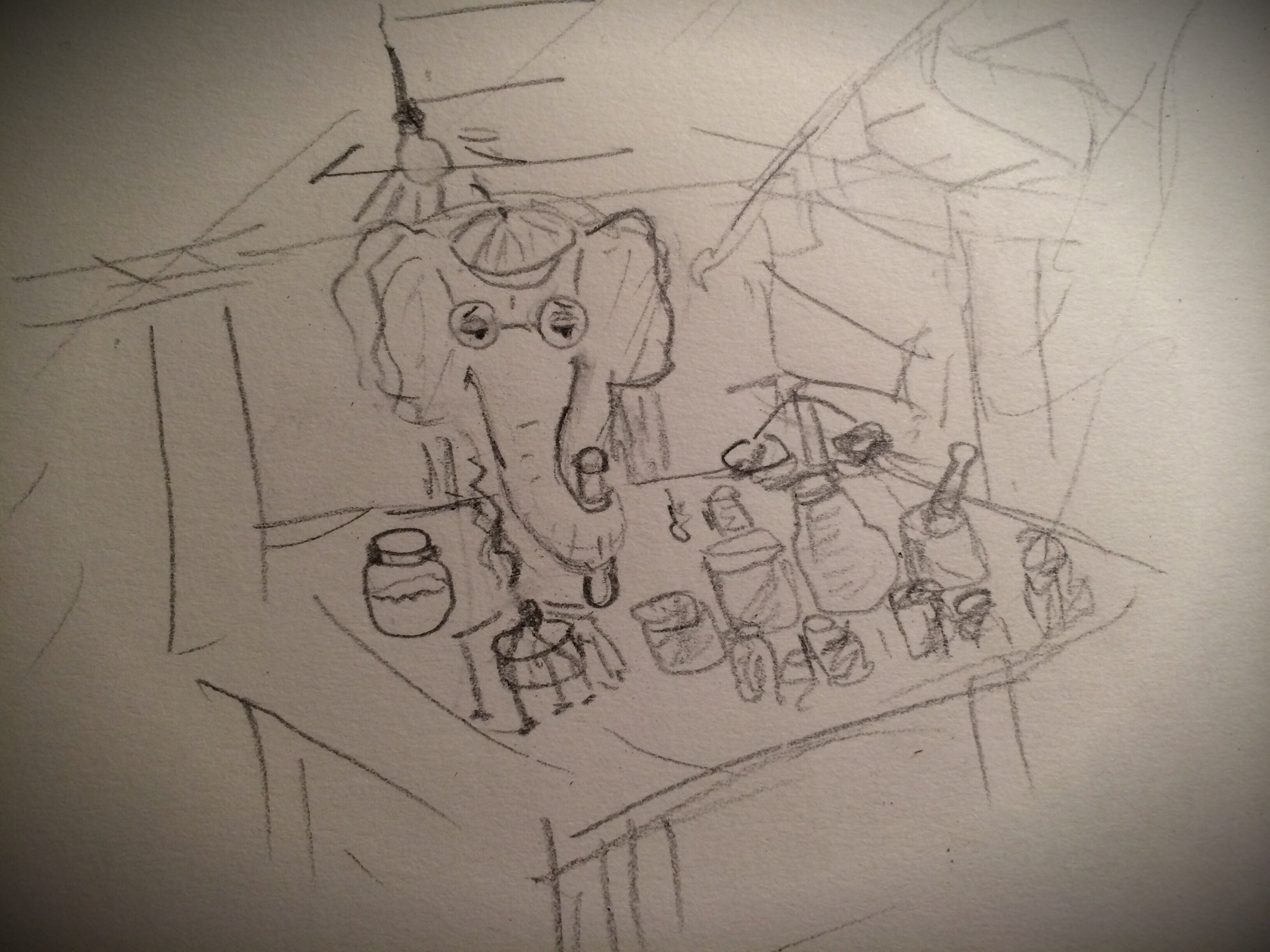
This is an old drawing, but seemed to fit. 

Chemical Make-up

October 26, 2014

IMG_2502.JPG

Chemical Make-up

Let the kids curl
around Heny Swarzfigger, who could pull
a nickel from his ear,
rolling the r’s in his
cadabras.

He knew that magic words
ended in -ide or -ate,
even -ic (hydrochloric), – ium (potassium),
and, okay, sometimes -ur–(only sulfur
he laughed with that squashed grin
that masked the jokes no one else
ever got, was more of a
curse–)
(peuw)

and that the shine on his brown basement
bottles, his beakers (mason jars)
and the true test tubes–three had come
with his first set and only one
had exploded–was brighter than even a coin
made out of gold (Au), though nickel (Ni)
was pretty neat stuff–good
for alloys and sea green–and he pushed up
the wire bridge of his glasses, and, for a moment,
the small round lenses were portholes
through which he could see waves
of mounded nickel compound, crystalline
aquamarine, though actually
more granulated–

and he’d been a sh–sh–shy boy
even before the TB took him so long away,
blanketing him, the only child, in a far cold place,
its windows flung open
even to snow–
it was the froth he liked especially,
that free-form fizz that sometimes whizzed
beyond prediction, a lava let loose,
that could, he knew, if he made a single
mistake, burn more
than his remaining
eyebrows, that might even
curl up the planked stairwell,
engulf the still upstairs, dissolving everything
in its place up there, the irrefutable proof
that all came down to atoms
colliding with
his mother’s firm tidiness, till the bubbling roar
pushed its way outdoors–

Oh, then, the kids would have something to see, he thought,
now squinting in the halo of bunsen burner,
the blue glow of incipient reaction.

******************************

Another draftish too-long sort of poem. This one is for Herotomost’s lovely prompt on “mah thing” when young, posted on With Real Toads.  In this case, I chose to write about my dad’s thing, chemistry  My dad was a very shy child, intensely devoted to his lab.  This may have come from being an only child, who had tuberculosis at age 7, which required him to spend two years away from home in a sanatorium.  The drawing as is the case with most on this blog is mine.  All rights reserved. 

Aftermath

October 25, 2014

IMG_3344 copy

Aftermath

“You’re hurting me,” she whimpered.
“I want to hurt you,” he said.

In the hours afterwards,
lying on a bathroom floor,
next to the clawed feet
of a large porcelain bathtub
so white it also hurt–he’d been
a pale man–
she did not understand
that it was rape,
only that she was stupid
and that she hated herself,
and, after her torso
was wrung out,
that it did not feel
like her lying there–how could that be her
on a bathroom floor?
The person lying there
also hated her stupid self, but she

was wedged in a purple corner
where ceiling
met wall,
camouflaged
by a crack in the molding,
where she looked down
at some person,

who might in fact
be her; certainly, the tiles that backed her arms
were cold enough.


****************************

Here’s a rather chilling draft poem.  (Please do not take it as autobiography!  Writers are imaginative people!)  It was inspired by a host of different prompts and conversations, but not really appropriate for any so not linking it.      


Follow-Up

October 24, 2014

Snippet013

Follow-up

She called my nipple a guy, as in
let’s get this guy over here,
twisting,
but so she also named
the photographic plate–
let’s try a new guy, exchanging
panes of glass, as if maybe
some smear
was the problem, and it isn’t
one’s favorite
experience,
but she was kind,
and, I don’t mind, I said,
as she turned the screws,
really, as she
tightened them,
just do what you need
to do,
wanting her to flatten every guy in this room
of just us two,
if only she would not call me back here,
give me
an all clear,
and then she told me not to breath
and I didn’t, not for a while.

***************************

All clear, thank God.   I am linking this to the Poets United Prompt, a day in the life.

Alternate last lines:
“and then she told me not to breath
and I wasn’t already.”

Thoughts?  (A part of me prefers the first as I don’t like to be ungrammatical, but I kind of like the idea of “wasn’t already.” )

The drawing above is by my dear friend, Diana Barco, who illustrated my book of poetry called “Going on Somewhere,” available on Amazon, with my other books, Nice, 1 Mississippi, and Nose Dive.  

Survivor

October 22, 2014

IMG_2499.JPG

Survivor

They visit me
when my skin feasts
on yours.

It’s become a ritual,
a habitual trick of the brain; some might call it
a glitch.

It’s as if the brain
had two hands,
but endless smoke and mirrors,
and no matter how I pick the grasp
I’m sure this time is right,
I’m left with wrong,
the wrong being
that they are gone. 

Their hair looks beautiful–so much more body
than mine–lifting off a rueful forehead–
and the flowers that draped the coffin of the one
who was buried
could not be more real, the glow of the gladioli softer
than the hue of pearls,
the green baize a flat glisten veiling
the ochre of riven clay.

You hold me
close as it gets, but they close in
in an instant and I say, “please,”
and they say, “please,” and the problem
is that we each still want
to please each other;
we were that kind of people–

but all pleasure is sacrificed–our pleasure
was sacrifice–we were, you see,
mothers, daughters, wives–

and though you hold me still,
close as it gets,
still I weep for them, one of me,
who doesn’t get to have you, their you,
still holding them;
so the brain instead grasps tightly
with both hands,
though the brain doesn’t actually
have
hands.

********************************

Very much of a draft poem for Grapeling’s prompt on With Real Toads to write a ghost story based on a list of words. 

 (Yes, I’m not sure about the enjambement at the end or throughout.) 

Grain Change

October 21, 2014

IMG_6227

Grain Change

A grain first measured
rain, soil, sun,
toil spent
till day was done–
the weight of growth,
a beat in the food canon.

But in the long wait
for growth,
in the way that men
turn earth,
a grain became
the measure of gunpowder,
the weight of what
makes cannon fodder,
the mass
of bullets,
and itself sows men, sows women,
their days done,
for they don’t grow–
these sons, these daughters–
no matter the toil, the soil,
the rain.

***********************************

Another poem inspired by Kerry O’ Connor’s prompt  “In Other Words” on With Real Toads and also Mary’s prompt on dVerse Poets Pub about news. (I’m thinking here of all the mass graves found in rural areas of beautiful Guerrero, Mexico in a search for missing student protesters; the graves do not appear to belong to the students who are still missing.) (Though I have another poem in mind for Mary’s prompt, if I can just get it written! So may not link this one. )

A grain is in fact a measure of gunpowder and bullets.   It’s also a weight sometimes used to measure gold and diamonds, which certainly opens a bunch of poetic possibilities (!)  But I wanted to keep this poem short for a change–just couldn’t stand to go there.

I’ve changed the title of this post since first posting.

Finally, hate to be such a promoter, but if you have a moment,  do check out my new novel, Nice.PP Native Cover_4696546_Front Cover

A Grain of Sky

October 19, 2014

IMG_2496.JPG

A Grain Of Sky

It was grey and hard as a pebble
in the back, but when they let her sit up front,
the grey turned blue and shone like everything
up there, even her father’s head as he turned
from the steering wheel–”you feeling better now?”
face moist with being human too long
in a car–

she pushed the kernal about her mouth, but gently,
like she’d prodded her first loose tooth–amazed then too
to find that the malleability of life so specifically
included her, excited somehow,
even when nudging the sore spots–

And she did feel better, perhaps because the front seat
did not in fact swerve so much,
and because a need had been noticed, noticed by
her folks–

She kept the kernal in her mouth then
for years–it had lodged there
even before she’d gotten into that car, to tell the truth–
a stupid place to carry it, she sometimes thought,
but girls’ clothes did not
have very good pockets–

and became so used to its wedge
at the side of a molar, lodged between
gum and cheek, that she could breathe, chew, swallow,
without even tasting
it,  without feeling the weight
of its expanse, except maybe upon a glance
out city glass,
when she felt a call of like-to-like
from the space above the cornices,
or on a sudden look up, walking.

Why couldn’t she just swallow it–
let the cerulean pump through her arteries,
lighten the whole dark lot?

Maybe because she only ever felt that blue groat hers
when she could run a tongue over its hull–

Or because she wanted to keep the grain whole
for further study, or, after a quick boil,
to pass it on–

Of course, more were always available–
should, at least, be available–if she could only
breathe them in–
the way you need to breath in sky
to reap its seed, lungs scything.

But she found herself able only
to take small sips,
not understanding
that you could not choke on sky,
overdose on sky, even shake loose
that grain you had already
been granted–

***********************

Here’s a prosish poem of sorts for Kerry O’Connor’s very cool prompt “In Other Words” on With Real Toads.

Computer problems all day, but fixed now!  If you have a chance, check out my new novel, Nice, which also describes kids on car trips and maybe even the search for grains of sky.  PP Native Cover_4696546_Front Cover

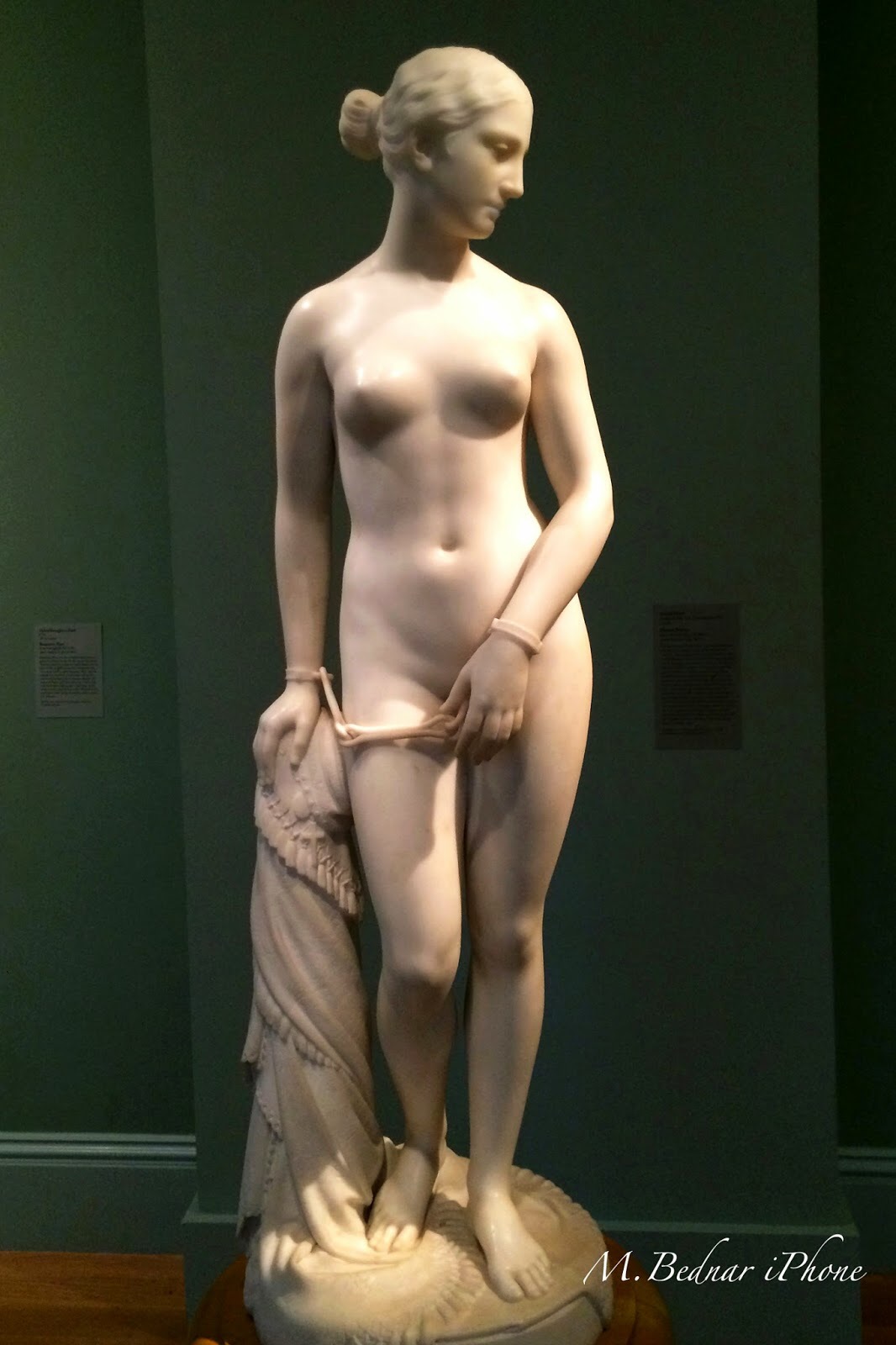
“Greek Slave” by Hiram Powers

October 17, 2014

IMG_2493.JPG

“Greek Slave”, 1873, by Hiram Powers

About fig leaves they were never wrong–
slap one on and whee ding dong–
you had a grand old statue that
even tots could gander at.
So, with the he==
but the she, the she–
choices there were not smooth–
a fig just (didn’t) fit her groove.
(It seems a sculpted ribbed curled leaf
was deemed an insufficient sheathe.)
Whatever.
The female whether marble, bronze,
if she were to have nothing on
needed to stand exactly so
with one thigh crossed and on tiptoe,
one hand, drape fold, just chanced to rest
over that place where babies nest
(you know, when dropped by friendly stork
‘twixt legs you’d n’er describe as forked.)

How beautiful, though, the breasts that rise
so perkily ‘neath downcast eyes,
the lids so modest, groomed, demure,
every hair (upon her head) so pure–
At manacled wrist, a rosary,
so surely we’re allowed to see
those breasts again, look long and hard,
their nudity no fault of art,
nor of the girl–a slave was she,
say the spellbound somewhat breathlessly.

**********************************

A ditty for Margaret Bednar’s prompt “Artistic Interpretations” on With Real Toads.  Margaret poses as the prompt a series of  (mainly) 19th century marble sculptures from the National Gallery in Washington, D.C. (My hometown!)  It is my understanding that fig leaves were used, especially by Victorians, for male sculptures, and not for female sculptures, who were typically placed in a “pudica pose.”  (Margaret says this sculpture one of the first publicly accepted nude sculptures in the prurient nineteenth century U.S.A., accepted in part because the girl was a slave, whose nudity was imposed against her will.)

I have some intermediate alternate lines, but they felt a bit too raunchy too use.  I don’t mind raunchy, but unfortunately, so much raunchy speech has echoes that could be deemed as demeaning to woman. I try to be rather careful of those things, so chose the more Victorian route.

Thanks, Margaret, for the beautiful photo.  Rights reserved to her for that, poem mine. 

And please if you have a minute check out my little-bit raunchy, but in a most not demeaning to women, book, Nice.   (Pic and cover design below mine.) 

PP Native Cover_4696546_Front Cover


Zombie (?) Poems (Not Pics)

October 16, 2014

IMG_1362IMG_1360

The Zombies That Come After Me

The zombies that come after me
shoot my errors from their eyes;
they aim them with their tautest bows,
my head their bestest prize.

I stoop below each window sill
flatten to the floor,
but these errors once unloosed
aren’t blocked by any door.

The zombies ride upon their shafts
feeling up the fletching–
those feathers lofted by my faults
that carry darts so wretched.

The zombies laugh to see me hurt–
how I, wounded, ache and squirm,
for those errors once they hit their mark,
will not stop their harm. 

********************************

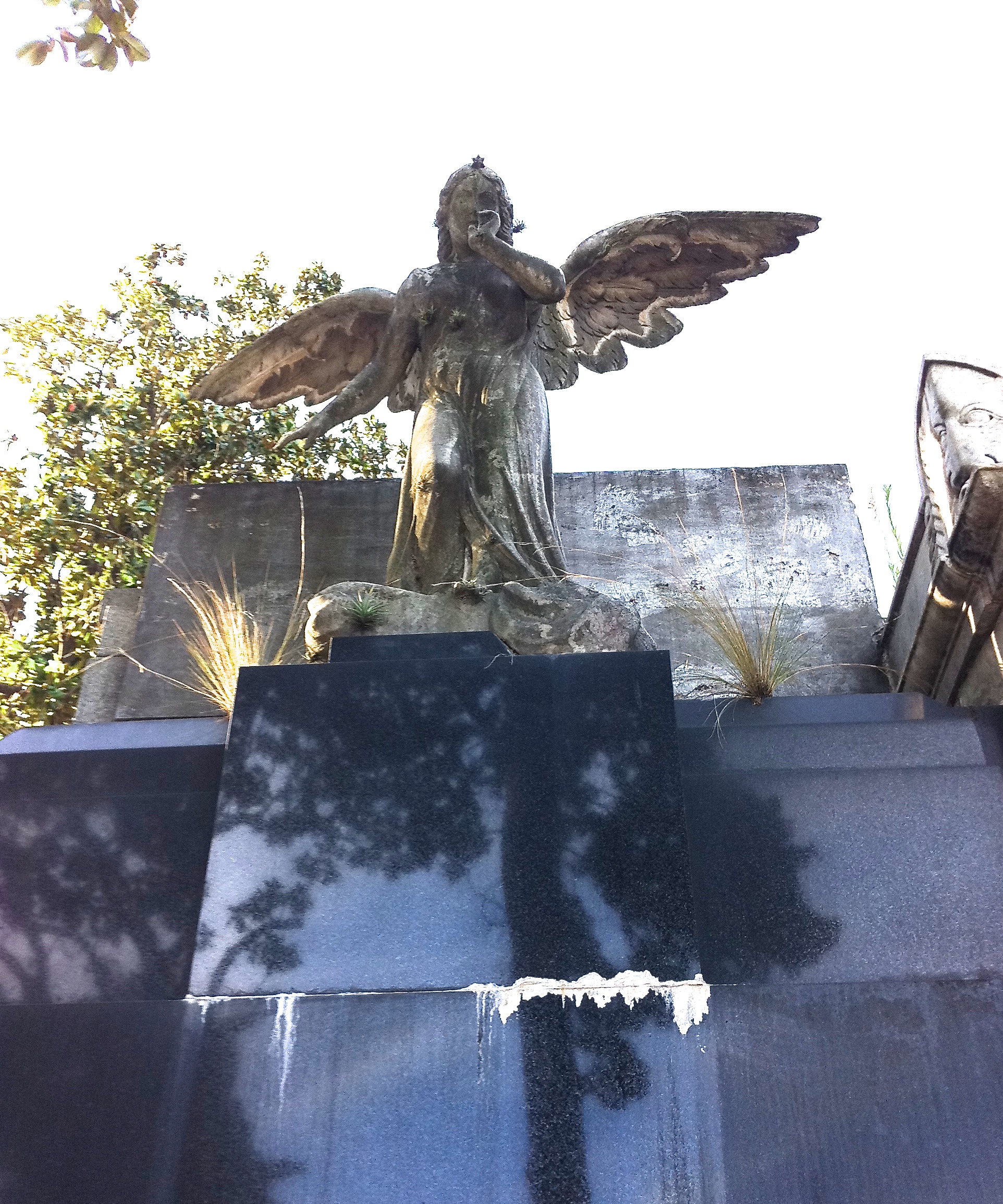
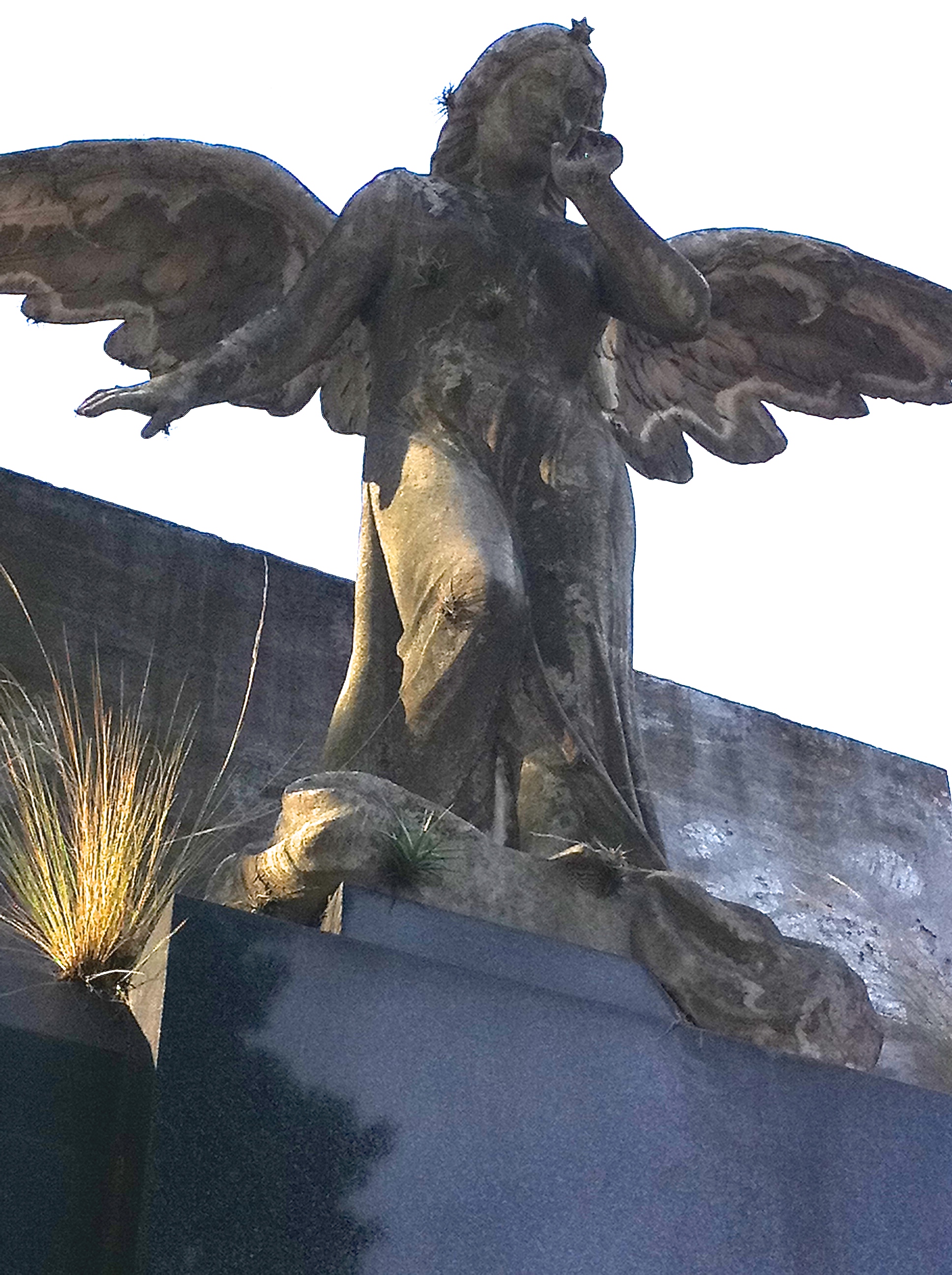
Here’s another poem for Izzy Gruye’s out of standard prompt on With Real Toads about zombies coming back.  (And here’s another rather silly, i.e. more humorous, one below.)  The pics (mine) are from Recoleta – a cemetery in Buenos Aires.   


Taking Issue With Those Down on the Dead

Some think the dead are self-centered.  Try,
they point out, getting one to return your call.
You give them a nudge, they turn a blind eye.
Gone to ground, and yet they cast a pall

on your merriment without even
bothering to rain on your parade.
But then come those hours with no reprieve, when
every self-reflection serves as spade

digging at you, a dull, sharp-edged, mirror
in which you see yourself as grey and clodded.
Then, I tell the doubters, when life abhors
you, the loving dead will sometimes come unplotted–

“Courage,” they say, in the French way–strange because
they never affected the Gallic
in their lives, but now they’re all accent grave,
(and because you see that there’s no malice

in their moues, you forgive them this artifice–)
for the truth is they are truly on your side,
and they prise from your open-mouthed surprise
much that you can’t swallow–the hurt, the pride,

your defects both general and particulate.
Yes, their misting about your neck brings fear,
but even that gripped alarm’s a benefit–
as you whisper back–not now, not here.

************************

Agh-just looked back at this and my computer had automatically changed clodded to clouded and then to clotted!  

Thanks, thanks for reading–if you get a chance–please check out my book, Nice, and other books.