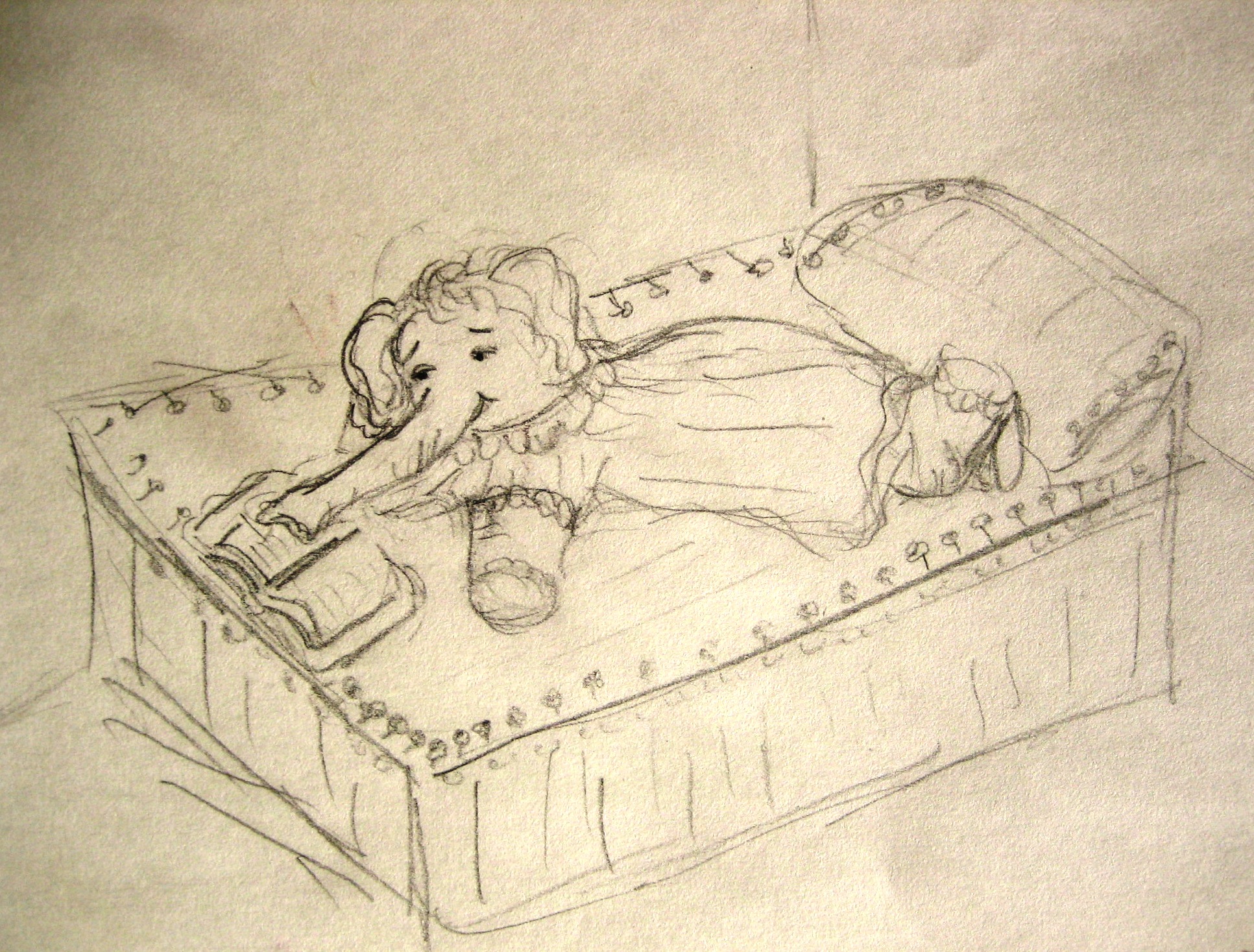
Archive for the ‘news’ category

Deficit of Trust in Government – How To Carry An Old Dog Downstairs

February 3, 2010

Obama and other politicians speak of “a deficit of trust” in governmental institutions.

I have a little, old, dog.  She is little enough and old enough that I generally can (must) carry her through the halls of my building, and out through the small back yard, until we get to the public sidewalk, before I can put her down without fear of prohibited incident.

I carry my dog on this journey like a baby, legs up.  She is incredibly passive in my arms, motionless through the bounces of the few flights of stairs, through the turns in the hall and yard, through the plunge into the frigid winds of lower Manhattan. Her stillness seems to reflect an absolute faith that, as her person, the one who feeds and shelters and takes care of her, I will do the right thing by her, carrying her to her appointed spots, not dropping, dislodging, or otherwise discombulating.

People are not really like dogs.  (Some may find this unfortunate.)  Yet the bases for trust are similar—a relationship or experience of a person or institution that gives rise to a feeling that the trusted one is competent, well-meaning, and that the relationship is beneficial, even necessary,  for the trustor’s well-being.

A belief in competence is paramount.  My dog is downright wiggly in unsure hands.  Babies are often like that too, fussing and crying when they sense inexperience.

Many adults do not seem to have an innate gauge of competence.  (Many voted for George W. Bush, for example.  Twice.)   Still, they must, at least, believe in competence.

Integrity’s important too, a lack of scandal.  But integrity is really a part of meaning well, of the trusted one looking out for the trusting.

Then there’s the question of benefits.  And necessity.  My dog (children too) trust me even when I have to do painful things to them, such as cleaning that yucky eye hair (that’s in the case of my dog), in part because they have been  acutely aware of all I have provided– food, shelter, college tuition (that’s in the case of my children).  It’s not as if the benefits are a quid pro quo for the painful treatment;  it’s more that the benefits somehow prove that the painful treatment is not arbitrary or mean, but a necessary part of taking care.  (Different versions of trust based on necessity/desperation arise in the case of a plumber, doctor,  accountant.)

Because benefit/necessity is so important to  maintaining trust, it’s difficult to understand how government can engender it simply by cutting taxes.  For trust to be felt, value must be provided, not just reduced expense.

Of course, the urge for endless tax-cutting arises in part because of a disbelief in government competence.  Then too, many refuse to believe that government benefits reach them.  (These kinds of people shout that the government should “keep its hands off their Medicare.”)

Others simply don’t see a need for government.  (I don’t know how these people plan to provide for fire departments, child labor laws, clean air and water.)

What to do?   In order for a “deficit of trust” in government to be filled, people have to be convinced that a more secure, stable, educated, and unpolluted society is a particular benefit to them, a necessity for the future, and something government is capable of helping to provide.

A tall order.

Of course, getting rid of the scandals would help too.
“The Jihadist Next Door” – A Dangerous Story Of A Boy

February 1, 2010

Yesterday’s Sunday New York Times Magazine featured a chilling article by the Pulitzer Prize winning Andrea Elliott about Omar Hammami, The Jihadist Next Door, a leader, or at least participant, in the Somali terrorism group, Shabab.   The article portrays Hammami as a gifted, loved child, born and raised in Alabama, the son of a Southern Baptist mother and Syrian, Muslim, father, the wisecracking, devoted brother of a loving, slightly hippiefied, sister.

The article traces Hammami’s life through childhood, high school, a couple of years of college,  through his increasing disaffection with the U.S., his move to Toronto, then to Egypt (which he found disappointingly secular), and finally to Somalia where he became aligned with the violently jihadist Shabab.   (He is now apparently the subject of a sealed federal indictment.)

Hammami was a charismatic youth, popular in school and high school, until an increasing devotion to Islam, and a somewhat rebellious nature, appears to have estranged him from local peers.   Increasingly discomfitted by the freedom of women in Western society, and desperate for marriage himself, he married an Islamic  Somali woman (in Canada).  Though they had a child, he seems to have spent remarkably little time or energy on his marriage.  (His wife eventually filed for divorce.)

The online version of the article shows an illustrated timeline of Hammami’s life, including a propaganda/”promotional”  video in which he is pictured.  Most of the video shows soldiers in training, loading and reloading assault weapons first in a leafy courtyard, then grouped in a congenial circle (all the guys together) over a pleasantly lilting soundtrack of (presumably) Islamic music.

Of course, the big question the article poses is “why?” “How did this happen?”  “What can be said to have radicalized a small-town boy from Alabama?”

Hammami’s family seems both mystified and grief-stricken by his transformation.  The article, to its credit, doesn’t openly draw conclusions.   But certain factors do pop into one’s mind.  The biggest one, perhaps, is a grandiose determination to be special, celebrated, heroic, combined with a need for excitement, drama;  the desire for the life of a movie character.

The urge for specialness marks Hammami’s words (as recorded in the article);  they are combined with a sense of duty  (a kind of altruism gone off) as well as a craving for adventure.  In a December email, Hammami writes his sister, Dana, “I hear bullets, I dodge mortars, I hear nasheeds” — Islamic songs — “and play soccer. Sometimes I live in the bush with camels, sometimes I live the five-star life. Sometimes I walk for miles in the terrible heat with no water, sometimes I ride in extremely slick cars. Sometimes I’m chased by the enemy, sometimes I chase him!…. I have hatred, I have love….  It’s the best life on earth!”

It sounds a bit like a desert version of James Bond, only with Boy Scout (non-babe) elements.

Certainly, the feeling that validation only comes with specialness, celebrity, fifteen minutes of fame, is a big issue in our current culture.  So is the belief, exemplified by multiple movies and TV shows, that only one, or perhaps just a small band, of very determined special people(a la Jack Bauer) are needed for earth-shaking, earth-saving, or earth-destroying feats.

The appeal to young men of adventure, danger, heroics (especially when dressed up with the bunting of sacrifice and societal purpose) is age-old.  It’s used in U.S. military recruiting materials;  it’s part of the appeal of video games and fantasy novels.   (It’s even sited in recent child-rearing books– see, e.g., The Dangerous Book For Boys.)

The need for brotherhood is as old as Robert Bly.  (That’s a joke; sorry, fans of Robert Bly and Iron John, sorry,Robert.)

Which raises another element that comes subtly through the article–Hammami’s homophobia; a desperation for a normality hoped to be found in marriage, followed by a distancing from the”wifey”.

Who knows what all this means?  Certainly,  not this amateur psychologist.  Whatever the reasons for Hammami’s development, the story is a sad and scary one,  worth reading well.

Even After the iPad – Reasons to Stick With Books – The Bath

January 28, 2010

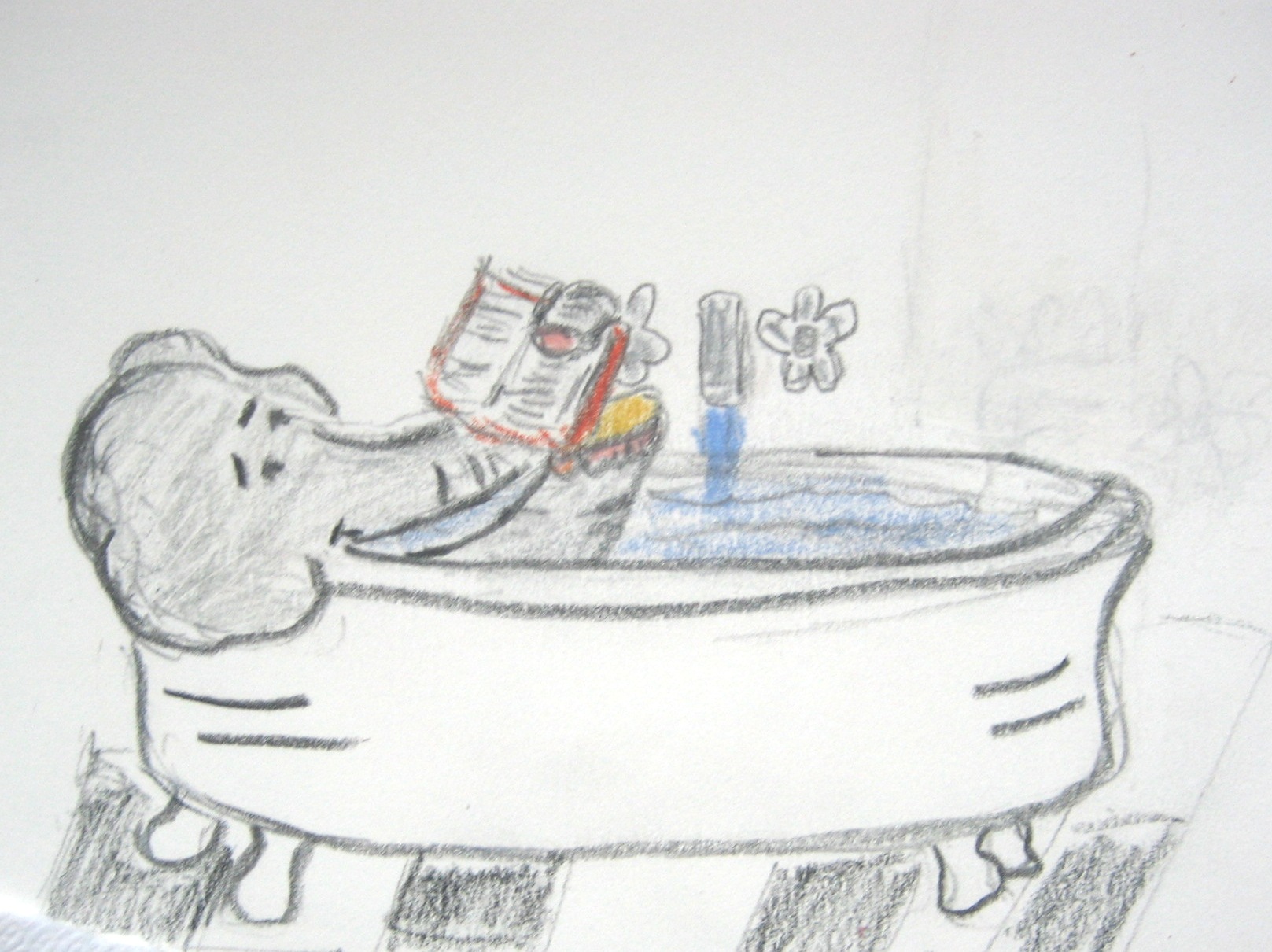
Bathtub Book

Even After the iPad;  Reasons to Stick to Books.

1.  You can take them into the bath.

2.  You can drop them in the bath (and, if you don’t mind rumpled pages, read on, without being electrocuted.)

3.  You can also drop them on the floor. (For example, at the side of your bed.)

4.  You can spill tea on them.

5.  Or pizza.  (Though it’s not so easy to spill pizza, even on a book.)

6.  They sometimes open to your favorite spots automatically.  Othertimes they open to spots you hadn’t planned on, but are glad you found.

7.  You can underline sentences or whole passages (if you’re kind of OCD.)

8.  Or keep them absolutely pristine (if you’re really OCD.)

9.  Sometimes you find things in their pages that you’d completely forgotten about—an unpaid bill, a letter from an old friend, a wilted buttercup, a spot of tea (or pizza).

10.  Some books bear handwritten inscriptions, even just a name, perhaps your grandmother’s name.  You might read these more closely than what’s in print.

PS – if you like elephants, check out 1 Mississippi by Karin Gustafson on home page or Amazon.


PPS- I am linking this to Bluebell Books Short Story Slam; the prompt was a girl in a bath–this may be a girl elephant.

Obama Message Competes With Jobs On All Levels (Including Steve)

January 27, 2010

Polls find that a majority of Americans like Barack Obama as a person.  If they have paid attention over the last year,they likely see him as both careful and deliberative.  Unfortunately, for Obama however, what many Americans want right now is not be someone with the patience of the Biblical Job, but someone with the dynamism of the Cupertino Jobs (as in Steve).

Obama’s messages tonight (I’m trying to post this before the State of the Union Address) will be competing with jobs on all levels–Americans’ needs for jobs, the many jobs in our society that need to get done, and (to add insult to injury) the buzz around Steve’s announcement of Apple’s new iPad, the new tablet computer which is supposed to fill the gap between laptop and smart phone

Jobs is a great showman.  He can make people feel that he’s filling a gap that they weren’t even fully aware of, and he can certainly make people want something that never existed before.   Yes, he’s full of hype (as in proposed battery time) as well as ideas.   But the ideas are interesting and forward-looking, and they are executed with a determined simplicity and competence which Jobs calls “magical” and which even his detractors admire.

Obama’s more orator than showman.   At his best, he can explain complex and conflicting facts and feelings, and if not rationalize them, at least, put them in the same picture, a picture drawn from a single perspective.   But, in the last few months, under the weight of conflicting pressures, needs, greeds, and niceties, he’s let the picture he paints seem both stale and muddied.

Of course, it’s a lot harder to move a balky, favor-seeking,group of legislators, a “gotcha” press, a forgetful group of (greedy) bankers and a forgetful (and suspicious) populace, than your own company.   Obama also inherited a virtually no-win situation;  he”s blamed for not moving forward fast enough on an economic ship that was actively sinking at the time he boarded it.

But if he wants to keep the faith of the American people, he does need to move forward, he does need to fill gaps, he does need to figure out how to integrate jobs into his programs; and he needs to do it in a way that is workably simple, simply workable.  (And, apparently like the iPad, with greater speed than anticipated.)

Jobs jobs jobs.

ps- disclosure–the writer is a fan of Apple, and owns some of its stock.

Apple iPad? With Elephants?

January 26, 2010

Will It Be As Good As This?

Hmmm…..

(Disclosure:  the illustrator is a fan of Apple and owns the stock.)

Calling On Citizens (Real Live Human Being Citizens) To Unite Against Supreme Court Ruling

January 21, 2010

Emboldened Fat Cat

I was all set to put up a post on bad snack habits making regular people get fatter, when I read about today’s Supreme Court decision allowing fat cats to get fatter, or at least, to better spread their fat around.  (Sorry, that’s a yucky metaphor, but it’s a pretty yucky concept.)

As most of you know by now, Citizens United v. Federal Election Commission basically allows corporate entities and interest groups to spend unlimited funds to directly torpedo or advance a political candidate or cause.

I’m not sure why I’m surprised by the decision.  We are living in the age of Qualcomm Stadium, Minute Maid Park, Citi Field.  Why should we not now have the explicitly corporate candidate? Statehouse?

In the old days, there was Wrigley Field.  But this was at least named for the individual person, William Wrigley Jr.  (It isn’t, for example, Juicy Fruit Field.)  Wrigley Field, in addition, has historically been home to just about the losingest team in baseball, so it’ s difficult to talk of undue corporate influence there.

This new decision raises the concern that the whole country (as well as every small locality) will become the South Florida of a Carl Hiaasen novel.  The scariest part of this is that all the terrible things that happen in those novels—the destruction of the Everglades and the manipulation of single-mother-topless dancers to protect and enrich sugar farmers and real estate developers—will suddenly be, more or less, legal.  (Okay, okay, maybe not the express manipulation of topless dancers.)

I don’t mean to imply that voters are naïve.  But, well, many voters are naïve.  Money, presentation, packaging, glossiness, go a long way in the sale of a message in the same way that they do of a product.  I think about the use of music as a backdrop for film—how different music can make the same footage menacing or romantic, comic or grave.   The Supreme Court decision suddenly allows in a huge amount of very determined money to pay the piper well; it is hard to believe that this new money will not be able to effect great changes in the contextual “music” underlying any political message, and to fundamentally alter the way in which such messages are perceived.

Sure, individuals often vote their self-interest, but the self-interest of individuals is far more complex than their economic well-being; people, real human people (as opposed to corporate entities and associations) tend to be more than their bottom lines.  People often don’t even have bottom lines;  many are simply at the bottom, standing in lines.  It’s unlikely such people  will be well-served by this ruling.

How To Feel Rich, Sensual, Happy, And Free to Turn Off Telethons.

January 17, 2010

Endangered Cheetah Stuffed Animal


Ten Reasons You Should Give To Charity (Haiti and Elsewhere.)

1.  It gives you free (i.e. non-hypocritical) license to make fun of Pat Robertson.

2.  And Brangelina.

3.  It allows you to guiltlessly  switch channels whenever a telethon comes on.  (No matter what stars participate in these events, they always remind me of the boy who was paid $5 to sing, $10 to stop singing.)

4.  It will make you feel good, on a sensual level, and happy, on a satisfaction level.  See e.g.  recent studies cited by Nicholas Kristof in NY Times op-ed, about food, sex and giving.

5.  That satisfaction thing works.  (At least for me.  Whenever I make a charitable donation, I feel immediately less broke.  Actually, I feel immediately kind of rich.)

6.  On the sensual level, you can do it in the middle of the night.  In the privacy of your own home.

7.  You can avoid that embarrassing silence that follows your accountant’s question, while computing your income tax deductions–“charitable giving?”

8.  The range of options as to how you spend money allotted to charitable gifts is even greater than those offered by Amazon–Haiti, rainforests, girls’ schools in Pakistan, a llama for a family in Bolivia, Jane Goodall’s chimpanzees….

9.  Some charities will even send you a stuffed animal.

10.  A personification of the warm fuzzies.

    Attacks of Amnesia – Giuliani, Perino, Matalin

    January 16, 2010

    Not quite breaking news:  Rudy Giuliani has fallen victim to a sudden infestation of swine amnesia.  Unlike the former brain glitch of Mr. Guiliani, a rare “towerettes” symdrome which caused him to blurt out the numbers 9/11 every few moments, the new affliction has  caused his brain to blank out these numbers.  Symptoms were manifest recently during a televised discussion of the attempted Christmas day attack by Nigerian, Umar Farouk Abdulmutallab, in which Mr. Giuliani insisted that there had been no domestic terror attack under the presidency of George W. Bush.

    Other victims of this amnesia appear to be Dana Perino, ex-press secretary to George Bush, and Mary Matalin, a former senior advisor to Vice President Dick Cheney.

    To give Ms. Perino the benefit of the doubt,  she may not have truly “forgotten” the attacks of 9/11, but have attempted to make a distinction between an attack carried out by a U.S. citizen, such as the shootings at Fort Hood, and attacks by foreign nationals.   (I’m sorry not to have done better research here—the tapes of people saying things like this make me too upset to spend a long time listening to them.)

    Without wishing to diminish the horror of the terrible shootings at Fort Hood, I can’t help but remind Ms. Perino of the U.S.-born Beltway sniper,  John Allen Muhammed, who spread terror throughout Virginia and Maryland in 2002 (a Bush year).

    Unlike Ms.  Perino,  Ms. Matalin seems to have simply “xed” out the first year of Bush’s presidency; her disorientation alloting it to the Clinton column.

    All of these killings are horrible; the fact that they are used to score political points is itself a sickness.  Hopefully, this amnesia will not be contagious.  Unfortunately, Giuliani, Perino and Matalin, are already beyond cure.

    Why I Like Rob Pattinson Better Than Pat Robertson

    January 14, 2010

    1.  He plays guitar.
    2.  And piano.
    3.  And not on the desperate wish of sometimes desperate people for a prescribed means of being safe in a unpredictable and unsafe world.
    4.  He (Rob) readily acknowledges that the vast amount of admiration he receives is simply insane.
    5.  When he says something deceptive, he is openly tongue-in-cheek.  (The doleful shakes of his head are accompanied by self-deprecating laughter.)
    6.   He admits (at least,  in vampire persona) that no one can truly know the fate of souls.
    7.  He admits (in every persona) that he’s an actor.
    8.  I wouldn’t want to even think about whom Robertson might be secretly dating.
    9.   And then, well, there’s the hair.

    Robertson’s Rule of Unreason

    January 13, 2010

    Appearing on the Christian Broadcasting Network today to raise money for  Haiti, Pat Robertson gave, with conviction but seeming reluctance, an explanation for the long-term suffering of Haitians.  There was a reason, he said, that “people may not want to talk about.”

    The problem, he went on, arose a long time ago when the Haitians were under the heel of the French, “Napoleon III or whatever,” and the Haitians “had gotten together” and made a “pact with the devil” to throw the French out of Haiti.  This pact had succeeded (in that the French were thrown out), but the Haitians had suffered ever since.

    I’m glad that Robertson is raising funds to help Haiti, but he’s also just nuts.

    Even on the most basic factual level, Robertson is wrong.  The revolt to which Robertson seems to refer was from the French under Napoleon I, that is, Napoleon Bonaparte, the guy with the hand in his waistcoat.   (Okay, okay, what’s in a roman numeral?)   As my husband who knows all things historical points out, the famous revolt against Napoleon III was in Mexico.  (Okay, okay, same hemisphere.)

    The Haitian revolt against the French was also the first successful slave revolt in the New World, and led to the end of slavery in Haiti.  (Somehow, it’s hard to think of the ending of slavery as the product of a pact from the devil.)

    Robertson’s “pact with the devil” seems to be inspired by the fact that the signal to start the rebellion was supposedly given, in 1791, by Dutty Boukman, a high priest of voodoo and leader of the Maroon slaves, during a nighttime religious ceremony.  (The French Revolution also influenced the rebels, but it’s my guess that it’s the voodoo ceremony that really gets to Robertson.)

    I don’t pay a lot of attention to Robertson’s pronouncements, but even I have noticed a history of linking catastrophes to divine retribution.  In 2001, for example, he “totally” concurred with Jerry Falwell who said that Americans in favor of abortion, homosexuality and the separation of church and state had “helped” the World Trade Center attacks to happen by angering god.

    What ever happened to the religious and philosophical conundrum of bad things happening to good people? (Was the 2004 Tsunami “helped” by Buddhism?  Is “don’t ask don’t tell” responsible for the casualties in Iraq?)

    Robertson’s God seems to punish with a very broad brush.  (The problem of a fly in the ointment is resolved by the burning down of the whole pharmacy.  Serves those prescription drug users right.)

    Yes, Haiti may lie upon a fault in tectonic plates, but whose fault is that?

    On the good side ( the New Testament, turn-the-other-cheek side), Robertson does seem to want alleviate the  suffering of poor people.  Still one can’t help but hope that Jeudy Francia, the woman, in Port-au-Prince, who cried “there is no one, nothing, no medicines, no explanations for why my daughter is going to die,” has not had to bear the additional misery of hearing Robertson’s reasons for her pain.