
Winking at Danger: McDonald v. Chicago
Winking at Danger: McDonald v. Chicago

Back Seat of Chevy Impala
When I was a child, my parents bought a new white Chevy Impala with a sea green brocaded interior—by brocaded, I mean, covered with a roughly embossed pattern meant to repel or disguise the spills, crumbs, and other tidbits that attach like limpets to the insides of family vehicles.
The morning after the purchase, we set out on our annual summer trek from home in suburban Maryland to grandmothers in Iowa/Minnesota, a two-day drive. Later, that same day, we sat by the side of the hot whizzing Ohio interstate someplace near Elyria, waiting for a tow truck.
This was a huge upset to my mom. First, we were only in Ohio—Eastern Ohio!—when we needed to make it at least to Indiana to do the journey in the requisite two days.
Second, how much was it going to cost?!! What if we were stuck? Would the warranty cover anything?
More importantly, she fumed (in an increasingly accusative and hot-from-sitting-in-a-stalled-car way), the breakdown proved that the car was a lemon–a lemon!–which would need years and years of nonstop repairs and still never be right.
This brought up its own cycle of despair. Why, she moaned (through a litany of family machines) did these things always happen to us?
My father (increasingly defensive and hot from bending over a stalled motor) tried to explain to her that things just sometimes don’t work.
I knew my mom was being extreme. Still, as the sea green seat covers imprinted their pseudo paisleys on the backs of my sweating thighs, so my mother’s sense of familial despair imprinted itself on my consciousness, enough so that any contemplation of a future major purchase in my own life has been clouded by a sense of doom.
In the last few years, however, I’ve slowly come to realize that my dad was right. It’s not just my stuff that breaks down; everyone’s stuff breaks down. The material/man-made world simply doesn’t work on demand.
There are many reasons for this problem–shoddy workmanship, cheap materials, careless delivery practices, “planned obsolescence,” questionable Chinese (but also global) cost-cutting and manufacturing measures, and (my increasingly curmudgeonly brain is certain) modern carelessness. But even when products are presumably built with care—as in the containment cap of BP or the NASA space shuttle—the unexpected will have its day, Murphy’s Law endlessly waiting to enforce its mandates.
This brings up all kinds of age-old wisdom: don’t put all your eggs in one basket, small is beautiful, look before you leap, but also, today, two new thoughts: (i) Bobby Jindal is idiotic; and (ii) so is the idea of genetically modified salmon.
I bring up Jindal (amazingly still Governor of Louisiana) because of his whining complaints about the federal bureaucracy not jumping aboard his spill-containment plans, which appear to be flawed ab initio. Jindal’s plans involve massive building projects which (i) will take too long to do any good (even under best case scenarios), and (ii) have serious risks of funneling the flow of oil in a manner that will make environmental damage more rather than less pervasive. People complain about Obama’s caution; I personally am glad that he has not decided simply to nuke the well. (To be fair, nuking is not Jindal’s proposal.)
I bring up the salmon because—geez—do you want to eat genetically bloated salmon? How can fish farmers actually determine, in their short-term studies, that salmon engineered to have non-stop growth hormones will be safe for human consumption? (Isn’t everyone already complaining about bovine growth hormones?) Also, how can the industry truly keep these salmon from the infecting the general population of salmon, much less, the non-genetically-modified marketplace?
Whenever I think of the possibilities of genetically modified livestock, all I can do is feel lucky that I genuinely like beans.
(As a final note—the white Impala was fixed by the next day; it did not break down more than usual in its lifetime; and for years afterwards, whenever we went by the exit for Elyria, Ohio, my father waxed nostalgic.)

Short-haired Rob
I suppose that today I could try to find something charitable to say about General Stanley A. McChrystal, the general who blabbed his discontent with various top level administration figures to the Rolling Stone (of all places), or, perhaps, something diplomatic about Judge Martin L.C. Feldman, the judge blocking Obama’s moratorium on deep-water drilling. Unfortunately, I don’t have enough energy to quash the cynicism, despair, and plain old irritation that each of these figures raises in me.
So instead I’m going to focus on a proper Rolling Stone subject and a cinematic (rather than environmental) vampire, and one of this blog’s traditionally favorite people – poor/lucky/hounded/sought-after Robert Pattinson.
I am responding here not to anything that Pattinson has done recently–gotten a hair cut! Awkwardly kissed Kristen Stewart on stage! Seriously—a hair cut?!–but to one of the few articles in the New York Times that isn’t seriously depressing me: “His Cross To Bear; Heartthrob Vampire.”
The article discusses Pattinson’s fatigue with all things Twilight, including (quite understandably) the fame and the fame surrounding the fame, the phenomenon and the phenomenon of the phenomenon. (Our media is so self-referential that attention is itself a huge story.)
Poor Pattinson reminds me of King Midas, except that everything he touches turns to Twilight –no, that’s not right – everything Twilight that he touches turns to gold. And everyone wants gold, right? Rob seems a bit unsure at this point.
And yet, grateful, always grateful. (Unlike some Generals we could name.)
The Twilight success has theoretically given Rob freedom to do whatever he wants, whether or not it makes sense (like some judges), but because his other projects have not, thus far, been terribly successful, they supposedly risk tying him further to Twilight, causing him to be the guy who is only deemed successful as Edward Cullen.
I, for one (smitten and non-McChrystally loyal), don’t believe that. The problem with Rob’s other projects has not been his performance, so much as a quirk in the overall project: any movie in which a Brit, an Irishman, and an Aussie, sit down to discuss the New York Yankees is going to lack a certain credibility for U.S. viewers. (Remember Me performed much better overseas.)
Still, Pattinson’s been working non-stop for the last few months. Can all the other films counterbalance his identification with handsome vampires: we’ll/I’ll see. In the meantime, there’s always Eclipse coming out on June 30th. Yes, it looks bloated, overproduced, schmaltzy, draggy, and his eyebrows are way too thick.
But at least he’s not threatening pelicans, nor talking trash.

Hey Ref! Look at Me!
When we were little and my parents were in another room, my older brother used to occasionally cry out, grinning demonically at me, “ManicDDaily, stop that! Stop hitting me!” (Well, those weren’t his exact words, but you get the gist.) In the meantime, I would just be sitting quietly, over an arm’s and leg’s length away. Even so, one of my parents would dutifully call out for me to leave my brother alone.
These were not my brother’s finest moments. They might, however, have been extremely good training if he had planned a career in FIFA soccer.
The level of “amateur theatrics” as the clipped British announcers call it, or, when it gets worse, “shamming”, has been pretty amazing in the ongoing World Cup.
Yes, we understand that the point is to get the attention of the Ref, and hopefully, substantiate a foul. Yes, we understand that it is very different than baseball where a hit by a pitcher automatically gets the batter a free walk, without his having to demonstrate how hard the ball hit him. (Almost invariably incredibly hard.) Or football, where the Refs can look at instant replays of someone ground into the dirt.
Still, the sight of all that flopping on the field, followed by shrugs and/or smirks, sometimes seems a bit much.
Yes, soccer is a tough game — people are kicked and jabbed, still…I mean… come on. It’s hard to completely respect players who whine harder than the vuvuzelas. Unfortunately, the culture of victimization seems so omnipresent that the team with the stiff upper lips might genuinely risk goal shots.
What to do?
More penalties for play-acting? Maybe the sting of that could be counterbalanced by a subcategory of awards: Best Performance on the Pitch? Best Kicked in the Shins? Best Elbowed (Not Quite) In the Nose? Best Instantaneous Whimper?
Biker Boot?
Okay, I’ll confess that one reason I’m so cranky today (see e.g. my earlier post complaining about World Cup 2010) is that in the past three days I’ve almost finished reading all of the Stieg Larsson trilogy that begins with The Girl With The Dragon Tattoo, moves on to The Girl Who Played with Fire, and (I hope) finishes with The Girl Who Kicked the Hornet’s Nest. (I do understand that there’s part of a fourth book kicking around in a computer held by the long-time companion of Mr. Larsson, who died suddenly in 2004.)
Although the books follow the same characters (more or less), Book 1 and Books 2 and 3 are quite different from each other. Book 1 is relatively self-contained, while 2 and 3 seem more like one separate, very long, book with a substantially different focus. And yet that’s not true either: Book 1 concentrates on a dysfunctional family and a corrupt and violent power structure; while Books 2 and 3 focus on a different dysfunctional family and an expanded corrupt and violent power structure.
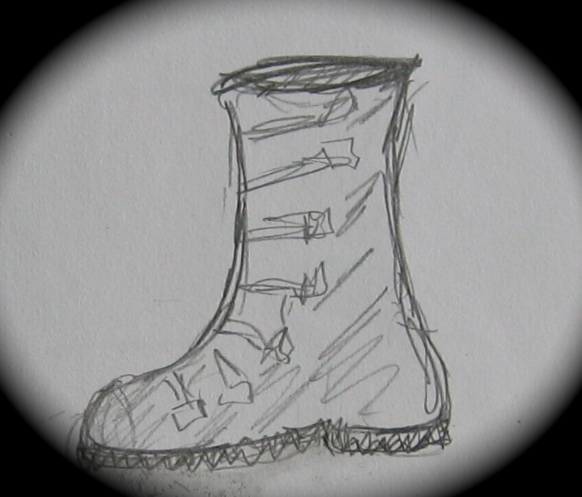
One reason the books are so popular is the main female character of all three books, Lisbeth Salander, who, in my mind, is what results when Minnie Mouse meets Mighty Mouse meets Kevin Mitnick (world champion computer hacker), meets Bobbie Fisher, Joan Jett, Andrea Dworkin, House (the doctor on TV), and, in her teeny pair of steel tipped motorcycle boots, divides her time between tattoo parlor, boxing gym and math library. (And, of course, her seventeen inch power book.)
What makes Lisbeth so appealing is that, despite the terrible abuse she’s suffered, she remains fundamentally moral, fearless, and, even compassionate.
Also, yes, she’s very very hip.
[Spoiler Alert–sort of.] The books are good books, if not exactly great; but they do very effectively tap into that most fearful of situations in which both the “bad guys” and the “supposed good guys”—that is, the authorities—are after you, where there’s virtually no one to turn to for help, where the powers-that-be cannot be trusted. I know that’s not atypical in movie circles, but I’m not much of a movie person. So, oddly, the books they bring to my mind are “children’s books”, namely the wonderful Sally Lockhart series by Phillip Pullman, especially The Tiger In The Well, in which Sally’s property and life are taken over by a faked husband with amazing ease. (It’s Victorian England.) (Actually, the Golden Compass books also work with this theme, which is probably particularly powerful for children, given the power of authority in their lives.)
It’s strange that the latest iteration of this theme arises in Sweden, a place not pictured by most Americans as particularly venal or sadistic. (I guess it’s been a long time since Ingmar Bergman.)
U.S. player?
Sometimes one gets the feeling that the rest of the world wants to save soccer for itself. (As in, butt out, America.)
Yesterday’s arbitrary and inexplicable bad call by Referee Koman Coulibaby of Mali that cost the U.S. the U.S./Slovenia game is only the tip of an iceberg that seems almost engineered to leave many Americans cold.
Well, maybe it’s not just the tip of the iceberg; maybe that type of thing is the upper third of the iceberg. Americans don’t like to feel disliked, disrespected, and/or general dissed by smaller countries (see e.g. the U.N. and lack of popularity in the U.S. thereof.)
The problem wasn’t just Coulibaby’s seeming bias, but his initial silence as to the nature of his crucial call. Coulibaby’s speaking French was no excuse. (Frenchspeakers are plenty good at arguing.) The fact is that not explaining bad calls seems to be a traditional part of soccer culture–a major contrast from most U.S. sports in which a significant portion of the drama is provided by the openly extended carriage (or miscarriage) of justice –all those little guys walking out onto the fields with stripes and flags and rather pompous magnified voices—
Speaking of unsatisfying, what’s with all the ties, called, I believe,”draws” by soccer aficionados? I personally don’t mind ties; I hate to see people’s feelings get hurt. (BTW, congratulations Slovenia!) But I’m not sure my attitudes are typical of most American sports fans. (As both Bush and Obama have found out, coalitions are not really our style.)
And the flopping. (John Wayne/Bruce Willis do not appear to be soccer icons.) We won’t talk about that.
But I will say that those vuvuzelas are getting truly irritating. (I never thought I’d hear stadium noise that made Superbowl half-time shows sound good.)
That said, all the U.S. males I know and some of the U.S. females are following the Cup avidly. I ask them to keep the sound down.

Green is good. People like green.
I admit that I’ve done it. Gone into a voting booth to vote for a presidential or mayoral nominee, and then, faced with a long list of unknown candidates for lesser offices, gone down the line flipping levers. I admit too that the rationale of my lever flipping has sometimes been fairly random, or at worst, based on knee-jerk biases. I used to, for example, go for the unknown women candidates, feeling certain, in the days before Sarah Palin, that increasing the number of women in politics was sure to be for the good.
In my defense, I’ve never voted randomly for a United States Senator. Whatever you think of government, these people have power. Whatever you think about politics, all politicians are not the same.
And now we have Alvin Greene, an unemployed vet, living in his father’s basement, with an obscenity charge against him, winning the Democratic primary by 60% in South Carolina. This might not seem completely unusual if Alvin Greene were a talkative, attention-getting, barnstorming, issue-oriented kind of guy. But in his first free media exposure, he seems extremely taciturn and more than a bit evasive.
Some, wondering how Greene came up with the $10,000 filing fee, have suspected that he is a Republican “plant”. A bigger question, it seems to me, is how he won 60% of the vote .
I suspect that both political operatives and marketing executives are studying this one. What about Greene lured voters? Could it just be dislike of his opponent, Victor Rawl? But did the voters, who seemed to know nothing about Greene, know enough about Rawls to kick him out? (No one’s mentioned any major scandals—only that Rawl has been in Congress for several terms.)
Were voters basing their votes on race? Did they know the candidates’ race?
Jon Stewart, in a pretty hilarious skit on the Daily Show, suggests the victory arose from the alphabetical order of the names. Greene was first on the ballot.
Then, there’s the benefit of a color name. People like color names—there is something innocuous, common, unthreatening about them. On the same Daily Show discussing Alvin Greene, Stewart had unrelated segments about Robert Green, the British goalie in the U.K.-U.S. World Cup game, and Betty White.
And, frankly, if you have a color name, green is a good one—the color of money AND the environment. (Granted, it may be slightly less good after the U.K.-U.S. soccer match, but it is unlikely that that game had any impact on the South Carolina primary.)
Then, of course, there are the echoes of popular music—the singer Al Green v. the singer Lou Rawls. In my mind, Al Green wins that contest hands down. (“I am so in love with you” sounds a lot better to my ears than “you’ll never find another lover like me.”)
Green (Al) is also alive, unlike Rawls (Lou), and has recently become a very good gospel singer.
Keep in mind, that I am not saying that Alvin Greene may not be a good guy, just that no one seems to know.
I, for one, am going to be a lot more careful in the future to leave all unknown levers unturned
Check out this BBC video to see my absolutely favorite soccer players.
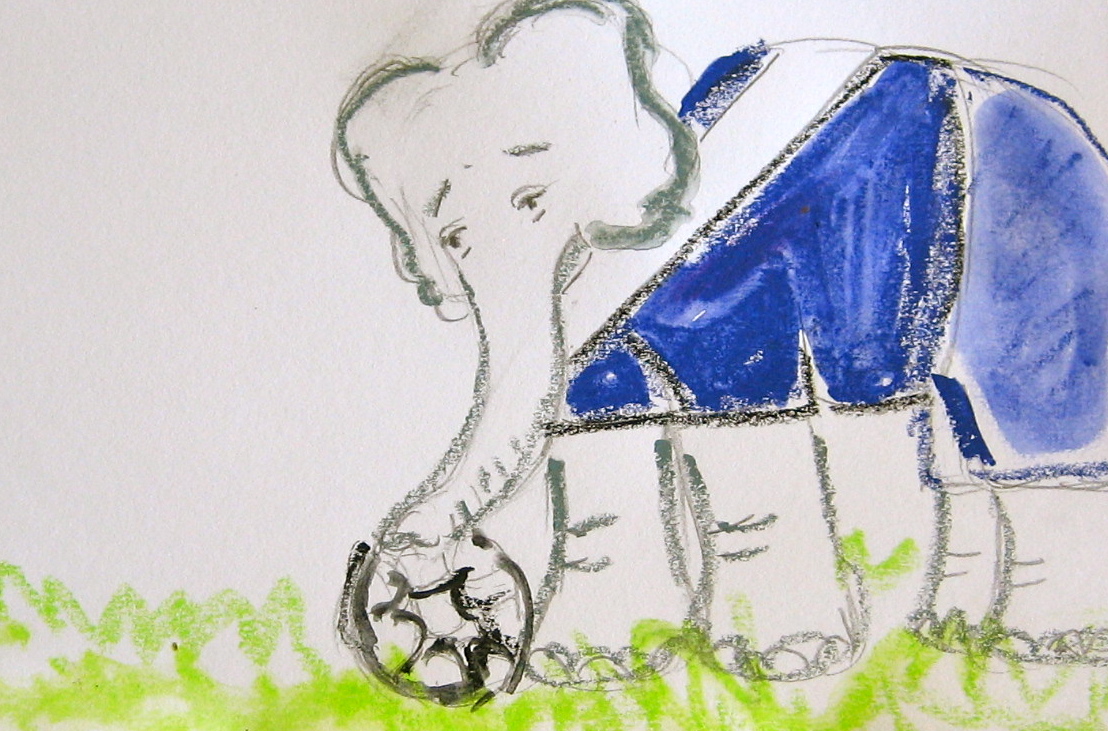
Question: should they be allowed to use their trunks?
(For a picture of elephants watching soccer instead of playing it, and for other rules for picking favorite teams in the 2010 World Cup, check out today’s earlier post.)
(And if you only like elephants, forget about soccer, check out 1 Mississippi by Karin Gustafson, on Amazon.)

Elephants Watching World Cup
You will find below the ManicDDaily guide to rooting for teams competing in the 2010 World Cup.
Correction: this is not a guide to actual rooting. I do not include instruction in drumming, kazooing, dancing, cheering, and swinging “revenge-of-the-angry-bees” noisemakers. This is a guide to choosing teams to root for, written for those, like me, who have absolutely no knowledge of any of the teams or current players.
Here’s how the system would work for a game like this morning—ARGENTINA v. NIGERIA.
1. Your college-age daughter has a boyfriend from Argentina who spends a fair amount of time at your apartment. Nigeria – 1.
2. Stop that! He really is a good kid. Argentina – 1.
3. His folks are nice too. Argentina – 2.
4. One the other hand, he’ll crow all day if Argentina wins. Nigeria – 2.
5. Besides that, Nigeria will be so happy is Nigeria wins. All of Africa will be happy. Nigeria – 3.
6. But Argentina will be so upset, and their economy has had a very hard time over the last several years. Argentina – 3.
7. But African countries rarely win, and Argentina wins all the time. Nigeria – 4.
8. He may be really upset….
9. But Argentina does make wonderful wine. Argentina – 4.
10. But Africa has elephants. Nigeria – 5.
11. Red wine. Argentina – 5.
Hmmm….. What was that cute player/deserving team thing?
 Abby Sunderland has been found, thank goodness. Safe in her small boat, Wild Eyes, which is afloat but without rigging. She is bobbing around, able to be spoken to on the phone, to be picked up in the next day.
The happy ending will happily have its day, at least for today. (I don’t mean to sound sarcastic. It’s wonderful. Crazy but wonderful.)
She will not resume her solo voyage. (Her family recognizing, I guess, that even great training, wonderful pluck, and digital safety devices, can be dwarfed by thirty foot waves.) (Kind fates should not be overly tempted.)
Now, we can go back to worrying about other parts of the world’s oceans, and other sea-travelers–pelicans, sea turtles, fish.
 ManicDDaily
Recent Comments