Archive for the ‘Uncategorized’ category

Pearlmydarling! (Video?–Video!)

October 2, 2010

I sometimes think that if I truly wanted fame and fortune, I would start a blog called “Pearlmydarling,” and focus on my fifteen-year-old dog.

Why do people love dogs so much?  There’s a huge variety of answers probably starting with “because they (dogs) deserve it.”  But the facts are also that (i) we love that that we truly take care of; and (ii) we love that which loves us back.

Pearl is, more or less, a loving-back dog.  I mean, yes, she has, despite an absolute hatred of water, plunged into roaring streams and frigid lakes to catch up to us (when we were canoeing or taking a brief dip).

She definitely wants to share our bed.

And dinner.  (She doesn’t mind our germs at all.)

But she’s also very much her own dog.  Meaning that she’ll plunge into frigid streams and all that, but don’t expect her to sit quietly next to you if there’s food happening in the next room.

Pearl is, if not exactly a role model, a survivor.  I won’t go into the mouse poison incident, or the dognapping, or this summer’s semi-paralysis,  but just say that she knows very well how to negotiate her world.  As a puppy, she quickly cottoned onto the fact that she wasn’t going to power her way into treats (not top dog) and developed three alternative tools: (i) cuteness; (ii) persistent cuteness; (iii) persistence without that much cuteness.   (These are, unfortunately, often the tools of creatures in dependent positions.)

I have sometimes thought that she is not super-smart–I’m not sure how well she could figure out a maze, for example, especially in the absence of steak.  She, however, always begs to differ.

PS – I enclose a video of Pearl, which doesn’t do her justice.  I don’t have an actual video camera, and she really is fifteen and nearly blind so I didn’t want to derange her too much.  But–a first try- and I hope, sort of fun.

Blocking Writer’s Block – Terry Pratchett- Parallel Parking?

October 1, 2010

Parallel Parking?

Sometimes you feel like you need a change.  You want to do a whole U-turn, but that feels as dangerous and illegal in the real i.e. metaphorical sense, as it does on the street.  But you don’t feel you have the time or patience to turn the slow way, the way that, well, parallels parallel parking–that is, the type of turn that involves a lot of backing and twisting and backing and twisting.

I just finished the new novel, I Shall Wear Midnight, by the incomparable Terry Pratchett.  It is not one of Pratchett’s best books;  it has a very complex plot with a great many characters  (long-time denizens of Discworld) who may not resonate with a non-Pratchett afficionado.   But like all of Pratchett’s books, it has wonderful moments of ingenuity, wackiness, and above all, generosity.  Also a lesson:  find out who you are and be it.  Find out what you like to do and do it.

Pratchett, who has now written over 40 books, is someone who found out what he liked to do at a relatively early age and who has done it a lot, even continuing now through early onset Alzheimer’s.

Which brings me to one of my perennially favorite topics–blocking writer’s block.  We can’t all have Pratchett’s prolific elan.  But we can like him, work with what we have.

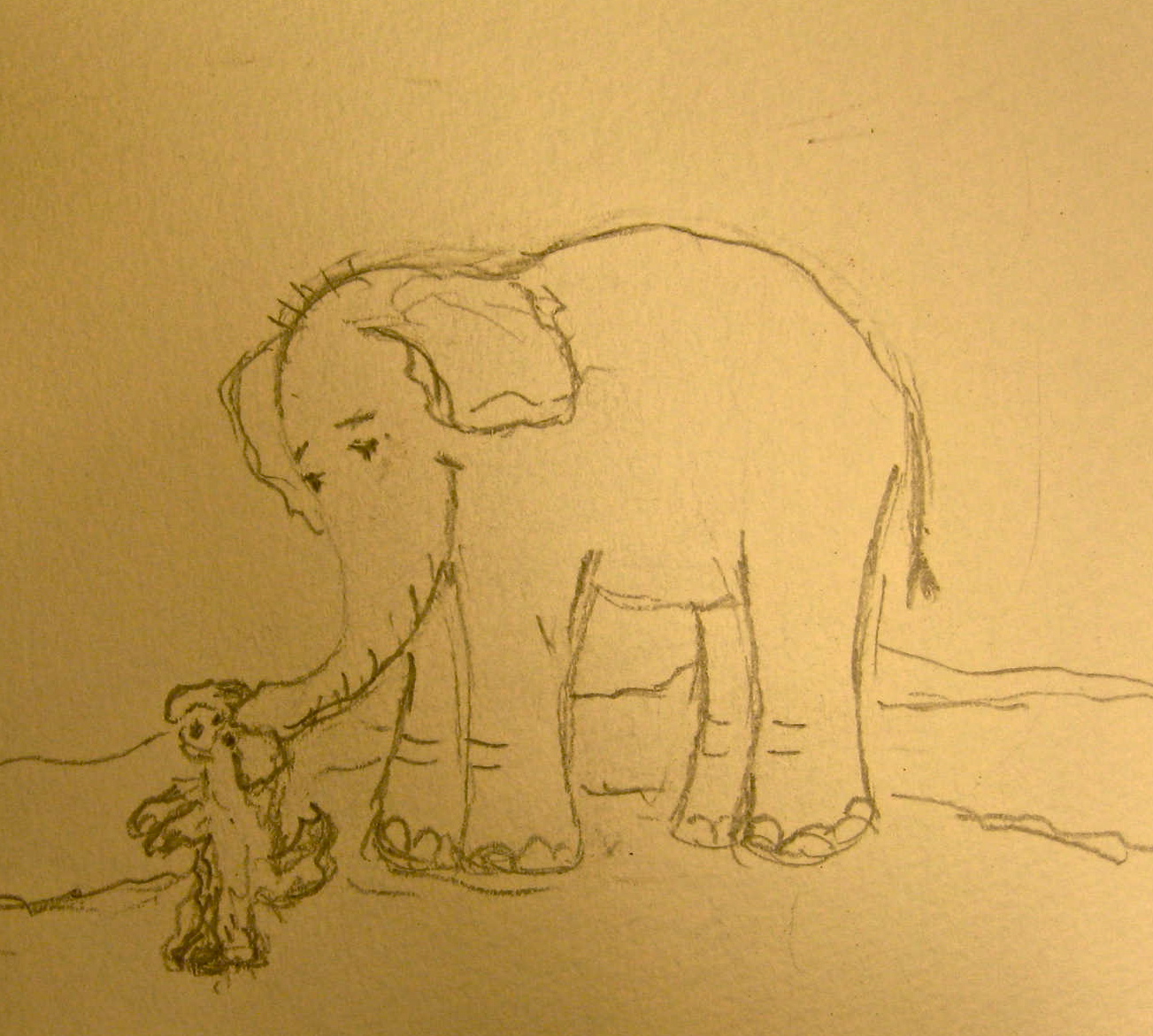
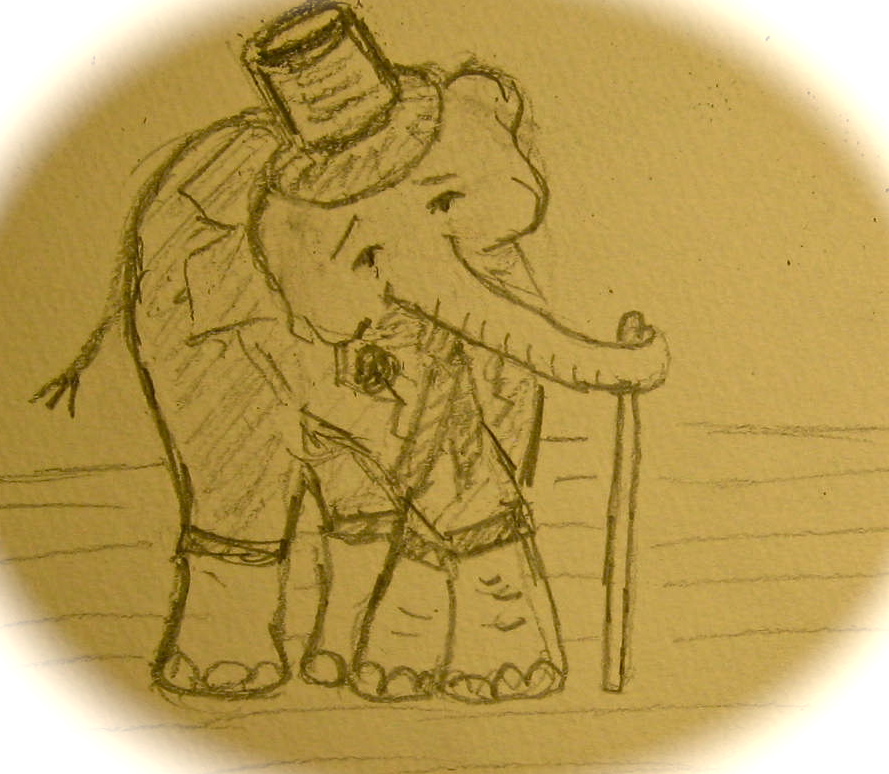
Easily said, I told myself.  So what about all the projects you want to do?   I thought of, for example, a book on writer’s block, for example?  I’ve already written a fair amount about the topic, but it immediately felt unmanageable.   My mind even filled with illustrations–yet, they too felt impossible.  (For one thing, they didn’t have elephants.)

And then, I got a phone call from a college-age daughter.   She wanted to talk; to get some advice.  So lovely to be sought in that way.  After a while, still listening, I began to draw.

The drawing, below, was not exactly what was in my head.  Still, it was a start.

First "Blocking Writer's Block" Drawing

My lesson:  give yourself the gift of trying.  Make yourself make a start.   Better yet, let yourself make a start.  Even if you have to twist and back into it, slowly working yourself into your chosen spot or direction.

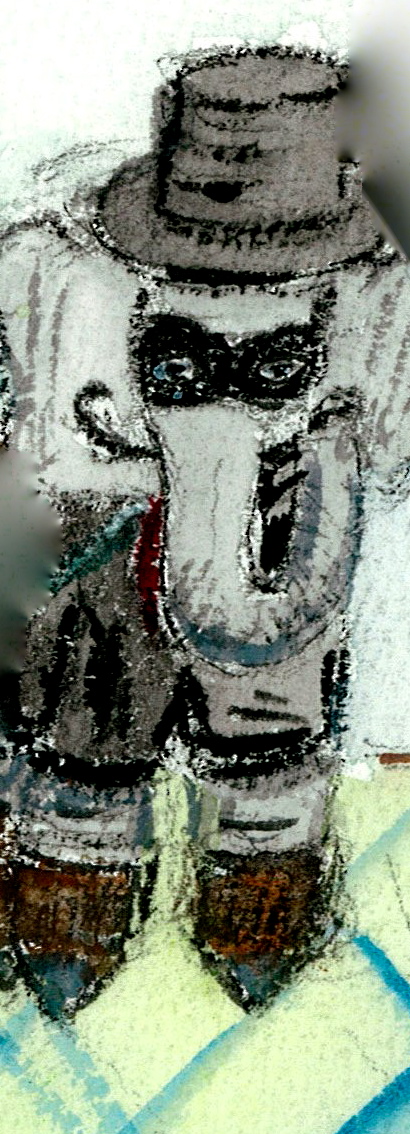
Then, after a while, start again.

Second "Blocking Writer's Block" Drawing

Continuing Legal Education – First Koala

September 30, 2010

Yesterday, I had to take a class in law.  I am a lawyer and New York State requires all lawyers to take a certain number of hours of law classes every couple of years.

Although most lawyers complain about them, the requirements are probably a good thing, at least in principle.  Laws change; people forget; you can’t take everything in law school.

Unfortunately, the classes actually pertain to, you know, law. Which means that they can be–well, not to mitigate it, put too fine a point on it, split hairs, obfuscate the truth… a bit boring.

Although the speakers do try, their topics are…dry.

And usually the lectures are taped, so there’s not even the frisson (okay, let’s not go wild here) the mild distraction (the possibility of tics, throat-clearing, unfamiliar windows) of a live performance.

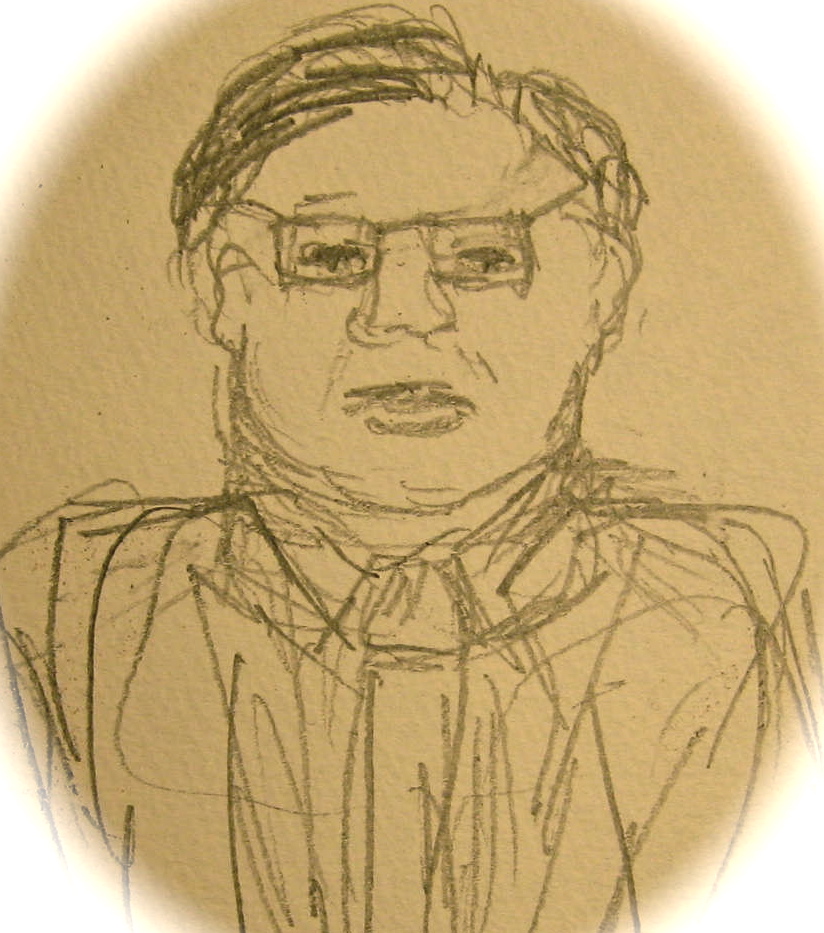
Yesterday’s lecturer was particularly  lawyerly.

Yesterday's Lecturer

The great thing about watching a videotaped lecture is that one is free to doodle while listening without actually being rude.

The other good thing is that you can eat a sandwich.   Mine was tuna fish.  I also had a little pasta salad.

Black & White Tuna Sandwich (and a bit of rigatoni)

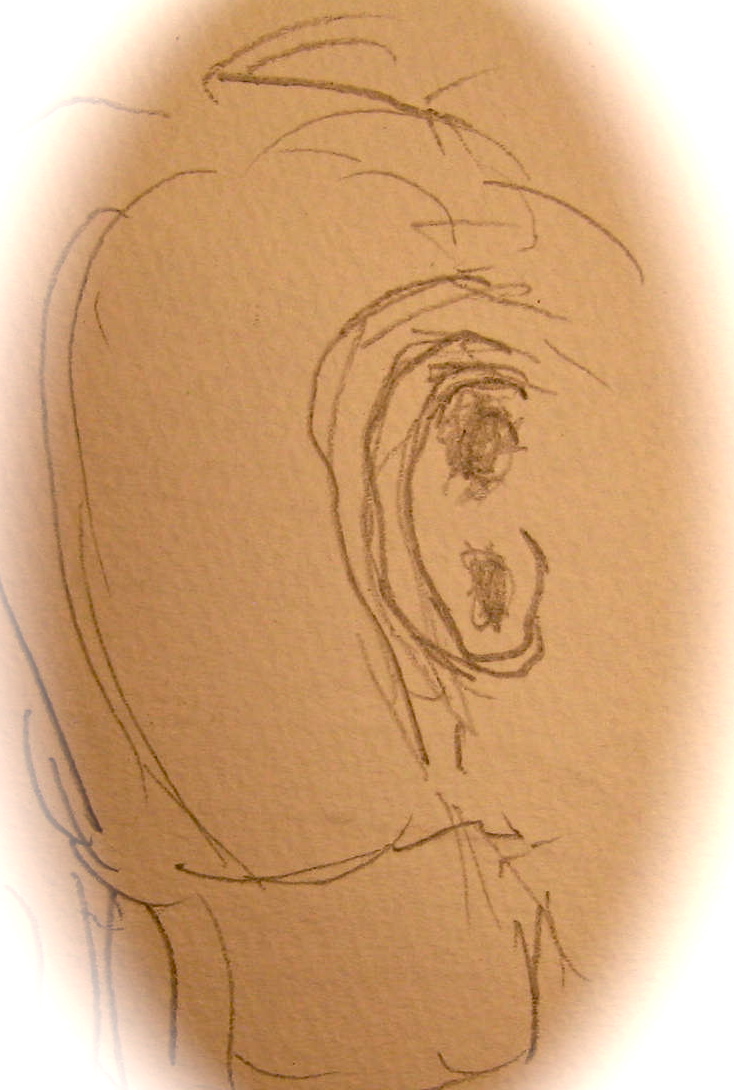
But how long can you stretch out a tuna fish sandwich?  Or a little pasta?  The guy in front of me had  a reddish ear.  (You’d see it if this were in color.)

Black & White Recreation of Reddish Ear

(This is a re-creation–I actually erased that drawing in case he turned around.)

It was a lecture on business torts–the types of actionable offenses people commit in advertising, for example.   Be very careful about disparagement of competitors.

Elephants jump to hand.   But everyone tells me that there’s no future in elephants–that that territory has been completely explored by Babar.  You’ve got to spread out, they tell me.

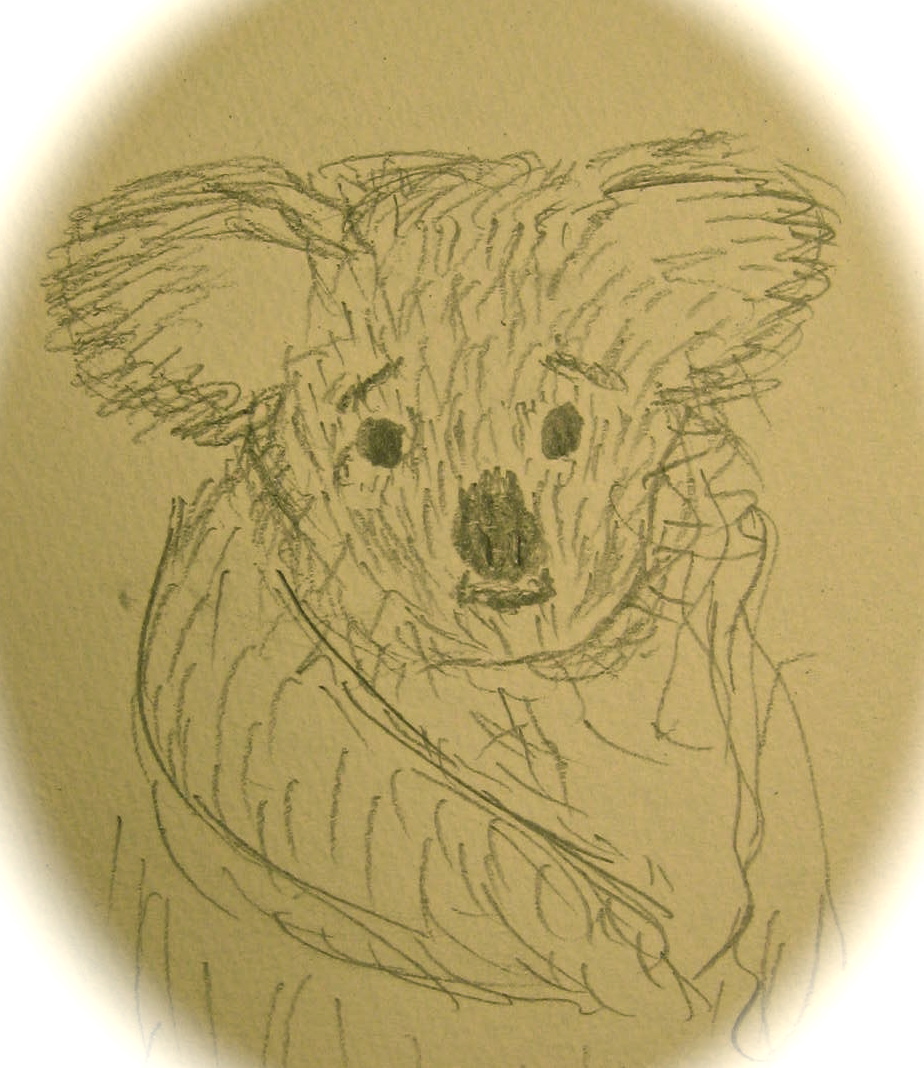
Ears… ears… ears… koalas!

First Koala

Okay, the first one is just recognizable, but the second—

It really would be better in color--

One thing I never before realized is that koalas look remarkably like robots.  Also, like the scarecrow in the Wizard of Oz.  Especially if they are not done in color (which would show the variation in their fur.)

This was getting really discouraging and the lecturer had only just started on the Lanham Act.

Note Presence of Dog!

I’m sorry, I can’t help it.  At least there’s a little dog.

Elephant a la Astaire

Okay, so there’s not even the little dog this time.   But he’s tapdancing!  When does Babar ever tapdance?

(What was that about disparagement?)

The Unseen Eye – Tyler Clementi

September 29, 2010

The Unseen Eye

A few years ago, living alone with my tween/teenage daughters in an old apartment building in Greenwich Village, I got a phone call from a man who said he had just moved into the apartment above.  He told me with great concern and even seeming embarrassment that, after moving in, he had discovered a hole in his bathroom floor through which a tiny camera had been inserted.  The hole peered into our own downstairs bathroom.  He’d found a bunch of videos too, he said: in fact, it turned out that the prior tenant had been filming us through this hole for a very long time.

I really am dense.  (“Naive” is too sophisticated a word.)  I let the guy go on for some while, only breaking in to question him about how this was possible, whether my children had been filmed too, all the while staring in terror and disbelief at our intact but cracked=at-the- edges-and-heat pipe bathroom ceiling.  It was only when he started describing activities that took place in our all-female apartment on a monthly basis that I began to understand that this was not a concerned new neighbor.

I hung up in a panic.  Had I heard a chortle at the end?  My shaking fingers called the police.  The officer, with a kind, but knowing, New York accent, explained to me that it was a crank call and that it was almost certain that no one had filmed me or my daughters.

A further examination of my ceiling supported the truth of what the policeman said.   But I just wanted to grab my kids and run.  I felt exposed, terrified, a failure as a mother.  The fact that I knew I was over-reacting only made me feel more stupid, more exposed.

The policeman thought the call was probably random.   Still, I felt watched, not so much by a hidden camera, but by my crank caller.  I tried hopelessly to recreate the conversation.   Was I the one to bring up the fact that I had children?  Had he mentioned the address?  The apartment number?  Nothing felt safe, and I felt myself to be idiotic.

And I was an adult.  Who hadn’t in fact been filmed.  And who had had no actual contact with the caller.

I think back to this now when reading about Tyler Clementi, the young Rutgers University student who recently committed suicide after being secretly and illegally filmed during an intimate encounter.  I think of it especially after reading the readers’ comments concerning the story.  Most are sympathetic to Clementi, though some say that the boy must have had self-esteem issues to begin with.  (Others argue for life sentences for the filmers.)

I know nothing about Clementi, or his tormenters, beyond what’s been reported;  I’m sure the full story will have further complexities, cruelties, stupidities.  But it’s easy enough to imagine a young man, a college freshman, feeling horribly and irretrievably exposed, and plunging into despair.   Easy too to imagine the callow, attention-craving, stupidity of the exposers.

So very sad.

Agh! (“Childing” Aging Parents)

September 28, 2010

As some friends know, an aging me has spent much of the last month trying to sort out health and care issues of aging parents.  I am not really writing this post to complain (or vent!) but because it seems that this is an increasingly common situation in today’s world, at least among people of my generation.  Following years of parenting children, many are suddenly trying to learn how to skillfully “child” aging parents.

I am not at all good at it.  It is simply excruciatingly difficult to persuade parents, especially parents, who like mine, were marked by the Depression and World War II, to accept the idea of outside help, especially paid help.

There are generational obstacles at play, then too, the natural reluctance of age==issues of ego and feelings of self-worth.

Of course, there are also “simple” problems of logistics, economics, ethics (issues, for example, of free will).

Perhaps more difficult are problems inherent with certain types of personalities.  People change as they age– some distinguishing characteristics (hair, for example) fade or even wear away, while many other traits (let’s say, noses, or ears, or how about stubbornness seem to accentuate.

Some of these personality traits, as well as age-old habits, even belongings, can feel like like life rafts for the elderly–they are clung to with desperate persistence even when the weight of years of flotsam causes them to drag their charges down, or worse, speed them headlong into a dangerous waterfall.  (Leave out the water.)

More painful difficulties arise from  the emotional history between the parent and child–all those incidents, tendencies, expectations, frustrations–similarities.  The same personal traits mentioned above may have already played starring roles in each of the parties’ lives–sometimes to great and wonderful effect, sometimes less so.

History, memory, reverberation–even small sounds are magnified in an echo chamber.  How confusing that these same echoes are interpreted so differently by each side–the parent who feels that they can never please the bossy child; the child who feels that they can never please the bossy parent.

An impasse.  With a history.  And echoes.  Complicated by love, guilt, control!  All played out with a semi-reversal of roles, and with the backdrop of looming disaster.

Agh!

Colbert Link (Congressional Testimony Re Undocumented Migrant Farmworkers)

September 28, 2010

For those interested in my last (sincere but kind of goofy) post re  yard work and Stephen Colbert’s recent testimony in Congress, here’s the link to Colbert’s (sincere but kind of goofy) opening statement.

What Didn’t Quite Suit Us – Women’s Wear Workplace Circa Some Time Ago

September 24, 2010

Speaking of pens, I am writing with a new one.  And it’s blue!  (Cobalt!)

And I’m wearing a bright green sweater (chartreuse!) on a day in which I am to meet with a client.

And shortish pants–cropped!

(I actually put on a suit jacket before leaving home, and then a blouse, and then a different sweater, and then the jacket again, and different, longer, pants, and then the green sweater again–instead of the jacket and that blouse–and then an underblouse, and then back with the cropped pants, and then I was really getting kind of late so I had to just keep on what I had, although when I got to the office I did take off the underblouse once more, but kept on the sweater.)

There has been a revolution in women’s workplace clothing over the past twenty years.

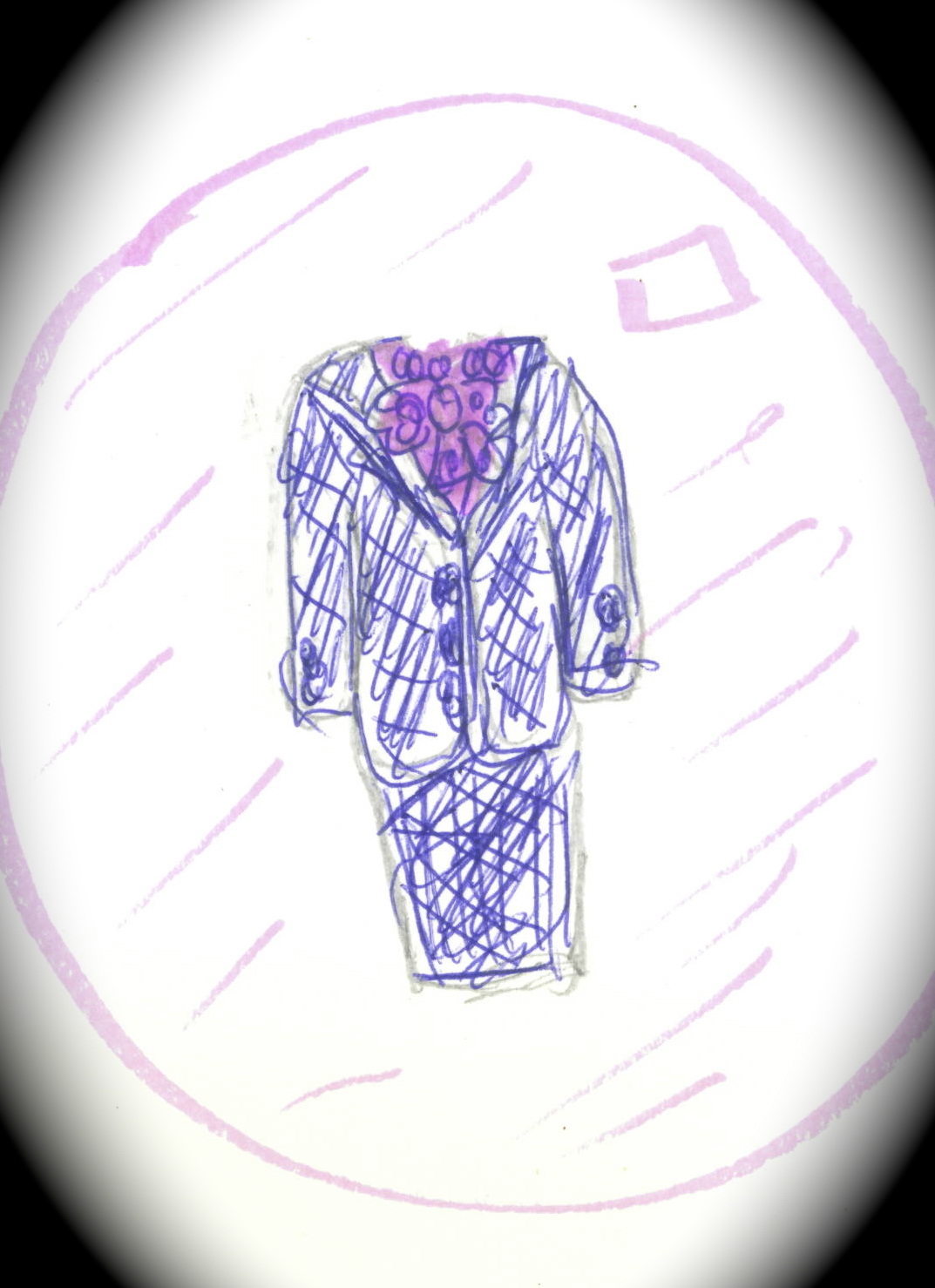
When I started as a young (I’ll admit it) lawyer, it was all blue (as in midnight) or possibly black, and cut into cookie-cutter suits.  I am talking jacket and skirt suits.  A woman partner (woman partner!)– there were a few of those back then but they were mainly wealthy women who practiced trusts and estates on their wealthy friends–could get by without lapels and possibly even red , but the lowly first year associates had to stick to the basics.  (As in blue, black/blue-black.)

I bought my first suit at a small dark shop on Orchard Street.  Harvey Bernard, midnight blue, pinstriped—the narrow skirt was a real b—- to try on behind some bolts of fabric and dust.  (For that price, I expected a changing room?!)

I wore the suit nearly every day for several months.  It was a curiously hermaphroditic ensemble with padded square shoulders, mannish lapels on top, below, a narrow slightly slit skirt.  The inside held a curly-q bow and some kind of silky blouse (no cotton).

I remember getting an extremely short hair cut a couple of years later and a senior partner pulling me into his office to berate me on its boyishnesst:  (i) “how could you do this without consulting me?” and (ii) “you might as well wear trousers.”

Trousers were introduced at the firm by a visiting Japanese attorney who would not have comprehended any complaints about her attire.  We all quickly followed…. suit.

The good part was that it was kind of uniform—you couldn’t really worry about whether the clothing was an expression of your inner self .  (What you worried about was whether the job was an expression of your inner self.)   This made for a relatively easy morning—stockings, skirt, jacket, bow, worrying about the job.

Alanna in Afghanistan? Girls Raised as Boys Taste Freedom And Sadness.

September 21, 2010

The Shield of "Boyhood"

Today’s New York Times has a fascinating and rather sad article by Jenny Nordberg about families in Afghanistan raising a daughter as a son to cope with the pressures of a society in which boy children are incomparably prized.  The reasons for raising a girl as a boy differ – in some cases, the “boy” is the only one who can work in the world, providing support for a family of females who are not allowed to earn their keep; in others, it is to provide some protection from the rebuke and ill fortune deemed the lot of a family solely of daughters.  The selected girl (usually a youngest daughter, chosen when hope of a boy child wears thin) is raised as a boy till puberty or beyond (sometimes even till marriage) , despite the risk of the girl’s body betraying her.  The “change back” to traditional female comes as a brutal shock to women who have been used to the freedom–societal, mental, and physical–that only “boyhood” allows.  Such women have difficulty not only in assuming their circumscribed feminine lives, but also in relating to other women.

How do you regurgitate a taste of freedom?  Some women (such as one of the main mothers interviewed) hope that that the experience of boyhood will enlarge the ambitions of their daughters, empowering them even after they are forced to revert.

Obviously, the article–the phenomenon–raises lots of questions, many of which can be summed up by the word “how”?  But one obvious point is simply the difference in Afghani culture from the mainstream West.   This is the stuff of fantasy in the West  (setting aside transgender girls and boys, which are a somewhat different phenomenon).   Alanna!  The wonderful/horrible series of children’s  fantasies by Tamara Pierce about the girl who disguises herself as a boy to train as a knight.

It’s also the stuff of history–those ages in which women could not own or manage property.  (In the children’s book area, this territory has been beautifully mapped by Phillip Pullman in the Sally Lockhart series.)

Okay, I’m not saying that everything is so clear and straightforward for girls in the West now.  Factors in Western culture push girls to all kinds of self-distortions–i.e. anorexia, cosmetic surgery. I recently received an Urban Outfitters catalogue in which all the female models look like underage prostitutes on quaaludes.

Oddly, many of these distorted means to power have a stereotypically feminine aspect in the West.   Girls who can only roam with relative freedom when they can pretend to be boys?  Girls who shield their whole families through such conduct?   This is something apart.

Pauvresse Oblige

September 20, 2010

It sounds paternalistic; it is paternalistic; but the concept of noblesse oblige, or as Sergeant Colon of Terry Prachett’s Discworld calls it – nobblyesse obligay–used to make the wealthy and/or aristocratic feel guilty enough to do the right thing, at least some minor sacrifice which passed as the right thing.

The “right thing” in this paternalistic, but noble, world meant something that was fair-minded,  generous (i.e. not greedy).  This seems to have been a little more clearcut in times before trickle-down economics or of  ‘get as much of it while you can’ economics (the system we seem to have now.)

As Paul Krugman points out in today’s New York Times (“The Angry Rich”), many of the rich in the U.S are hopping mad.  They feel absolutely entitled to  (or perhaps psychotically defensive about) their hundreds of millions and are really really worried about a return to a tax system that was in place a mere ten years ago.   An especially angry billionaire, Steve Schwarzman, has compared President Obama’s proposals to tax the earnings of hedge fund managers as ordinary income to Hitler’s invasion of Poland.   (I’m not completely sure who is more injured by this type of statement–Obama or the people of Poland, whose suffering in World War II seems horribly demeaned by such an idiotic comparison.)

What’s crazier, and sadder, is that so many ordinary Americans are caught up in the defense of the rich and super-rich.  Such Americans, angered by the more visible entitlements of the poor (which in the big scheme of things are pretty paltry–that’s why they are poor). give the rich a free ride.   Many of the working and middle class seem to view the rich as a parallel (if luckier) group to themselves; hard-working folks who deserve to keep absolutely all of what they have.   They don’t seem to ask if the rich are really thousands of times more hard-working or deserving than a poor guy or gal with two low-paying jobs.

The idea has been spread that protecting a billionaire’s billions from a pre-George W. Bush level of tax is somehow incremental to protecting a middle or working class person’s thousands (or hundreds); the fact that it’s the Republicans who are holding tax reductions for the middle class hostage has also been obfuscated.   What’s saddest is that many of the working and middle class do not seem to recognize that by fighting any return to the former tax regime for the rich, they are unknowingly offering to make big sacrifices for them–sacrifices in safety, public services, decent schools, a civil society.

A not so minor sacrifice.

Pauvresse oblige.

Back to NY from FL

September 19, 2010

A New Yorker's Concern About Bare Feet

I have been in Florida these last couple of weeks and am returning home tomorrow.

I have to confess to being very happy to return home.  Not to leave my parents who have transplanted themselves here, but to get back to New York City.

Weirdly enough, what I will enjoy the most is a return to nature.

There is certainly nature down here–nature with a capital N as in the end of Ocean, the middle of Hurricane–Nature that is beautiful but so forceful people seem to need to insulate themselves from it.

I’m looking forward to the kind of nature that I can walk around in even at noon and open my windows to.   (This assumes no more NYC tornadoes.)

Actually, the main thing I’m looking forward to is simply walking.  People walk in Florida, but either (i) on the beach or (ii) early in the AM with big sneakers and determined elbows.

I try to do errands on foot.  These are not comfortable walks–aside from the heat, it feels a bit odd to schlep plastic shopping bags on the beach.   (BTW, butter melts if left on hot sand even in a bag covered by clothing.)

I’ve learned not to wear black.  But even in muted colors, I don’t really fit in.  I’ve started one fire and one explosion in the last two weeks. When I drive, which I hate, I roll all the windows down.  (Yes, it’s very hot without A/C.)

Maybe what I’m anxious to return to is my personal nature.