Archive for June 2010

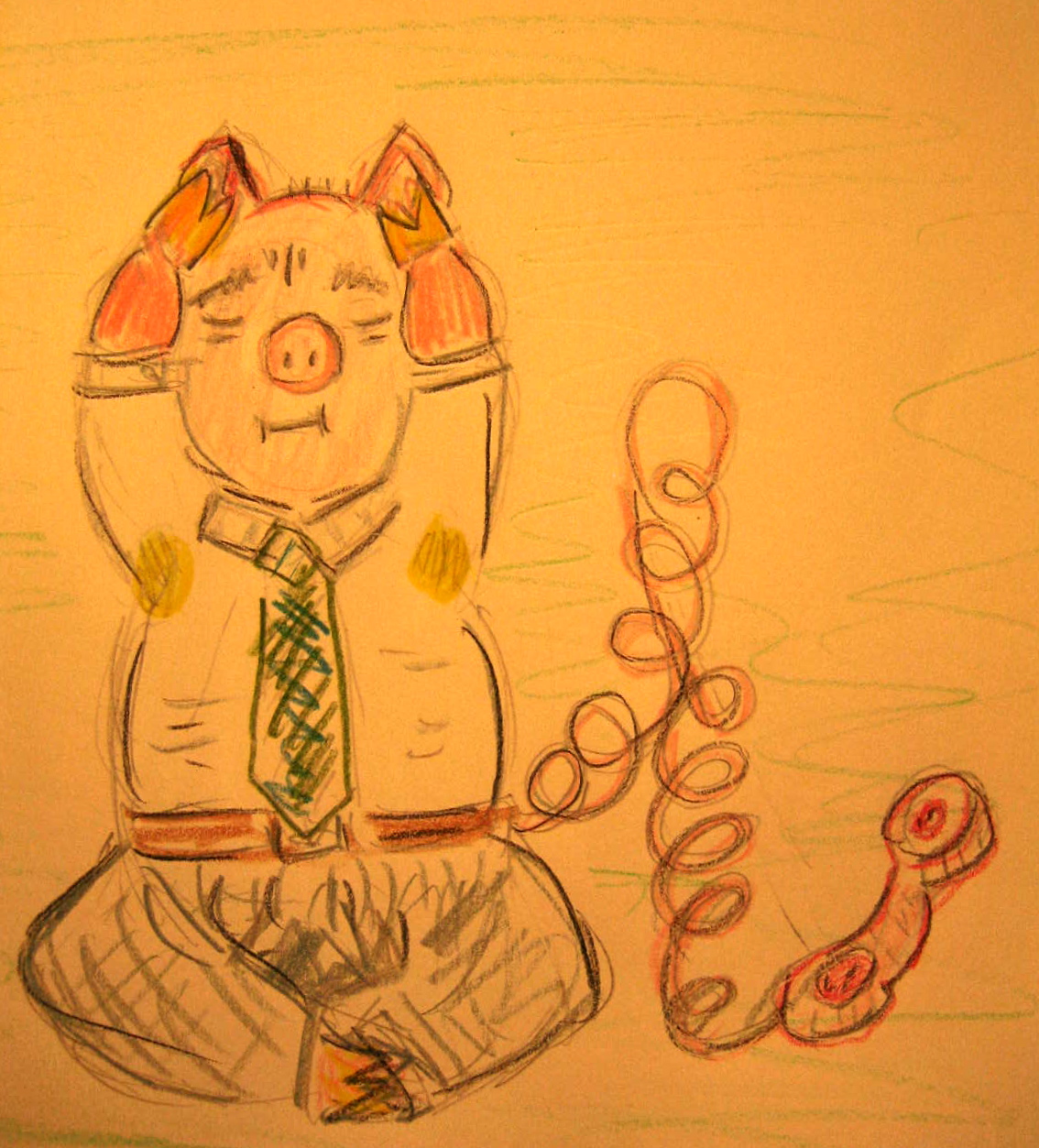
What to do when the Dark Cloud descends….

June 13, 2010

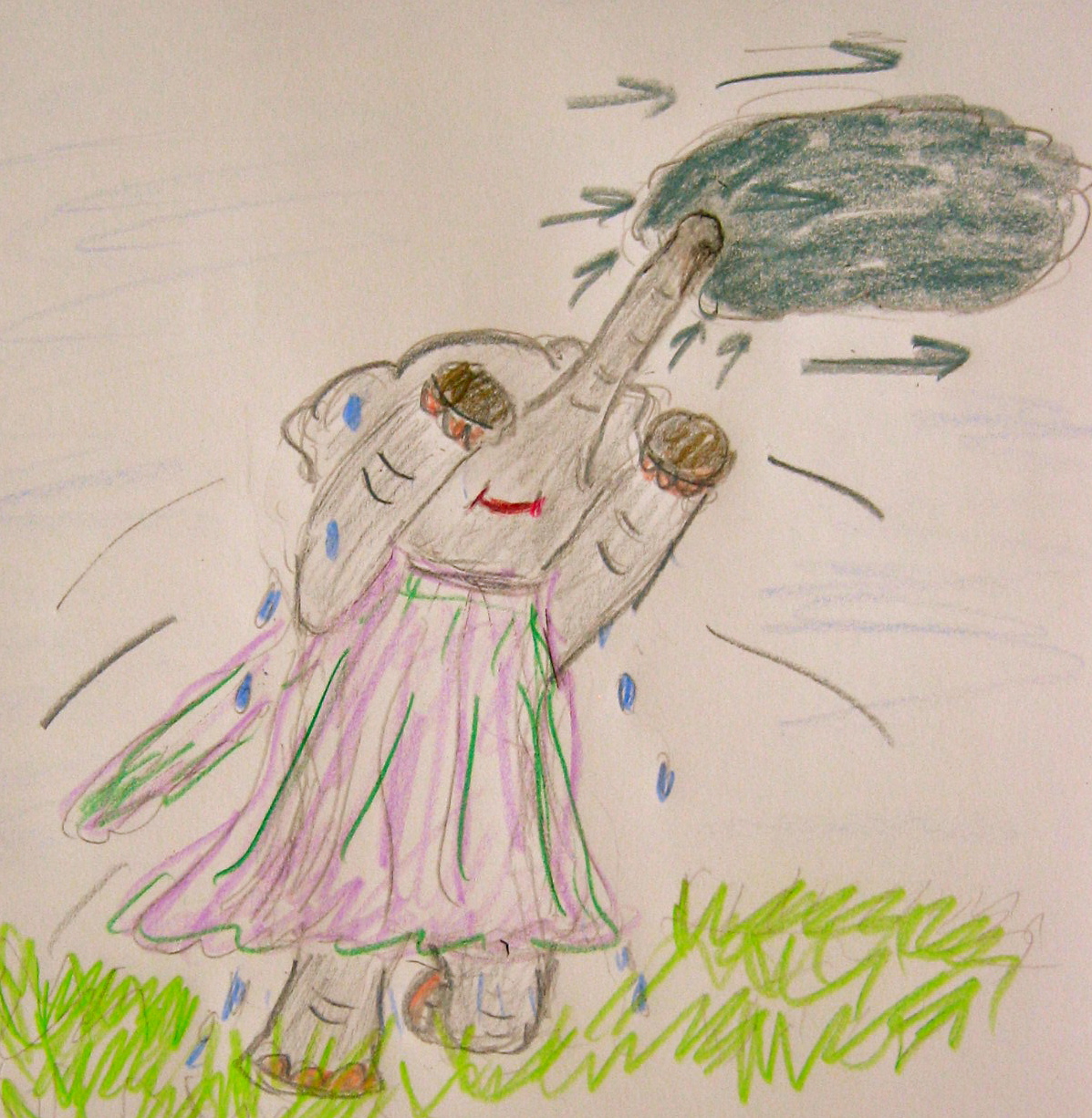
Pushing Away Dark Cloud With Cold Water and Interpretive Dance

A week or so ago I announced that the long-term, if slightly, obscure focus of this blog has been stress and creativity.  (I could not quite steel myself to call it the interface between stress and creativity, which, I admit, would sound a lot more zooty.)

One follower of the blog suggested that the true sub rosa topic was something more obvious—the issues associated with being manic-d daily.   This suggestion brings me to today’s particular topic:  what to do when the black mood strikes.

By the black mood, I mean, that cloud, ache, depression that sometimes forms because of very specific sadnesses, other times because of a more generalized sadness (a sudden, deep, awareness of non-specific suffering).

This cloud may also simply result from a quirk of your personal chemistry, some habitual combination of molecules and electrical impulses that arises from your genetics, conditioning, and whatever you’ve just ingested.

Those with a more religious bend might considered this type of low to be a swerve in one’s tilt towards the universal, God, the Self, with a capital S.

Whatever the cause, when the black mood descends, a very practical question arises: how to get rid of it.  Frequently, the sad circumstances, whether specific or general, are not things that can be changed; what can sometimes be changed though is your chemistry, and, possibly, your spiritual or psychic tilt.

Perhaps the initial most important tool is to try to keep in mind that the black mood, no matter how deep and murky, will not last forever.  (Nothing does.)   So, even when you don’t know how to make it go away, tell yourself that it will go away—at some point—perhaps even if you do nothing.

Once that’s understood, you may as well try something.  If you tend towards the spiritual, you might go for meditation, prayer, a solitary walk.  If you tend towards the chemical, there are plenty of different choices.

Or, if you are like me, and tend towards the manic, you may like to try cold water (as in jumping into rather than adding to scotch.)  A pond or swimming pool is best—but if you don’t have one of those, and you do have a lot of grit and faith—an ice cold shower or bath may do the trick.

The point of the cold water is to get the blood flowing, the skin to stand on end;  to shake up all those teensy-weensy nerve endings.   Once that has been done, a certain hectic frivolity usually becomes possible.

Hectic frivolity may not be the right words for the state I am urging you towards—how about a certain loss of physical dignity?    By this, I am suggesting that you simply move, in silly unusual energetic ways.

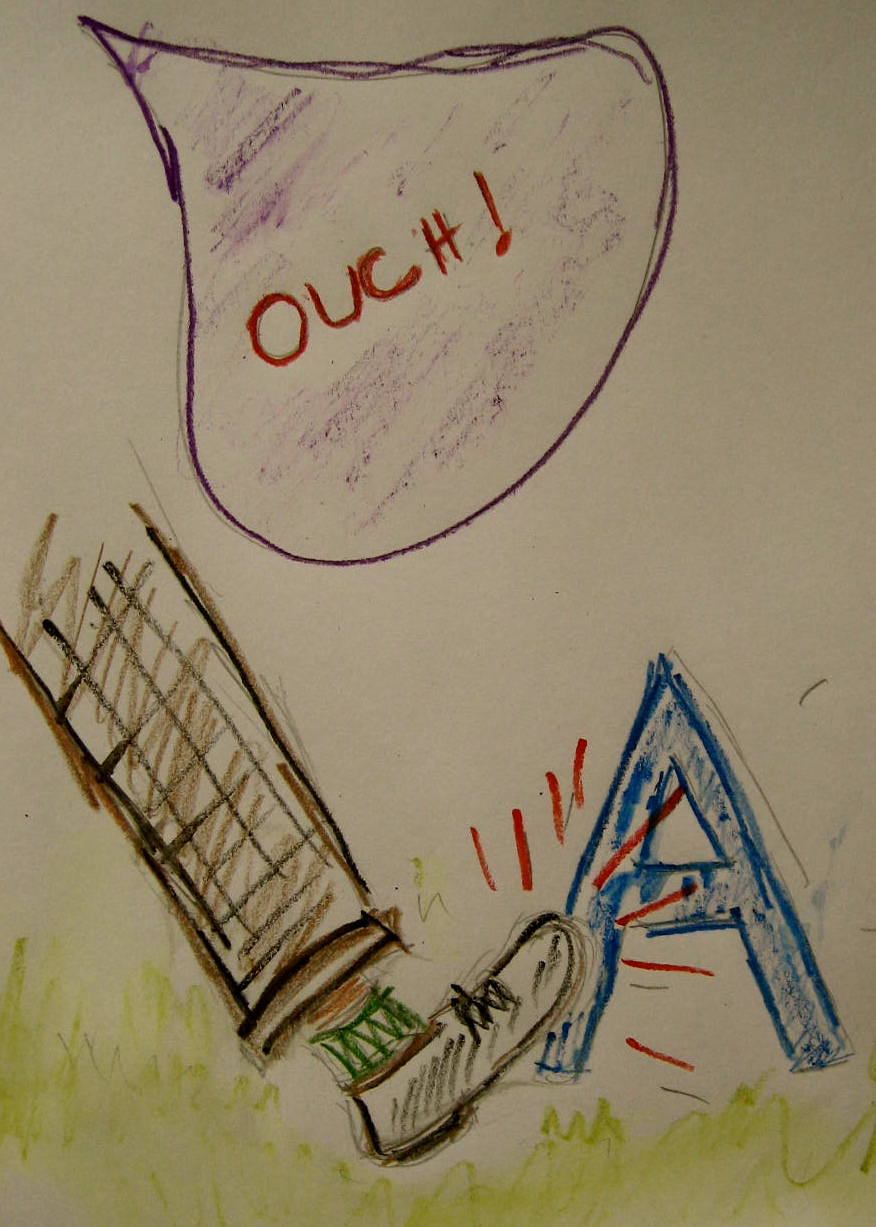
In setting out on these movements, I would suggest an initial focus on the upper body.  Silly leg movements (“silly walks) are fun but can be dangerous.  (You don’t want to trip.)   But even a relatively straightforward walk or two-step can become quite silly, and correspondingly uplifting, if combined with strenuously interpretive arm motion, and curious body swings.

Think Isadora Duncan here—not strangulation but angulation, as in bold, possibly rhythmic (possibly not)  gestures.

I do understand that the black mood may constrain your interpretive dance.  The trick is to try to separate your conscious mind (the depressed part of your brain) from the coordination piece, the silly “why-not-just-let-go-a-bit?” piece.

It may not be possible.  Or, what’s more likely, your dark mood may only be alleviated while you are actually waving your arms about, and then fairly rapidly descend again.

In that case, you will at least have gotten some good exercise.  And anyone watching may find their spirits lifted considerably.

ManicDDaily’s Favorite Soccer Players

June 12, 2010

Check out this BBC video to see my absolutely favorite soccer players.

Question:  should they be allowed to use their trunks?

(For a picture of elephants watching soccer instead of playing it, and for other rules for picking favorite teams in the 2010 World Cup, check out today’s earlier post.)

(And if you only like elephants, forget about soccer, check out 1 Mississippi by Karin Gustafson, on Amazon.)

ManicDDaily Guide To Picking 2010 World Cup Teams

June 12, 2010

Elephants Watching World Cup

You will find below the ManicDDaily guide to rooting for teams competing in the 2010 World Cup.

Correction:  this is not a guide to actual rooting.  I do not include instruction in drumming, kazooing, dancing, cheering, and swinging “revenge-of-the-angry-bees” noisemakers.  This is a guide to choosing teams to root for, written for those, like me, who have absolutely no knowledge of any of the teams or current players.

  1. Determine which team’s country will be made happiest by the win;  factors to be considered include number of prior wins, perception of national commitment to the game, and recent national hardships such as flood, financial collapse, coup d’etat, etc.
  2. Determine which team will be made happiest by the win, and, in your one-hour-or-so appraisal, is most deserving.    Factors to consider include team spirit as measured by hugs, bottom pats, tears.  Modesty, as measured in determined faces/sheepish grins.  Are there any particularly cute players?
  3. Factor in your personal experiences of the team’s country, i.e.  how’s the food?
  4. Assign points.

Here’s how the system would work for a game like this morning—ARGENTINA v. NIGERIA.

1.            Your college-age daughter has a boyfriend from Argentina who spends a fair amount of time at your apartment.  Nigeria – 1.

2.              Stop that!  He really is a good kid.  Argentina – 1.

3.              His folks are nice too.  Argentina – 2.

4.            One the other hand, he’ll crow all day if Argentina wins.  Nigeria – 2.

5.              Besides that, Nigeria will be so happy is Nigeria wins.   All of Africa will be happy.  Nigeria – 3.

6.             But Argentina will be so upset, and their economy has had a very hard time over the last several years.  Argentina – 3.

7.            But African countries rarely win, and Argentina wins all the time.  Nigeria – 4.

8.            He may be really upset….

9.             But Argentina does make wonderful wine.  Argentina – 4.

10.           But Africa has elephants.  Nigeria – 5.

11.            Red wine.   Argentina – 5.

Hmmm…..   What was that cute player/deserving team thing?

Abby Sunderland Found (Thank Goodness)! Happy Endings Prevail!

June 11, 2010

Abby Sunderland has been found, thank goodness.   Safe in her small boat, Wild Eyes, which is afloat but without rigging.  She is bobbing around, able to be spoken to on the phone, to be picked up in the next day.

The happy ending will happily have its day, at least for today.  (I don’t mean to sound sarcastic.  It’s wonderful.  Crazy but wonderful.)

She will not resume her solo voyage.  (Her family recognizing, I guess, that even great training, wonderful pluck, and digital safety devices, can be dwarfed by thirty foot waves.)   (Kind fates should not be overly tempted.)

Now, we can go back to worrying about other parts of the world’s oceans, and other sea-travelers–pelicans, sea turtles, fish.

Prayers (and Thoughts) For Abby Sunderland

June 10, 2010

Feeling sad and worried about little Abby Sunderland tonight, the 16-year old girl who is missing in the Indian Ocean in the midst of a round-the-world voyage.  Also feeling alternately sad for, and upset with, her parents.

Finally, I’m feeling guilty, guilty to write about this when the parents already must be suffering terribly.  So I want to start by saying I wish that nothing but good comes from this voyage, that Abby is found promptly, that she is safe and uninjured, that she receives a heroine’s welcome, that she is reunited with her family, and that she gets whatever wisdom the experience offers her and also whatever benefits fame can offer her.

And now, after all that, I want to say that there is a reason that 16-year olds are not legally competent to sign a binding contract; there is a reason that they are traditionally tried as juveniles; there is a reason why in the eyes of the law they are treated as infants and not adults.

The reason is that they are considered too young to fully understand the possible consequences of their choices.   Because of this lack of understanding, i.e. immaturity, their relevant adults– parents or guardians–are legally charged with making important choices for them.

In the modern age, however, there is no longer much notion of being “too young” for anything.  (It’s a new addition to the canon of Wallis Simpson, the Duchess of Windsor: “you can never be too rich or too thin.”) We confuse the vitality and beauty of youth with smarts, innate wisdom, a cool invulnerability. Kids want to pursue extreme activities that put their youth, their long-term health, and sometimes even their lives at risk—from nonstop training for Olympic sports or pro-tennis, to modeling careers, to concert tours, to solo trips in small boats around their world—and their parents, often incredibly loving parents, view their job as to “support” these youthful drives rather than to act as moderator, protector, shepherd, guide; the drive for fame and fortune and some form of “bestness” is just so strong.

A childhood (and possibly childish) dream is born, and the culture acts as if it is destined, with enough determination, to become a dream come true.

Of course, the dream often doesn’t come true (maybe not ending in calamity but simple failure, burn-out).  But the culture is determined to find fairy-tale endings, a magic of obstacles surmounted.

I feel terribly terribly sorry for the entire family, and pray for the absolute best.

Repeal of the Estate Tax – A Capital Gain For the Rich–What About the Rest of Us?

June 9, 2010

No Step-Up

In dying this year, Dan Duncan appears to have become the first U.S. billionaire to leave a multi-billion dollar estate to his children and grandchildren free from U.S. estate tax.  This avoidance of U.S. estate tax does not result from charitable giving, nor from the clever use of U.S. estate tax loopholes, but from a curious quirk of the Bush tax cuts of 2001, which repealed the estate tax for persons dying in the year 2010.  Only.

Under the Bush tax cuts, the one-year 2010 estate tax repeal is “sunsetted” next year, 2011.  At that point, the federal estate tax will come back into force with a vengeance, with higher rates and lowered exemptions, limiting the amount passing to non-spousal and non-charitable heirs, without federal estate tax, to only $1 million.

What this means is that if you are a relatively wealthy person and your heirs are likely to have tried very hard to keep you alive on December 31, 2009, but may not try nearly so hard on December 31, 2010.   In other words, if you are a wealthy old person, or wealthy young person, trust no one this year!  Don’t let an heir touch a hair on your head!

For the last ten years, trust and estate attorneys have made jokes about the prospective 2010 effect of the Bush tax cuts, sure that the Federal Government would act to change the rules before the end of 2009.  But in December 2009 congressmen were so fearful of being tagged as voting for an increase in the notorious “death tax” that no agreement was reached.

This is not a post about the unfairness to wealthy people of a weird one-year loophole.  Nor is it about the dangers of allowing increasingly high concentrations of wealth in the society.  Nor even about the dangers to old rich people from greedy heirs.

No, this post is about how this year’s rules (surprise! surprise!) actually raise the prospective tax burden of the middle class and lower.   Here’s how it works:

(Because I’m a lawyer, I’m going to start out by saying that this is a vast oversimplification, even though it will sound very complicated.  I’m also going to say that nobody should rely on this post for tax advice.)

Actually, I just spent about four paragraphs writing my oversimplification and then, in sympathy for you, I cut it. I’ll just go for the juglar:

In 2009, a person could leave an estate of 3.5 million or less (not including bequests for spouses and charities), without federal estate tax.  Under the traditional (non-2010) rules, appreciated assets that were inherited got a “stepped-up” cost basis to their value as of the date of death of the decedent.  This meant that the assets could be sold by heirs with relatively reduced capital gains tax (or, if sold promptly, with none at all.)  This also means that in 2009, the heirs of a person with an estate of approximately 3.5 million or less did not have a federal estate tax burden, and actually had some federal income tax benefits, related to the death.

In 2010, the Bush tax rules offset the loss of fiscal revenue from the repeal of the estate tax by eliminating the capital gains benefits that had previously been granted on dying.   Just as there is no estate tax, there is, in 2010, no “step-up” in cost basis for the appreciated assets of the deceased.  For the very wealthy, this exchange of tax burdens is a bonanza—(i) because capital gains tax rates are considerably lower than estate tax rates;  and (ii) because capital gains tax is only assessed if gains are actually realized, i.e. when assets are sold.  Many wealthy heirs may not need to sell inherited assets, such as stock or jewelry or houses, or can offset the gains by realizing losses on other assets.

However, the loss of the capital gains step-up imposes additional tax costs on those less wealthy people whose estates would not have been subject to the federal estate tax under prior rules, but who now will have to pay higher capital gains taxes on the sale of inherited appreciated assets.   (Keep in mind that the lower cost basis will not get changed at the end of this year, so could affect sales far in the future.)

So once again (even after Bush leaves office), his tax policies favor the rich.

The amazing thing to me is that no one is talking about this.  (Yes, I know it’s complicated.)

Even weirder is the feeling I have that many lower and/or middle-class Americans, who seem to have a perverse habit of rooting for economic policies which do not, in fact, favor them, may be happy about the one-year repeal of the estate tax.  I imagine them thinking that it’s a blow against big government, not realizing, of course, that they may personally pay the price tag.

IRS CIRCULAR 230 Disclosure:  To ensure compliance with requirements imposed by the IRS, please be aware that any U.S. federal tax advice contained in this communication (including any attachments or enclosures) is not intended or written to be used and cannot be used for the purpose of (i) avoiding penalties that may be imposed under the Internal Revenue Code or (ii) promoting, marketing or recommending to any other person any transaction or matter addressed herein.

Dear President O: Sorry, But Talk Of Kicking A– Just Sounds L—

June 8, 2010

With All Due Respect, It Just Hurts You

Dear Mr. President,

I don’t blame you for being p—–.  You were down there in the rain.  You were down there before all these talking heads even knew what was going on.  You were down there even before there was a Web cam.

I don’t blame you for being very very frustrated.  People seem to expect that a President, like a king, can cure scrofula with the touch of a hand.  I’m not sure what scrofula is, but you get the point—they seem to think that you have quasi-magical powers, and that any hesitation in the use of this magic is a sign that you just don’t care.

I absolutely believe that you are hopping mad at BP, just as you are hopping mad at NBC, ABC, CBS, CNN, FOX, CNBC, AP, and practically every single commercial organization out there with a name of three letters or less.  But when your showing pique is actual news, when Brian Williams has to make a televised announcement telling us that your showing anger is what we are about to see (from a clip of an interview with Matt Lauer) then you have just got to accept that the voice of rage does not come readily to you.

Personally, I think that’s fine.   No one ever disparages George Washington for keeping his temper.  Washington himself, in the Rules of Civility & Decent Behavior In Company and Conversation, which he transcribed before the age of 16, set down Rule 45th, “in reproving Shew no Sign of Cholar but do it with all Sweetness and Mildness.” 

I happen to be someone who shows Choler a fair amount.  But, when I’m in a better mood, I generally understand that anger to be a sign of my immaturity—the ManicDDaily part of me.  I get angry because I want the world and people in it to be different than they are.   But the world is what it is; s— happens; people can be jerks; sometimes, my own anger (as warranted as it is!)  just adds to the general jerkiness of it all.   A few curt admonitions definitely have their place;  still, it’s often more useful to focus on concrete steps than to rant at the nature of nature (human, mechanical, or divine.)

The point is that some people angry are cold, clear, analytical.  (Often such people are mainly angry at themselves–for not predicting jerky people, jerky circumstances.)

I don’t know, Mr. President, if your anger takes you into those cold, clear waters  (the kind we’d really like to protect), but I’m pretty sure it’s not the type of anger that rants about “kicking a–.”  The words are dumb words, and they sound especially dumb coming from you.  They don’t flow from your lips correctly; there’s a stutter, a disconnect, that comes across as forced and petulant.

So, let it go.  Be yourself.  Stop worrying about the anger bit; just keep worrying about the doing bit.

iPad Sunnyside Up–Let Me Just Check My Mail

June 7, 2010


iPad Sunnyside Up

The  New York Times has a couple of articles this morning on how technology is re-wiring our brains; you can find them if you check online—excuse me a sec, I’ve got a new gmail coming in.

The articles talk about the mental and emotional price of a life hooked into, and hooked on—oops—there’s my cell….gizmos.

(Sorry, sweetie, I’m writing my blog.  Can I call you back in two minutes?)

Some people think multi-tasking makes them more productive, but studies show it makes people actually accomplish less, and encourages a kind of shallowness.

Did you know, btw, that Robert Pattinson won MTV awards for best actor, global star, and perpetrator of best 2010 screen kiss last night?   (Does ManicDDaily have her finger on the popular pulse, or what?)

One article depicts a software executive (hey, what do you expect?  The guy’s a software executive, head of a start-up, in Silicon Valley), who “works” in front of three or four large video screens.

In the photos of the guy’s family , they all have iPads.  Even the kids.  The guy even reads Winnie the Pooh on an iPad to his littlest kid.  In bed. (I know it’s kind of awful, but the graphics are also amazing!)

I can’t help wondering if the article will be good for Apple stock.

(I’m just going to check that, okay, it’s bookmarked, so won’t take a mo.)

The guy’s wife say it’s hard for him to be fully in the moment, that when the emotional going gets tough, he escapes into computer games.  But then one of the articles cites a kid who texts a lot in school and that kid says that the “the moment”–that is all the time she spent in school before she had texting–was incredibly lonely and isolating.

I feel sympathy for the kid, but isn’t loneliness and isolation part of what school is all about?  Childhood?  Has she not read Jane Eyre?  Virtually any Dickens?   (I’m sure they are on Kindle.  Maybe even for free.  Or Google Books?  Let me check a sec.)

Oops, there’s my other email, office, you know, my crackberry, the red light is blinking—do you mind?

Summer Mornings Without Air Conditioning – A Certain Slant of Light, Gainsborough Hair,

June 6, 2010

Sir Thomas Gainsborough - Mrs. Thomas Hibbert

Emily Dickinson writes about a “certain slant of light,/Winter afternoons,” which I’ve been thinking of a lot as I wake up these days. There’s definitely a certain slant of light on summer mornings.  I feel (kind of) sorry for those who sleep in air conditioning and don’t get to fully experience it.

It’s only a trick of my ear that thinks of Dickinson, for this slant of light is not oppressive like the light in her poem.   It’s a low angled, almost curved, light, which accompanies a time of softness, space, invitation.  Movement is easy enough, though after the restlessness of a night of trying to find a cool place on the sheets, you may not want to move much.  Your body feels suddenly dry, almost powdered.  The air, because you are careful not to fully open blinds, is tinged by a slight blue-grey wispiness like the hair in a Gainsborough painting.

Sounds are distinct, but muted—footsteps below your window, water running upstairs—there is nothing like a Sunday morning after a sultry night in New York City for quiet.   Stereos stilled–if there is a music, it’s in the tradition of John Cage.

You can smell that it will be hot again soon; you can even see it after a while –just there, at the corner of your eye.  The promise seems not to come from the sky so much as from the sidewalk, which, with its cached memory of yesterday’s heat, early radiates an incipient over-brightness.

But, the heat’s not forced itself into your apartment yet;  for these minutes, Gainsborough lingers in the air, and the breeze whispers at just the right pitch.

(If you like summer and sultry, but are more into elephants than Gainsborough, check out 1 Mississippi by Karin Gustafson, on Amazon.)

(And, for a complete change of pace, check out yesterday’s post, why people hate banks.)

Why People Hate Banks

June 5, 2010

Bank Phone Customer Service (Hear Nothing, See Nothing, Do Nothing)

We all know the big reasons why people hate big banks.  They were major players in the recent destruction of the U.S. economy;  they were supposed to be slow, plodding, cautious, institutions, but instead tried to behave like growth stocks.  However, their “products” were not actual innovations like iPads or Lattes, but beguilingly packaged jigsaws of future losses, i.e. unsecured debt. ( As Lloyd Blankfein put it, they were packaging “risk.”)

Then, of course, there’s the fact that they needed to be bailed out so that would not sink the rest of us.

But still got bonuses.

All of the above has made me plenty mad, but what’s made me actually hate banks is something much more mysterious and mundane:  their amazingly inept compartmentalization.  That is,  the zillions of separate departments, none of which (even if reached) can ever help you (because it’s not their department).

I don’t mean to attack bank officers in branches.   In my experience, actual people in actual banks try to be helpful.  But often, they can’t help you, because they, like you, are relegated to searching, on the phone, for the right department.

The large banks are like countries, no, continents.  Drifting continents full of separate bureaucracies, none of whom know each other’s name (or language).  They are united, if at all, by a single computer system, which they consult like a gospel.   But while the gospel has actual TEXT, descriptions, lessons and commentary, this computer system has only options, little boxes that are checked. The system allows for no commentary; no context; and no record, it seems, of the ten previous conversations that you have had with the bank on the very same subject.

The phone system of the bank is even worse than the computer system;  any variation from set words gives rise to an outraged robotic voice, then disconnection.

Last year, I had interactions concerning identity theft, committed through (and possibly by) a bank teller.  (The bank would never tell me, or the New York City Police Department, the exact circumstances.)     Even weeks after the initial complaint, after weeks of laborious paperwork, I would find out, in my dogged follow-up that a particular required form had not been given to me; or did not cover everything, or was not sent to the right place.  The bank officers at my local branch were frankly as clueless as I was, and, like me, with every call to some distant Fraud Department, needed to go through a full re-explanation of circumstances.

In my more recent dealings with a large bank, days have been spent trying to reach one employee whose name was given on a regular bank statement as a contact person, but who apparently follows a practice of never actually picking up his phone;  it was only after several days of emailing and messages that he let me know he didn’t actually deal with questions related to the account on the statement and that the bank had no incentive for helping in any case.  He then gave me a number for customer service, which, unfortunately, was actually customer service for WalMart.    (Not a bank subsidiary, last time I checked. )

Since then I have been on the phone with bank employees more times that I’d like to count.  One person put me on hold for a few minutes, during which my call was picked up by a completely new person (Dixie in Manila), who once more needed to be filled in on my inquiry.   Letters I have faxed and emailed to about five different bank employees have not yet been noted on the holy computer system.   One fax number I was given failed to accept faxes.  (Now, there’s a way of reducing paperwork.)

The New York Times had a recent article about people in foreclosure who simply stopped paying their mortgages, and stayed in their homes, forcing their bank to go through the laborious legal process of trying to get them out.  Many people seemed to feel a certain satisfaction about this situation, first because they are saving money, and secondly, because they’ve finally found a way of sending a message to a bank that is being heard.