Archive for June 2010

Flopping at the World Cup – Best Instantaneous Whimper?

June 21, 2010

Hey Ref! Look at Me!

When we were little and my parents were in another room, my older brother used to occasionally cry out, grinning demonically at me, “ManicDDaily, stop that!  Stop hitting me!”  (Well, those weren’t his exact words, but you get the gist.)  In the meantime, I would just be sitting quietly, over an arm’s and leg’s length away.  Even so, one of  my parents would dutifully call out for me to leave my brother alone.

These were not my brother’s finest moments.  They might, however, have been extremely good training if he had planned a career in FIFA soccer.

The level of “amateur theatrics” as the clipped British announcers call it, or, when it gets worse, “shamming”, has been pretty amazing in the ongoing World Cup.

Yes, we understand that the point is to get the attention of the Ref, and hopefully, substantiate a foul.   Yes, we understand that it is very different than baseball where a hit by a pitcher automatically gets the batter a free walk, without his having to demonstrate how hard the ball hit him.  (Almost invariably incredibly hard.)  Or football, where the Refs can look at instant replays of someone ground into the dirt.

Still, the sight of all that flopping on the field, followed by shrugs and/or smirks, sometimes seems a bit much.

Yes, soccer is a tough game — people are kicked and jabbed, still…I mean… come on.   It’s hard to completely respect players who whine harder than the vuvuzelas.  Unfortunately, the culture of victimization seems so omnipresent that the team with the stiff upper lips might genuinely risk goal shots.

What to do?

More penalties for play-acting?    Maybe the sting of that could be counterbalanced by a subcategory of awards: Best Performance on the Pitch?  Best Kicked in the Shins?  Best Elbowed (Not Quite) In the Nose?  Best Instantaneous Whimper?
Also For Father’s Day – “My Father (baby birds)” Poem

June 20, 2010

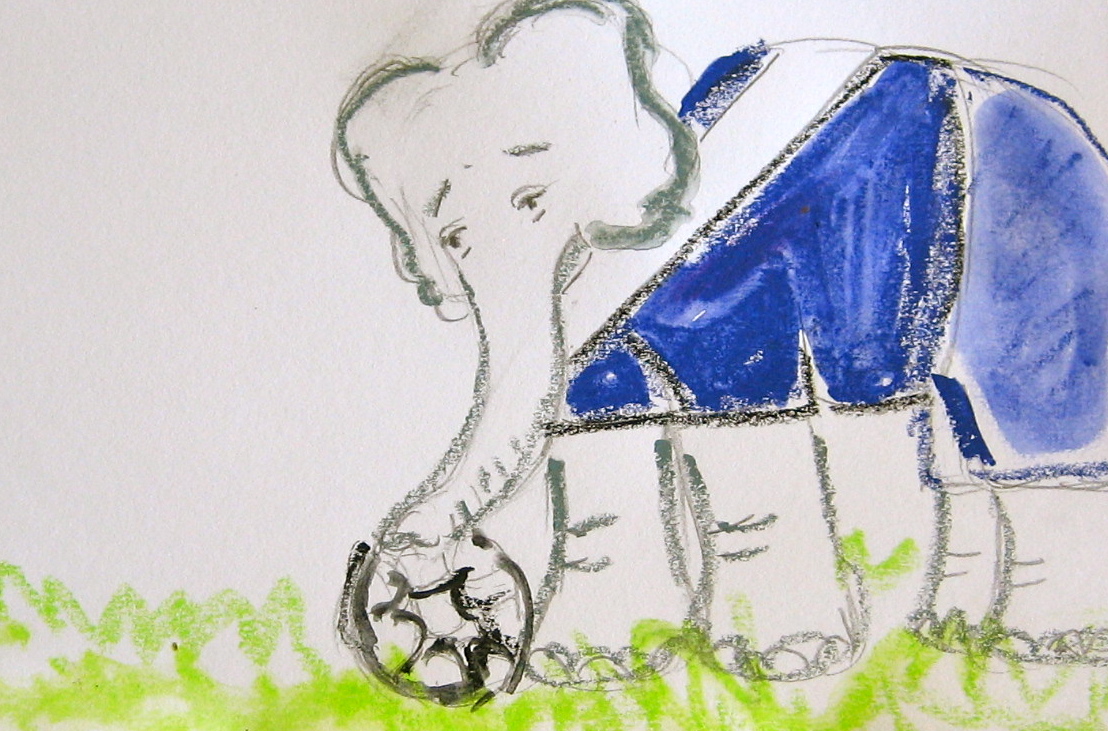
Earlier today wrote a post, which, despite the elephants, approached Father’s Day from the sociological side (sort of).  My true bent is more towards the poetic, so here’s another post (draft poem) in honor of the day.

My Father (baby birds)

When he sang,
which was only in church,
my father’s voice
was deep and cragged and
reminded me of a froggie
gone a’courting.
But this was baby birds.

It was not even a person
who had died.
It was not even a particularly noble dog,
though like all of its species, it was capable
of a self-debasing attachment that could seem
Arthurian.

But after the accident, the rush,
the sad blur home,
my father’s back faced me in my room
with a sound
of birds.
It silenced all gone wrong,
turned me back into a person
who could do things in the world.

Father’s Day – Missing Dads

June 20, 2010

My Father Taking Me Everywhere

Father’s Day somehow carries an edge of sadness for me.  I have the greatest father in the world.  He is quite old (but thankfully still around) and struggles with a variety of serious illnesses.  None of these ever weakens his “fatherliness”, that is, his unwavering, (crazily) uncritical, and unconditional love and support.

I’m conscious now of being very very lucky.  The edge of sadness comes…well, partly memories of teenagerdom, when I was not so conscious of my good luck.  (Though my father has certainly never held any of those snarly rebellions against me, I hate to think of causing him past pain.)

Then there’s the fact that, with job and immediate family demands and the geographic dispersal of modern day life,  I don’t get to see my father as much as I’d like.

But part of the sadness is my sense of how unusual my luck is; how many children today don’t have the gift of a present, loving, self-sacrificing father.

The absence of a daily father is a multi-whammied loss.  Apart from the  absence of the particular person, there’s the additional emotional, physical and financial stress on the mother or grandmother, faced with a huge amount for one person to do alone.  A successful single parent of young children, even if armed with family support, must be willing to sacrifice quite a bit of their separate personhood (the part of them that is not primarily parent) in order to fully play a solo role.

Yes, I know that even in two-parent families, there may be one primary caretaker, who may be as overwhelmed as a single parent.  I also know that sometimes familial stress may be reduced by the absence of father, especially an uncommitted, or difficult, or troubled father–I’ve just finished the Steig Larsson The Girl With the Dragon Tattoo Trilogy, after all, in which father figures are not painted in the most flattering light.  I can well understand that a house led by just one parent may have a peacefulness that is uncommon in a house run by a couple.   (And I’m not making any comment, or even comparison, here about the differences of families with fathers over families with same-sex parents, etc.)  I’m just sorry that so many kids today don’t have what has been so important to me personally–a Dad.

Triple-Dosing on Stieg Larsson

June 19, 2010

Biker Boot?

Okay, I’ll confess that one reason I’m so cranky today (see e.g. my earlier post complaining about World Cup 2010) is that in the past three days I’ve almost finished reading all of the Stieg Larsson trilogy that begins with The Girl With The Dragon Tattoo, moves on to The Girl Who Played with Fire, and (I hope) finishes with The Girl Who Kicked the Hornet’s Nest.  (I do understand that there’s part of a fourth book kicking around in a computer held by the long-time companion of Mr. Larsson, who died suddenly in 2004.)

Although the books follow the same characters (more or less), Book 1 and Books 2 and 3 are quite different from each other.  Book 1 is relatively self-contained, while 2 and 3 seem more like one separate, very long, book with a substantially different focus.  And yet that’s not true either:  Book 1 concentrates on a dysfunctional family and a corrupt and violent power structure; while Books 2 and 3 focus on a different dysfunctional family and an expanded corrupt and violent power structure.

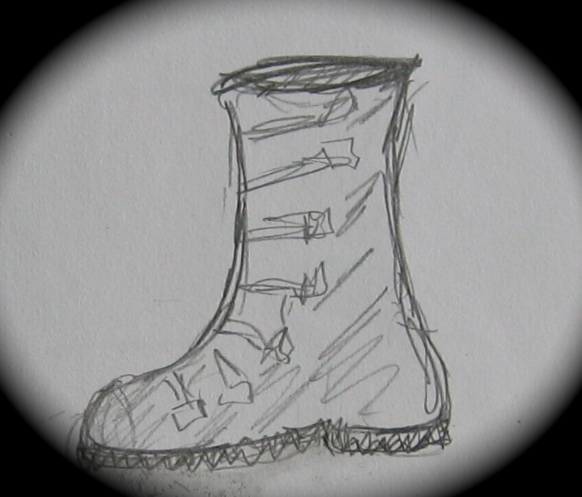
One reason the books are so popular is the main female character of all three books, Lisbeth Salander, who, in my mind, is what results when Minnie Mouse meets Mighty Mouse meets Kevin Mitnick (world champion computer hacker), meets Bobbie Fisher, Joan Jett, Andrea Dworkin, House (the doctor on TV), and, in her teeny pair of steel tipped motorcycle boots, divides her time between tattoo parlor, boxing gym and math library.  (And, of course, her seventeen inch power book.)

What makes Lisbeth so appealing is that, despite the terrible abuse she’s suffered, she remains fundamentally moral, fearless, and, even compassionate.

Also, yes, she’s very very hip.

[Spoiler Alert–sort of.]  The books are good books, if not exactly great;  but they do very effectively tap into that most fearful of situations in which both the “bad guys” and the “supposed good guys”—that is, the authorities—are after you, where there’s virtually no one to turn to for help, where the powers-that-be cannot be trusted.  I know that’s not atypical in movie circles, but I’m not much of a movie person.  So, oddly, the books they bring to my mind are “children’s books”, namely the wonderful Sally Lockhart series by Phillip Pullman, especially The Tiger In The Well, in which Sally’s property and life are taken over by a faked husband with amazing ease.  (It’s Victorian England.)   (Actually, the Golden Compass books also work with this theme, which is probably particularly powerful for children, given the power of authority in their lives.)

It’s strange that the latest iteration of this theme arises in Sweden, a place not pictured by most Americans as particularly venal or sadistic.  (I guess it’s been a long time since Ingmar Bergman.)

World Cup 2010 Continues… A sort-of fan’s sort-of U.S. perspective

June 19, 2010

U.S. player?

Sometimes one gets the feeling that the rest of the world wants to save soccer for itself.  (As in, butt out, America.)

Yesterday’s arbitrary and inexplicable bad call by Referee Koman Coulibaby of Mali that cost the U.S. the U.S./Slovenia game is only the tip of an iceberg that seems almost engineered to leave many Americans cold.

Well, maybe it’s not just the tip of the iceberg; maybe that type of thing is the upper third of the iceberg. Americans don’t like to feel disliked, disrespected, and/or general dissed by smaller countries  (see e.g. the U.N. and lack of popularity in the U.S. thereof.)

The problem wasn’t just Coulibaby’s seeming bias, but his initial silence as to the nature of his crucial call. Coulibaby’s speaking French was no excuse.  (Frenchspeakers are plenty good at arguing.)   The fact is that not explaining bad calls seems to be a traditional part of soccer culture–a major contrast from most U.S. sports in which a significant  portion of the drama is provided by the openly extended carriage (or miscarriage) of justice –all those little guys walking out onto the fields with stripes and flags and rather pompous magnified voices—

Speaking of unsatisfying, what’s with all the ties, called, I believe,”draws” by soccer aficionados?   I personally don’t mind ties; I hate to see people’s feelings get hurt.   (BTW, congratulations Slovenia!)   But I’m not sure my attitudes are typical of most American sports fans.   (As both Bush and Obama have found out, coalitions are not really our style.)

And the flopping.  (John Wayne/Bruce Willis do not appear to be soccer icons.)  We won’t talk about that.

But I will say that those vuvuzelas are getting truly irritating.  (I never thought I’d hear stadium noise that made Superbowl half-time shows sound good.)

That said, all the U.S. males I know and some of the U.S. females are following the Cup avidly.  I ask them to keep the sound down.

Happy Belated Bloomsday!

June 18, 2010

Happy Belated Bloomsday!

I missed it yes I did an important day I don’t know where my mind was under the bed or out the window or most likely in a screen where real life and even book life can pass you by it’s not really an important day not like a birthday they made a lemon cake this year orange really out of lemons and didn’t want to drive to town moist as anything the zest of orange so sweet if anything a book holiday not bank those manicured sons of bitches O and now its too late to even talk about it much less write but Ive always been on the late side running for the train my suitcases better have strong wheels

I actually did go to Dublin years ago so grey and blue and gusty the Irish Sea like that scarf that’s been lost and found all crinkled not with huge waves but on every single inch of it pressing me to the railing the whole night long freezing over the side I was and sick as a dog while the natives kept to the warmth in the saloon of course like a parody of Irish drink and song I could hardly stand and neither they staggering out red faced morning with cheap black pants legs clumping over stuttering shoes it was so long ago and poorer then though now is not great either what with the crash me as green as sea ice even on land I was pale back then O not like now maybe get some special cream for redness wrinkles too real soda breads on the shelves lined up like little school kids I tore the pieces that’s how hungry I was when I finally got over it no knife and my fingers scrabbling among the caraway and crumbs Martello Tower what I most wanted to see the Joyce stuff most were grey toned streets but it with all its grey stones was blue that morning out by the sky and sea and Im standing there on the pavement admiring tea I can’t help thinking of tea with Martello Tower in front of me thick brown irish tea with the thick slabs of bread and butter Stephen Dedalus and Kinch his sort of friend  the milk in that chapter so thick and sweet as well the whole breakfast one I dream of porridge sometimes too humble not French toast or pancakes or what do they call them crepes but those thick sweet slabs of tea in sun and cold and tower though its not all sweetness Joyce not exactly generous to his past not is the word forgiving?  Art like a knife the wind then too December not June when I got closer to the tower and a woman all bare and white her flesh as creamy as the milk only with pink folds where she rubbed she had a little towel and then just undies bra and panties overflowing robust that’s what you had to call her her flesh so white and pink and flowing like the wave crests maybe a nice bit of pork I hate the way they hang those sides up in the window no not like pork everything about her lived fresh from the sea she had been swimming and her curls the only thing that didn’t glisten curly hair don’t with its frizz I wish I had it mine straight as a stick my whole life long but what I really wished for then was that glow smiling at me towel rubbing the nape of her neck below the curls.

In the movie she has curls too her dark hair spread upon the grass in Andalusia some place south and is kissed and saying yes though I’m not sure about the grass in the book itself and how do you make a movie of a book like that or any book to tell the truth I do know that she says yes though I’m sure of that even though I missed the date that’s the one thing I won’t ever miss that she says yes.

Blogging, Mania, Late Mornings, Late Nights, Stieg Larsson

June 17, 2010

One of the great things about writing a daily blog is that it gives you something to do at night.

One of the great things about writing that daily blog in the morning is that your night is suddenly amazingly, wonderfully, free.

I don’t mean to make not writing the blog sound so great—but, yesterday, after approximately eleven months of daily posts, the prospect of a blog-free evening felt well worth the  sinking anxiety that descended on me as I made my way  (later even than usual) to the office.

That feeling of freedom even felt worth the shoddy speed yoga I inflicted on myself (after using up all my morning yoga time on the deficiencies of presidential desks.)  (See yesterday’s post.)

When I came home last night, I told myself, gaily, that I’d make up for the shoddy yoga by going to the gym for a really good work-out.  Then I might even get to bed early.

Unfortunately, staying up till 2 a.m. can be habit-forming.   As is finding something to distract you at the gym.  (Yes, I do understand that it is probably not optimal to lift weights with a book on your lap.)

So, instead of focusing on triceps, or sleep, I poured myself into the immensely popular Steig Larsson book that’s been sitting on my shelf several months –The Girl With the Dragon Tattoo. I’m not quite sure why I’ve avoided the book—maybe  because a slightly pushy friend has been slightly pushing it;  maybe because I’d been warned that it describes (spoiler alert) some fairly sadistic violence against women.

The violence so far (I’m about ¾ through), has been manageable.  But, heeding the warnings, I forced myself to put the book down at around 2 before something so terrible happened that I would not be able to shut my eyes.   (I even left time–2-2:30 – to read something else for a while, something innocuous in the sexual violence department.)

Frankly, that discipline amazed me.  Even more amazing is the fact that I’m actually blogging in the A.M. again, instead of lying here in bed reading.  My mind suddenly tells me that this means  I’m planning to finish the book during the day somehow, and then buy the next one (the second in the trilogy by Larsson) for this evening.

Actually, I’m not sure I’d really call that discipline.

This, by the way, is one of the great things about mania—it always finds you something to do at night.

Obama’s Speech – The Need to Speak Outside the Box (And Desk)

June 16, 2010

Part of the Problem?

I have to say that I find almost any presidential speech made from the Oval Office desk immediately suspect.

I can remember Nixon looking shifty (even before we were sure he was), his face shining with sweat and the nervousness of sweat; Johnson managing to combine both elephant and basset hound in one sorrowful gaze; Reagan with the actorly aw-shucks confidence of the perfect-haired;  Carter, lips moving less than a ventriloquist’s, irritated arrogance barely hidden by humble bangs.  I can even summon up a few traces of Kennedy, elegance nearly obscuring message.   (Johnson weirdly enough is one of the most compelling memories;  there is something about a massive and slightly rumpled head that counters the irritatingly punctiliousness of the desk’s carefully staked-out surface.)

My dislike does not particularly target the Oval Office desk;  I dislike desks generally.   I am a floor sitter (or bed sitter) by nature.  When I do sit at a desk, I tend to squat or sit cross-legged.  (Thank God for  “modesty panels.”)

Desks are automatically a little disempowering—the person is foreshortened;  their breath doesn’t flow right;  their gestures are crimped.  (How many opera singers do you see singing from desks?)

A desk is particularly bad for Obama whose youthful appearance and natural neatness already give him an overly-studenty aspect.

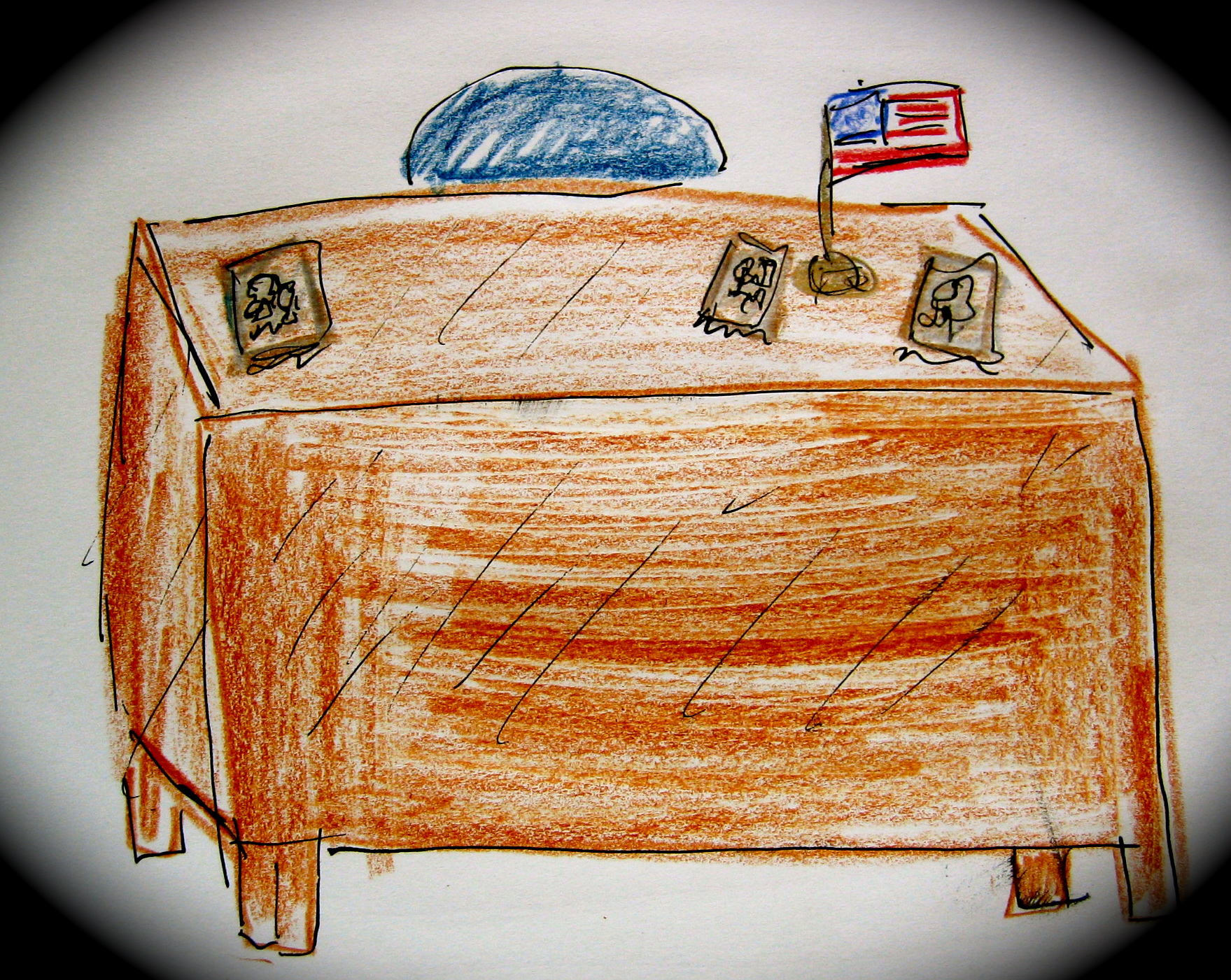
What’s on the desks bugs me too.  (Enough, I know….)  I can understand wanting photos of one’s wonderful family as talismen for one’s self, but when I see the photos facing out to the audience, I feel, well, manipulated.

Given my feelings about desks, I was a bit put off by Obama’s speech at the start.

I was also put off by the end, the story of the fishermen’s prayer ritual.  Obama may be a genuinely religious person (I think he is), and he may be right that a collective consciousness of suffering, a collective prayer, is worth some promotion (though a little of this goes an awfully long way.)  But an extended discussion of prayer tends to make one feel as if there is no hope for human solutions.

Now for the middle of the speech.   Yes, I know problems need to be studied, but arranging for a commission sounds  like “sending something off to committee”—a way to keep change from happening rather than to make it happen.

So what part of the speech sat well with me, as it were (though not at a desk)?   We simply have to change the way we consume and produce energy in this country, and the ways in which we regulate exploration and production.  Obama has got it absolutely right here, and, hopefully, in the wake of all of the despoliation and waste, in the midst of the desk and prayers, people will sit up and listen.

Greene v. Rawl in South Carolina. (Echoes of Al v. Lou?) “You’ll Never Find—-”

June 15, 2010

Green is good. People like green.

I admit that I’ve done it.  Gone into a voting booth to vote for a presidential or mayoral nominee, and then, faced with a long list of unknown candidates for lesser offices, gone down the line flipping levers.   I admit too that the rationale of my lever flipping has sometimes been fairly random, or at worst, based on knee-jerk biases.  I used to, for example, go for the unknown women candidates, feeling certain, in the days before Sarah Palin, that increasing the number of women in politics was sure to be for the good.

In my defense, I’ve never voted randomly for a United States Senator.  Whatever you think of government, these people have power.  Whatever you think about politics, all politicians are not the same.

And now we have Alvin Greene, an unemployed vet, living in his father’s basement, with an obscenity charge against him, winning the Democratic primary by 60% in South Carolina.  This might not seem completely unusual if Alvin Greene were a talkative, attention-getting, barnstorming, issue-oriented kind of guy.  But in his first free media exposure,  he seems extremely taciturn and more than a bit evasive.

Some, wondering how Greene came up with the $10,000 filing fee, have suspected that he is a Republican “plant”.   A bigger question, it seems to me, is how he won 60% of the vote .

I suspect that  both political operatives and marketing executives are studying this one.  What about Greene lured voters?  Could it just be dislike of his opponent, Victor Rawl?  But did the voters, who seemed to know nothing about Greene, know enough about Rawls to kick him out?  (No one’s mentioned any major scandals—only that Rawl has been in Congress for several terms.)

Were voters basing their votes on race?  Did they know the candidates’ race?

Jon Stewart, in a pretty hilarious skit on the Daily Show, suggests the victory arose from the alphabetical order of the names.  Greene was first on the ballot.

Then, there’s the benefit of a color name.  People like color names—there is something innocuous, common, unthreatening about them. On the same Daily Show discussing Alvin Greene, Stewart had unrelated segments about Robert Green, the British goalie in the U.K.-U.S. World Cup game, and Betty White.

And, frankly, if you have a color name, green is a good one—the color of money AND the environment.  (Granted, it may be slightly less good after the U.K.-U.S. soccer match, but it is unlikely that that game had any impact on the South Carolina primary.)

Then, of course, there are the echoes of popular music—the singer Al Green v. the singer Lou Rawls.  In my mind, Al Green wins that contest hands down.  (“I am so in love with you” sounds a lot better to my ears than “you’ll never find another lover like me.”)

Green (Al)  is also alive, unlike Rawls (Lou), and has recently become a very good gospel singer.

Keep in mind, that I am not saying that Alvin Greene may not be a good guy, just that no one seems to know.

I, for one, am going to be a lot more careful in the future to leave all unknown levers unturned

In Praise of Daughters

June 14, 2010

Letting Mom Sing Along

For ages past, and in many parts of the world even today, people have prayed (and done more than pray) for sons.   I personally never participated in such prayers, and was lucky enough to be blessed with daughters.

I’m sure sons are very wonderful.  I have lots of terrific nephews;  my daughters have male friends who are fine people.    But I was lucky enough to be blessed with daughters.

I really don’t want to seem sexist here.  I suppose it is true that sons, in this modern age, can and do enjoy many of the activities that daughters do; I am sure sons can, like daughters, keep their mothers company in ways that are extremely kind and thoughtful (and also a bit goofy).  But I also think it probable that sons, especially in their teens and early twenties, may be more driven than daughters to separate themselves in clear and definite ways, ways that may keep them from indulging their mother’s silliness, and that may interfere with a certain playful cameraderie.

Most college age sons, for example, probably will not (even with groans) sit next to their mom while she watches Robert Pattinson on MTV.  (Actually, even daughters won’t put up with this for long.)

Nor will most sons dance away dark clouds on a country lawn.   Nor make risotto, and then something called, “fool” (without a single comment that it resembles a certain older female family member.)    (Fool’s like custard but with folded-in whipped egg whites.)   Nor will most sons play clips (communally) of old musical comedies on Youtube, letting the mom sing along.

Somehow daughters can do things like this and still remain extremely independent.  An amazing gift in all senses of the word.