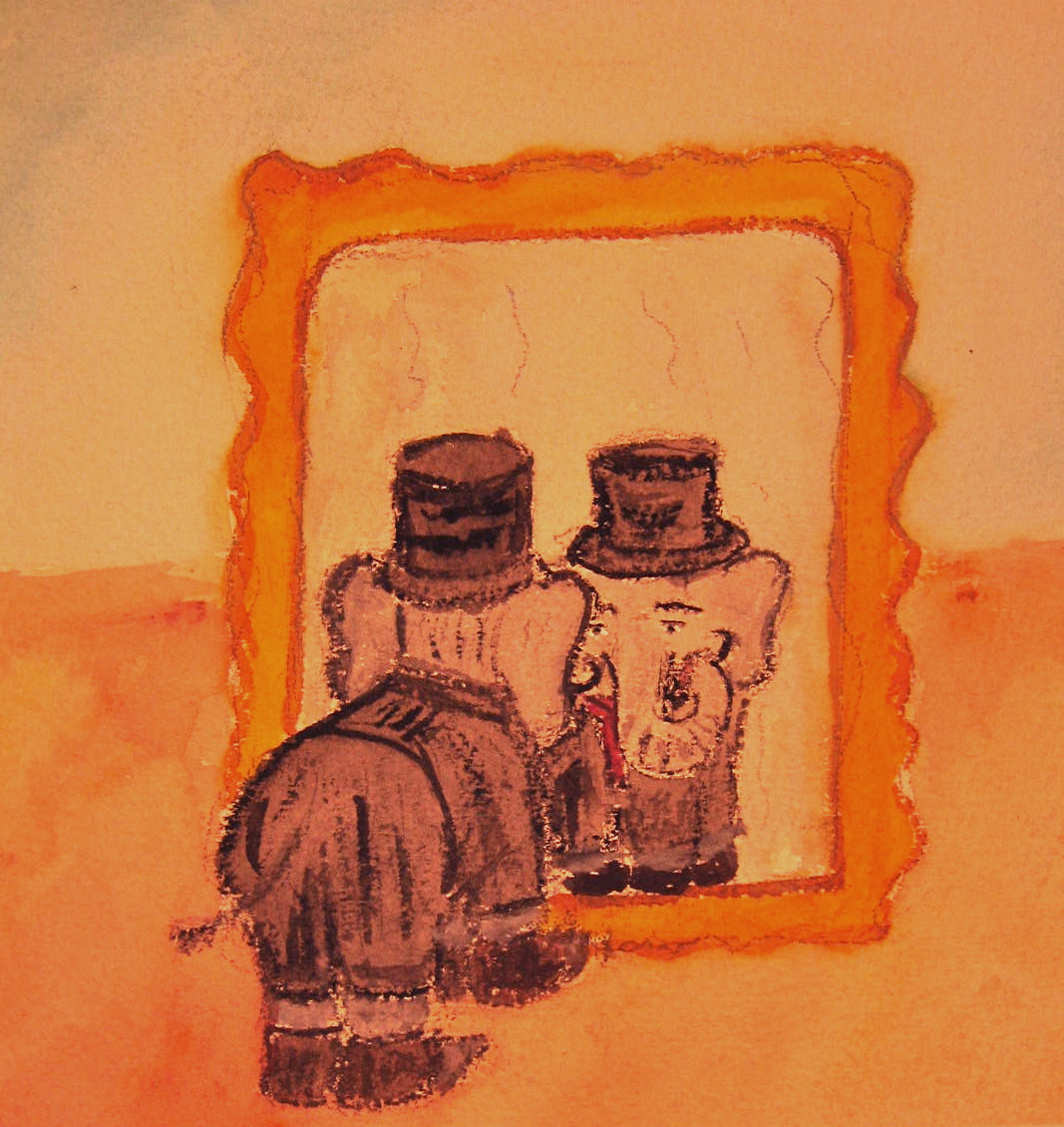
Self-promoter?
Yesterday, I wrote about stress and success, but what I really wanted to write about was my antipathy towards self-promotion.
Self-promotion is a major currency in our culture. Many believe that fame, celebrity, translates into wealth; that notoriety is an achievement of its own. (See e.g. Richard Heene, father of balloon boy.)
I personally have an exceedingly hard time with self-promotion. I don’t mind it so much in others; I well understand that a certain kind of self-touting is necessary to get attention in our culture, and that, for all my wish to deny it, attention can translate into a kind of power (book sales, ticket sales, advertising and endorsement contracts, appearances on “Dancing With the Stars”).
But, the idea of my self-promotion, that is, my own self-promotion, seems acutely, horribly, embarrassing.
What can I say? I was raised as a Lutheran (which seems to instill, in its adherents, an overwhelming sense of inadequacy), admire Buddhism (which finds triumph to be illusory in any case), and I’ve been formed (culturally) by the stiff upper lip of English literature. Besides all that, I am a woman. (In my generation, feminine modesty did not just mean keeping your clothes on.)
(When I think of historic restrictions on women’s self-promotion as compared to men’s, my mind turns automatically to Emily Dickinson and Walt Whitman ; while Walt, sounding his “barbaric yawp,” openly identifies himself as “Walt Whitman, a kosmos, of Manhattan the son,….Divine am I inside and out, and I make holy whatever I touch or am touch’d from,” Dickenson writes, “They shut me up in Prose–/As when a little Girl./ They put me in the Closet—/Because they liked me “still”—”)
Agh!
Putting me aside (thankfully), I have been heartened by the recent hubbub around two wonderful non-self-promoters—Detroit Tiger pitcher, Armando Galaragga, and supremely penitent umpire, Jim Joyce. Nothing could have been more graceful than the rueful smile of Galaragga when his perfect game was blown by the wrong call of Joyce, umpire at the first base line during the critical 9th inning third out. Joyce’s open and sorrowful admission of his mistake was equally refreshing. (Even the reporters listening to Joyce’s apologies were taken aback, one of them actually telling the ump that he was only human.)
Given our culture’s quest for both celebrity and happy endings, both men will probably get more fame and fortune from Joyce’s wrong call and Galaragga’s acceptance of unfairness than they would have gotten had the perfect game been achieved without incident. (Society loves a story! Society loves meaning! Maybe the whole incident will result in the use of instant replays!)
Still, that doesn’t diminish the men’s grace and sincerity, and the wonder of a modern, heartfelt, and very public, apology. A pretty perfect interlude no matter how the game is ultimately classified.

 ManicDDaily
Recent Comments