Posted tagged ‘Manicddaily pencil drawing’

10th Day of National Poetry Month – Draft of the Day – Who Would Be Thin

April 10, 2010

Who Would Be Thin

As those following this blog know, I am honoring National Poetry Month by writing (sort of) a draft poem a day.   The aim is not only to get myself to write some poems, but to get you writing them too.

In that spirit, it may be useful to discuss some of what gives rise to each draft.  Yesterday’s “Good News/Bad News” actually came from the suggested topic of “killer frost”,  which is what the Hudson Valley appeared to be facing last night due to the sudden drop in temperature after an  incredibly warm week.   I ended up finding “killer frost” a bit too depressing to write about, but it did set in motion the idea of “good news/bad news.”

I’m not quite sure of what the “inspiration” for today’s draft is;  maybe it came out of a sense of deprivation this morning that it was Saturday,  I was on my own, sore-eyed, with a great many chores to do;  this somehow brought up the idea of  thinness , though the poem went in a somewhat different direction.  Please keep in mind–it’s a draft!  Any suggestions for this one, or any of them, are greatly appreciated.

Those Who Would Be Thin

There are those who want to be thin.
We’ve seen their breath-filled
cheeks jog along a walk, their knees a seeming
abundance in straight legs, their forearms softly downed
like some human thistle.
Magician and assistant alike, they saw
their bodies in half, seem to make vanish
tidbits with sleight of mouth
or wrist or palm, seem to.
Magician and dove at once, they crave
a flight that will lift them from the thick wooden
planks of the daily, the deep velvet droop of curtain
to their sides, the darkly spot lit stage,
into a blue-veined streak of sky,
the haven of the spare, where they can be
both coveted and bypass notice at once,
translucence made flesh, opalescence made bone,
where light alone is swallowed
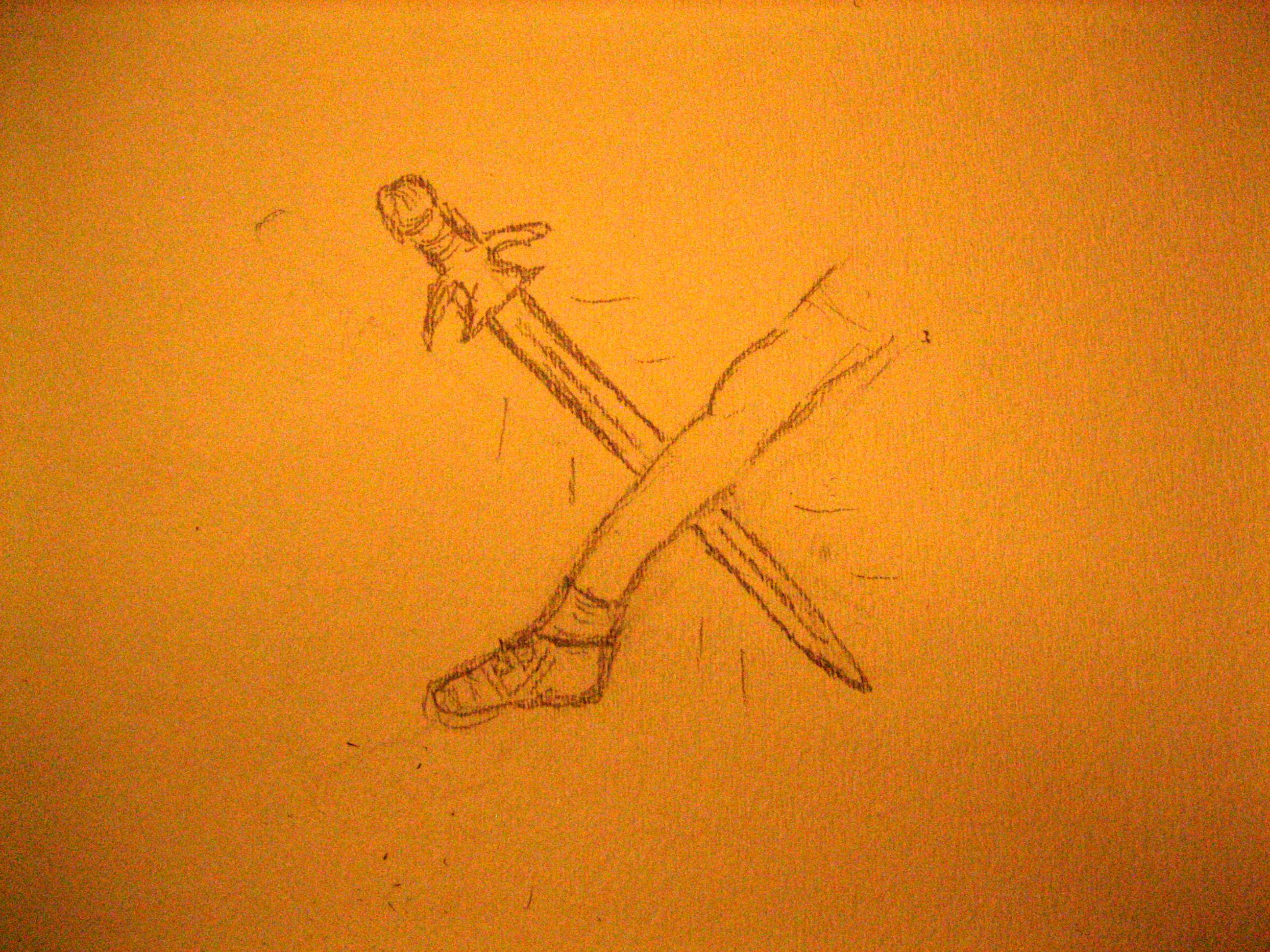
like a sword.


Second Day Of National Poetry Month – A Pantoum

April 2, 2010

Silver Slipper

Today, tried a pantoum.  The great thing about a pantoum (a form of repeating lines) is that you don’t need to come up with so many new lines.  ( For instructions on the form, check here.)

Remember, this is a draft a day!  A Draft!  (And the point is for you to try too.)

(Please note that in my poetry, pauses come only with punctuation–commas, or periods–and not at line breaks.)

Last Anniversary Party

She walked that night on the side
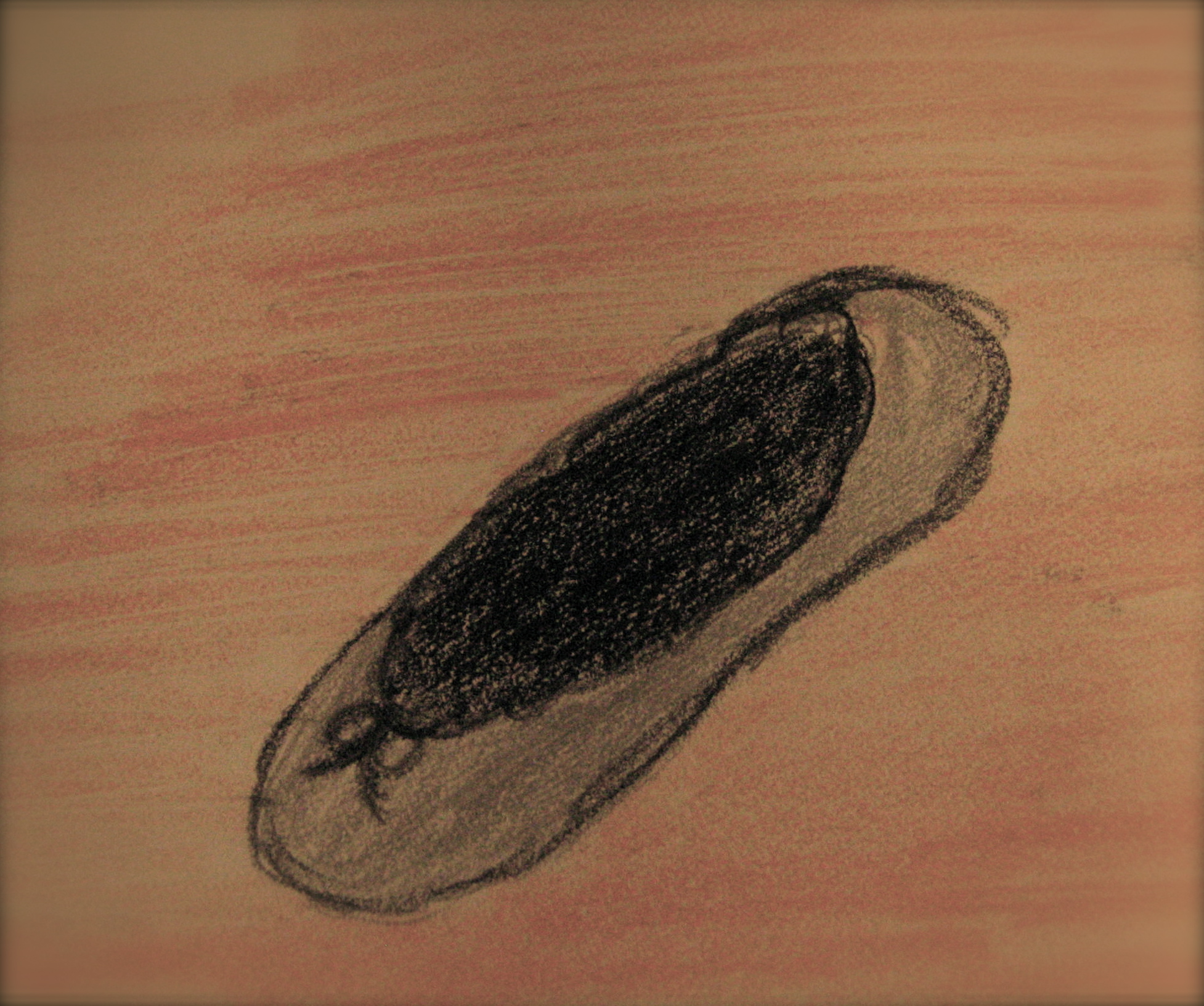
edges of silver slippers.
Her smile stretched movie-star wide
above sored feet that moved like flippers.

The edges of silver slippers,
gathering, elasticized
around sored feet that moved like flippers
as their slow, held, waltz defined

our gathering; elasticized
the sweet stretched around the bitter
that their slow, held, waltz defined.
We were her husband, her too, who fitted

that sweet, stretched around the bitter,
to make it last, while we each tried
to be her husband, her too, as they fitted
loss with all that sparkled fine

to make it last, while we  each tried
a smile stretched movie-star wide,
at loss, at all that sparkled fine.
She walked that night still on this side.

National Poetry Month- National Poetry Exercise Month (Blocking Writer’s Block)

March 31, 2010

April Poetry Clock

April is National Poetry Month.  This “tradition” was started in 1996 by the Academy of American Poets.

I guess the idea was to hook people’s love of targeted celebrations to poetry.  April seems to have been chosen because it followed Black History Month (February), and Women’s History Month (March), and because it did not include Halloween, Thanksgiving, Christmas, or New Year’s, was during the school term (schools are natural candidates for the celebration of poetry), but not at the busy beginning of the school term, or at its tousled end.  (Of course, Easter and Passover sometimes fall in April, but as religious holidays, these are not big competitors for concentrated school celebration time.)

April may have also been chosen because it already reverberates with specific poetic associations.  Yes, it’s the cruelest month, but it also (and perhaps more popularly) hosts “shoures soote.”  It’s (presumably) when lilacs last in the dooryard bloomed, and at least one of the times when it pleured in Verlaine’s coeur.

April also seems to be a popular month for relatively new, made-up, sorts of holidays like April Fool’s Day, Professional Administrative Assistant’s Day (the fourth Wednesday) followed by Take Our Daughters and Sons To Work Day (the fourth Thursday, perhaps intended as payback to Administrative Assistants), Earth Day (April 22nd), Tax Day (April 15th).  While “Tax Day” is not exactly a holiday (unless standing in a long line at the post office is your idea of a good time), it is a day of national observance.

Then there are other newish April holidays that seem too obscure to warrant mention, but are just too goofy to leave out: Zipper Day, National Honesty Day (date of George Washington’s inauguration), Girl Scout Leader Appreciation Day, National Pineapple-Upside-Down-Cake Day, National Read a Road Map Day, and, my personal favorite No Housework Day (April 5th), which also falls on World Health Day.   (In keeping with these holidays, April is also Stress Awareness Month.)

In celebration of National Poetry Month (and perhaps also Stress Awareness Month), I am proposing to replace the daily ruminations I post on this blog with a new poem, or truly, the draft of a new poem, each day of the month.

This will be an interesting exercise for me; and I hope you’ll find it one as well.  It is intended to follow up on the various posts about blocking writer’s block, the theme being how to write poetry with no clear inspiration other than a (relatively short) deadline.

This may also be a way of celebrating April Fool’s Day (all month long.)

If any one has topics, suggestions, poems of their own, please note them in a comment!

March Winds; Mental Health; Greater Parity In Health Care Legislation

March 30, 2010

Brain Chemistry

March is nearly over.  Anyone who lives in the gale force winds of downtown Manhattan will be extremely glad to see its end.  This includes my old dog Pearl, who, despite her near perfect bladder control, peed once in the apartment and once in the lobby this evening in an effort to avoid spending any time at all in the rain-spattered winds outside. (Darn you, Pearl!)

Somehow these gusting winds and my leaking dog bring up… mental health.  Forceful emotions, mood swings, bouts of depression, clinging to a fence post, or something worse, and (you got it), the recently passed health care legislation.

One of the changes wrought by the new legislation is a greater parity of treatment for mental and physical health issues.   This is, of course, welcomed by mental health professionals;  even an outsider, like myself, tends to agree that a greater focus on mental health seems needed in this country (and I say this not only as an observer of the Tea Party movement.)   The National Institutes of Mental Health estimate that approximately one in four Americans suffers from a diagnosable mental disorder in a given year, and about one in seventeen from one of the most serious mental illnesses;  an illness that affects one’s mind, one’s ability to really perceive and truly gauge reality, one’s self, the people around one, can certainly put a halt to one’s ability to function in the world as powerfully as a physical illness.   (To say nothing of putting a serious dent in the old happiness budget.)

The greater parity makes sense too because the line between mental and physical health is sometimes thinly drawn;  both just seem so chemical.    As one ages, one becomes particularly conscious of how circumstances, conditioning, genetics, chemistry, all seem to play upon each other in one’s brain.  (I have to confess that I base this statement on instinct more than scientific measurement.  I can feel in my water that it’s true, however.)

One problem with the new parity is that the benefits of many mental health treatments seem very uncertain;  side effects can be problematic;  some treatments lose efficacy over time;  additionally, some people whose functioning really isn’t very impaired may seek ongoing and expensive treatment (people who just really like the attention of a therapist).   Of course, efficacy, risk, side effects, and over or unnecessary usage, are issues with physical health treatments as well; (people who just really like the attention of a physical therapist).   Who knows yet how all of this will play out?    For many (the one in seventeen at least), it seems good that future choices may not be made simply on the grounds of what’s covered.

Amendments Republicans Didn’t Think Of

March 26, 2010

No Transfusions For Vampires

On Thursday, in the confusing process which I understand is required by our bi-cameral very-keen-on-procedure Congress, the Senate passed a budget reconciliation bill which allowed for the final passage of the new health care legislation.  In the process, more than forty amendments to the bill were proposed by Republican senators, including several from Republican Tom Coburn of Oklahoma;  perhaps the most colorful of these was an amendment prohibiting coverage of Viagra and other Erectile Dysfunction medications to convicted child molesters, rapists, and sex offenders.

Somehow one feels certain that the purpose of this type of amendment is to cast a shadow of malevolence on the benefits offered by the new legislation.  (There seems to be a desire to create a feeling that, without the amendment, the bill would operate as a kind of Americans With Disabilities Act for those covered by Meghan’s Law.)

Here are a few amendments that got dropped from the Republican list:

1.  No more than fifty (50) month-supply prescriptions per day may be covered for convicted narcotics offenders.

2.  No “herbal” supplements for potheads.

3.  No chiropractic coverage to W.W.E. hall of famer Quebecois Mad Dog Vachon unless an American passport and an original American birth certificate are provided.

4.   No acupuncture coverage for acrobatic Shaolin Monks temporarily visiting the U.S. from China.

5.   No acupuncture coverage to anyone permanently moved to the U.S. from China.

6.   Or Mexico.

7.  Or anywhere else.

8.  Including Hawaii.

7.  No rolfing for residents of California.

8.  No medical tattoo removal coverage for Jesse James.  Such expenses may be coverable for Michelle Bombshell McGee but on only on personal application.

9.  No blood transfusions for vampires unless named Bill Compton or Edward Cullen.  (Sorry, Eric.)

Blocking Writer’s Block – Post-Partum Embarrassment

March 25, 2010


Circle of hell for one's own work


Embarrassment is not so much of a problem when one is writing as when one has written. Shortly after the piece is more or less “done”, the excitement, the satisfaction, the engagement, of doing the work peters out.

Okay, sure, there’s a moment of “whew”.  Maybe even “wow.”  And then, like carefully-cut fruit turning brown around the edges, the whole thing seems  tawdry, sour, over-ripe.

This feeling often sets in around the time you start showing your work to others. When you glance at the piece through their imagined eyes, you wonder how you were ever satisfied.  You feel exposed, ridiculous.

It’s worse than seeing one’s self in a bad photo, in a brightly-lit mirror, at one’s worst angle.  When looking at a depiction of one’s physical self, feelings of inadequacy are often tempered by surprise, even disbelief—( Is that really what I look like?)  Even as one cringes, one’s image is so different from the self one imagines it hardly feels possible.  Besides that surprise, we are most of us well trained enough in the idea of people not being able to help their looks to have some grudging acceptance of our physical aspect.  (Other than of our fat, I suppose.)

A special circle of hell is saved for the sound of one’s own voice, either heard or read.

This hell, this embarrassment, can make it almost impossible for a writer to get his or her work out in the world.

Despite the daily appearance of blog, I really do have some problems with this.  Nonetheless (with typical “do as I say, not as I do” bravura), I’ll posit some suggestions:

1.  Collaborate.   Share the work process before your work is finished so that it’s less of a struggle to share it afterwards.  There are many different levels of collaboration, which may or may not include co-authorship.   The simplest may just be doing writing exercises with someone—writing at the same time as they are, then reading your writing aloud to each other.    (This is like taking your clothes off absolutely simultaneously with someone else.  Easier if you both pull down the pants at one time. )

The frigid sea (of exposure) also feels better if you hold hands with someone and run into the surf together.  Meaning, if you want to try to read in public fora—poetry readings or slams—go with a writing buddy first;  make yourselves both sign the sign-up sheet.  No turning back.  Clap loudly for your friend.

2.  Shut your eyes.  Get your piece as good as you can, send it into the world,  and then, if you can’t bear to face it again, don’t.  Don’t re-read it endlessly once you start circulating it (at least not for a while.)   If it’s published, and you can’t bear others to know, just don’t tell them.

3.  Understand that you are not your work.  It is, at most, a glimpse of your brain’s inner workings for one relatively short period of time;  a simulacrum of a synaptical dance.  If someone doesn’t like it, it doesn’t mean they don’t like you.  If someone reads it, it doesn’t mean that they actually know you.  Distance yourself from the content of the work;  distance yourself from the feelings of exposure.   This takes discipline.  Don’t wallow.

4.  Don’t worry that everything you do may not be your best work.  People’s taste run wide gamuts.  Sometimes you/they are in the mood for brown rice; sometimes you/they are in the mood for whipped cream;  sometimes for oranges.   (i.e. you can’t please all the people all the time;  actually,  you can’t even please some of the people all the time.   And maybe, well, you should worry a little less about pleasing. )

5.  Be happy that you have completed some work at all.  Always keep in mind how wonderful that feeling was when you first finished, how wonderful to have just slogged through.

Examining Self-Sabotage (A Shot Foot) (Old Dog New Tricks)

March 23, 2010


A Shot Food

An article in today’s New York Times discusses self-sabotage—that is, many people’s unfortunate tendency to ensure that expectations of disappointment are not disappointed: the bizarre attraction to shooting one’s self in the foot,  because (i)  a wound in the foot looks like a stigmata (i.e. is a good accoutrement to a martyrdom guise), and (ii) a familiar pain feels safer than the risk of an unknown pain (or even pleasure).

I, for one, am very good at this type of self-sabotage.  The article talks of repeated masochistic love affairs.  I’m offering, as an example, a long masochistic love affair with fatigue.  (Let’s not get too personal here.)

If I stand back a little from my own conduct vis-a-vis fatigue, I am aware that much of it– taking too many things on; getting to, and leaving from, my office too late in the day; drinking a very strong cup of tea upon my arrival at home in the evening; doing a lot of goofy evening stuff (i.e. blogging), then staying up very very late reading and re-reading silly books, or doing a crossword, or trolling the internet; getting up super-early to do some of the same exhausted internetty/reading/goofy types of strong-tea-fueled pastimes–is not productive or even all that pleasurable.

If questioned, I will say that my staying up late happens by chance, as if I just get carried away (every single night).  If questioned harder, I might admit that the late nights are an act of will—I’ll say that I need that time to myself to feel that my life is expansive.

If questioned extremely probingly, I may even admit that my schedule of late, crowded (but slightly aimless) nights is one that I stick to with extreme rigidity, despite the resulting exhaustion and reduced productivity.

What’s the answer to this kind of self-sabotage?  The article talks of medication, therapy.

But I look to the sage of my apartment, my dog, Pearl.  Pearl (nearly fifteen) is an extreme creature of habit, particularly now that she is losing her vision.  Pearl knows, for example, the direction that each of her walkers (me, my husband, daughters, nephews) like to take her in (North or South), the exact places (within my building) where her walker will get nervous of her bladder control and pick her up and carry her,  the amount of time each walker will let her sniff and mosey.  Pearl then enforces these patterns, tugging in the walker’s habitual direction, stopping stock still in the spots where she is supposed to be carried, turning recalcitrant when a normally tolerant walker tries to pick up the pace.

Most of Pearl’s walkers just let Pearl have her way.  But sometimes the patterns simply have to be changed, when, for example, Pearl’s side of the sidewalk is covered with salt.  It’s hard to shift Pearl—you have to tug her with some determination, which because she is small, cute, fluffy, can be embarrassing.   She will eventually follow the walker’s tug, however, and then, oddly (after a day or so),  she will become just about as rigid about the new habit as she was about the old.

Which means, I guess, that old dogs can learn new tricks.

Of course, some kind of tug must be there, a determination to make the change.   (I have a feeling I’ll be up late.)

Subway Blog – St. Patrick’s Day/Ground Zero

March 17, 2010

Tassled Boot

St. Patrick’s Day.  Spring.  (Crocuses in the small park in front of my Battery Park City building.)

I work at home in the morning, so miss the main parade rush (usually bright green with hats), and go into the office late.   A small group of teenage girls stand beside me  on the platform with tight jeans tucked into knee-high boots, slightly wavy hair swooping across broad foreheads. Vague green (a dark shade on a shirt, or just eye shadow on a lid) is worn by the ones who look Irish, a brighter viridian on the girl who looks Italian.  “Like” is said frequently, and large slouchy purses are held protectively.

Their smiles slacken in the subway car as they become quickly aware that all seats are taken, mainly by very large men who are not giving them up.  They are not small girls, and there is only one small channel of grey plastic bench, which, after a minute or so (and a nod from one of the men),  I nab.

It’s amazing to me how men can take up so much space on the subway.  Even men who are not particularly large take up huge spans, their legs spread wide as a matter of course.  They never ever cross these legs, or even press them together.  (It may be a physical thing, but I always think it’s ego, ego stretching wide.)

The girls congregate by one of the poles, looking young, pale, and a bit subdued, under the fluorescents.   I want to shout out “Robert Pattinson”, to see if that would perk them up again.  But there is something about the way they hold their large purses which makes me think that they probably wouldn’t react (except to think I was nuts.  Hmmm….)

A friend at my office, male, who is completely immune to, and somewhat obtuse about, Pattinson’s charms assures me that the poor showing of Pattinson’s new film Remember Me is a sign that (i) Rob doesn’t really have it; and (ii) that the celebrity fixation of our culture is exaggerated.  (“People may look at little blogs about Pattinson,” he says contemptuously, “but they won’t shell out ten bucks.)

$12.75 in Manhattan.

Maybe he’s right.  I still think that the emphasis on 9/11 may have something to do with the poor showing of Remember Me. I walked by Ground Zero on the way to the subway today, before encountering the Irish/Italian girls on the subway.  I walk by Ground Zero every day, but today for the first time (perhaps because of the suddenly blue sky),  I realized that the site has turned into “Above Ground Zero”, or really “Above-Ground-By-A-Couple-Of-Stories-Zero.”

Big rust-colored girders are now extending into the air.  I know enough to recognize that the girders do not stand on the “footprint” of the old towers, but they are close enough.

My heart caught in my throat, my breath in my chest.  I was amazed, and embarrassed, that the sight of the girders almost brought on an asthma attack.  (I’m not someone who commonly has asthma attacks, but I was genuinely panting.)

I called my husband as I crossed Church Street.  He said something about pollen in the air.

“It’s not pollen; it started right here,” I insisted.

I told him finally the terrible feelings came because I didn’t like to feel like a target.  (As a non-New York City person, he doesn’t fully understand.)  I didn’t talk about the sadness that encompassed me.

But all of that was before the subway, before the Irish-looking, wavy-haired girls, and their Italian looking friend, before the possibly pregnant Hispanic woman just across from me on the train, who crooks her arm in her man’s arm, whose sweet smile is punctuated by braces and quick laughs.

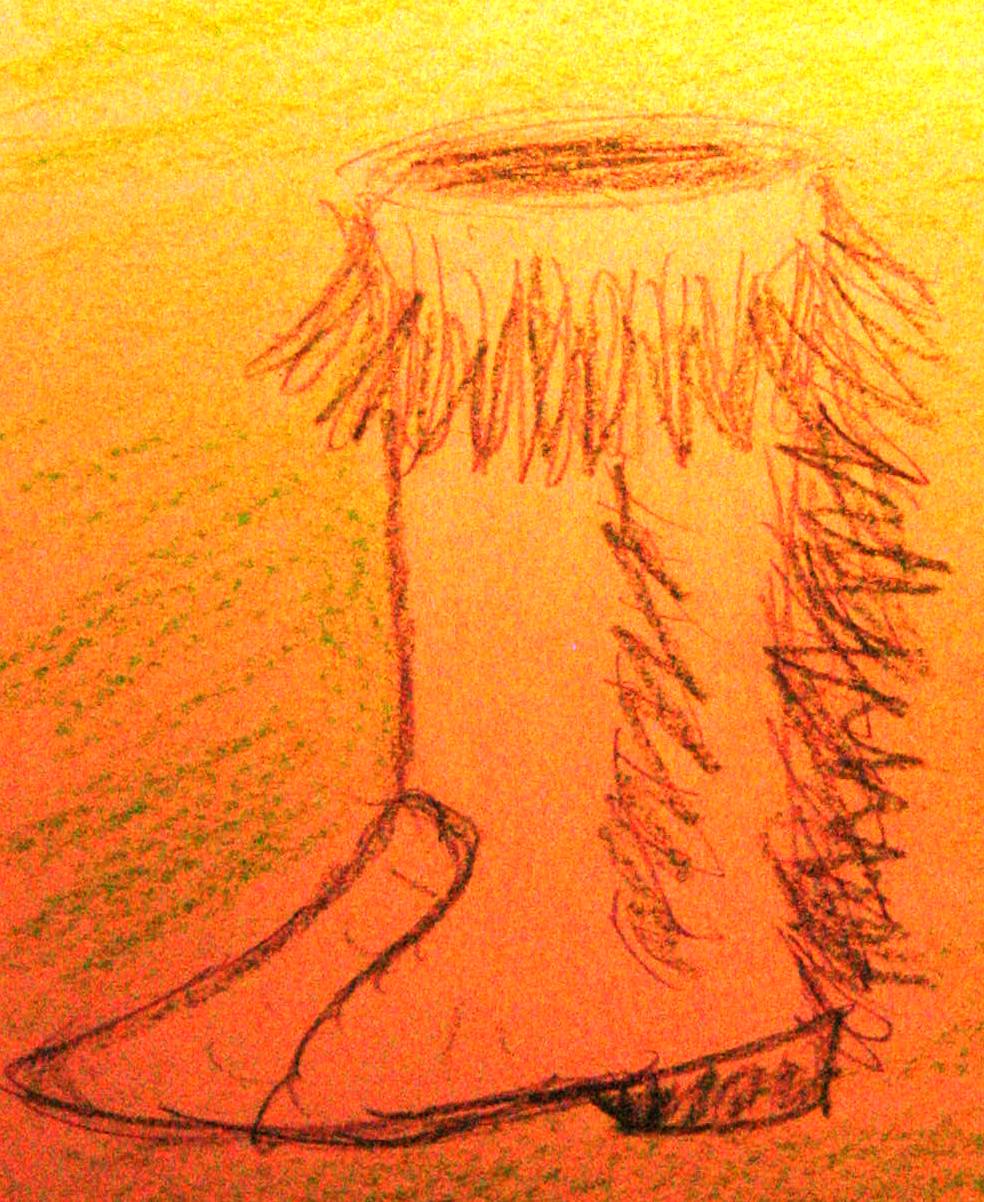
Before too, the little girls on the platform as I get out, who wear green shamrock vests, and black and white polka-dotted dirndls, and white much-tassled cowboy boots.  They hold hands as they wait, behind their parents, for the next train, one of them tap dancing.

“A Man Steals A Bicycle….”

March 11, 2010

Big Bicycle, Small Silver Box

Like many New Yorkers, I sometimes buy an egg sandwich in the morning from a little stainless-steel cart parked outside of my office building.

I love these stainless steel carts; my daughter calls them “boxes.”  While she was in high school, she would go out every morning at a time that was somehow called lunch, and buy “box coffee.” It was reasonably good, very cheap, reliably hot.

The carts remind me of little, square, Airstream trailers, everything silvery and compact, the glass of the little windows, as slightly dulled as the 1950’s, showing the Art Deco curve of crullers; the boxes of tea displayed on the top shelf, even green tea, brightly anachronistic.

My particular silver box guy is named Nick; he is from Greece.  For some years, I thought he was from Macedonia, and, trying to be nice, commiserated throughout the late summer of 2007 about the forest fires there.   But I have finally gotten it into my head (after several bemused corrections) that Nick is from the Peloponnese (Olympia).

Nick would be unlikely to make a corresponding mistake about where I am from.  Like almost every silver box guy I’ve ever dealt with, he has a memory akin to Borges’  Funes the Memorious.   He knows the caffeine, dairy, egg, ketchup, bagel and doughnut preferences of a few hundred regular customers, many of whom simply greet him with a grunt, or (the more polite ones), a nod.   (People waiting for coffee tend to be quiet.)

Nick and his some silver box occupy my corner every single weekday, rain or shine.  His only vacations come when the police cordon off the street.  His is one of the few businesses, other than Goldman Sachs, that has done well  in the economic downturn.  His prices for a substantial breakfast are so much cheaper than lunch prices in mid-town that, over the last year, more and more people fill up early in the day.

I really like Nick.  He treats everyone with friendly respect, never even rolling his eyes at  their requests for eight sugars, or their bacon sausage cheese, grape jelly, and ketchups on a roll.

Besides all that, I look like his mother.

He has told me this a couple of times.  I’m never sure whether to be insulted or touched.  (Nick is younger than me, but not that much younger.)  (He also once made a guess of my age, a wrong guess;  we don’t talk about that time.)

I asked Nick today about his mother.  He laughed and said that he had told her about me.    (This time I actually did feel touched.)  Then we moved on (it takes a while to cook eggs) to the Greek economy.  He shook his head sorrowfully, murmuring about the tough time people were having, the tough times that were expected for a while; higher taxes, higher expenses.

“A man steals a bicyle, he goes to jail,” he said.  “He steals a million dollars, he goes to…” he shook his head.

“The Ritz,” I finished.

We bemoaned stealing and dollars (both millions and the lack thereof).

I asked him if he could visit Greece soon; he wistfully shook his head ‘no’ again, wrapping my sandwich in thin silver foil, passing it through the small silver space.

“A man steals a bicycle, ” he said again, “he goes to jail;  he steals a million dollars….”

(Note re above post:  it’s not intended in any way as a criticism of what Obama has done, or is trying to do, with respect to overseeing and regulating financial system, executive compensation, etc.  )

“Marching Orders” From My Dog Pearl

March 8, 2010

Pearl Being Exuberant

T.S. Eliot said that April is the cruelest month.  I tend to think it’s March.

March is a teaser.  You step out in the mornings into air that feels suddenly, caressingly, warm.  Your heart lifts.   Then, after maybe a minute,  you become aware of a damp undercurrent.   You realize, unless you manage to collide with an angle of absolutely direct sunlight, that the caress was like the touch of a best-selling vampire wearing gloves.   All it truly is, is warmer than it’s been.

It’s dark when you get out of the subway after work–still dark.   Your eyes fixate on the big hard mounds of extremely gritty snow in the middle or on the edges of certain pubic spaces.

You just know it’s going to start raining soon (probably on the weekend.)   You imagine big pools of water collecting at street corners,  pools so murky that people will risk injury by veering taxi cab rather than get close to them, even people who have spent monsoon seasons in Calcutta.

You tell yourself that this is March, predictably unpredictable, that Spring really is coming.  But, since you are stuck inside for the nice parts of the day, it’s hard to feel good.  In fact, you feel pretty lousy.

At times like this, I tell myself that I should emulate the one great sage I know, that is, my dog Pearl.

Pearl is a very old dog.   She seems, unfortunately, to be going blind.  She sees my shape moving from living room into kitchen with absolute clarity.   But once she tracks me into the kitchen, she can’t always tell if I’m holding a treat in my hand or if I’ve dropped it in front of her, or if I have dropped it in front of her, where exactly.  On evening walks, she’ll almost bump into things (like park benches) or  halt in sudden fear or disorientation.

That part is pretty sad.

Most of the time Pearl is beyond sedentary.  (Sedentary derives from the word “to sit”;  Pearl doesn’t bother with sitting; she’s generally stretched out flat.)    But there are moments, on a nearly daily basis, that still  bring out a joyful puppydom.    These often follow that difficult evening walk.   There is a stretch of carpeting in  my building’s hallway, between elevator and my apartment door,  that she has always found to be an irresistible running track—the carpet is firm,  and at that point in the walk, she’s free–of leash, of whatever “business” took her outside, of any further duties for that day.

She goes, to put it mildly, bananas—running back and forth, circling, grinning a weird canine side grin.   She will run until she’s almost choking, and then (she’s not the smartest creature in the world),  run a little more.

What Pearl seems to understand is that new energy comes from the expenditure of energy,  new joy from old joy, from jumping into joy, and  that joy doesn’t need to be saved up, it just needs to be savored.

Some might say I’m anthropomorphizing.  Some might say that I’m not, that what Pearl does is simply easier for a dog.   Either view seems to offer me something palpable:   to find exuberance, be exuberant (even about the routine, the mundane,  especially about the routine, the mundane);   to get through March, march right on through it.

Of course, once Pearl is back in the apartment, she usually collapses again.  (After one more quick exploration of the kitchen.)

That part sounds good too.

PS – for a poem about Pearl’s exuberance, check out this.