Posted tagged ‘Karin Gustafson’

“Nursing Mother Commutes” (Oddly based on Kandinsky).

January 29, 2012

20120129-102818.jpg

Yesterday, I had the fun and honor of hosting dVerse Poets Pub Poetics prompt, challenging people to write about undercurrents–the layers of a moment or experience.   I was not very pleased by my own poem, which I had cut hugely before posting.  I tend to think that almost all poems are a bit too long; but I worried all day that I had eviscerated it.  (Ugh.)

But the great thing about blogging is that you learn to just move on to the next thing.  So, here’s a new poem for MagPie Tales, hosted by Tess Kincaid.  The poem is based upon the Kandinsky overhead (Red Spot II).

Nursing Mother’s Trip Home

She runs, takes stairs aslant by twos,
tethered purse banging at purposeful
hip, diagonals by the commuter who
doesn’t have a nursing baby at home, weaves
around this woman with the slow high heels, that backpack
that blocks her dash, this stack
of newspapers–anything that would collapse
the pace pounding her brain; pushes
onto her next train, squeezing her newly reduced
body between limbs, suppressing inner
relief sob, pulling slash
of coat from pinch of train doors; leans for the
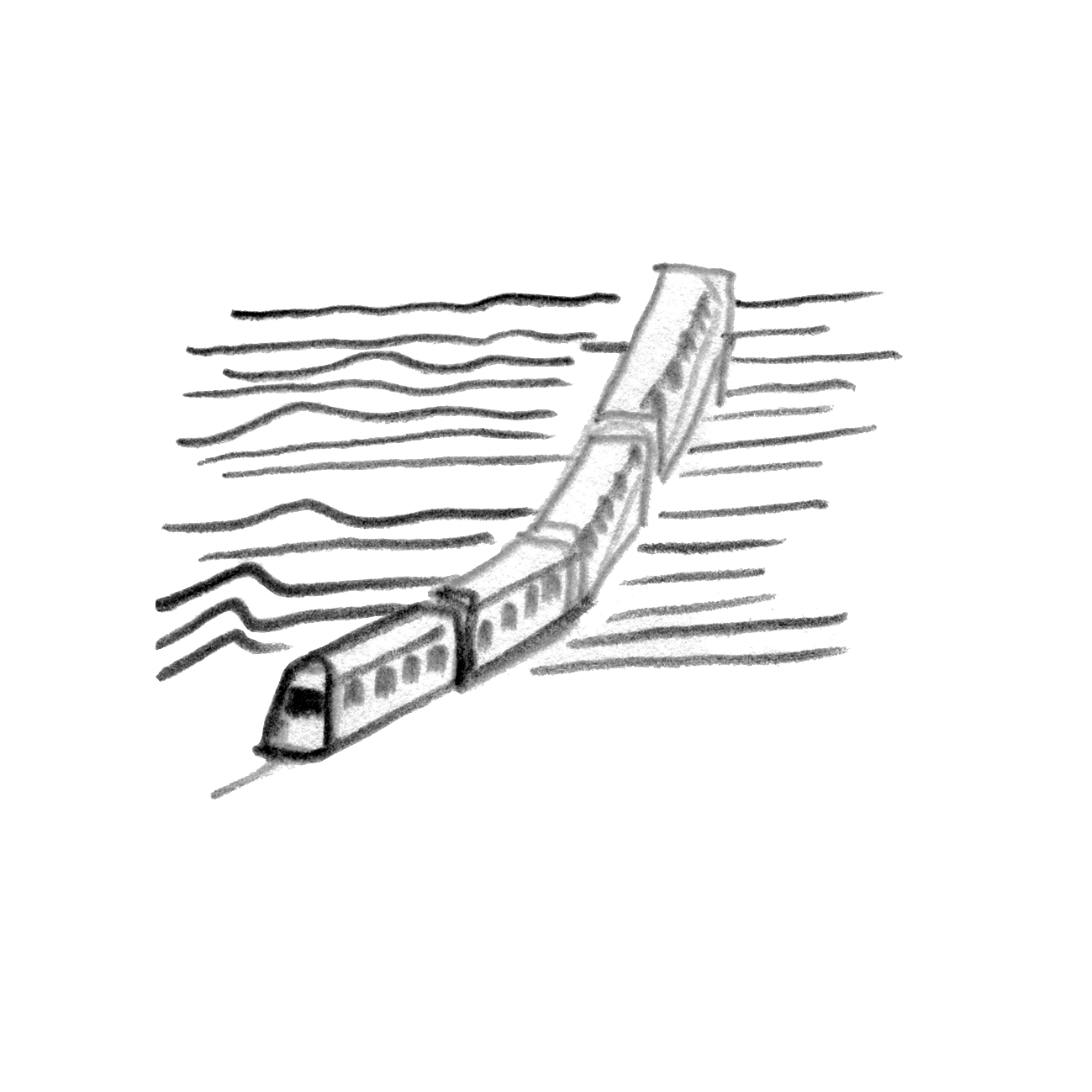
long part of the ride–the passage beneath
the river–against
the conductor’s silver
booth, trying now
to control her chest–the harsh
breath of hurry, the milk whose heated
seep already pushes
her nipples,
stopping only in her 1-2-3
to pray for no stoppage, no moment of
slowdown between shores when she will feel crushed
by crinkle and murk, the image of tons
of river overhead–even as she knows –she does
not need to tell herself, she knows it
so absolutely–that nothing, not even a burst
of flood through train’s fluorescence—-will keep
her from getting home.

It is only the delay that crazes
her–the time it takes from
this grey metal door to
her infant at her breast–for
she knows, yes,
in every mote of
her being she knows,
that it is only
a matter of time.


(P.S. I am also linking this to Imperfect Prose.  Have a great week. K.)
Borders – Here She Once was There

January 21, 2012

I am posting the poem below (a sonnet) for a dVerse Poets Pub poetics prompt to write about borders.   I thought of posting a more more risque, i.e. erotic poem, as this would somehow represent crossing a sort of personal online- publishing border,  But the fact is I kind of like the poem below, though it is not rique or erotic.  The drawing above, by Diana Barco, is from Going on Somewhere.

East Indian Trains in the Catskills
(For Jeannie Hutchins)

As lilacs cast their fragrance on wet grass,
she thinks of trains and dust, the smell of hot spiced chai,
maroon banquettes, babbled cries en masse—
muffled by shutters echoed Hindi words for buy,
the soles of porters’ shoes so flat and white and pointed,
her own were thick, protection sewn by Clarks,
the baseline of what made her feel anointed—
when her hand waved at the window, it left sparks.
She sparkled just for coming from the West
(with cash, pale eyes, and shockingly blonde hair).
But now she feels a different specialness:
no matter where she is, she once was there,
so that even on this Catskill-scented lawn,
mind resonates with Indian trains at dawn.

Pantoum – Slow Waltz “Last Anniversary Party (During the Chemo)”

January 10, 2012

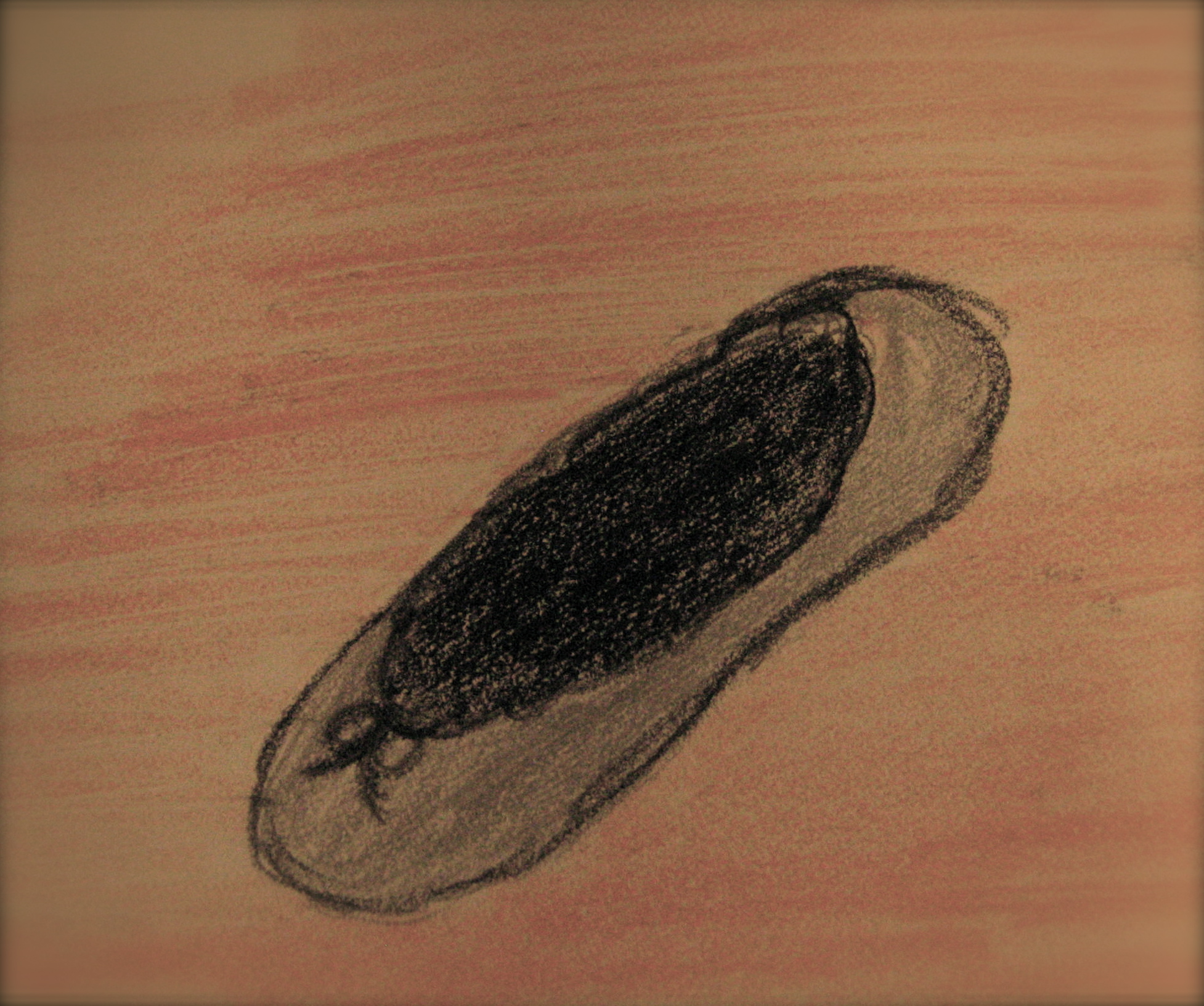
Silver Slipper

Due to the death of my beloved father last week, I’ve spent the last few days somewhat focused on loss.  Here is an older poem, a pantoum, that deals with the loss of a friend.  (I posted a very early draft of this poem some time ago.  I think this version is much improved.  I am linking it to dVerse Poets Pub open link night.)

I’m not sure the poem quite works, even improved.  However, the pantoum form, which is by its nature a bit of an unwieldy dance (with all the repeating lines) seems to suit the subject.   (As with all my poetry, pauses in reading should be taken based on punctuation, not line breaks.)

Last Anniversary Party (During the Chemo)

She walked that night on the side
edges of silver slippers,
her smile stretched movie-star wide
above feet the meds had blistered.

The edges of silver slippers,
gathering (elasticized)
around feet the meds had blistered,
wedged in a slow waltz that defined

our gathering.  Elasticized
sweetness stretched around the bitter
wedge that their slow waltz defined.
With her husband, her too, we fitted

into that sweetness (stretched around the bitter
to make it last), pain astride.
With her husband, her too, we fitted
loss with all that sparkled fine

to make it last.  Pain astride
a smile stretched movie-star wide
lost none of that sparkle fine.
She walked that night still on this side.

dVerse Poets Open Link Night “After It’s Fallen”

January 3, 2012

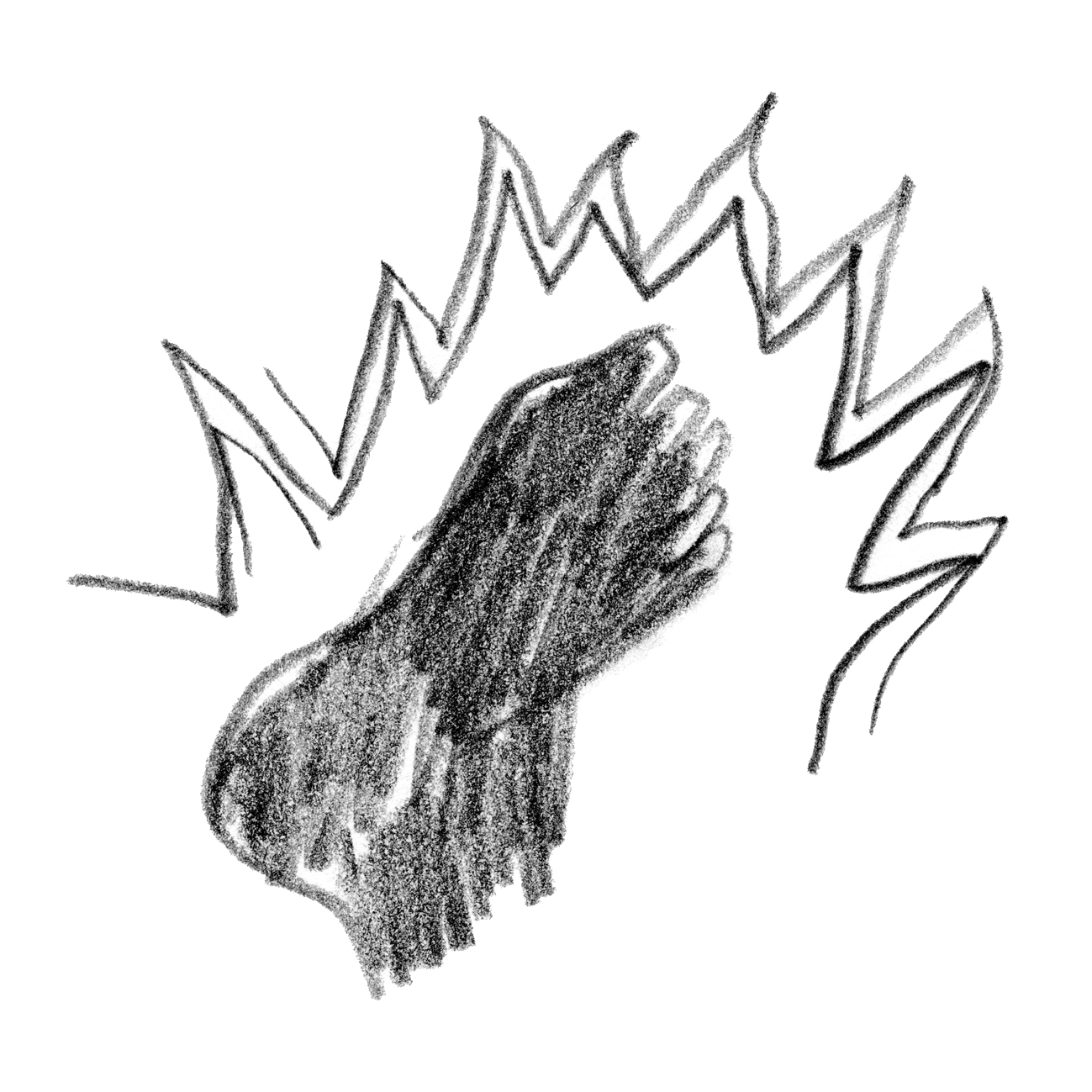
This is an older poem about the burning ghat in Varanasi (Benares), India.   The picture above is by Diana Barco, from a book of my poetry called Going on Somewhere.    I am posting it for dVerse Poets Pub open link night as well as the Poetry Palace Poets Rally and for Victoria C. Slotto’s blog, liv2write2day (for a prompt about memory.)  All are great resources for poets and those who love poetry.

After it’s fallen

In Benares, the tenders rake the fallen feet back into the flames.
The first time we watched them, I was horrified.
How you would know that foot, I kept thinking,
your father’s soft purply big-veined foot.
My father’s feet have always seemed too small to me.
When he walks he seems to go on edge, as if they
can hardly carry him.
The toes of his shoes turn up strangely,
even after he’s had them just one week,
Something from the war, he’s always said.

In Benares, the feet are the last parts to be burned.
They overhang the pyre and simply
wait there, smoking slowly
until the shins are completely charred.
Their full flesh too heavy for the burned legs,
they fall, eventually, to the ground.
They never fall together, but one first, pointing randomly,
the other still flexed in the air.

When one of the tenders notices, he
pushes the fallen foot back into the flames.
He uses two long poles, the
green bamboos of the bier.
Sometimes he has to lever the foot
to reach the flames again, crossing the poles
like huge chopsticks.

They have dark feet in Benares,
darker than my father’s would be,
smooth and brown.
I couldn’t stop looking at them, thinking how you would know
that foot on the ground there, that foot.

Goodbye to Old Year – “Taking Leaves”

December 31, 2011

20111231-034503.jpg

Happy New Year all!  I am posting this for dVerse Poets Pub “poetics” prompt about the reflection that comes at the end and beginning of a year.  Ironically, Mark Kerstetter, the wonderful host of today’s prompt used a photograph of a leaf in his article.  My poem, below, a sonnet of sorts (on I guess accepting the way things are), was also inspired by leaf shapes.

Taking Leaves

The lily pad is formed like a spoon of heart,
holly a pronged sleigh.  Look out for three points–
my leg itches at the thought–there is no part
of me–not organ, not digits, not joints,
not susceptible to mind’s suggestion
(like a house plant that blossoms to Mozart
and cringes at a din).  No. My question
is how to put the horse before the cart,
how to let the soul’s true shape unfold
outside the mold of to think and then to be;  
that is, not to ask why, or wait to be told,
but to just accept pi (what rounds), gravity
(what makes for fall), and Death’s shade (from Day One),
while we earthgrown still will–must–seek out the sun. 

Have a wonderful, thoughtful, safe, healthy, happy, New Year.

I myself realize that what I am hoping for most is kindness–to receive it, of course, but more, to give it–to overcome all those obstacles that sometimes come in the way of being as kind as I would like to be.  (Agh.)

Magpie Tale 97 – The Bite of Eve

December 28, 2011

20111229-074448.jpg

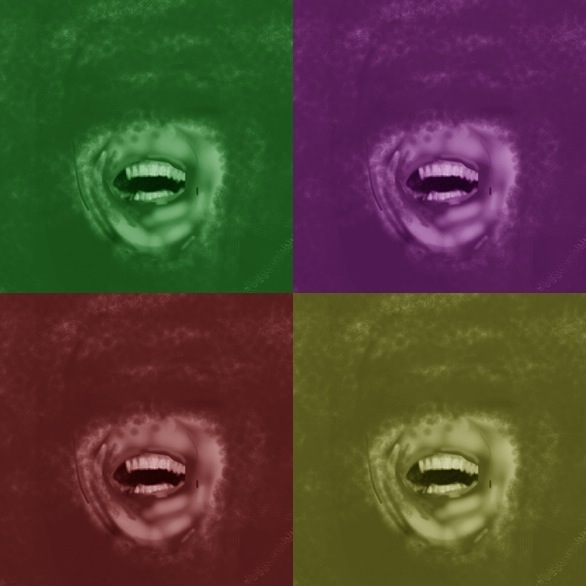
Here’s a delayed Magpie Tales, a post based on a prompt from Tess Kincaid. Tess’s prompt was a picture of Marilyn Monroe laughing, but, frankly, I’d just about as soon be shot as write about Marilyn Monroe during the week between Christmas and New Year’s, so instead, I’ve focused just on a certain aspect of the photo, which I have re-done in my own manner above. (Please note that the poem is not intended to be about Marilyn–I’m just focusing on the mouth/tooth of the picture.)

The bite of Eve

A spirit of conviviality

is often partly propped
by good strong teeth.

Eve had to bite
in
to
the apple.
How unfairly difficult it seems
for the dentally-challenged
to sink their flailing
chompers into

an open-throated laugh. That bit
of the predator that seizes
humor, shaking it above
a thrown-back head as it
proclaims inside

I got it,

somehow denied
by the decay of those
squared sharp gates, blocked by
the absent bars
of canine, those
enforcers, you know, of
a certain kind
of kiss.

20111229-075131.jpg

Finally Catching Up To Christmas

December 25, 2011

20111225-071341.jpg

Just in time!

(Hope you all enjoyed the day!)

Happy…errr.. Hoppy! (Jingle With Elephant!)

December 24, 2011

A Merry Best to All!  Thanks so much for reading, commenting, writing, inspiring!  

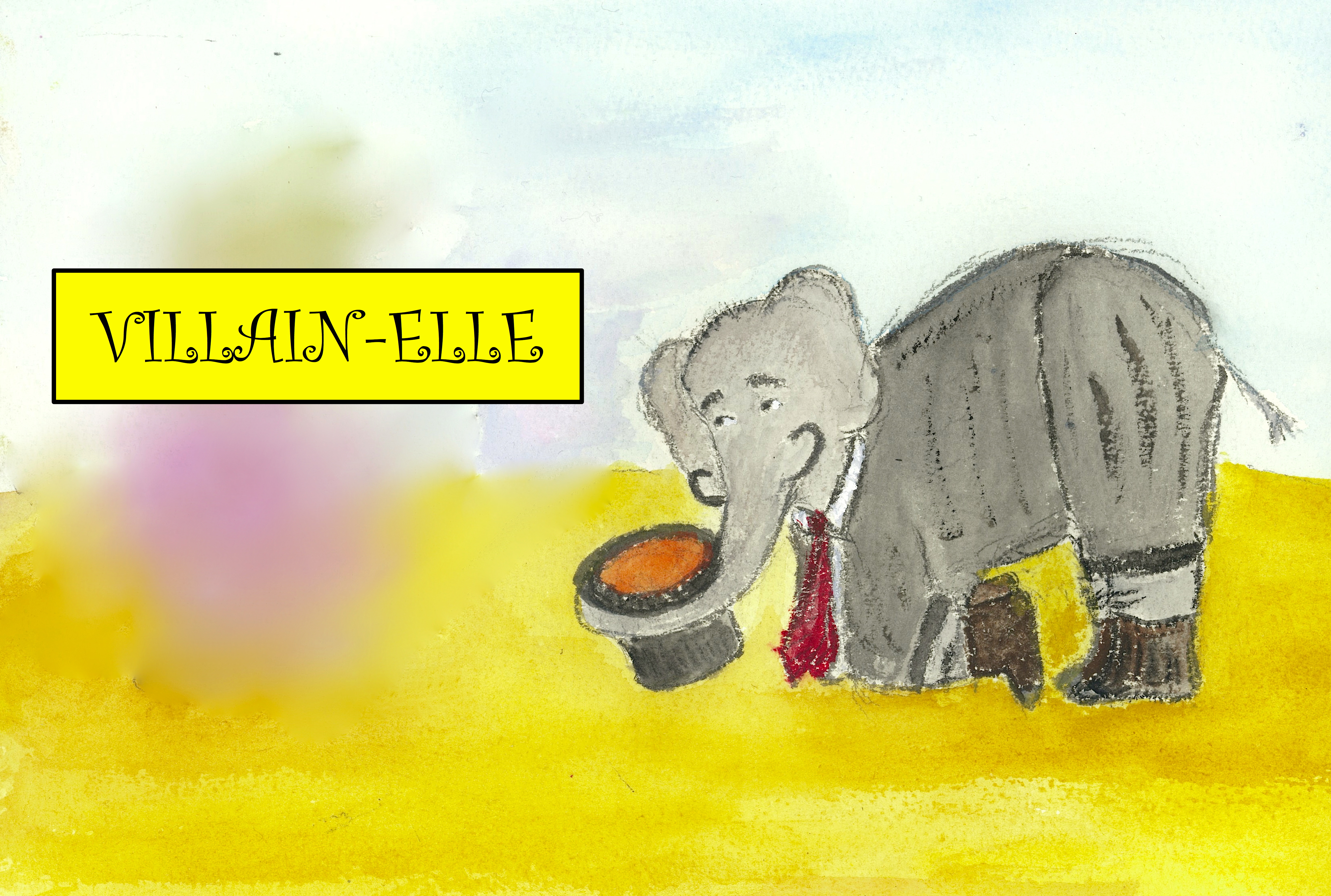
Contrast/Villanelles/”Villain-elle” (With Watercolors and Elephants)

December 22, 2011

I am a great lover of villanelles.  I am reposting “Villain-elle” today because it illustrates an important tool in villanelle writing: contrast. 

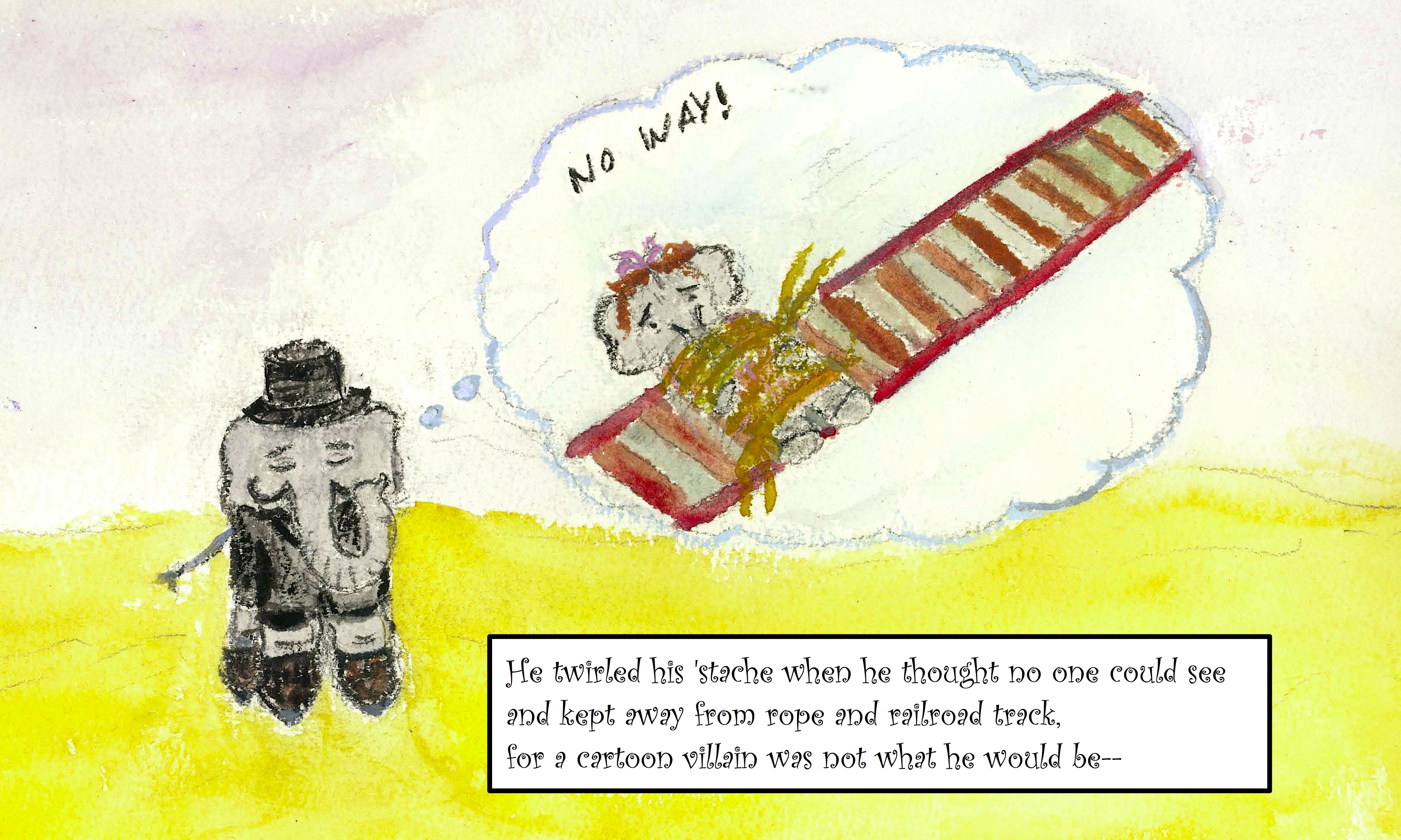
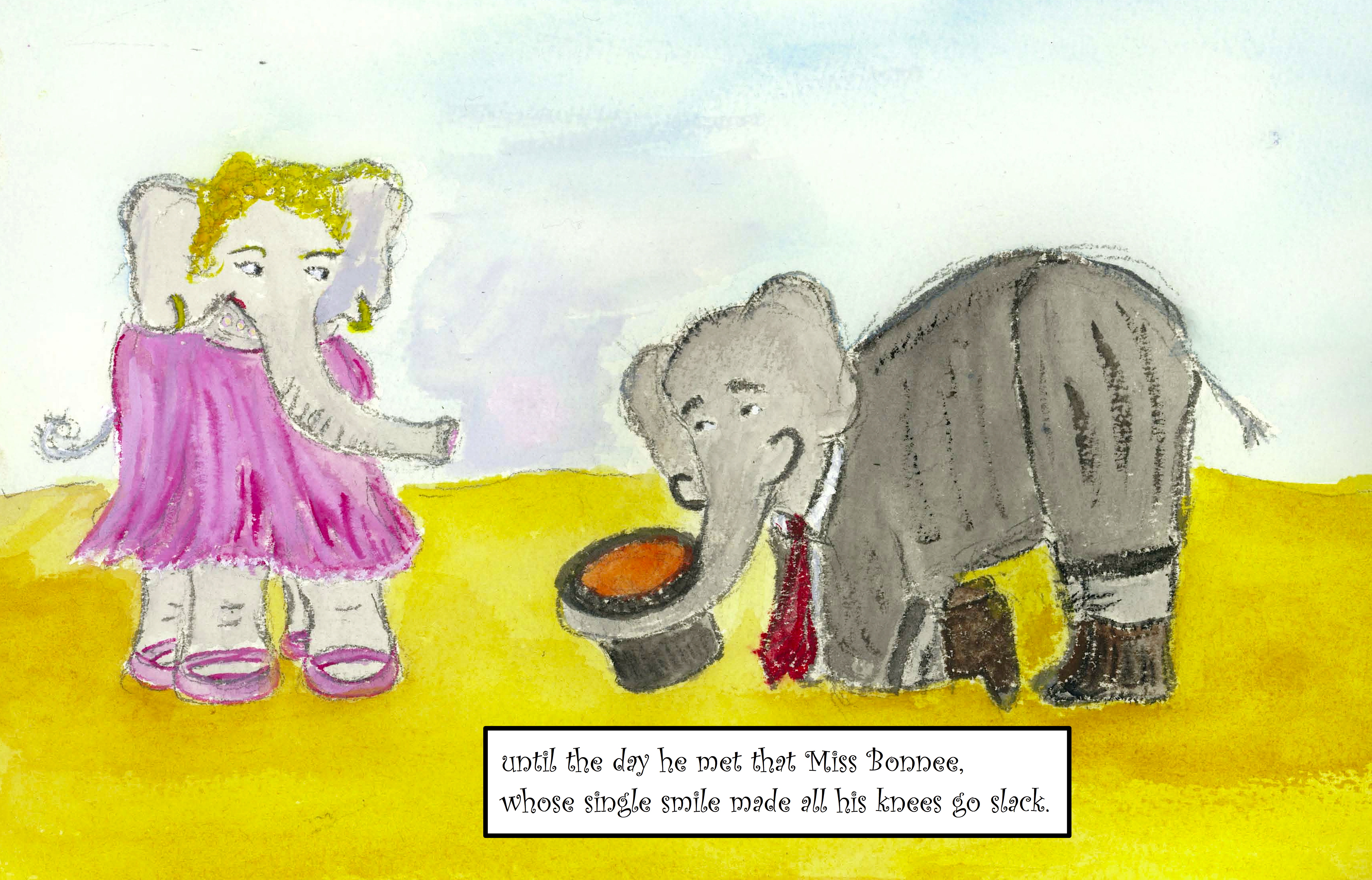
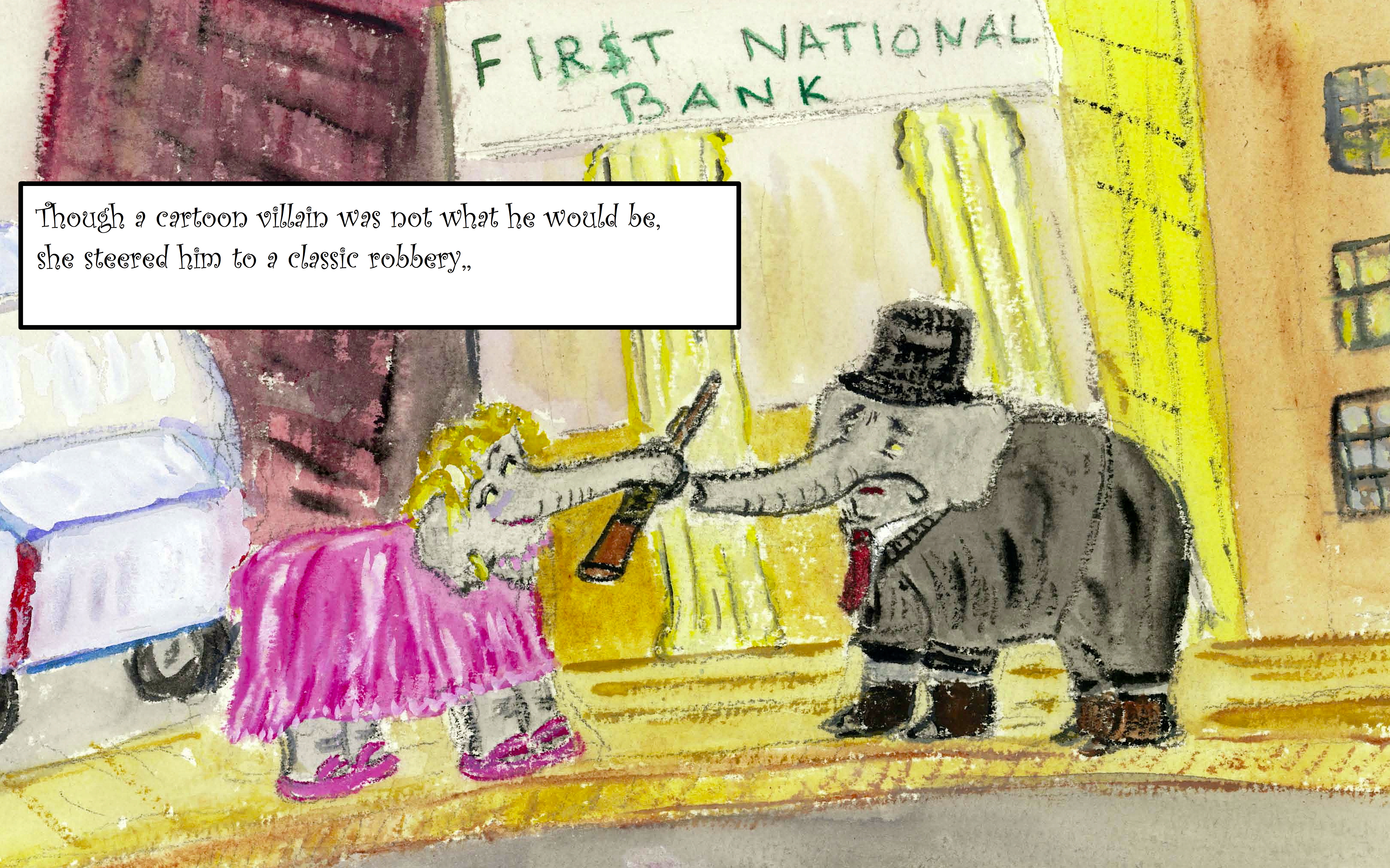
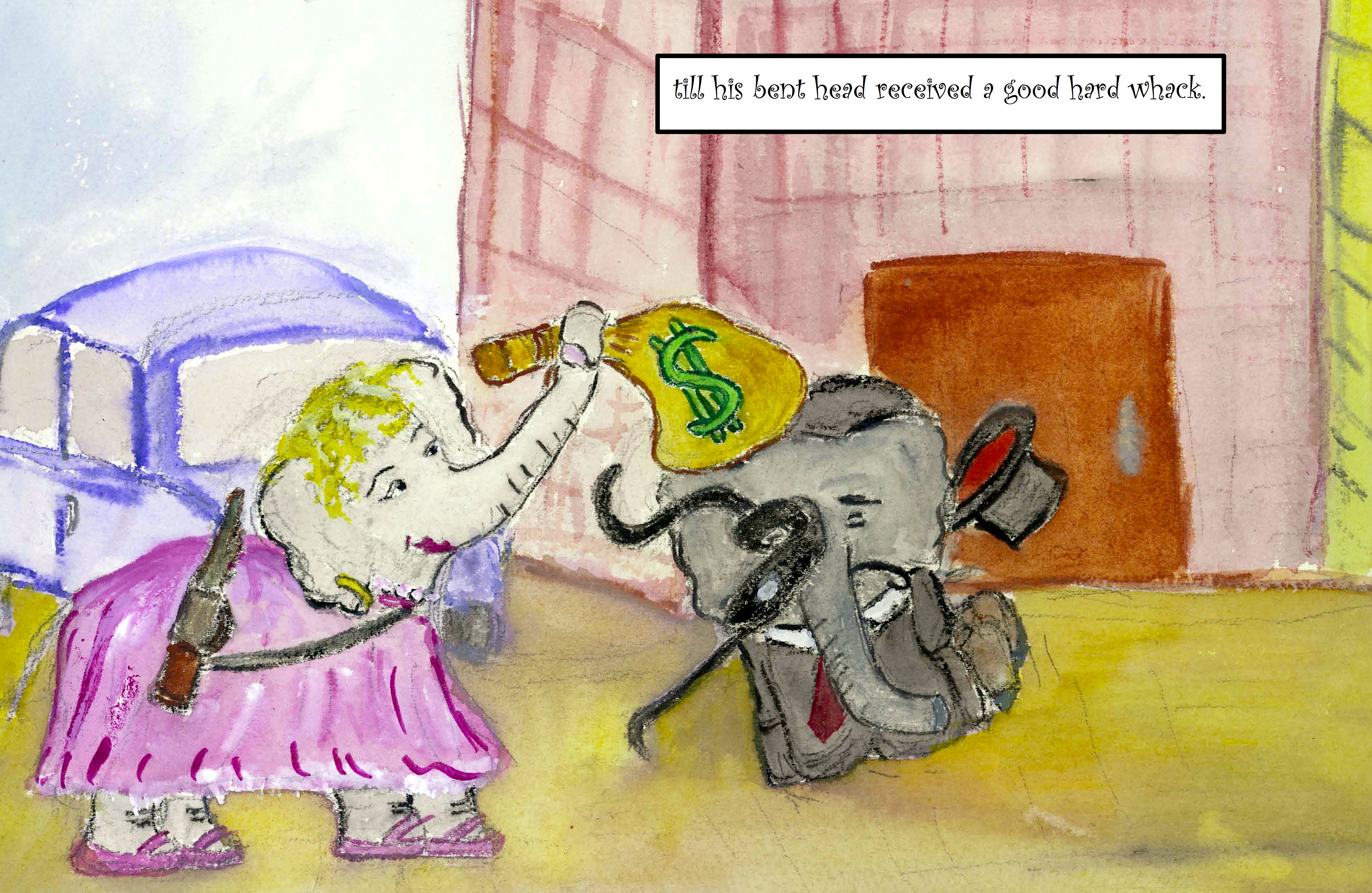
Contrast in poetry, the subject of a thoughtful prompt by Victoria C. Slotto for dVerse Poets Pub , is a useful tool for effects in all poetry, but it is especially useful in the repeating, and potentially static,  lines of a villanelle.  Contrast in a villanelle can come through changes in meaning, homonyms, enjambment (the breaking up and running over of lines), elephants.   (Note that I tried to put the lines of the poem in the drawings but they are incomplete and blurry so I’ve put them below each drawing, and the full poem below that.)  (I am also linking this poem to the poets’ rally.)

He twirled his ‘stache when he thought no one could see
and kept away from rope and railroad track,
for a cartoon villain was not what he would be–

what he sought was originality.
Wearing a hat that was not quite white, nor black,
he twirled his ‘stache when he thought no one could see,

until the day he met that Miss Bonnee,
whose single smile made all his knees go slack.

Though a cartoon villain was not what he would be,

she steered him to a classic robbery,
a bank heist with a gun, a car out back,

He twirled his ‘stache when he thought no one could see,

but see they could, if only digitally.

She whispered, as she relieved him of the sack,
that cartoon villain was not what he would be,

“my hero,” and other murmured fiddle-dee,


till his bent head received a good hard whack.

She twirled her stash when she thought no one could see.
A cartoon villain was not what she would be.

Here’s the poem without elephants!

VILLAIN-ELLE

He twirled his ‘stache when he thought no one could see
and kept away from rope and railroad track,
for a cartoon villain was not what he would be–

what he sought was originality.
Wearing a hat that was not quite white, nor black,
he twirled his ‘stache when he thought no one could see,

until the day he met that Miss Bonnee,
whose single smile made all his knees go slack.
Though a cartoon villain was not what he would be,

she steered him to a classic robbery,
a bank heist with a gun, a car out back,
He twirled his ‘stache when he thought no one could see,

but see they could, if only digitally.
She whispered, as she relieved him of the sack,
that cartoon villain was not what he would be,

“my hero,” and other murmured fiddle-dee,
till his bent head received a good hard whack.
She twirled her stash when she thought no one could see.
A cartoon villain was not what she would be.

HAPPY HOLIDAYS!

P.S.  If you like humor, poetry or elephants, don’t forget to check out my books NOSE DIVE, GOING ON SOMEWHERE and 1 MISSISIPPI on Amazon.  Thanks much.

P.P.S. = Accidentally dropped “Whack” painting from first posting of this.  So sorry!  (Kind of tired when posting but had a nap now!)

MagPie 96- Wearing the Trousers in Macbeth (In English Class With Two Ringed Braids)

December 20, 2011

20111220-120726.jpg

Here is a poem for Magpie Tales 96 and also dVerse Poets Pub Open Link Night.   This is based on a photographic prompt from Tess Kincaid, which was of a woman in a shadow that appeared to be a beard.  (It’s not so clear in my version above.)  Below is my poem:

English Essay In Two Ringed Braids

In English class in post-colonial school,
the study of idioms, literature
and exposition are assayed with
diligence: “some
complain that Shakespeare is
dull as ditchwater but in
the pages of MacBeth
may be found
a rip-roaring
ride.  Lady
Macbeth wears the trousers
in the family at the
beginning of
the play, but by Act V,  Macbeth
has taken the trousers
back while the Lady
throws the baby out
with the bathwater, as it were, going mad.
Macbeth, in the meantime,
adds suspenders
to his belt, killing one and all
till he feels as certain of
the throne as Bob’s
his uncle, but he cannot
see the forest for
the trees, coming
to a very bad end.”

The girl writing the essay wears
her hair in braids, which curl into
two ravenshone rings, elastics
camouflaged, in
each case, by
a large white bow, looped
to emulate both butterfly
and lotus,
wing and bloom,
and too, the “x”
of “betwixt,” all
in one
fell swoop.

And now a question for decisive poets and readers out there–I contemplated changing the last couple of lines to refer to the “cross” in “betwixt” rather than the “x”.  That seemed a bit heavy-handed to me, but I am curious to see if anyone thinks it would be an improvement.  Also toyed with “braces” in place of suspenders, but, well, I live in NYC.  Thanks much for your thoughts.

(And please please please check out my new comic novel NOSE DIVE on Amazon if you have a mo.)