Archive for April 2013

Archeological Museum (Not)–Golden Mugget in Thrissur

April 20, 2013

20130420-102406.jpg

20130420-102458.jpg

20130420-102511.jpg

20130420-102538.jpg

20130420-141908.jpg

20130420-142627.jpg

20130420-142642.jpg

20130420-142658.jpg

“Heh, heh,” the autorickshaw driver answers with the sideways shake of his head that looks like ‘no’, but means, ‘yes,’ only his is a particularly dismissive sideswipe which seems to mean, ‘of course, you idiots’ and he springs into gear (and put-put) and we, who are not able to bear crossing the sprawling exhausting tar-melting streets one more time, breath a sigh of relief that we won’t have to, so sit back, holding our hats, thinking maybe this city, Thrissur, isn’t so bad if you just whiz around it, avoiding the sidewalk crush of people and trash and generator (the small gas kind which exude hot rumble outside every couple of shops.) (The hydro-electric grid can’t be trusted after a few years of very bad rains.)

Until suddenly, the ride just seems too long, and I shout out once more “Archeological Museum?” and “do you know where we are going at all?” and the driver stops in the middle of a roundabout, annoyed, but also clueless, so after I shout “Archeological Museum? repeatedly and show him my guidebook map, he swerves through the traffic to a guy on the side of the road, and at last, after much discussion and more blank review of my map–I realize that drivers here–even men – are not used to reading maps–we head off again, in a completely different direction, till our driver pulls us into the grandly gated entrance of a large official-looking building bright with white paint and past colonialism, where I confirm ‘Archeological Museum?’ and he bobble-nods again.

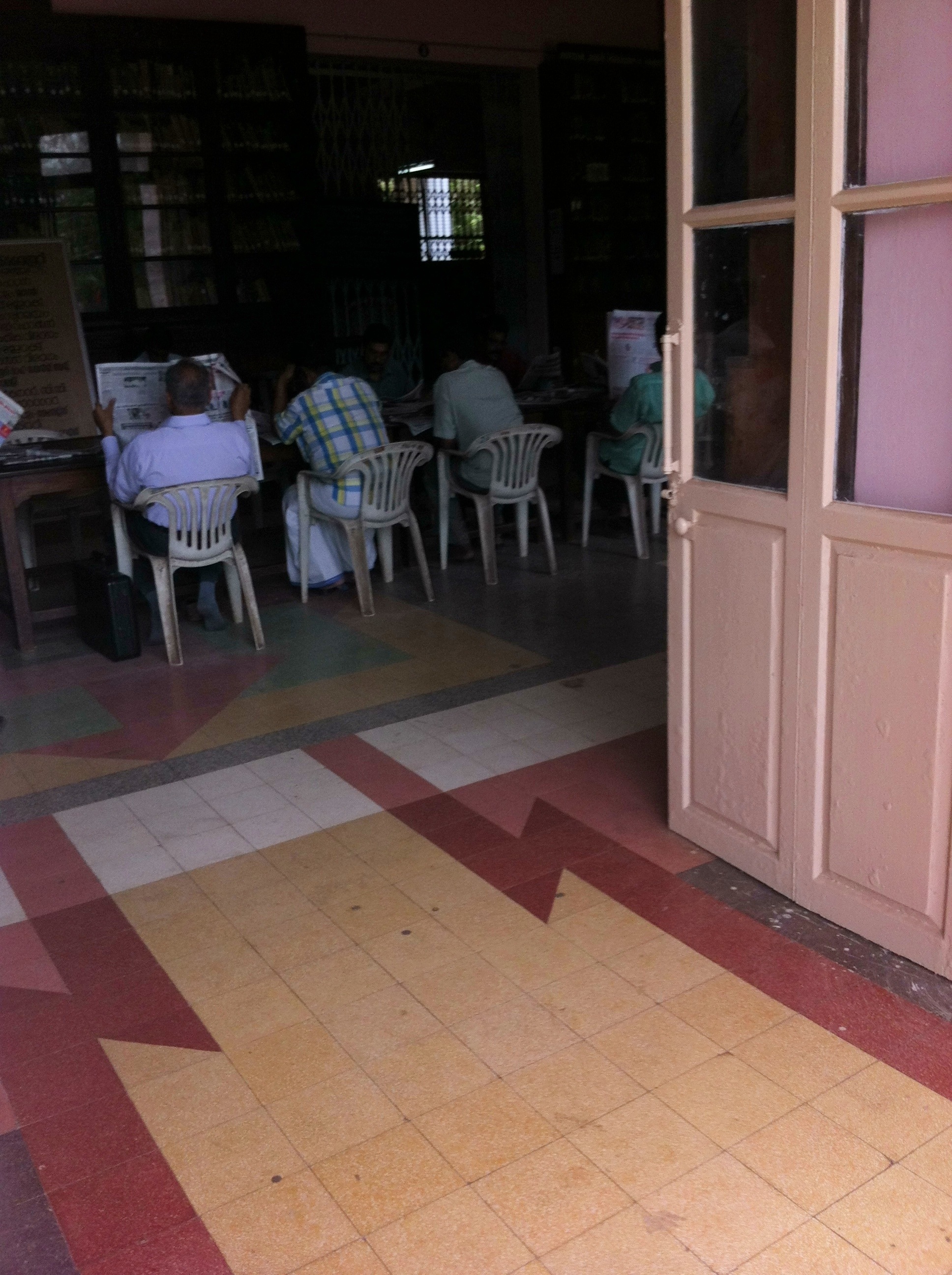
We walk up to a dark entryway, a blur of fans and men in glasses–maybe the intellectuals of the town–sitting around a long wooden table. They look up from their newspapers (many with wooden slats down one side) intensely irritated by our approach, telling us dismissively that it is the town hall, also, it seems, the public library and basically to go away–

But I insist, and one comes to the door, and “Museum,” he says and directs me around the block – well, around the block and “no more than half a kilometer.”

In truth, we are not sure we care half a kilometer about the Archeological Museum, but it is really too hot to look for elephants right now, the reason we have come to this town–so trudge down the road, backtracking the way the rickshaw has come, and treading a fine line between debris and traffic but glad at least that the alleged museum is on the same side of the road, and that the only street crossing required is relatively mild (though we hold hands and trot)–

Come at last to a small gathering of food stalls and rickshaws, people, children – the municipal zoo is here – park benches, shade, wilting flowers-and a large green building labeled with a small sign “Multipurpose Museum.”

The description “Multipurpose” does strike me as odd, but this is India – home of signs like “Infant Jesus Tyre Repair,” and electric words at the highway toll booth that blink after one has paid “Happy Bye-bye”–

My husband, a man of maps and precision, particularly when it comes to historical, geographical or scientific matters,would undoubtedly look back at the guidebook around now and comment that this building is not in the same location as the “Archeological Museum.”

But hey, it has a big skeleton of an elephant in the doorway. The tallest elephant in memory, says the explanation, and describes this particular beast’s history in all state festivals around the early 1900s.

It doesn’t occur to us that the early 1900s is not exactly an archeological age, nor that the large wooden sculpture (next to the elephant’s bones) that was made in ten months in the prison yard by someone sentenced to life imprisonment in the 1970’s is a strange choice for an archeological curator.

As are the chipped models of various sea creatures. “A Dolphin.”

The next room though has some old armor and weaponry: “A Curved Sword.” “A Straight Blade.” “A Sword with a Silver Line.” “A formidable knife used by Afghans.” Truthful enough descriptions so far as they go.

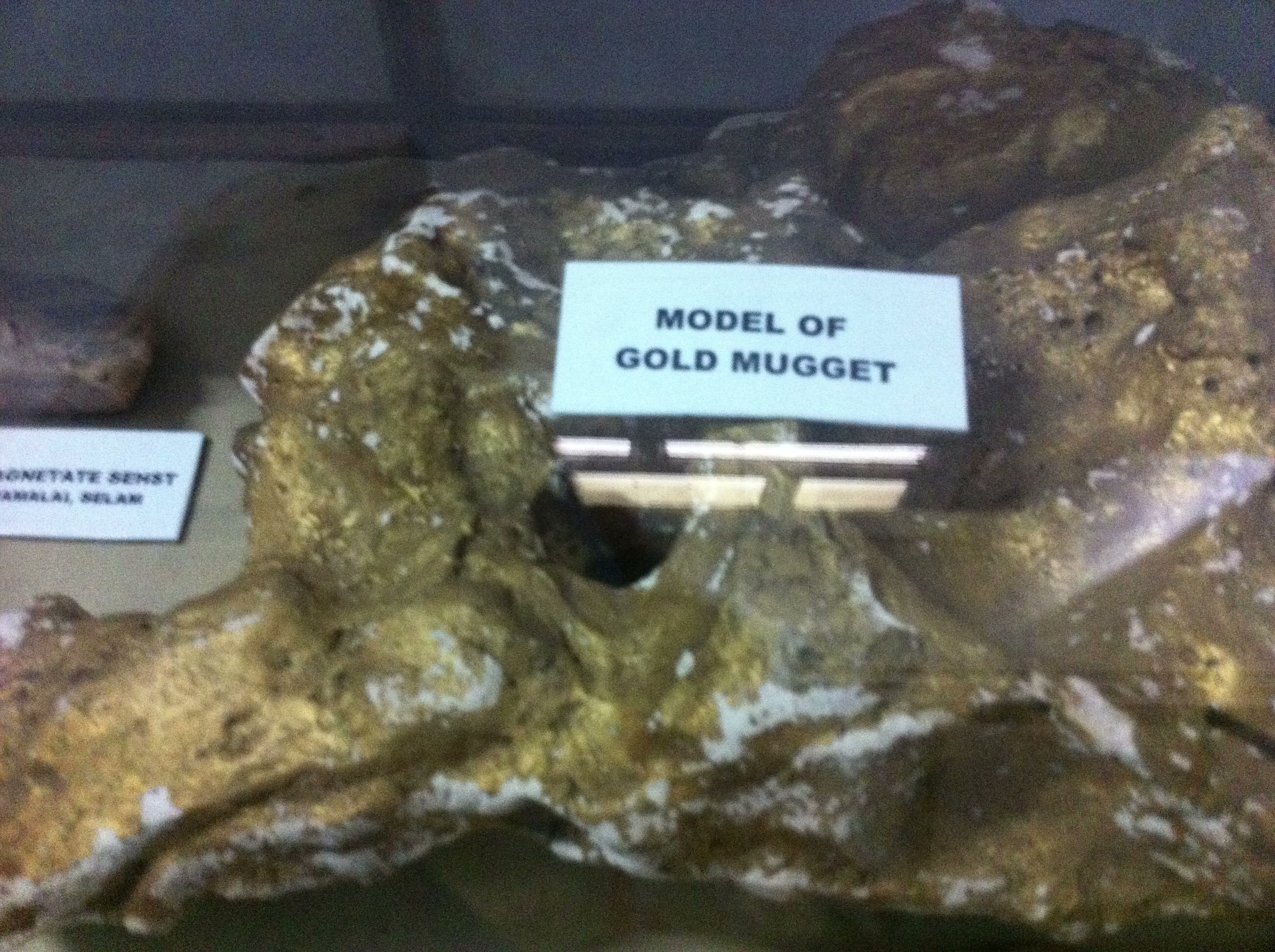
Next there’s a model of a Dutch House, Kathakali dance costumes, and many cases of minerals – meaning rows of rocks with things like “Sand” written underneath them. Photography is prohibited, but we cannot resist the specimen above ‘”Model of Gold Mugget.” (We joke, but also acknowledge that our Malayalam is nonexistent, and frankly, I kind of like to imagine young children coming here on a Saturday morning, their imaginations sparked.) (There are large conical breasts on one of the Kathakali sculptures that would seem to spark a lot of things.)

However, the most excited visitors we see are two young couples in the shadows of the upstairs landing, who, when we come up the stairs, immediately spring apart from each other, while the guard up here, a woman pushes a small plastic “backscratcher”- the kind with a little curve-fingered hand–down the back of her sari blouse.

On this floor, the cases hold rows of cloudy glasses of water showing various species of dead crustacea,fish,a cobra and various moth-eaten birds.

It is worth noting that in all this touring neither my daughter or I question where are those items specially mentioned by the guidebook – the cooking pots big enough for children to fit into, certain special intricate boxes, old scrolls – but honestly, we are probably just as happy to see things like the “gold muggets.” There is something about spending time in India when it is very hot – combined with the strange veering between freneticism and torpor (all mixed up with a heavy dose of avoidance of any kind of offer, question or tout)–that just seems to sap the good old intellectual curiousity.

Then of course there’s the brain fog of the antimalarial tablets.

Though, as I sit here, writing this, I suspect that our willingness to accept, to even be content with the Golden Mugget Museum, to not even realize till several hours later that it could not have been the Archeological Museum, probably cannot truly be blamed on the antimalarial tablets – or even on the heat.

But rather that it comes from some deeper aspects of our personalities, at least, of mine. (I will not hook it on my daughter.)

On the one hand, I seem marked by a kind of intellectual laziness–that part of me that would find all the informative signs at a true archeological museum rather hard going. On the other hand, I have been granted the gift of a fascination with “just folks”–big-eyed couples jumping apart, bored women scratching themselves.

I do not, frankly, know if this is a genetic gift, a general gift (meaning applicable to my greater life), or simply something I long ago picked up for the specific purpose of travel in India. I do know that it is an extremely useful quality for traveling here.

There are plenty of historic sites, beautiful sites, archeological sites, and even some good museums in India. But if you travel here with an expectation of seeing a large number of them (even those directly on your route) in any truncated period of time or budget, you are pretty certain to grow almost immediately irritated and frustrated (i.e. “hot and bothered.”)

You are also likely to miss whatever golden muggets lay just before your eyes.

And there are so many of those – I think of our cooking instructor in Cochin – who so sweetly called out “Leo” – her husband’s name–every time the power went out in our little cooking class–not pausing in her supervision of my daughter sauteing at the small gas range; while Leo repeatedly carted out a lithium battery powered light from a back room, and set it up on a corner shelf, and how, in those fan-less moments of rather complete- and then semi-darkness, I would become conscious of a delicious, if slight breeze, lifting the air–

But I am still in the museum in this particular story, and as we step out into the blistering light, we come onto two hedgerows of deep red Amaryllises–and I say something to my daughter like – “okay, they’re wilting, but you have to admit that they are beautiful,” and she admits that they are beautiful, and we get into another rickshaw, and this time, although we tell driver the name of the biggest road in town, we mainly just get him to drive until we get to a good stopping place, or should I say, jumping-off place, and ‘stop’, we tell him, waving our hands, and he, scooting as close to the curb as possible (given the traffic), does.

PS -after the museum and elephant, we got ourselves taken to one of the big churches in Thrissur – Our Lady of Lourdes.

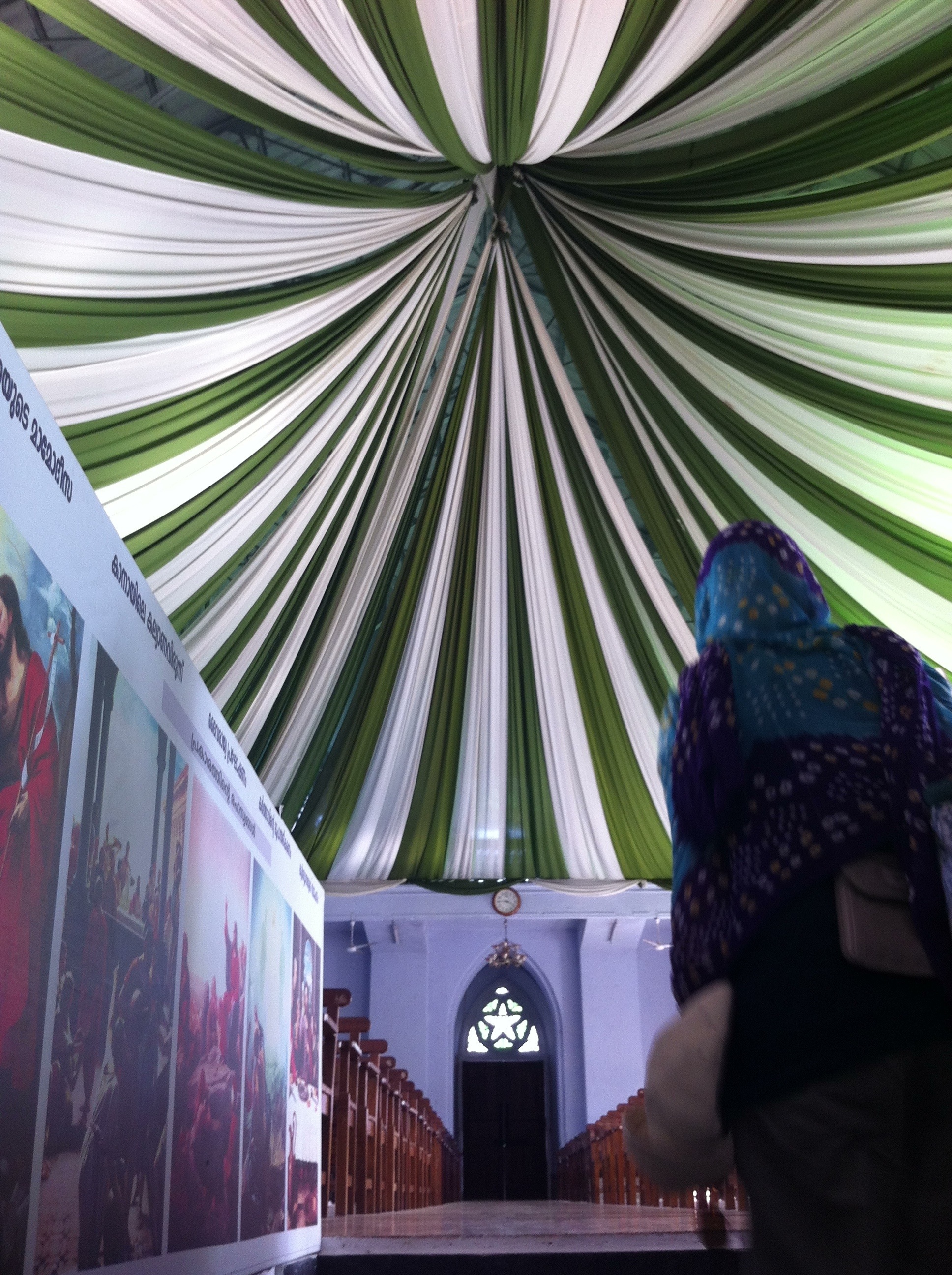
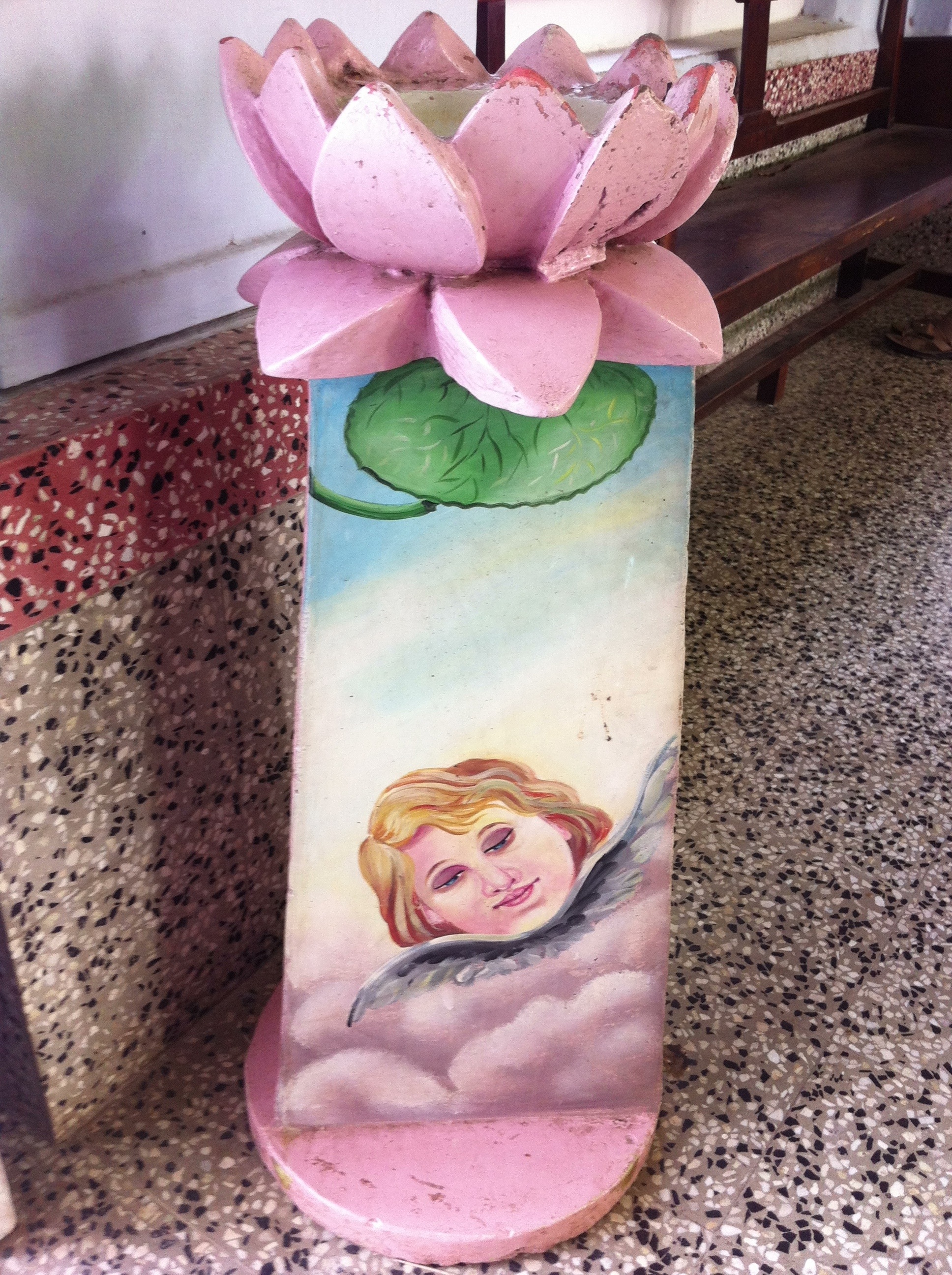
There are a zillion churches in Kerala. They are huge and extremely ornate, with spires and a bit of a wedding cake motif. This church – which really had a lovely atmosphere–had a big green tent in the inside (below most of the front nave) to block out the sun, and a very cool (temperature-wise) underground sanctuary. The pictures show the tent part of the nave.

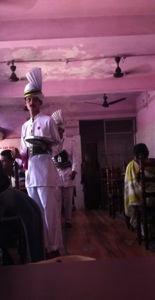
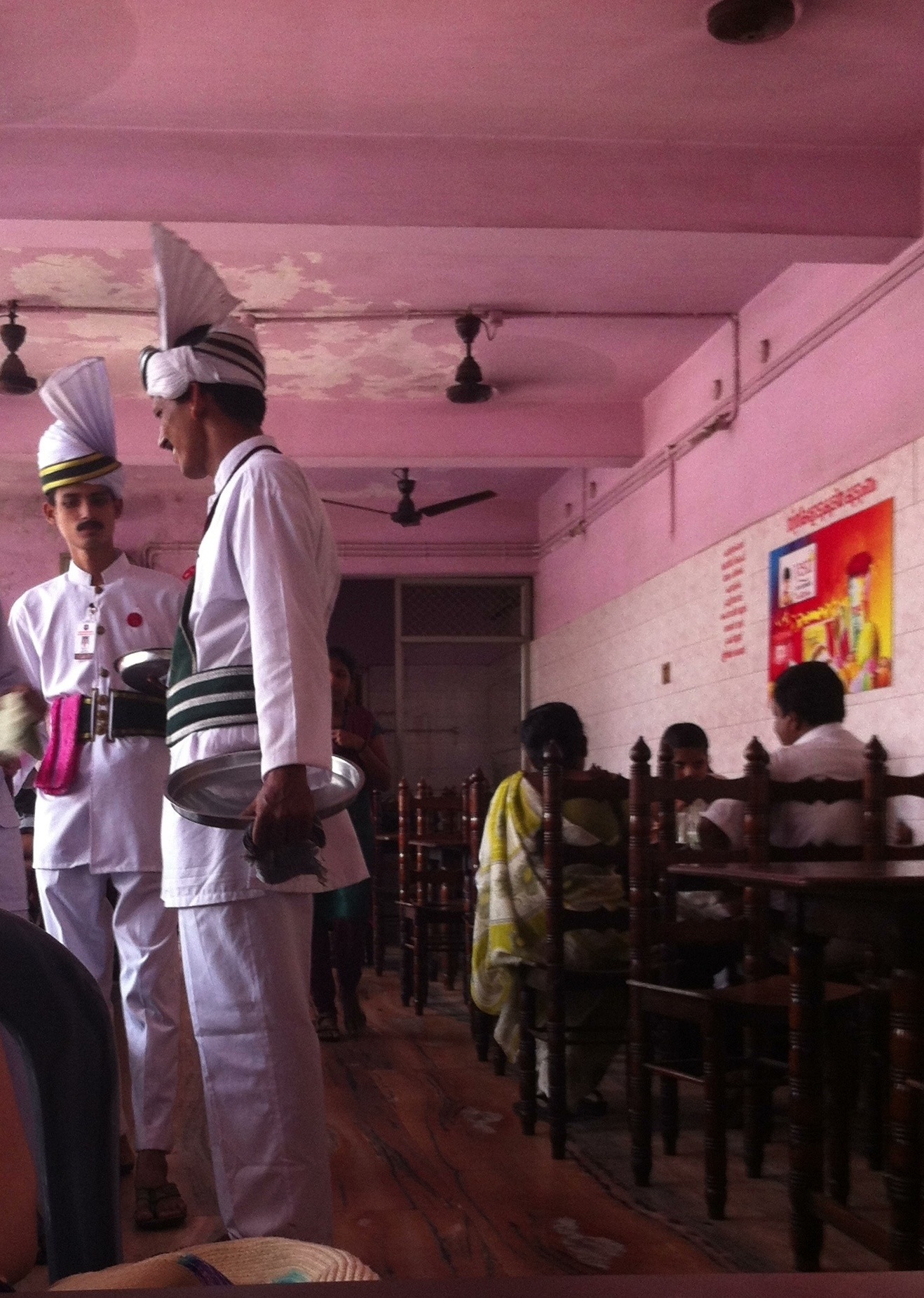
I also include a quick picture of the Town Hall’s reading room, and my favorite place in Thrissur – the Indian Coffee Houses. Indian Coffee House is an old chain owned and run by a cooperative of Indian coffee workers (in the South.) The waiters all wear weird cockades. I really liked this place because when I was here before (thirty years ago), they always felt like a certain respite. They’ve gone a bit seedy, but still feel very fun to me.

You can see that pink is a popular color around here.

PPS – sorry for endless typos and endless text – I really feel as if I’m losing my grasp of language of late. This part I’ll blame on the anti-malarials.
More on Finding the Elephant (Thrissur)

April 19, 2013

20130419-220801.jpg

20130419-221126.jpg

20130419-221146.jpg

20130419-223254.jpg

20130419-223629.jpg

20130419-224007.jpg

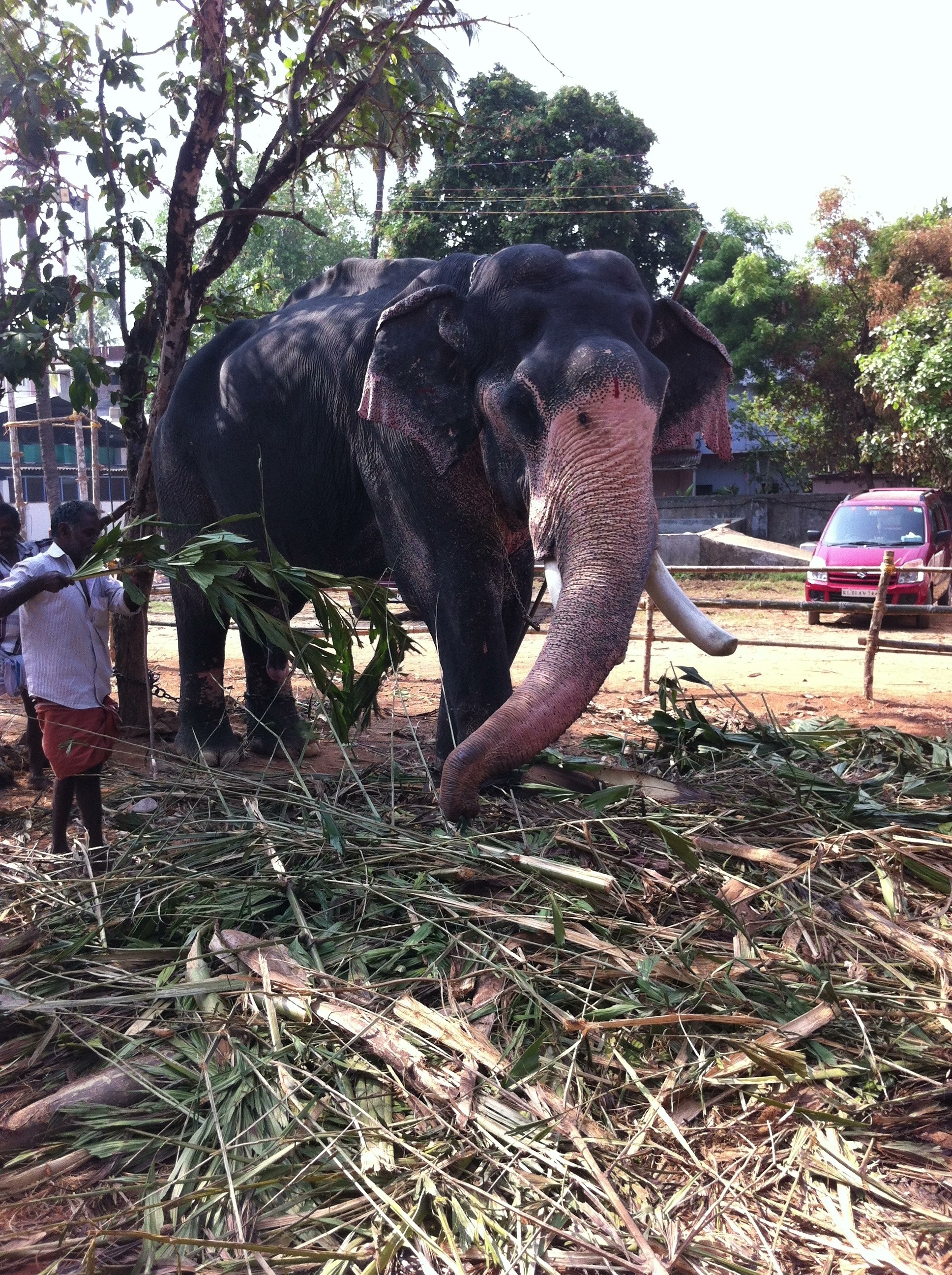
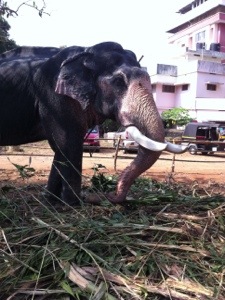
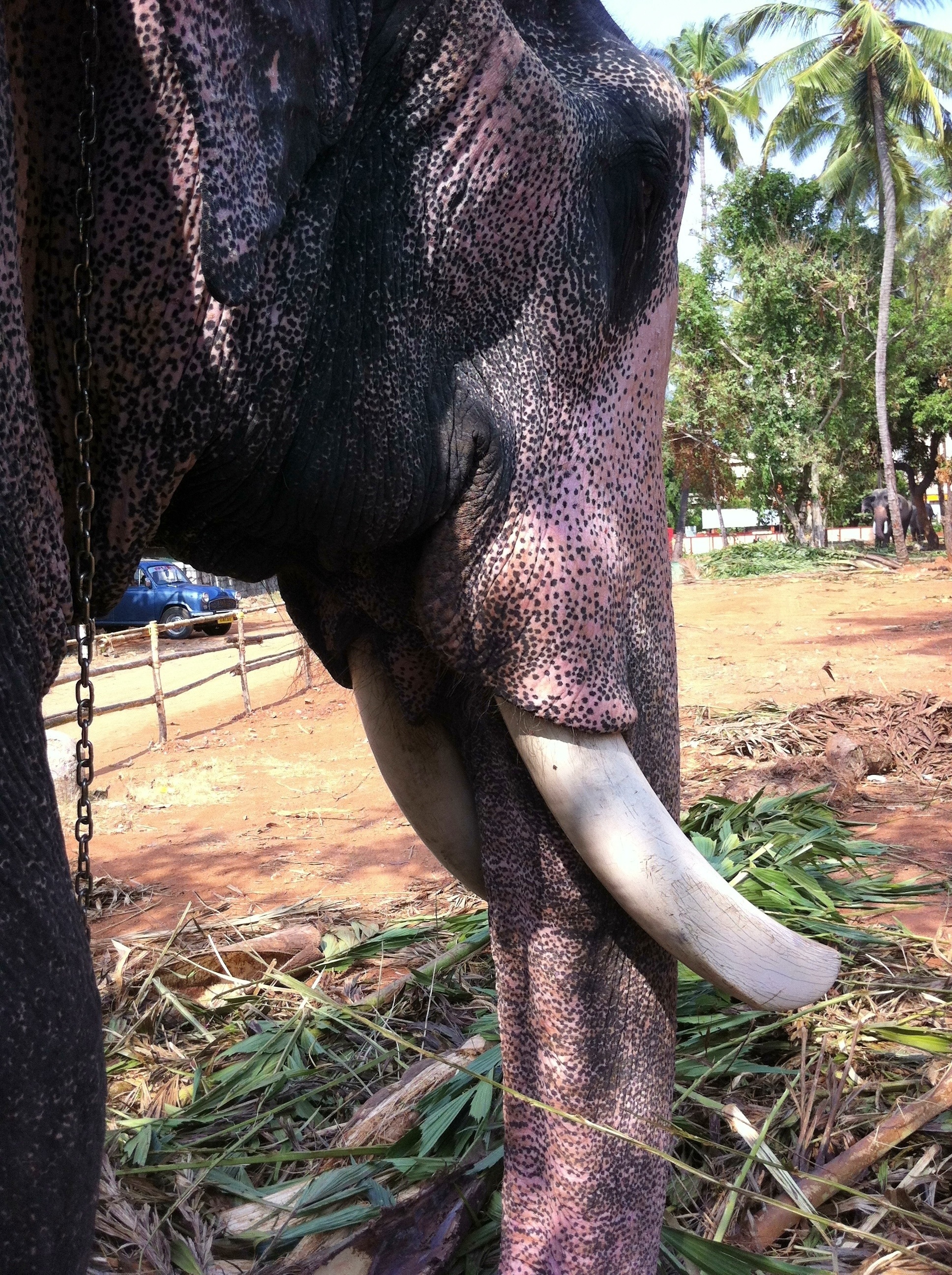
The elephant had an erection. I can’t make any jokes about the size of it as it was somehow part of the sadness of his situation, how the body goes on even enchained, how little dignity is allowed the enchained.

The thing that struck me most – and I have seen elephants before – but what struck me most about this one was the development of the head. The sculpted mounds of the temples; the cranny in the center of the cranium; the intense (and immense) modeling of the skull, the slightly bloodshot thick-lashed eyes that looked with intensity out of its thick skin almost as if looking out from a mask,

Touching its side felt like touching a road made live, tar-folds of a circuitous bristled pathway, back and forth and back and forth, and back again. Dry, grooved, tear-inducing.

It sounds like I am being overly sentimental. I don’t think I am. .

We left chastened. Again, I’m not sure why exactly – we had known any captive elephant we would find in India we would make us feel sad and punily powerless, and not really all that separate from the actual people that get the elephants and make money off of them. All connected.

(PS– these are pictures from Thrissur, India, a couple of days before a large elephant festival, where elephants, in costume, parade around a Hindu temple. The guy in the photo is the elephant owner or trainer. The young woman is my daughter.)

Worries/Recriminations in Thrissur, Kerala

April 18, 2013

20130418-123400.jpg

20130418-171717.jpg

20130418-171756.jpg

20130418-171822.jpg

We are currently staying at the best hotel in Thrissur, a small city in central Kerala. It lacks a certain je ne sais quoi. Let’s call it, freshness.

We have come for elephants –there is an elephant festival here in a couple of days–and the air conditioner in our room– it is about 100 degrees and muggy outside–has a definite rumble.

Thrissur was an odd choice. The actual festival is known for an intense jam of people, heat, and elephants (sometimes running amuck), so we thought we’d give it a miss.

On the other hand, we also thought it might be Interesting to see elephants being prepared for the festival.

We know that they will likely be mistreated. We could have gone to some kind of elephant park instead possibly– maybe even have washed elephants. It would be pretty cool to wash an elephant. But we worried that those elephants might also be mistreated (subtly) and that by paying to wash them we might be complicit in their mistreatment.

Is it better to be where there are no pretenses of sanctuary?

And what if they were actually kind to the elephants at the washing place?

We go through these questions again and again. But part of the whole calculus had to do with heat and logistics. It would have been very difficult to get to the elephant washing place at elephant washing time. And so we didn’t. And now we are here.

One of the advantages of traveling with somewhat open-ended plans is that you have endless things to fret about and regret. When you travel with another person, you can also re-miscommunicate all prior miscommunications as to who wanted to do what and who wanted to please whom. There really are many different ways of passing time.

******************

And now we have passed time, and after miscommunications not with each other but with several rickshaw drivers, we have located elephants. This was after being led several blocks by a man with bare feet of leather (or iron) –it is super hot–from the big temple where the festival is planned to a smaller temple where three elephants were stationed in the back yard. (The ones for the festival are not here yet.). Only one elephant was touchable– the other two dangerous–and truly, touching the tamer one was unutterably sad.

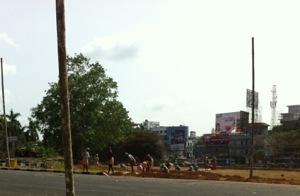
There were comic elements to our adventures today, which I may relate when I am not on the iPhone, but finding the elephant was not one of these. On the way to find him we went through a large temple park– mainly surfaced with dirt– where many very poor men in orange lungis were squatting on the ground digging holes to hold some kind of posts or scaffolding for the upcoming festival. One can’t expect great treatment for elephants in a place where humans are also not treated so well. Though it is easier somehow, as a Westerner, to block out the plights of some of the humans here. Do we anthropomorphize the elephants more than the human? Or is it because the elephant is in a situation that is so clearly against its will and nature? (Chained.). Or is one simply overwhelmed by the numbers again. (We had to look for elephants–people are everywhere.)

Anyway, back in the room now hoping for some freshness by turning off the AC.

I can’t post very big pics without wifi– but there’s our room, a waiter in an Indian Coffee house (part of an old chain where we snacked), the workers and the elephant. I may repost more or these in bigger scale when we get wifi again. Tomorrow.

PS. In case you missed and are interested I posted early this morning pictures I quite like of tea pickers in Munnar.

Tea Pickers (Munnar, Kerala)

April 17, 2013

20130417-224400.jpg

20130417-224254.jpg

20130417-224333.jpg

20130417-224457.jpg

20130417-224637.jpg

20130417-224717.jpg

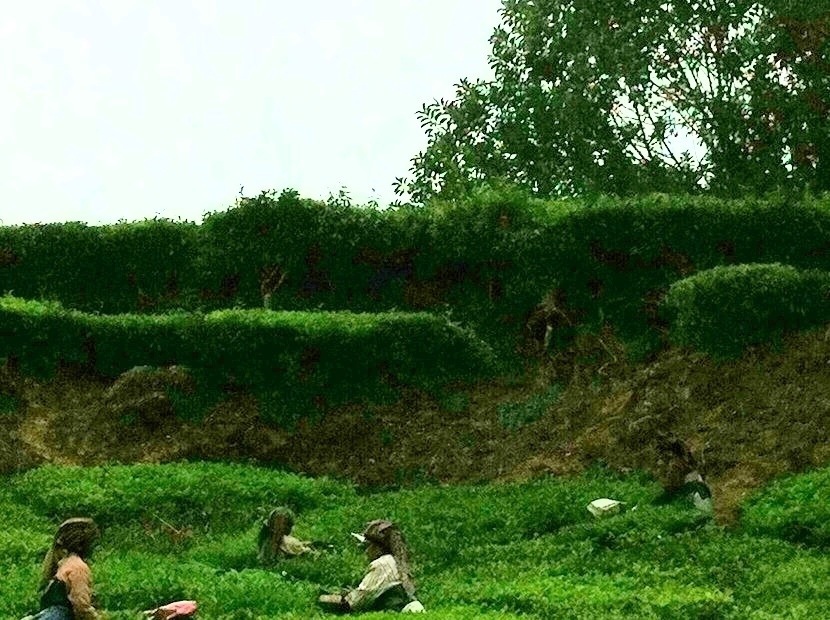
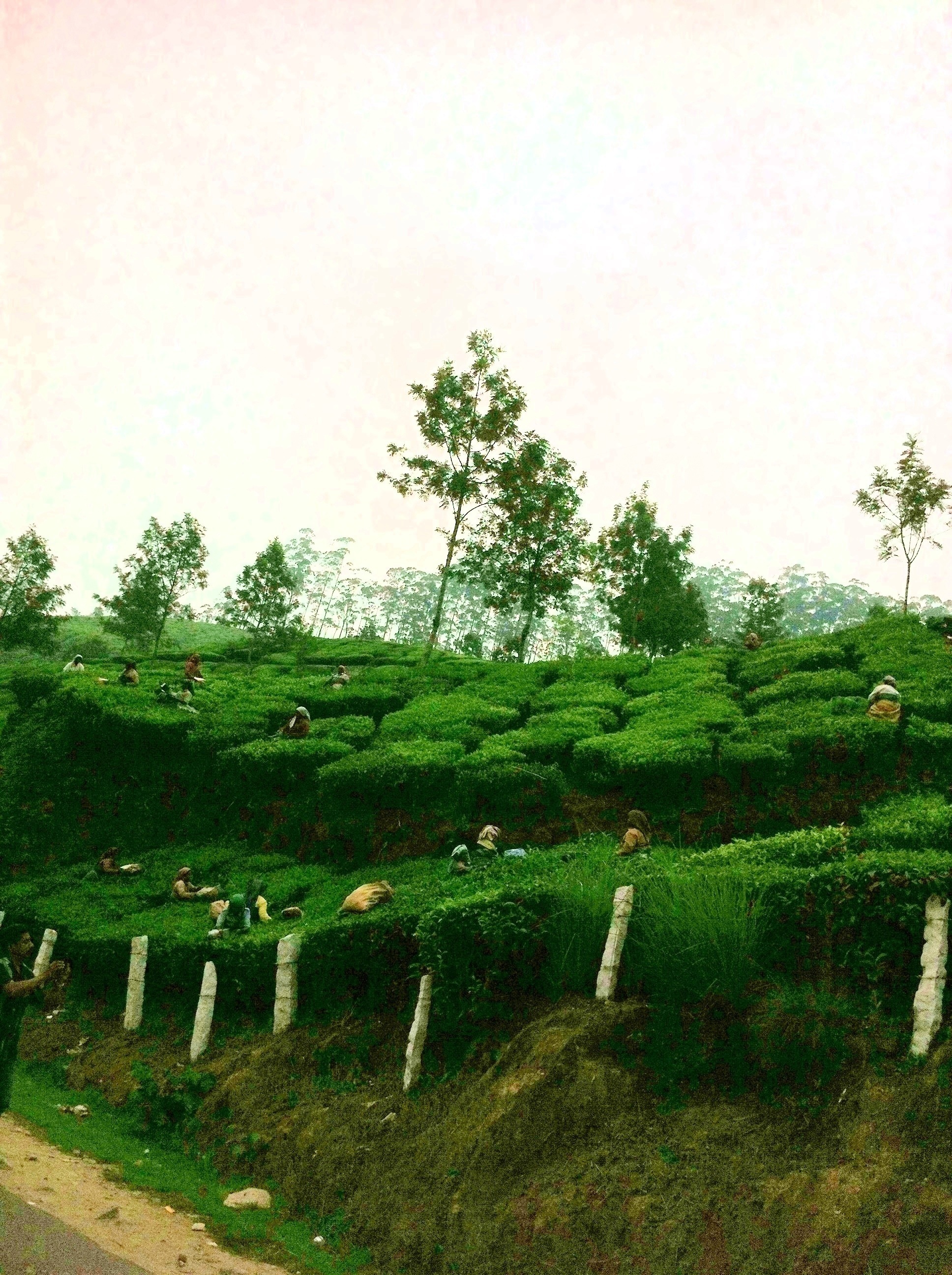
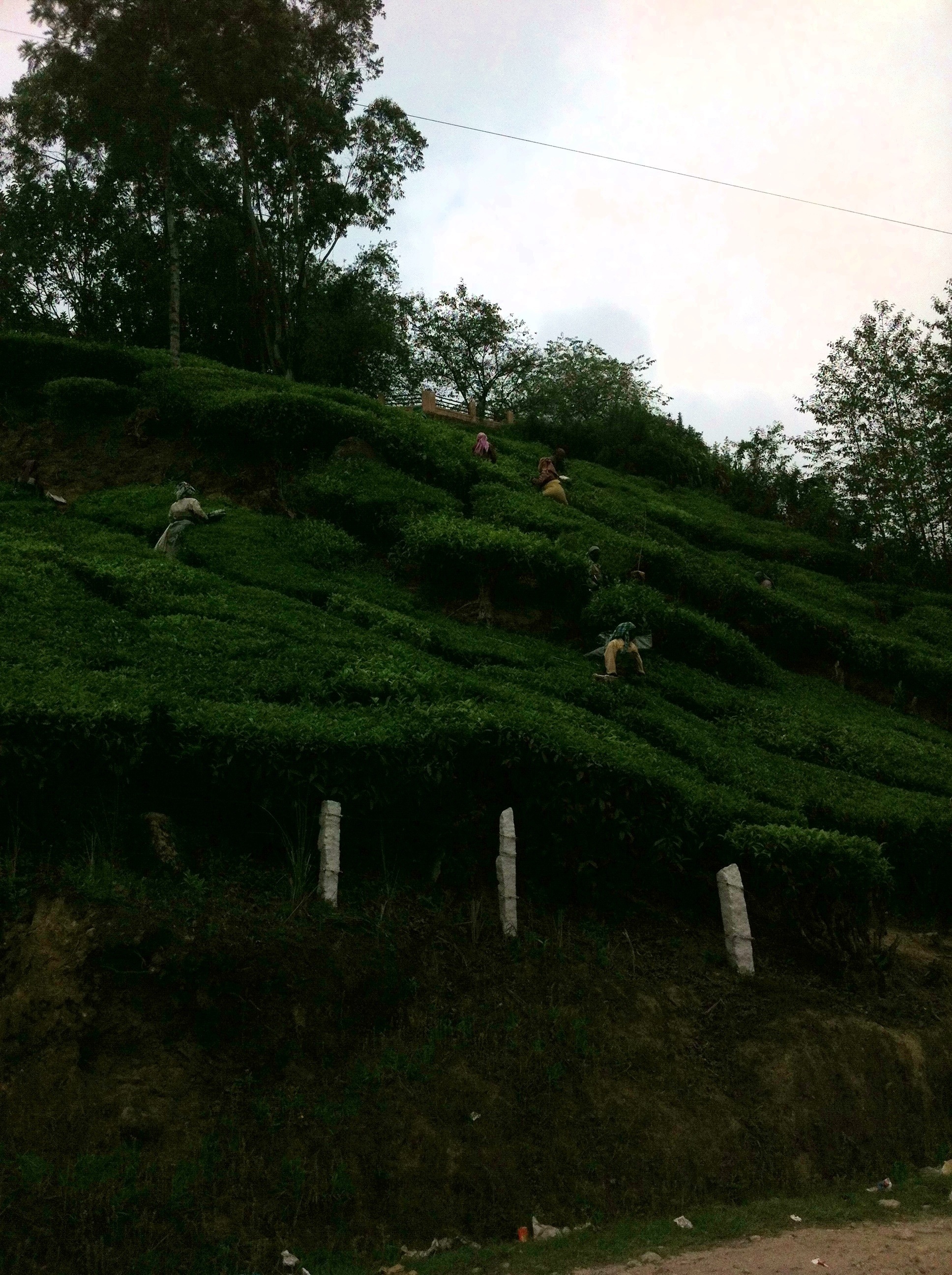
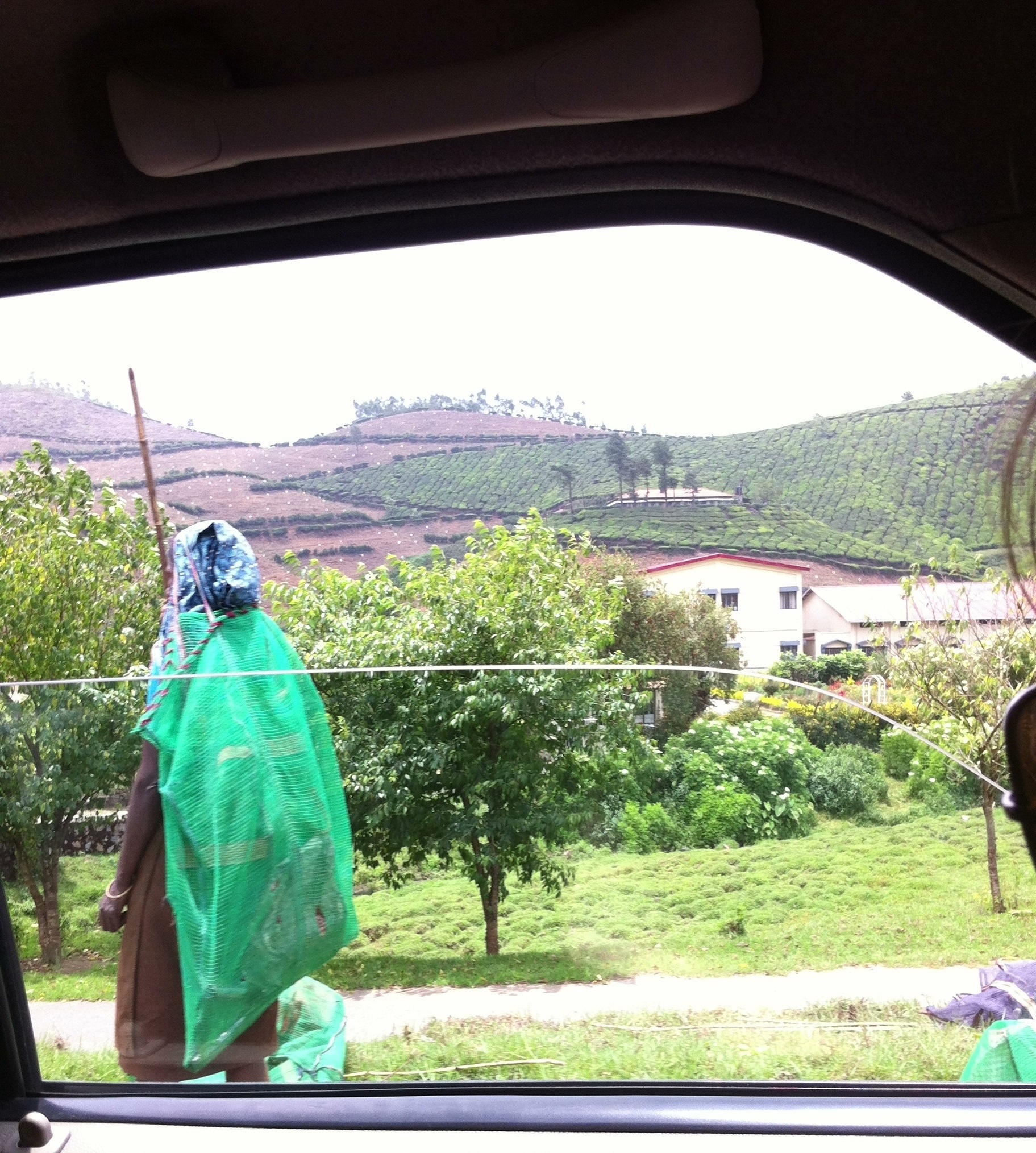
Leaving the Western Ghats and Tea plantation area of Kerala this morning but wanted to post a few not very close pictures I took of tea pickers. They are all women. They wear big plastic sheets (bags?) tied at the waist for clothing. Maybe because of tea stains? They wear tump lines on their heads, the baskets on their backs. They seem to live in plantation housing. The tea workers were originally brought by the British from Tamil Nadu, a state just East of here, in order to work. My understanding is that current workers are descendants of the original workers.

Mountain Goats (In Munnar)

April 17, 2013

20130417-172043.jpg

20130417-172238.jpg

20130417-172448.jpg

20130417-172314.jpg

20130417-172434.jpg

20130417-172536.jpg

20130417-172958.jpg

20130417-173447.jpg

We are very lazy today in the way of travelers (i.e. exhausted.)

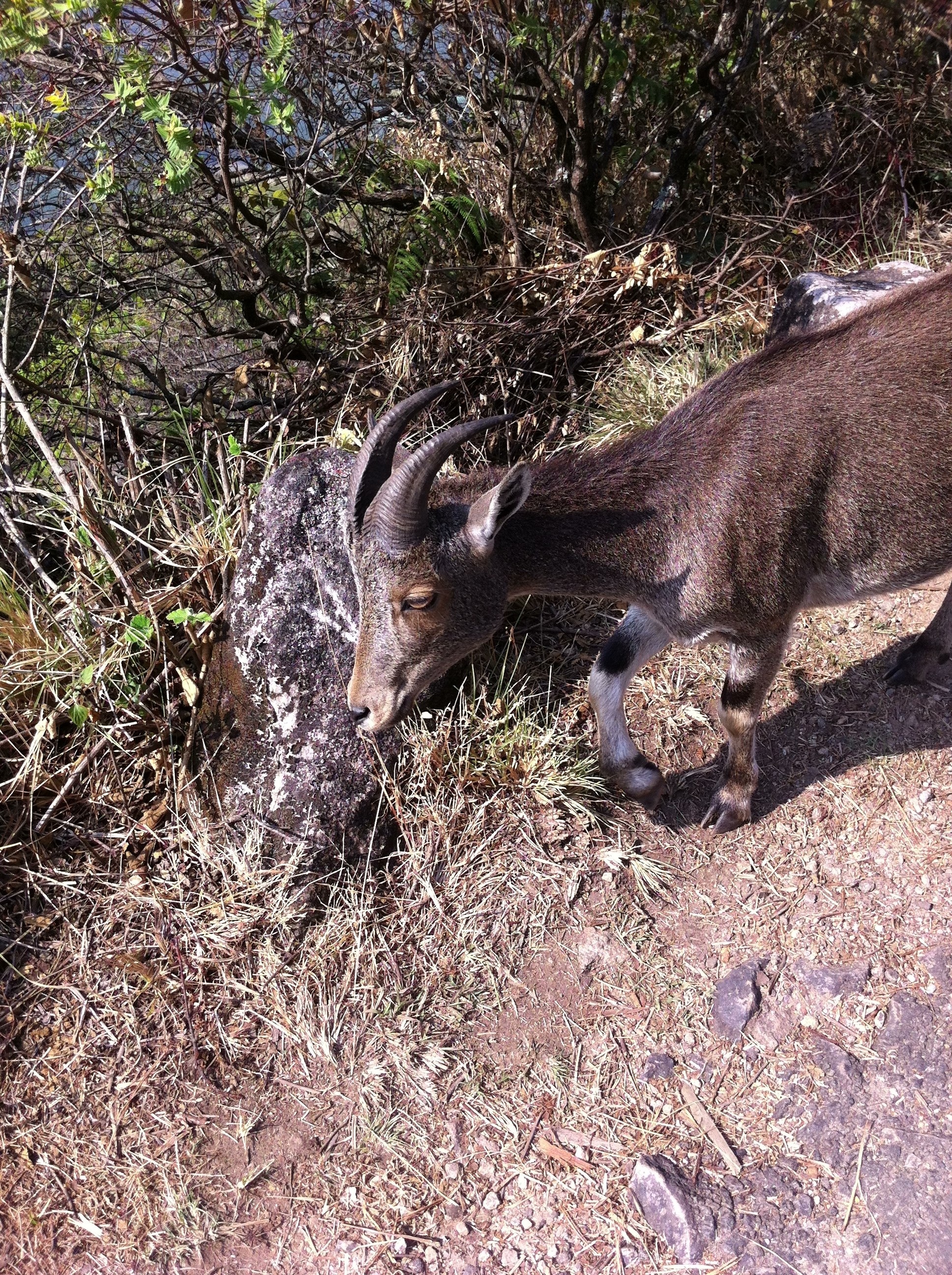
We got up early (i.e. not really terribly early) in order to “feel like we were walking among the clouds,” as one Indian tourist had put it to us. This meant going to the Ernakulum Wildlife Sanctuary, just outside of Munnar, and the home of the Nilgiris Tahr (a wild mountain goat).

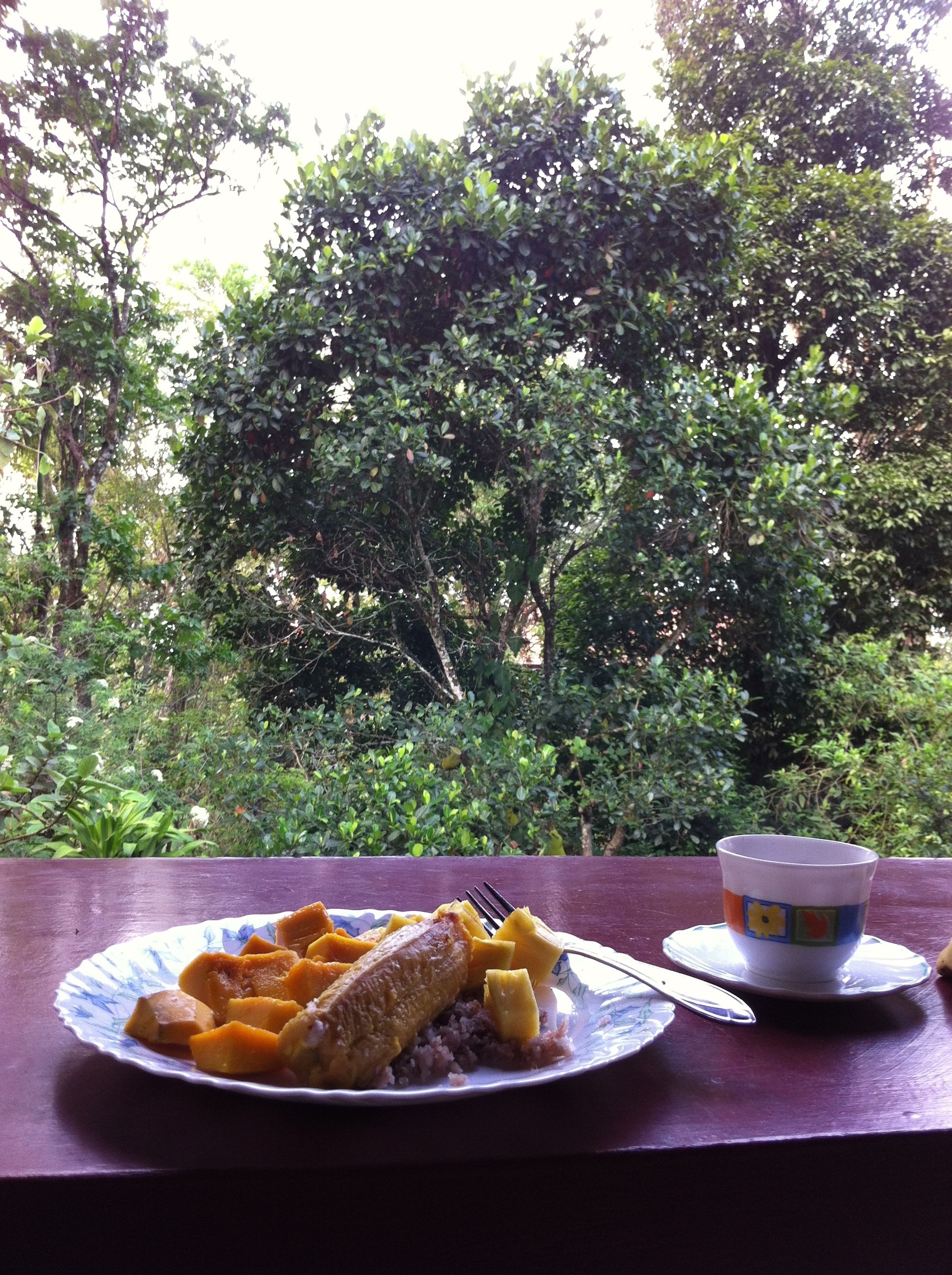
Our host put breakfast just outside our room at 7. All we had to do was pour ourselves into the balcony’s wicker chairs. The tea on the ledge offered ample enticement to me, but my daughter is not quite as involved with caffeine as I am.

Steamed bananas in their skin, coconut with rice flakes (and, of course, sugar), fresh mango, pineapple, home-hived honey. Not quite as enticing as cups and cups of chai, but pretty darn good, I thought, though someone grumbled beside me that we should have gone to bed earlier; that we should try to get more sleep.

All true. (Chomp chomp.)

One of the hard things about traveling in the digital age is the ability to experience, in real time, substantial parts of a very extended day in two different hemispheres.

The screen’s eye view, the shortened shouting distance, afforded by things like Skype, G-chat, the digital NY Times, allows you to be both here and there (sort of). This shortened tether can be comforting (as in, yes, he does miss me right back), annoying (as in, okay, so there’s a burst pipe you’re trying to fix — don’t you miss me?), also extremely disturbing (as it was last night, with the news out about Boston).

But the truth of it is that the body is not geared for living one day in two different hemispheres.

So, yes, we were very tired this morning. But our determined Munnar driver, Sabu, had arrived, and, with a couple of changes and re-changes of the dregs of our dirty clothes – everything else still out being laundered–we were off.

Though Sabu too seemed subdued. (Maybe because we had not hired him yesterday to go for three-four hour trekking, or to his house, or shopping, as he had wished.)

So instead of his slightly mocking, but somewhat overly protective bossiness, he drove swiftly but quietly, at one point, becoming almost sombre as he pulled up next to a Christian shrine, and feeling in the slot at the side of his car seat, came up with a few rupee coins, which he tossed silently into a stone slot.

“A very good idea,” I said. After a brief and weighted silence, on he sped.

He would meet us right here, he said at the in the middle of the little tour bus sand at the Park.

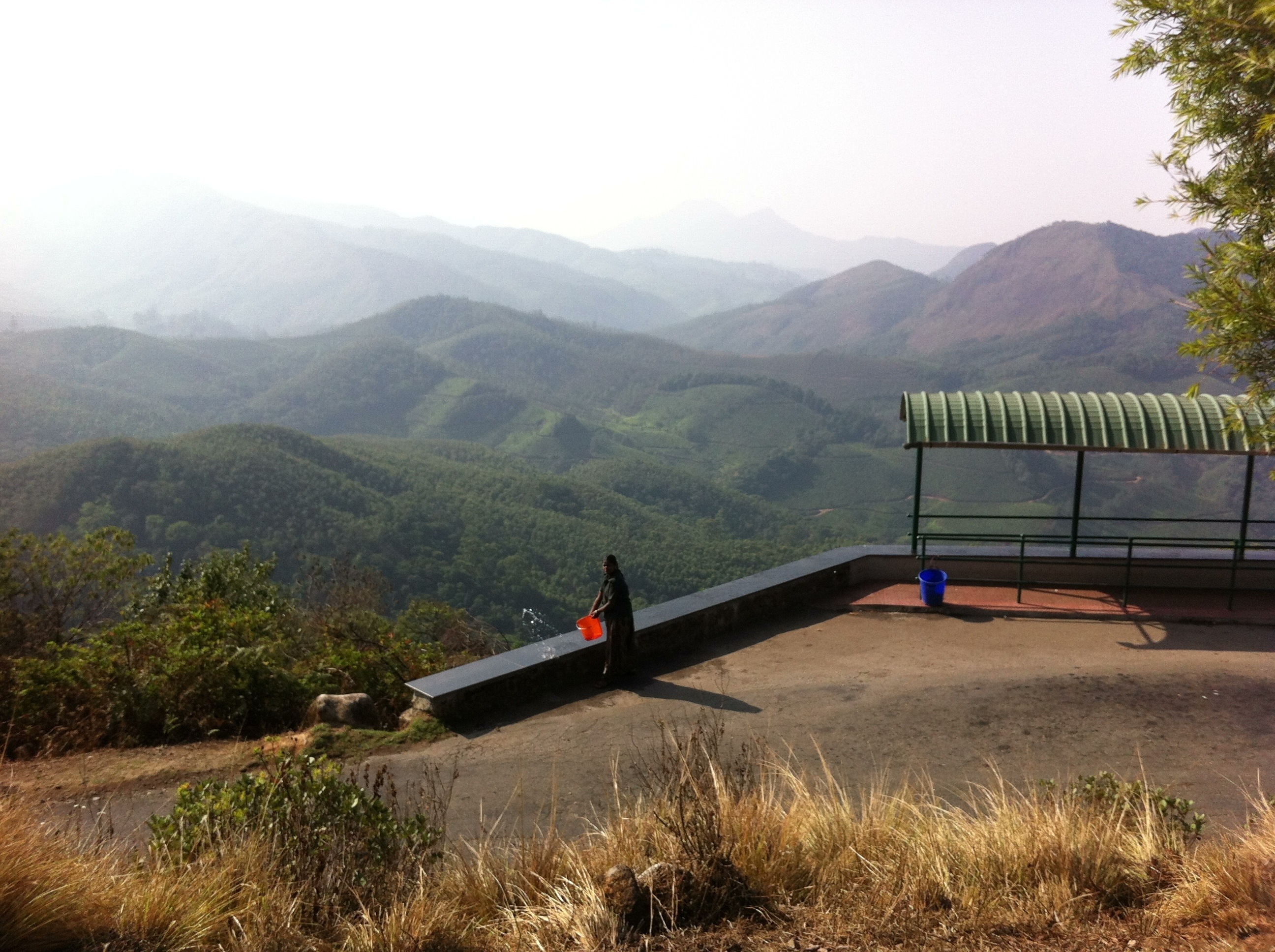
One gets up to the top of the Park by these little buses. As is typical, there is a separate (relatively high) price for foreigners (and cameras), and a separate lower price for Indians. It is hard to be upset by this, as it is a way of making the experience affordable for people who actually live here. Also, and perhaps because we paid a higher price, the bus monitor moved us past all the elbows to a better place in the bus line, so we got seats. Useful as the bus hairpinned us up the mountainside, to a bus stand just above the clouds, as it were.

One walks the rest of the way up, and there are in fact plenty of beautiful ochre-eyed mountain goats. This being India (where somehow the news that bad things happen to good people does not seem to have fully filtered down), at least one family put a small toddler over the fence separating the road from the grassy slopes so that they could get a picture of him patting one of the wild goats.

The child, sensibly, froze. The goat, sensibly, froze. The crowd stayed active enough, urging each to do something.

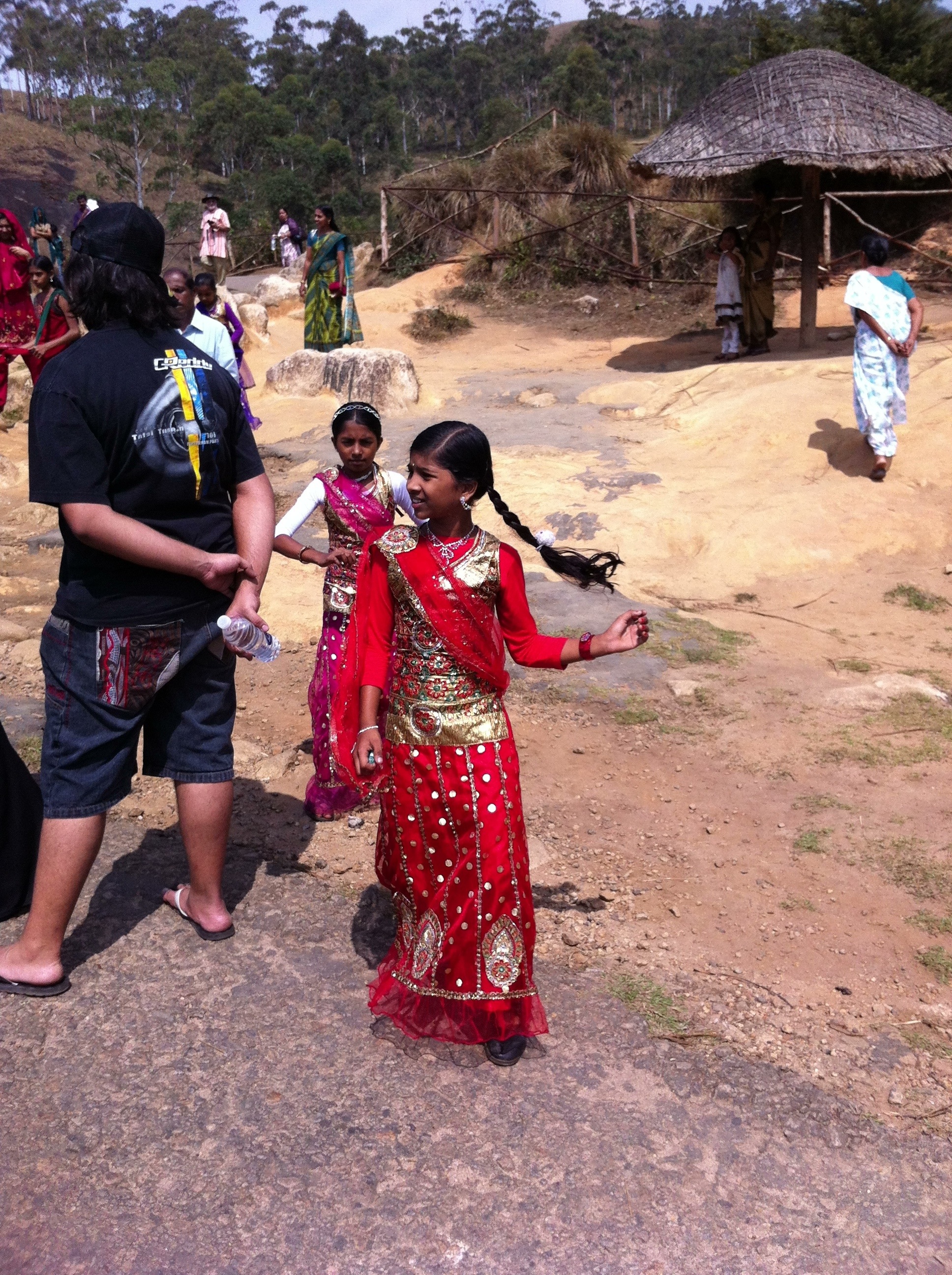
Local hiking gear is admirable. (The uphill walk is fairly long.) Many girls were dressed to the nines, in filmy white chemises, spangled kurtas, strap sandals. Many boys were making a special effort at hip, with tight low slung jeans, and an odd fashion of those back-of-the-head ear muffs. (This may be in part because there is a school vacation and many, in holiday mode, expected to have their pictures taken.)
For some reason, many Indian tourists (not sophisticated Indian tourists, but less sophisticated ones) crave pictures of themselves with Westerners. “One snap?” they will ask, meaning will you pose with us, or for us.

This is often preceded by waves of snickers and giggles, as some brave or jokerish soul is either pressed or volunteers to be the one to pop the question. Or, if there is no camera available, the group’s representative will simply be the one enjoined to ask us “Your name?” “Your native place?” “Your country?”

It’s difficult to know quite how to handle this. If you are young, female and blonde, a certain level of aloofness is probably recommended. On the other hand, if you are old and decrepit (i.e. me), the situation feels more conflicted–especially if you yourself are busy snapping away. (Though, on my behalf, I typically do not slap people on the arm to get their attention.)

Part of the problem, which is part of the problem of almost any situation here, comes with the sheer numbers. A picture with one person leads to pictures with several people.

Then, there are the issues with attitude. Some people – typically little girls, are typically very sweet in their questions and requests. They are shly proud of their English. Often a man with one or two children in tow will also exhibit this kind of gentle approach.

But sometimes (especially with the low-slung sort of boys and even sometimes with girls and women), the questions feel such a stunt– a showing-off for friends, a verbal cockiness.

So, you walk on. Or you answer crisply, and walk on. Or you wait and let the group behind you pass, so at least you do not have to be immediately followed by snickers, but can let the laughter go ahead.

As the group goes by, you pick up bits and pieces of your own words passed around – some version of your name and “USA?” Today this was even transmuted to “U.S.S.R.?” (You kind of want to shout out there – no, not U.S.S.R.)

In the meantime, you take pictures of the mountain goats. From above the clouds.

(On the Sabu front, his mood picked up considerably as the morning proceeded, especially when I told him what a good driver he was for hanging out behind a bus in a no-passing situation. He did later, laugh wildly, if sheepishly, when we almost collided with a tractor around one corner, but then, when we said Christina was car sick, drove with exaggerated care, and at about ten miles per hour, letting – at what cost I can only imagine–even rickety rickshaws go past. We drive with him several hours tomorrow to Thrissur – a temple city. Wish us luck!)

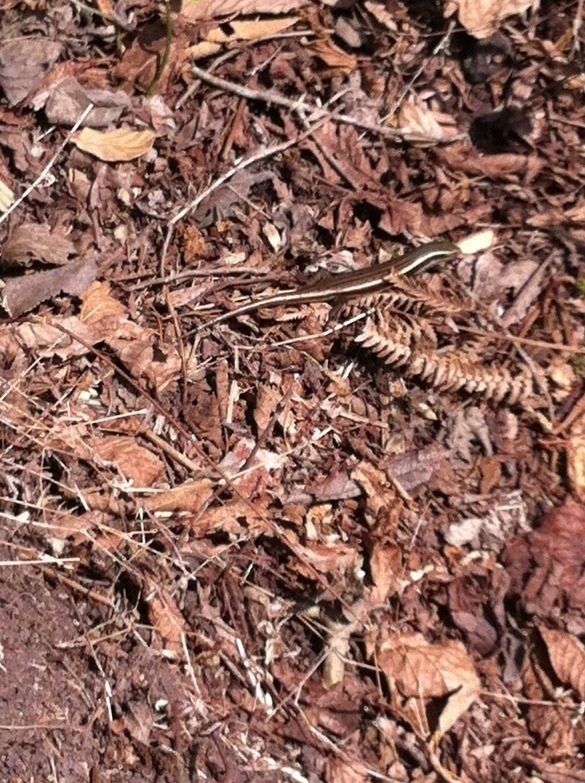
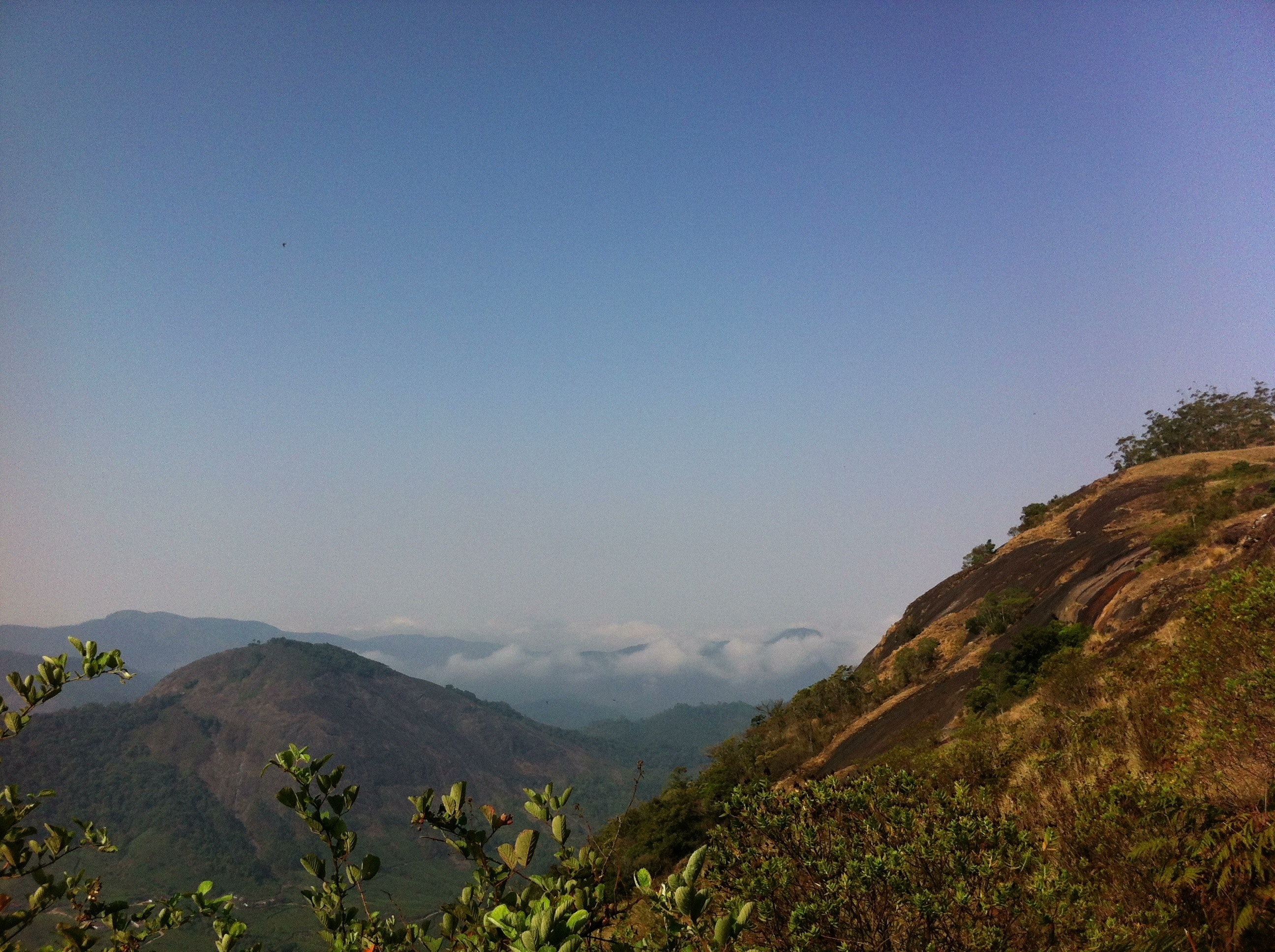
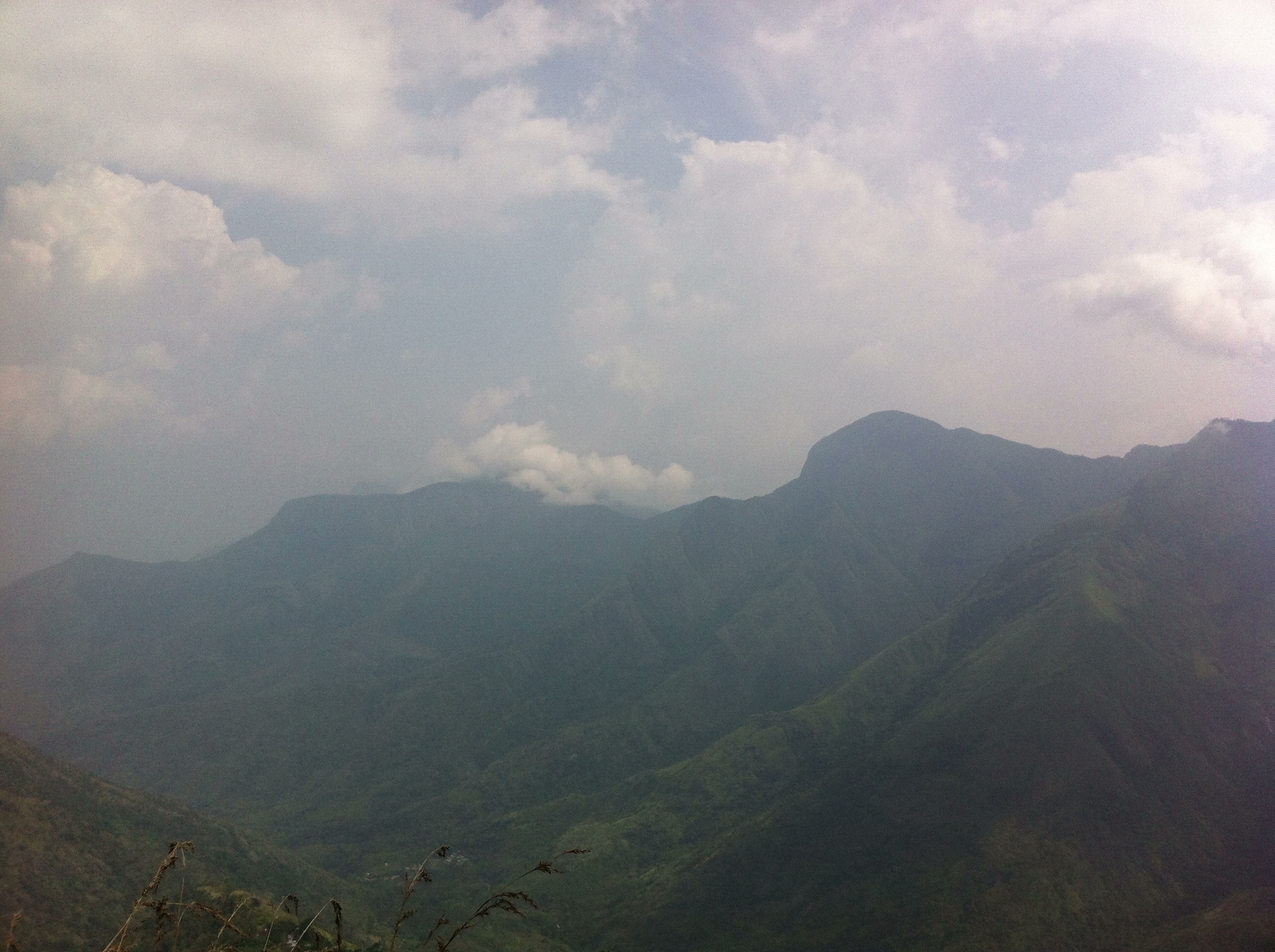
PS – pictures above are our breakfast from the balcony; a park guard cleaning one of the ledges at Ernakulum Wildlife Sanctuary (where the bus stops towards the top of the mountain), what I thought was a snake, a picture of the Nilgiris Tahr (the mountain goat), but turned out to be a lizard, the little boy’s end of time on the wrong side of the fence when the dad at last leaned over and grabbed him; one of the dressed-up little girls at the top; an older man in traditional garb–the picture is reddish because my iphone turned on some weird filter, and a view along the way of the Nilgiris Mountains/ called here the Western Ghat.

PPS – thanks for kind comments re pictures. I do have a lot and will try to put up more and maybe less text! or somehow caption – but that seems to be difficult on the app I am using. k.

Shapes of Clothes, Spice, Tea

April 16, 2013

20130416-183357.jpg

20130416-183531.jpg

20130416-183545.jpg

20130416-183417.jpg

There is something so reassuring about walking into the sight of one’s clothes stretched out on a line. Sleeves seem to wave, even without much of a breeze, to greet with a “hello there; here we are–your size and shape all relatively clean and fresh again.”

Well-worn clothes are the friendliest, clothes that even wrung out and pulled flat still bear some remnants of your imprint. That stretched edge of hip or breast that lets you know that yes, you do have a place in the universe, even if only in the stitched confines of cotton, even if just hanging up by a drainspout.

The fact is that we’ve been feeling sort of out of place today, reeling with the news about Boston, which in an age pre-mobile device, we would likely not have seen or heard about for days, (There is a TV in our guesthouse for the host family, but, to the degree that it’s been on, it’s shown either soap operas or something that looks like “who wants to be a millionaire?” ) (Only with questions about things like Indian dance.) (Shades of Danny Boyle?)

So, in an earlier age, we would not have known about the bomb blasts, the terror, the lost lives and limbs. But in this age, we do know. And when I read these things, I find myself to especially miss home, if only to be with people who will be on the same grief cycle, people who are mourning the same slice of sadness.

The fact is there are so many different slices of sadness in the world; it comes in so many different varieties, shapes, colors. (On this front, we went through a dark bazaar today, tinged with the smell of gas from little generators, tailors and seamstresses working in such tight dark places, heavy smells of rot.)

But, of course, sweetness comes in a lot of shapes too, and aside from the news, we’ve had a rather sweet day.

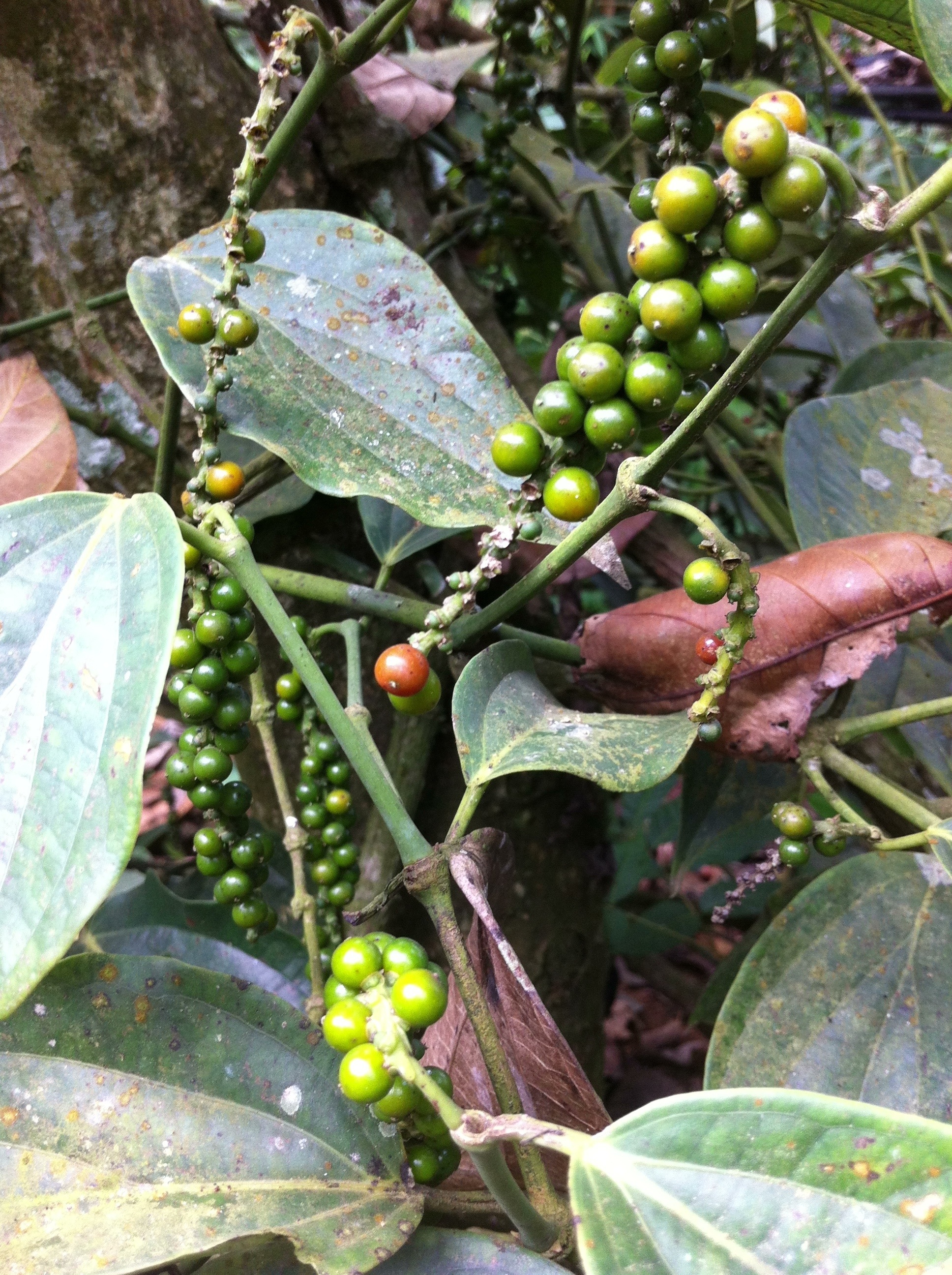
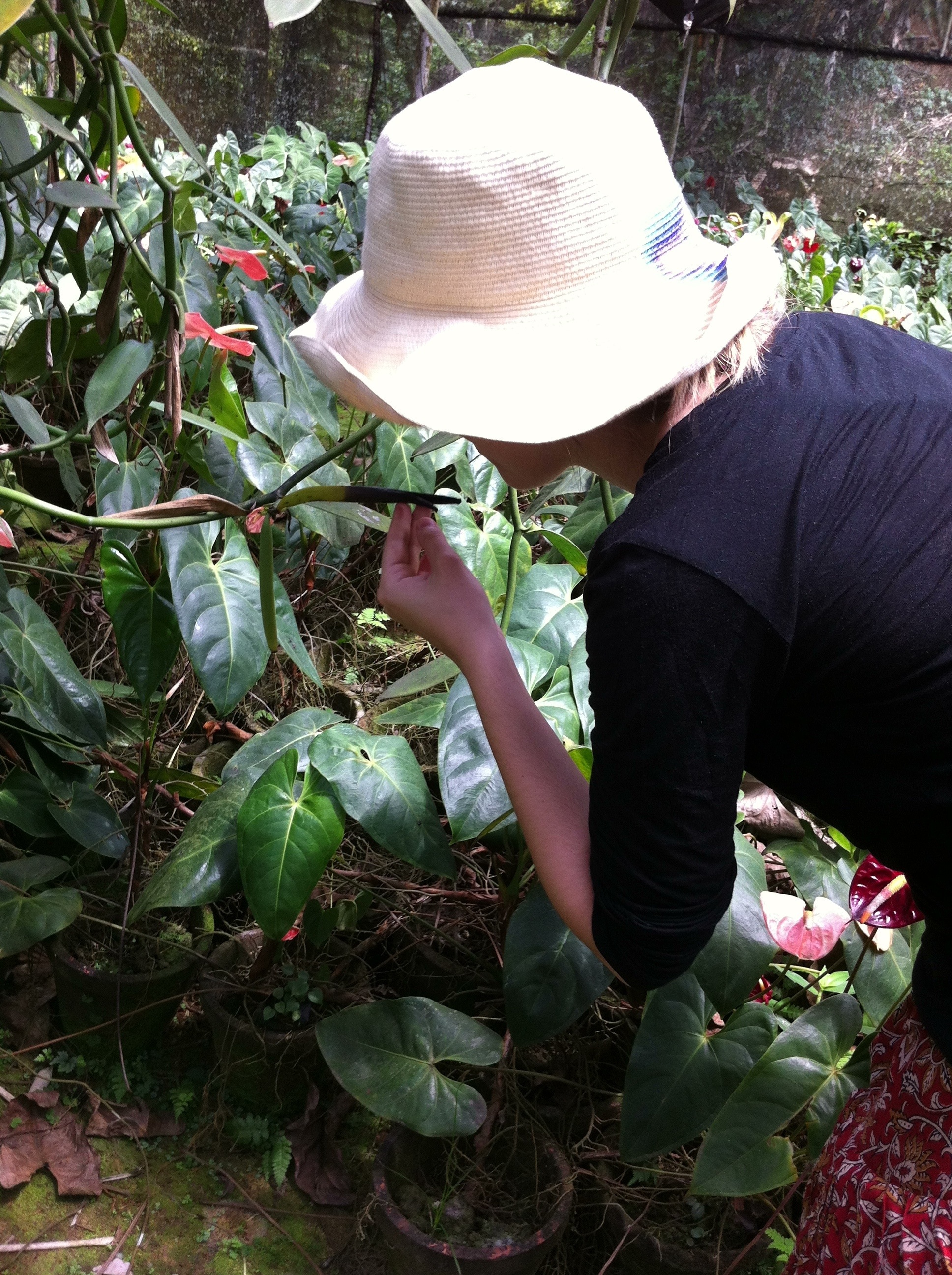
Our host gave us a tour of his amazing garden–flowers, fruit, but he also grows spices – true pepper! Which he picked for us, rolling away the outer orange shell between his finger tips, to let us taste. (Holy Moly!) Also, Holy Basil! Cardamom (with beautiful little white and purple flowers by the seed pods). (These are not quite ready for harvesting, but he found a couple.) Cinnamon and cloves, whose leaves alone taste of their savors. Vanilla, coffee, cocoa!

And speaking of leaves, we went to the Tata Tea Museum – which, as the Indian family who gave us a lift in their car (after we just missed the bus) told us, is not really that much of a museum. (It displays, for example, an electric typewriter from the 1970-80’s.) However, it also has fascinating photos of colonial life–things like British officers with their tea workers, and the All Indian Rugger Team. (My pics of the pics here.)

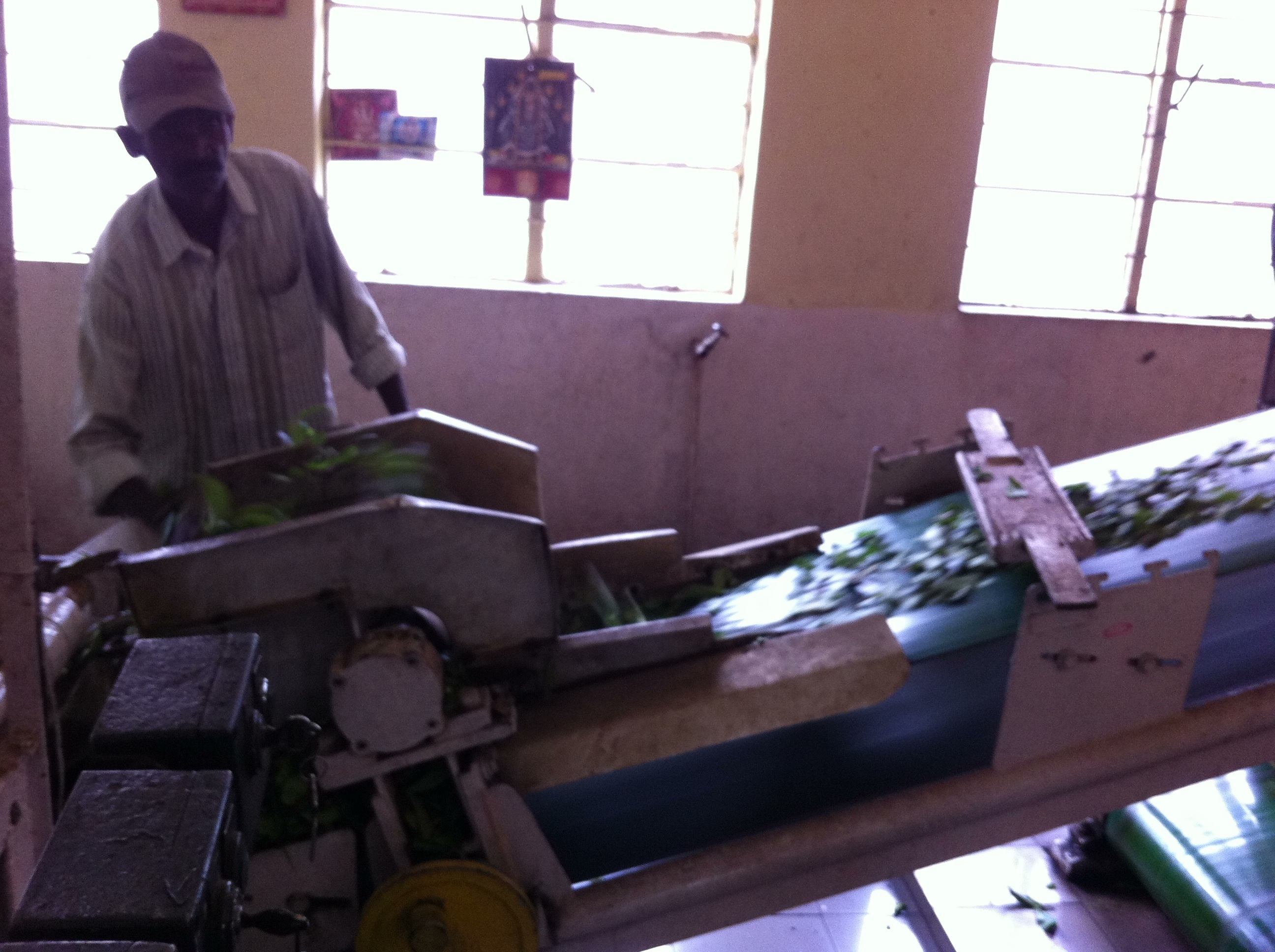
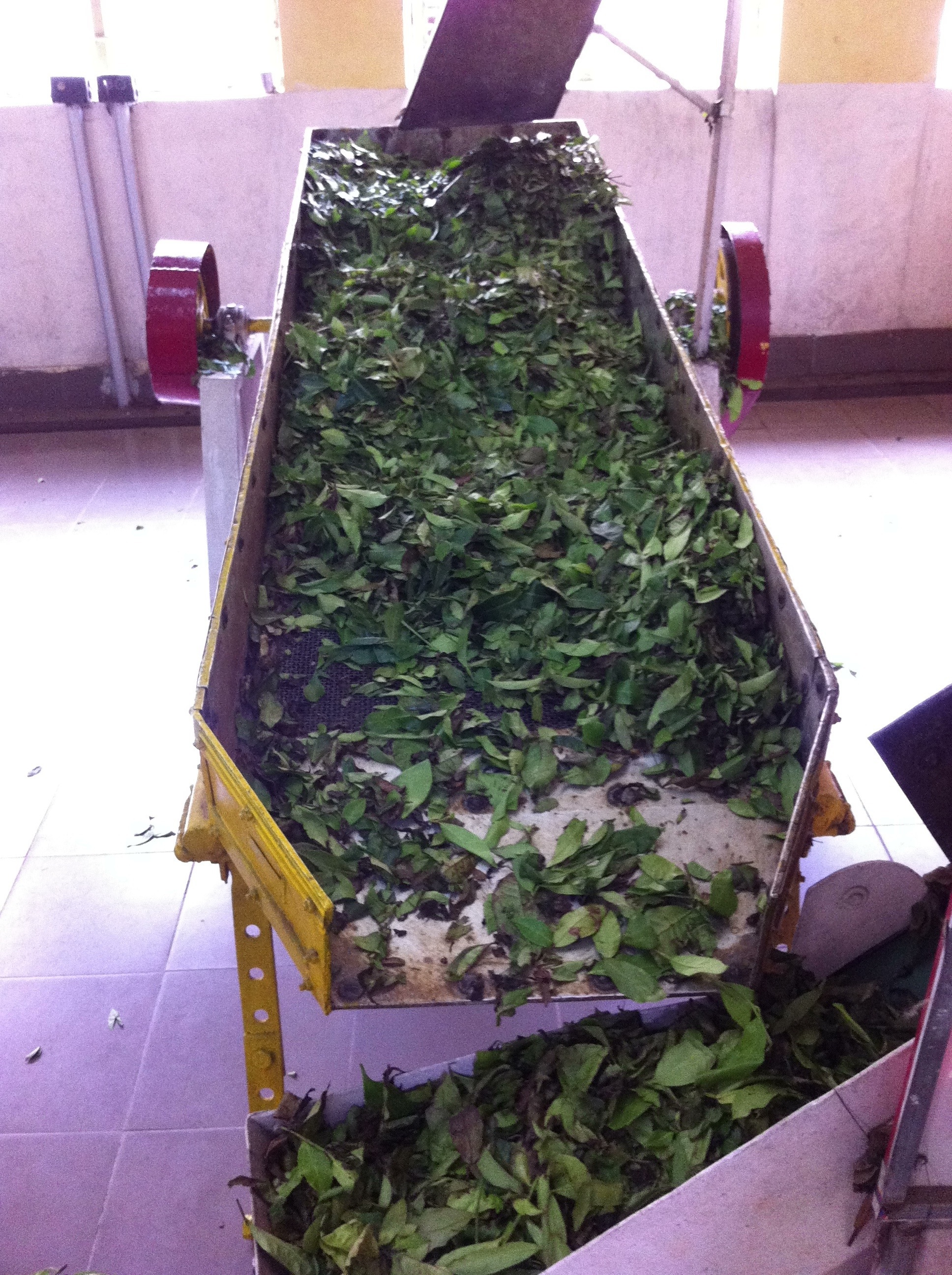
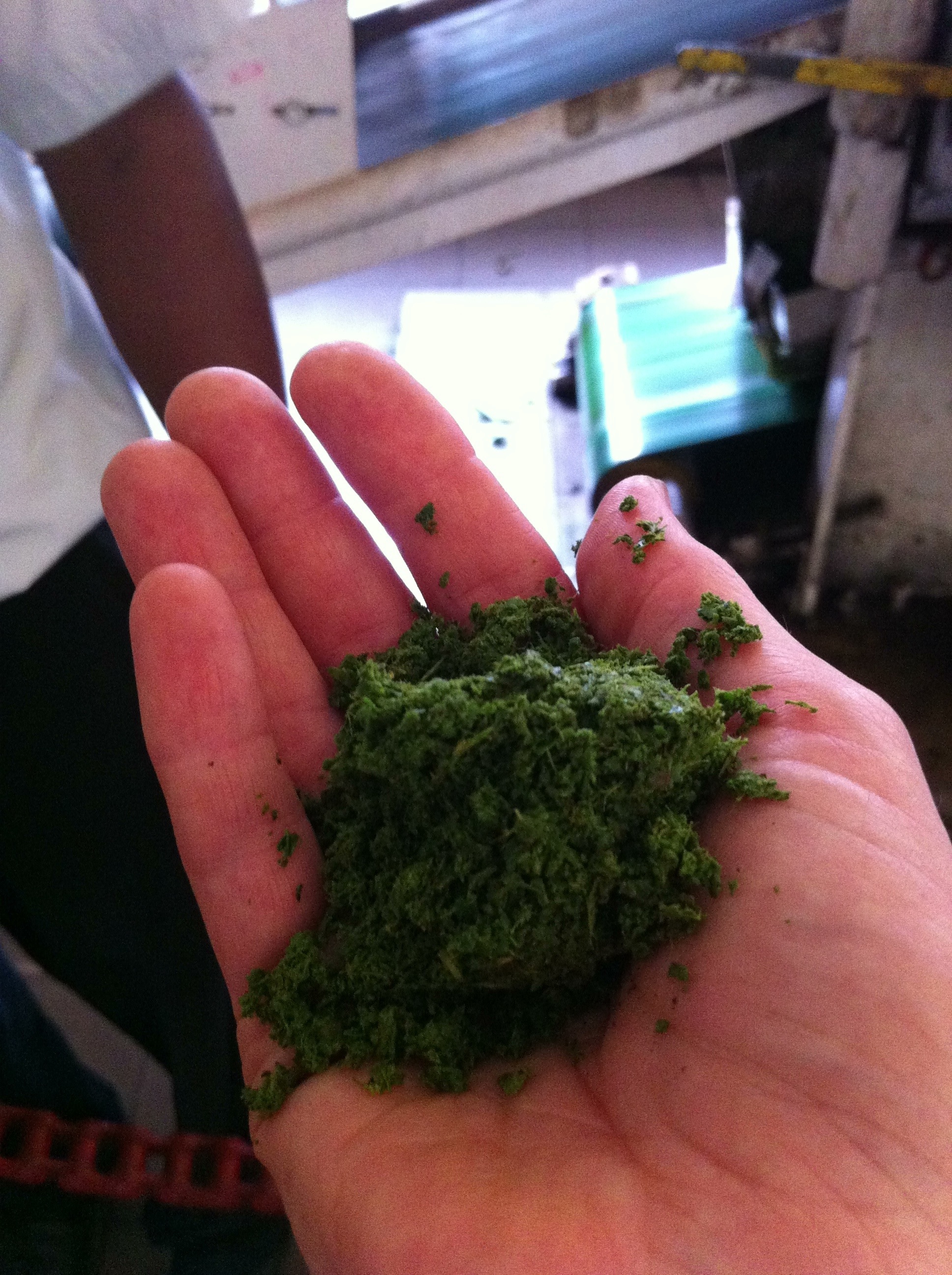
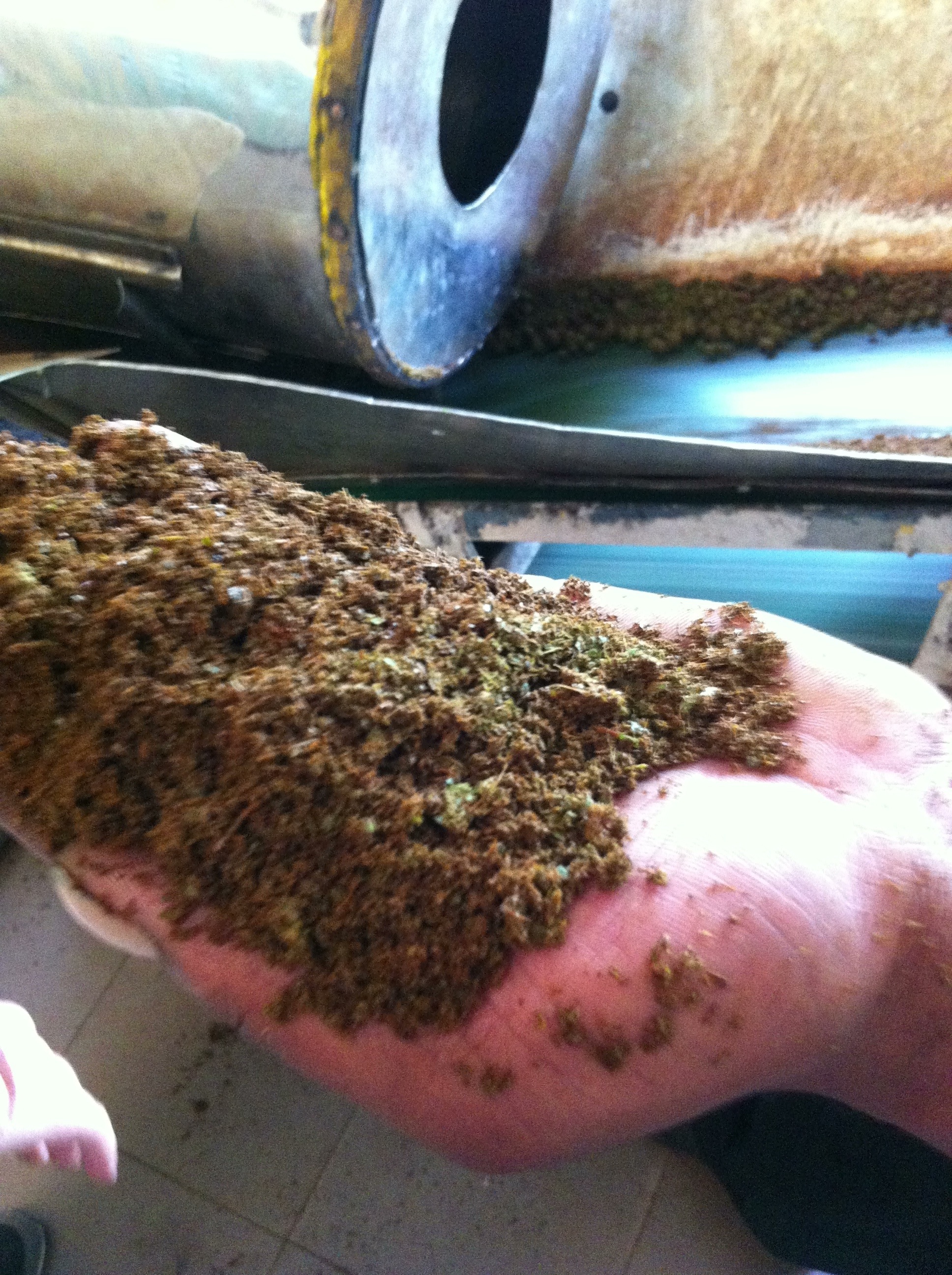
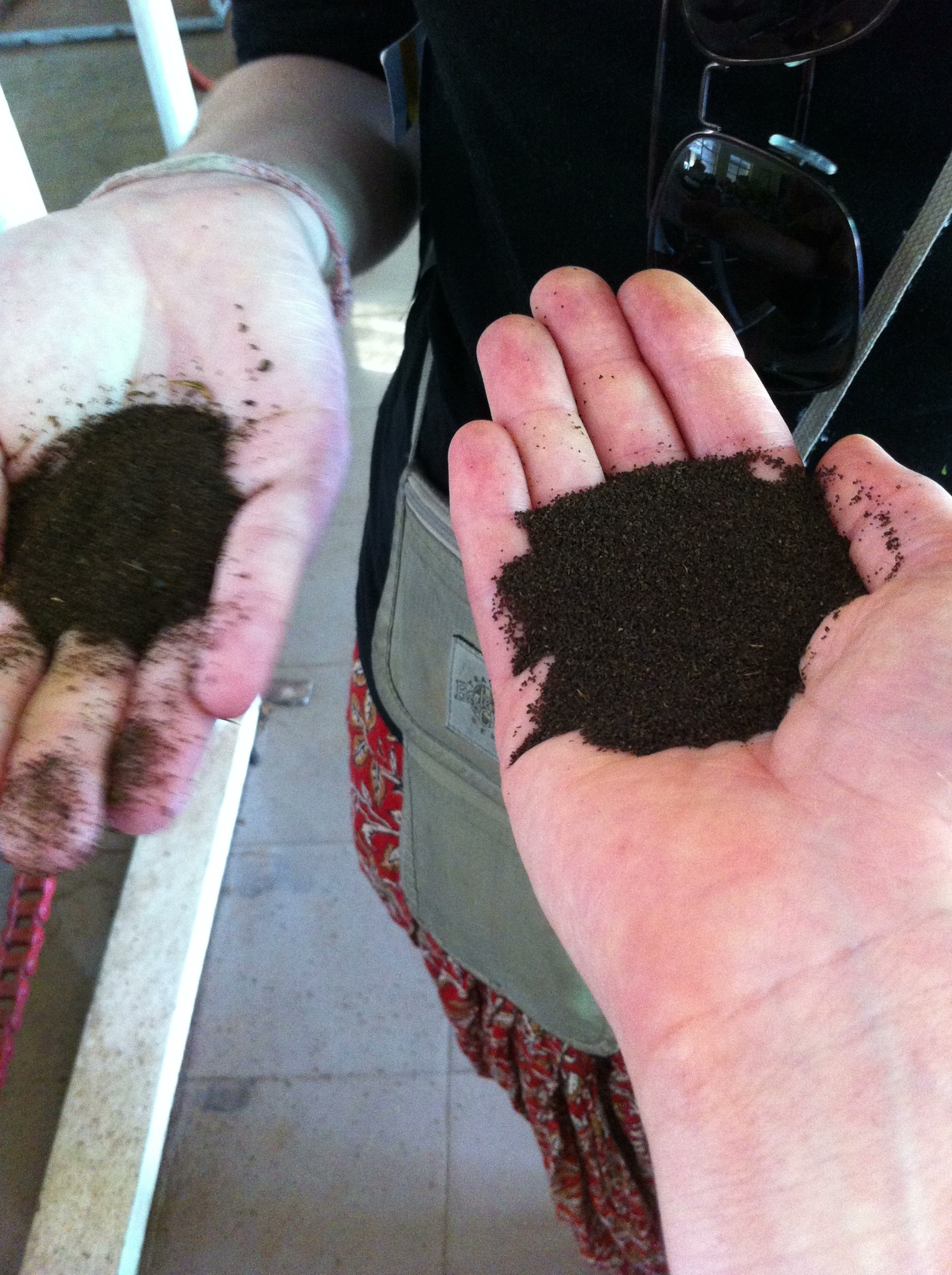
More importantly, the museum has a mini-tea factory that shows how tea is processed. There, a super nice staff member kept sticking his hands in the machinery (as it operated) to bring us out handfuls of tea in its interim states.

The tea itself starts out green, of course, and moves in stages from a wet=smelling olive mulch to something that feels like soil. (This factory specializes in “tea dust,” finely chopped tea for chai.)

One of our rickshaw drivers — that was another aspect of the day – we went around by rickshaw rather than car–explained that there were 53,000 acres under cultivation in this area.

He also called the main, and only real road, a “dance road,” meaning, I think, that complicated maneuvers were constantly required to avoid webs of potholes; these were felt especially in the rickety open seats of the rickshaw.

My daughter found the bumping less bothersome than car swerves. My rear end seemed able to take the non-stop concussions but I am less sure about my brain pan. (It was like one of those old-fashioned reverberating belts for weight loss.)

And my hands, honestly, did not stop tingling (from holding on so tightly–remember the road is on the side of a mountain) until some time after we stepped out onto the asphalt drive of our guest house, right next to one one freshly washed red kurta (tunic top) stretched out upon the gravel.

“Don’t worry, it’s not one of yours,” I told my scowling daughter.

Sure enough, her embroidered red-stitched shape waved from a further line.

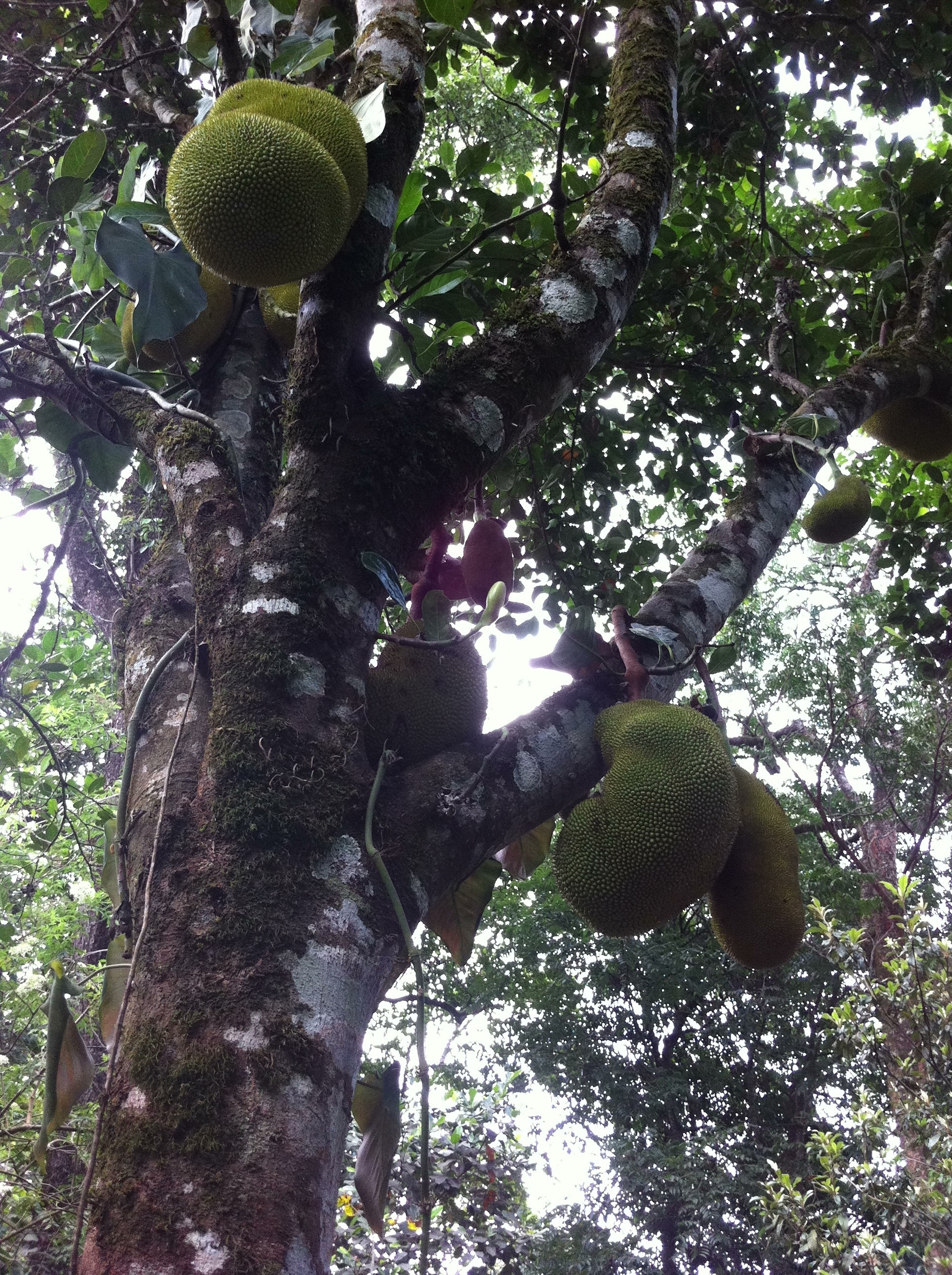
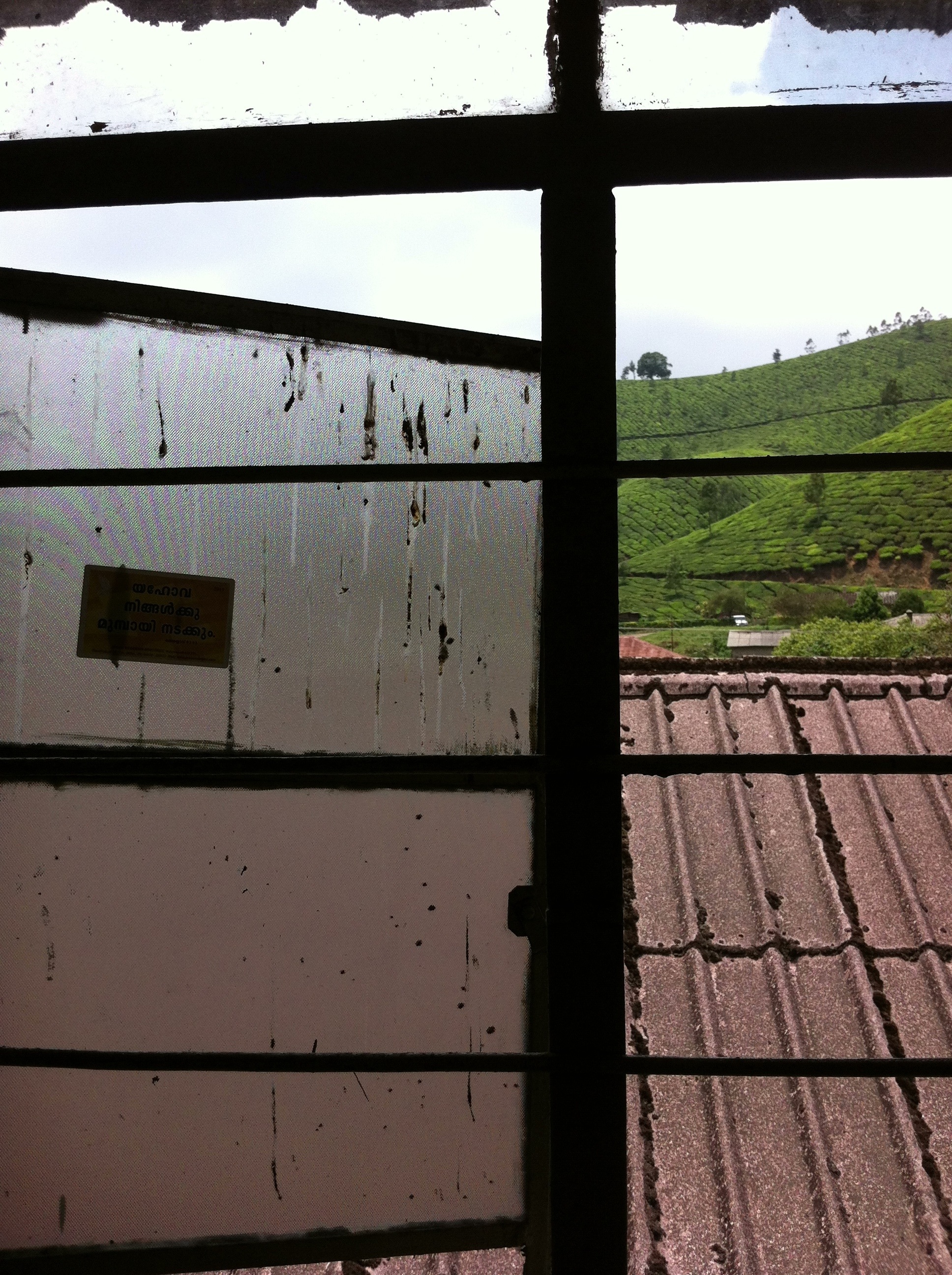
P.S. I’m having a hard time loading pictures in a planned order so don’t quite know what will come up, but above are photos of our host’s garden, including pepper, vanilla, crazy jackfruit, and flowers, and below of the Tata Tea Museum. There is one photo I like especially of a slightly broken (unhinged) window in the museum, looking out onto the tea plantation just beyond. As a historical note, this area was first colonized by the British when they were looking for good climate for convalescent soldiers. Then later came the Kanan Devan Tea Company, which now produces “Ripple Tea.”)

20130416-190100.jpg

20130416-185955.jpg

20130416-185931.jpg

20130416-190133.jpg

20130416-190300.jpg

20130416-191330.jpg

20130416-191440.jpg

Tea (Makes me Human Again) (And Elephants)

April 15, 2013

20130415-184422.jpg

20130415-184556.jpg

20130415-184808.jpg

20130415-185841.jpg

“It’s locked.”

“But there’s a key in it.”

“But it’s bolted from the other side.”

“Bolted?” I turn the key, push, push, shove.. “I don’t like this.”

“I’m not going to be able to sleep, if I don’t get water.”

“There’s a little.”

“Not much.”

“For brushing our teeth.”

“I’m not going to be able to sleep.”

“You have your iodine?”

“Yes, but it takes four hours.”

Me, pushing at the door again–“What if there was a fire?” muttering.

What I am not liking is that for some reason our host (it turns out it was probably one of his sons, acting inadvertantly) has bolted (from the other side) the only door that leads off of this house’s main balcony. This is also the balcony that holds the only entrance to our room. Meaning, because we are on the second floor, that the only way we could get out, if needed, would be to jump off the balcony, hitting, in this darkness, who knows what on the way, but concrete, most likely, at the end.

And we thought we had another, full, bottle of water.

“Maybe you shouldn’t have given that bottle to those Americans,” I gripe, mainly because we had encountered them in a few hours off their cruise. (Meaning that they could have gotten their own damn water.)

‘I got another bottle,” my daughter says.

But whatever that bottle was is now empty.

We have in the luxury of working wifi stayed up well beyond our host. We are essentially locked in our room, well, our room and its balcony. And the iodine tablets, which my daughter sets about finding in our luggage, will take four hours. And, well, our dinner was delicious but Indian food is rather salty, plus I have to take my malaria tablet. (Meaning anti-malaria tablet.)

Which means too that there are flies in the ointment of paradise. Big flies as the night goes on and something about a malaria pill taken without water at midnight swells up my throat and tightens my chest.

Very hard in other words to sleep, though the room is cool, comfortable, though my daughter does drop off at last, though the iodine tablets are busy doing their thing (which even at about 4:30 or 5, I find myself not trusting.) The main thought I hang onto — our host’s promise of a thermos of tea made available well before breakfast.

I get up with a headache and still-taut throat to get it – it is chai – tea and milk brewed together–and after three or four cups plus the host’s apology re the bolted door –we overhear some barked words at one of his sons – I am feeling somewhat human again.

Tea.

it is what this place is all about. Munnar. Now home of Tata Tea Plantations (and several others.) Originally, a main site of the East India Company.

We have not yet been to the Tea Museum so I don’t know much about the history of it all, but there is one big fact we have picked up over the course of the day. Tea is an incredibly beautiful plant. The individual bushes segment the mountainsides in a mosaic of brilliance. One feels caught in a honeycomb of green, a catacomb of green (if catacombs could, like bellybuttons, come in “outies.” And verdigris.) (One other side effects of the malaria pills by the way is brain fog. This is also one i am positive that I am suffering from. Outies????)

The mountains themselves are beautiful. Old mountains with those eccentric shapes worn by multiple eons – vertical loafs and straight up points, and because they’ve risen fairly dramatically from sea level (I guess), and because we are in the very beginning of the rainy season, misted. (Like my brain.)

I am drinking more chai right now after a day zooming and walking among the plantation mountains with a super sweet and protective, but rather bossy, driver tour guide. Two women traveling need help he thought, and definitely tried to give it, though his English was not so great – “Are you from Munnar?” I asked. “No problem.”

But he glared mightily at any one who made brassy comments to us during the day, such as “from which country?” “Nice brassiere.”

And smilingly took us up and down various parts of the mountains. Bought us a passion fruit and a chico, warned us repeatedly bad bathrooms (making a growling noise to describe the smells), was very careful to hold my arm in a truly helpful way on the rough parts and offered, laughing, to carry me up the steep. Stopped to point out these incredible treed bee hives, and monkeys, and most importantly, four wild elephants. (It is really unusual to see wild elephants, and a small crowd had gathered by the roadside. )

Admittedly, I have a thing for elephants. But there is something that would move anyone, in seeing them flapping their ears in the bright greenery.

Yes, the side of the road where we stood was super-littered (it is an Indian roadside.)

Still. Elephants. Wild. The driver too was thrilled; it was impossible not to be thrilled; it was impossible not to look down at them and not feel some deep thankfulness that such animals ear-flappingly exist, even in a place as crowded and cultivated as this one.

“Lucky men,” our driver kept saying after we got back into the car, turning in his seat to point at us.

“Yes.”

Above a couple of pics of the tea plantations, the view from “Top Station”, our very thoughtful driver, the wild elephants. My iPhone, which I am using as my only camera on this trip, only caught two.

PS – the tree frogs and what my little ten year friend assures me are squirrels are hooting like crazy right now. He is drawing rockets, me winged elephants, and now he’s gotten into the flying elephant game, only his elephant has a rocket instead of wings on its back. I include our joint drawing too.

PPS – sorry everything is so long and that I can’t seem to write wonderful little poems that pass on the feel. I am blaming it on the malaria pills.

Upward Bound (To Western Ghats, Kerala)

April 14, 2013

20130414-225028.jpg

Just in case you are wondering, we did not die and go to heaven last night, although it feels like that right now. (Well, a bit.)

We have ascended (in a very competently driven car) about 5500 feet, and instead of being in a beautiful hot always-muggy leafy place, we are in a beautiful cool and only-muggy-right-before-a-rainstorm leafy place.

It is useful, if you travel mountain roads in India, to be in a competently driven car. The margin of error is thin – make that the distance between the sides of cars is thin. Less than an inch sometimes.
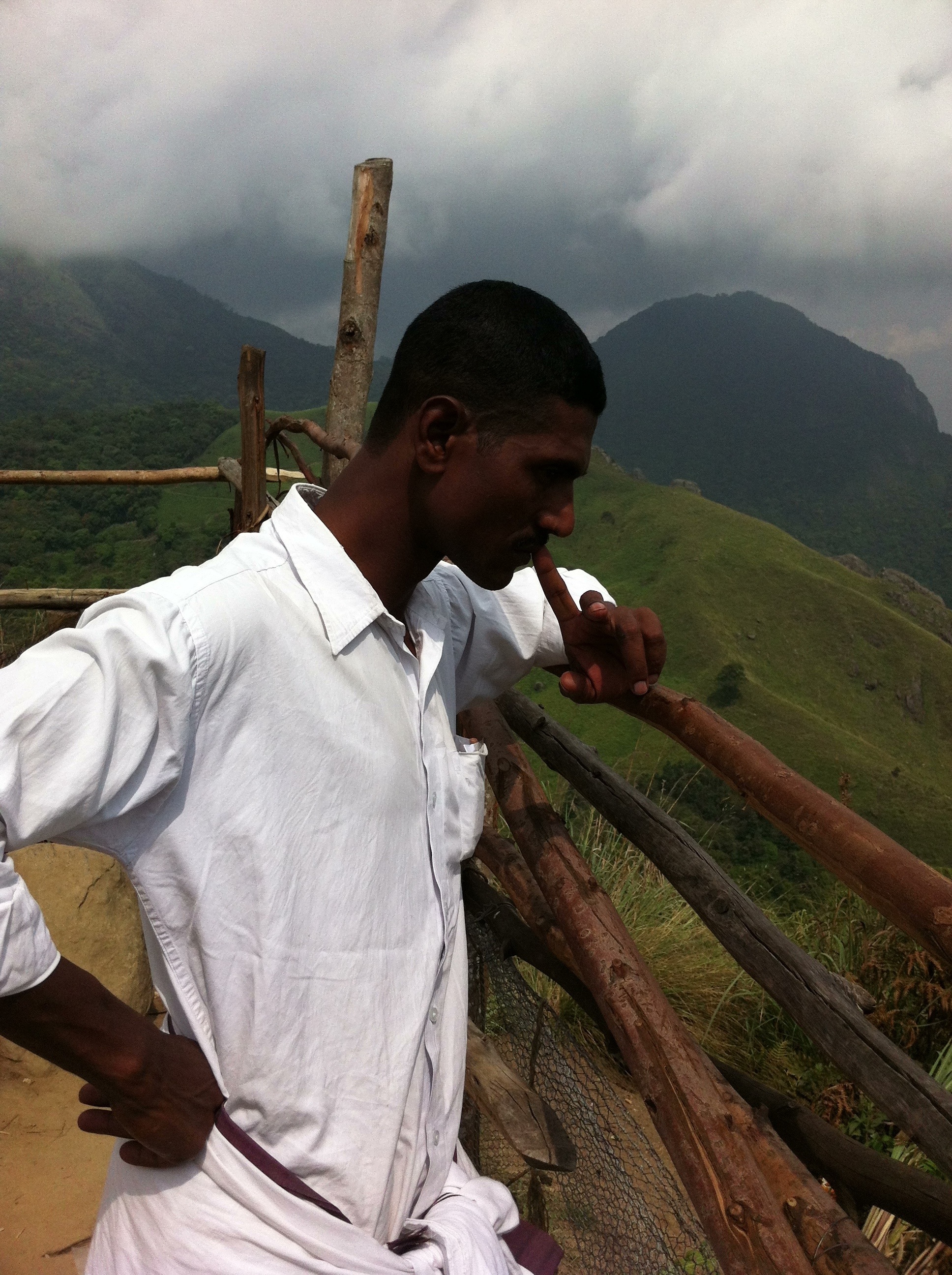
Driving basically means (i) passing, while (ii) avoiding vehicles going in the opposite direction that are also passing. (All this, in the mountains, on a one and a half lane road.) Avoiding also–and this is important–large buses that careen front and center even when the road curves. In other words, there is a reason one reads about terrible bus accidents in India.

To be fair (i) there are vehicles of all speeds on the road, and (ii) some of our 4 1/2 hour drive was spent on a toll road freeway in which everyone stayed absolutely on their side of the divide.

But, by and large, the process takes either (i) a careful combination of concentration and calculated nerve (I like to think this is what our driver had), or (ii) full-bore recklessness spiced with an unshakeable belief in predestination (as in – don’t worry, you will not die till your time has come.)

Signs like “Accident Prone Road” don’t seem to hush all the internal yikes.

But enough of that – to catch you up, my daughter and I both managed fine in our ceilingless bath last night. Of course, in the darkness necessitated to avoid mosquitoes, I did not figure out how to get water to go through the shower head, as opposed to the knee-high spigot, until I had almost finished my personal bath. “Hurry hurry,” I shouted to Christina when the shower head suddenly began spurting. (We had spent part of the day with no water, so haste seemed imperative.) (Also, process note – most showers/spigots in India pour out directly onto the floor with no division between shower space and toilet space, except perhaps a bucket. There is typically a drain in the corner.)

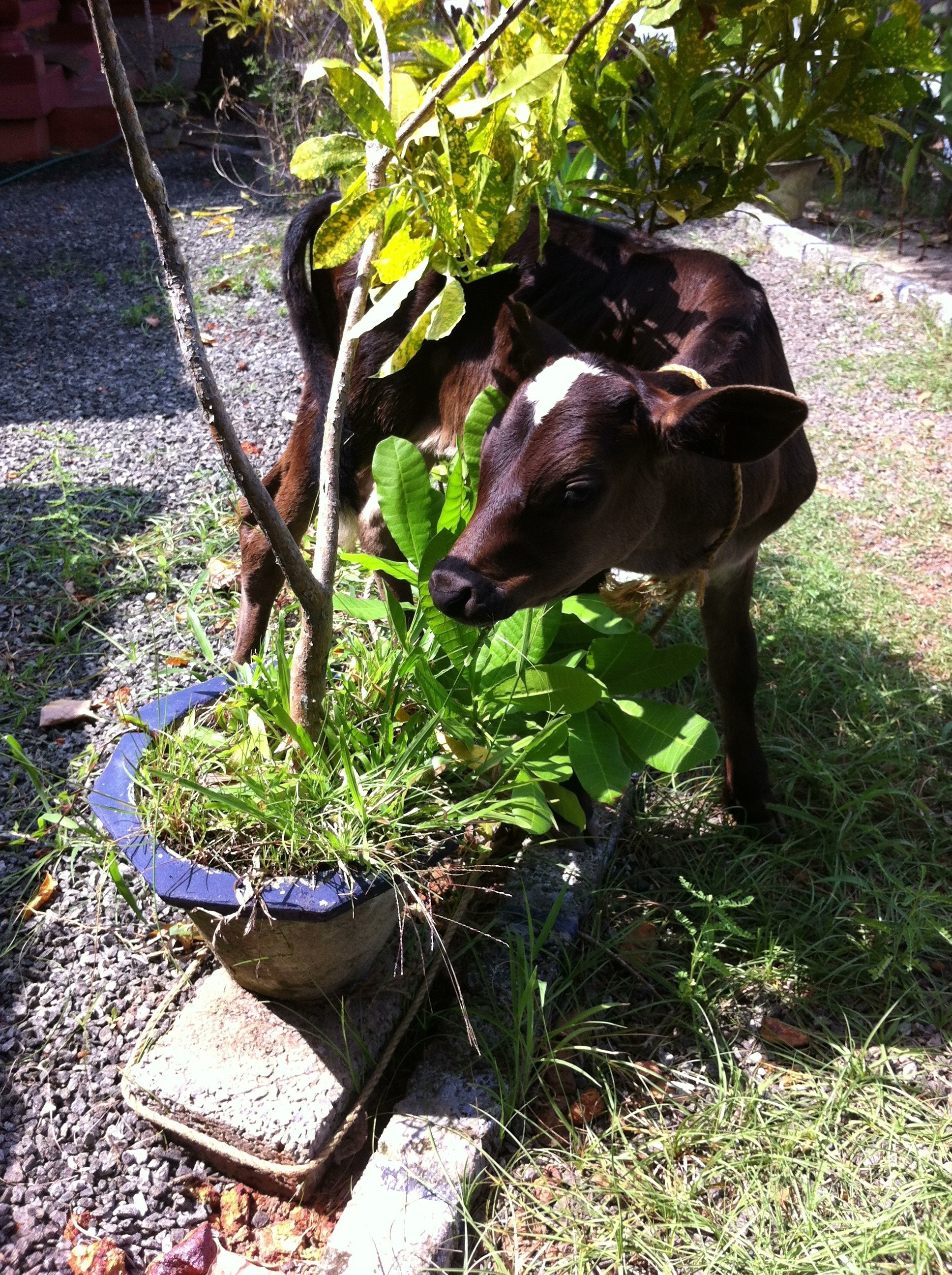
On the good side, there were no heavy thuds and squeaks from the bathroom during the night (as there had been in the afternoon). The fireworks across the river did sound like someone endlessly tapping on the door, but no one actually was, and we woke up to a fine muggy morning in which the very sweet Manu, who’d helped us so much with the computer the night before, told us that he absolutely intended to choose his wife (rather than have his marriage arranged), the little hot calf was tethered (entangled) in the grassy shade right outside our room, the crazy red ant that bit my arm did not leave a sting, and the hotel owner refunded in full all the money I’d prepaid for the second night (which we were canceling). (Though he was so doleful that I gave him a big tip back.)

In other words, all was more or less right with our particular little Indian world.

20130414-202751.jpg

“Did I take you from your family on your holiday?” I asked our driver when he arrived promptly from Cochin, as it turned out to be not only Sunday (he is Christan) but also pretty big holiday here today. (A Hindu holiday but celebrated by all Kerala.)

“Yes,” he replied curtly. But pretty soon both Christina and I decided that he didn’t quite get the tone of my question, as he was an incredibly good guy, who did not seem to feel overly put out, and had even brought back a small canvas bag of books that we’d left in his car when he brought us to the Backwaters the first time.

The fact that I’ve taken over the tipping in the last couple of days (and probably give crazily high tips) may also have had something to do with it. Tipping in India is difficult. Though one understands that service people probably depend upon it to some degree, when you are here awhile, you can at moments develop almost a knee jerk reaction against it, just as you do against being over-charged. (My daughter, for example, is fine with the tipping, but she can get into longwinded arguments with rickshaw drivers over the equivalent of a quarter. I remember behaving similarly in the 80s, after I’d been here for a while, inspiring, at one point, such a fierce fight between two competing bicycle rickshaw drivers that one went after the other guy’s tires’ with a hat pin.)

But when you have been away and are freshly here again, you feel a little differently, especially in a place like Kerala where people really do not seem to angle much for tips, and receive them with seemingly genuine pleasure. (It is kind of wonderful to be able to please someone with such a relatively small gesture.)

At any rate, on our driver drove; on we rode. Over backwaters and under palms. Through something that looked rather like a true toll booth and through another one that just looked like some guys hanging around on the road in rolled-up lungis and golf caps. (Lungis are the draped cotton skirts that men wear traditionally in the south, long rectangular swathes of cloth, often plaid, that are wrapped towel-like around the guys’ waists, and then doubled into short skirts all day long –again and again and again. Refolding and tying their lungis seems to be a favorite pastime of many men)

20130414-225050.jpg

Through horrible little quikie-mart type towns, past newly constructed and immense villas (Kerala’s booming in the IT age), little green mosques, Hindu temples, and huge multicolored Catholic Churches with big painted plaster-of-paris sculptures of Christ and Mary and various saints in large niches. From palm trees to bigger trees, taller trees, still jungly sort of trees, twisting and passing and just cutting in front or around or beside.

And now we are sitting on a balcony on a mountain side in the Western Ghats, with a very lovely room with attached bath AND ceiling, surrounded by extremely tall trees, tea plantations, spice groves, and much lower temperatures. Banana bhaji (fritters) and tea have just been served and a very sweet, very cute, but worrisomely garrulous little boy wants to race his plastic cars with us. (Wants to, a lot, all the while telling us about Bugattis and showing us all the different tricks he can do with his nostrils. My car, the smallest, keeps getting taken off by his fire truck for a tire malfunction, though the repairs always take less than a hour, he says, so that I can soon join the race again.)

So maybe it’s not completely heaven.

But close enough.

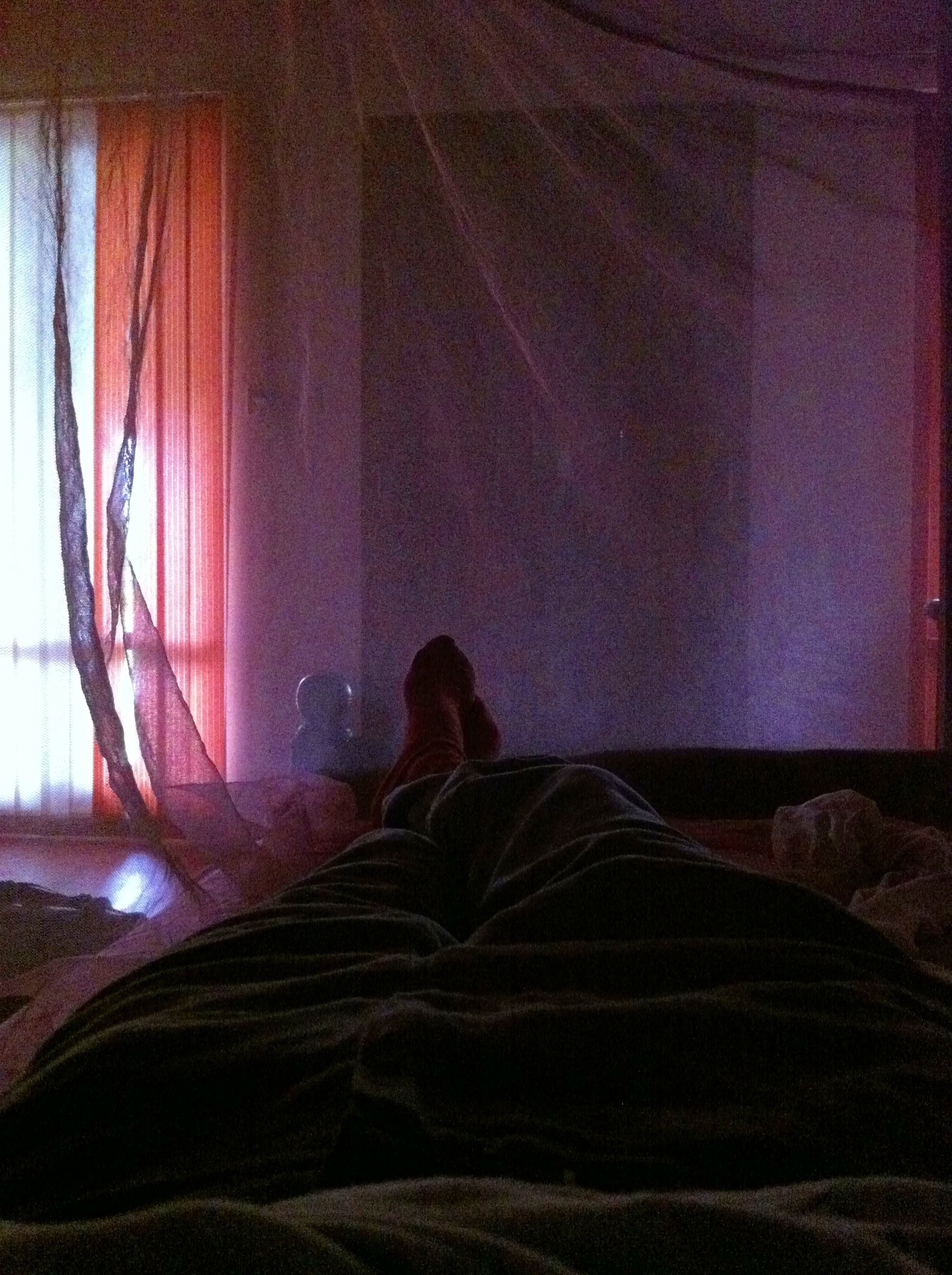
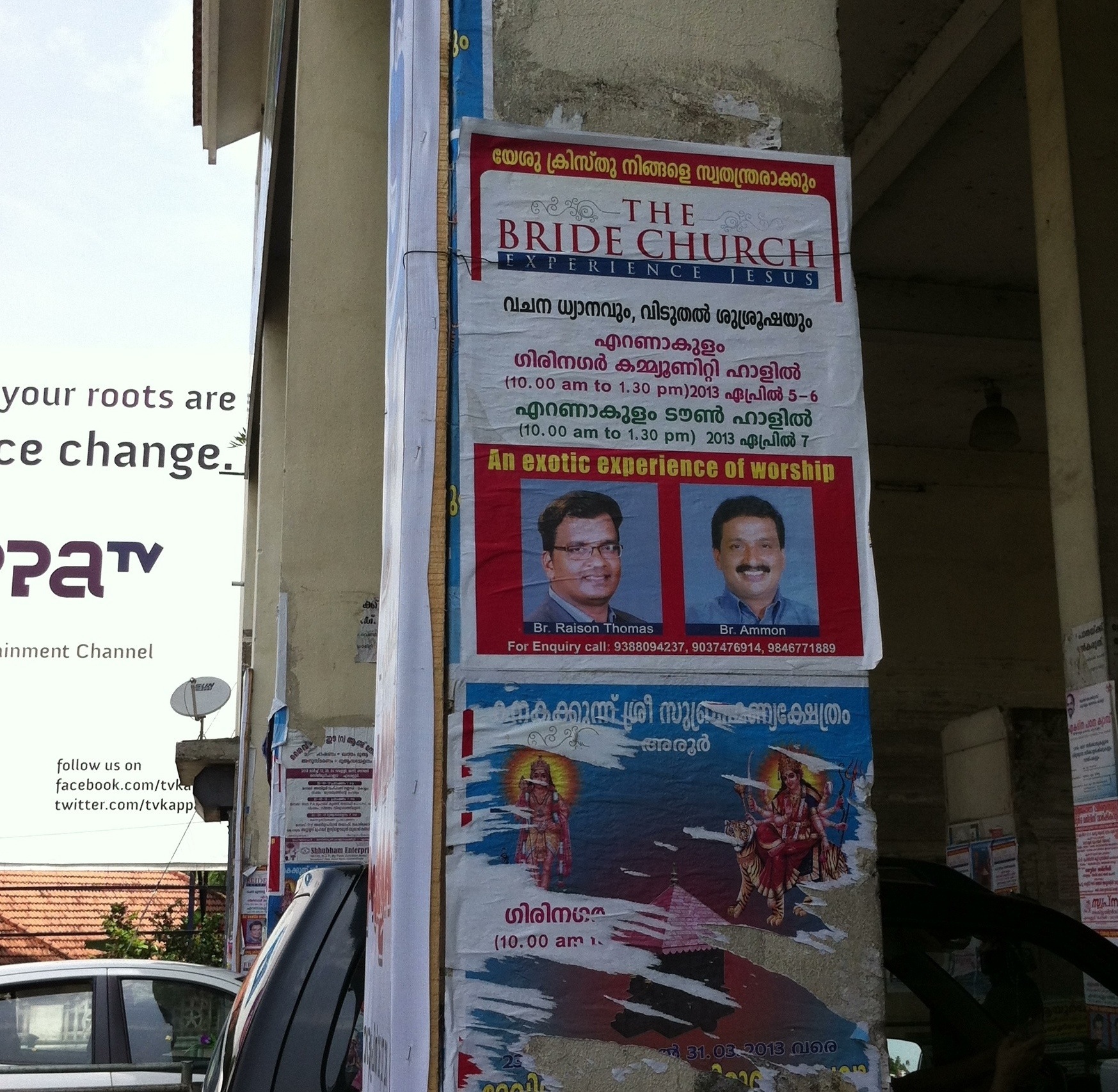
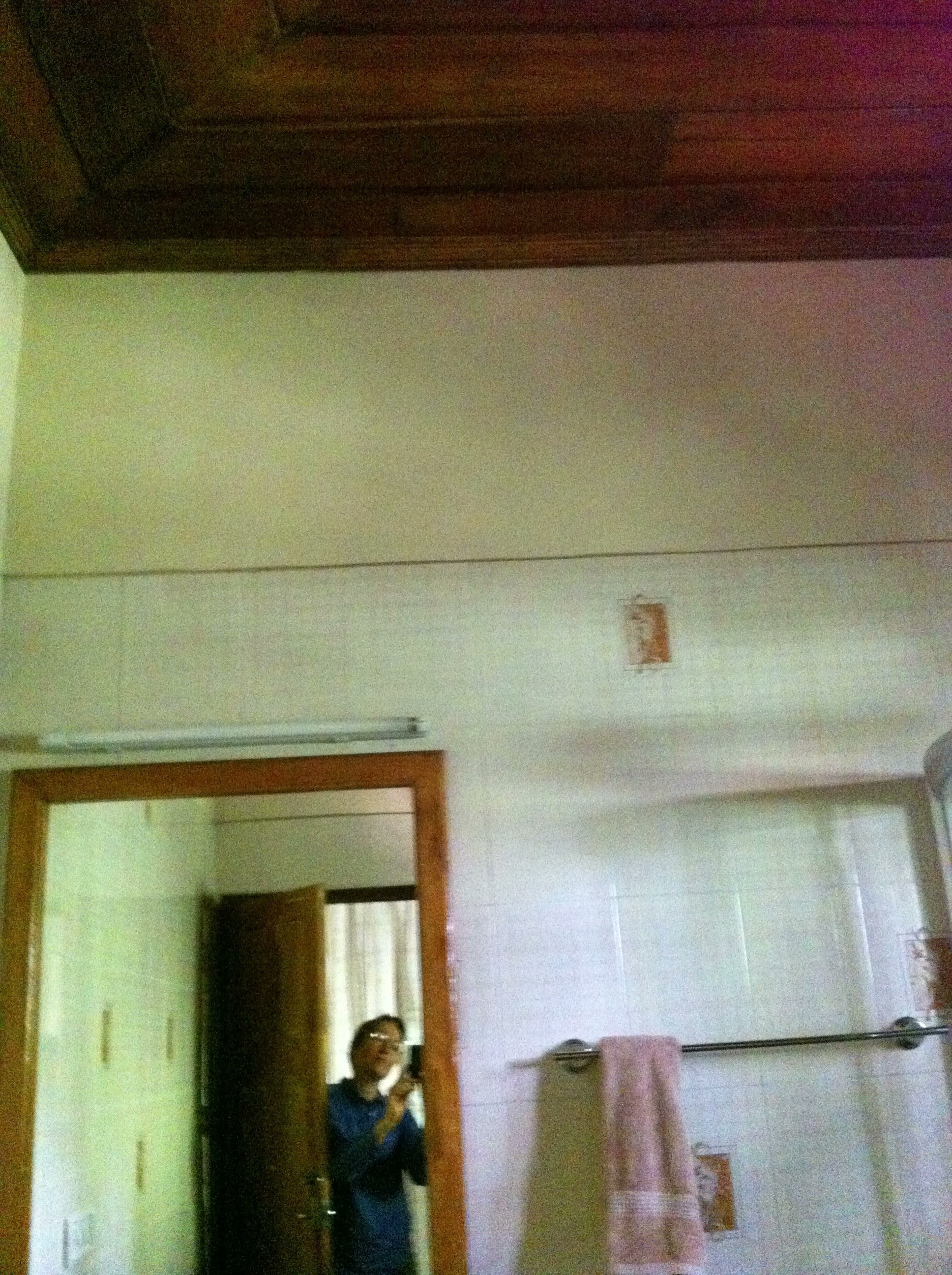
(The photos are as follows: above – my feet in socks and body draped in pants, against mosquitos and ambitious A/C, under mosquito net this morning; the little hot calf; one of the toll booths – note the “Bride Church”. Below -our driver’s very neat and religious dashboard, me photographing the ceiling of our bathroom, our balcony here outside of Munnar.)

20130414-203544.jpg

20130414-203626.jpg

20130414-203644.jpg

Kerala Backwaters (From the Back–Hard–Seat)

April 14, 2013

20130414-175528.jpg

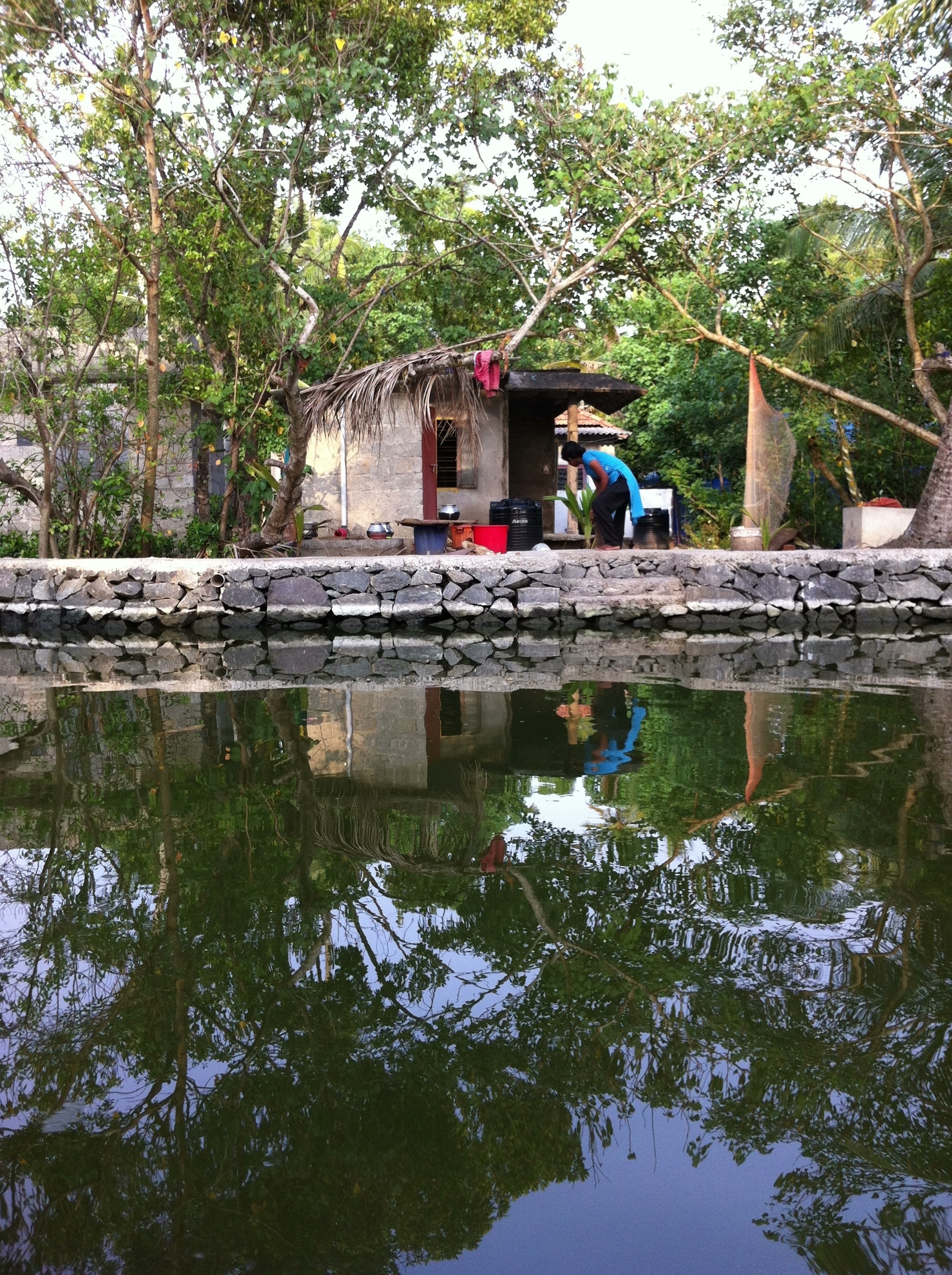
My true post for today is the next one, which describes our trip from the backwaters of Kerala to the Western Ghats, but before moving on, I wanted to post some photos from the short trip we took in the backwaters in a man-punted dug-out boat. The area – on the border of the Alleppey District – really is very beautiful.

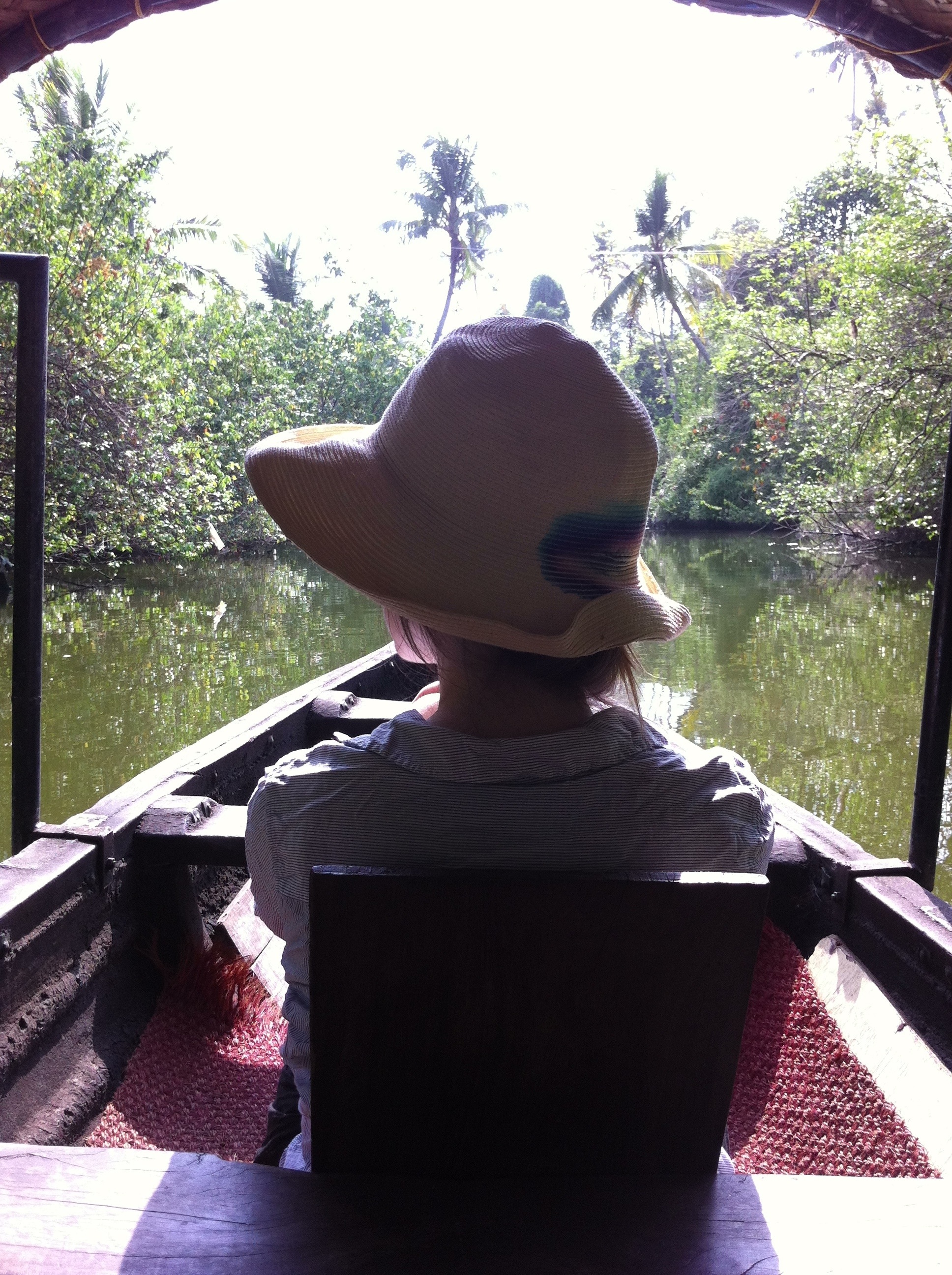
Granted, the dugout boat is also kind of hard on the backside, despite the small boards our boatman got us to lean against, and the coir (coconut fiber) mat that lay on the bottom of the boat. On the return trip, when the boatman got out of the boat and pushed the boat along the current while walking beside the canal, I sort of wanted to walk too–but Christina, my daughter, is much more gracious than I, and her feeling was that getting out of the boat and walking beside it might seem as if we weren’t fully enjoying the trip.

Needless to say, she won out.

Some pix below.

Just a process note – the women under the blue awning are peeling prawns (as a job). The red marker is of the local CPI (Communist Party of India) office. Kerala had the first Democratically elected Marxist government in the 50s, and it’s my understanding the party has been in and out of power at various times since.

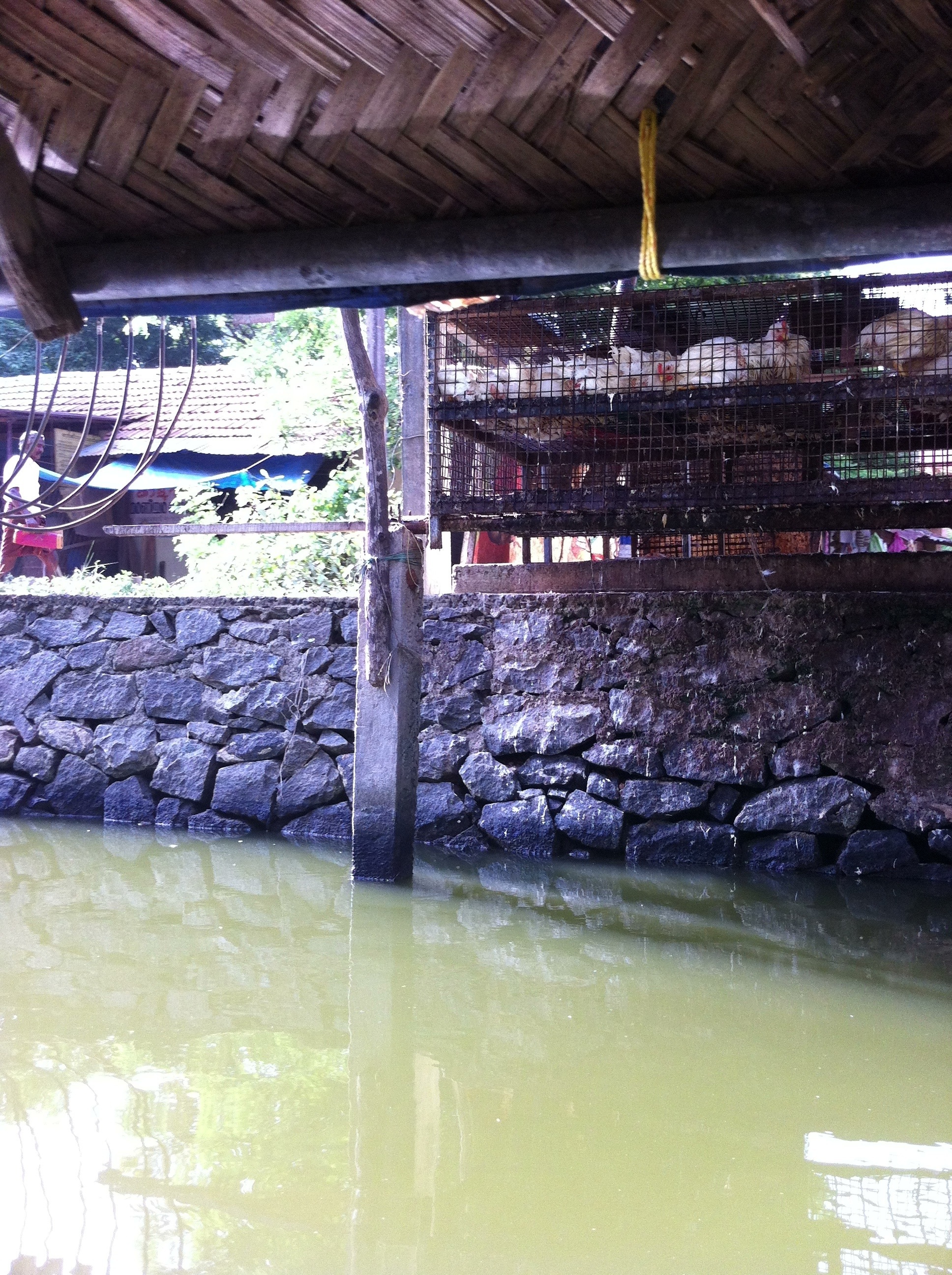
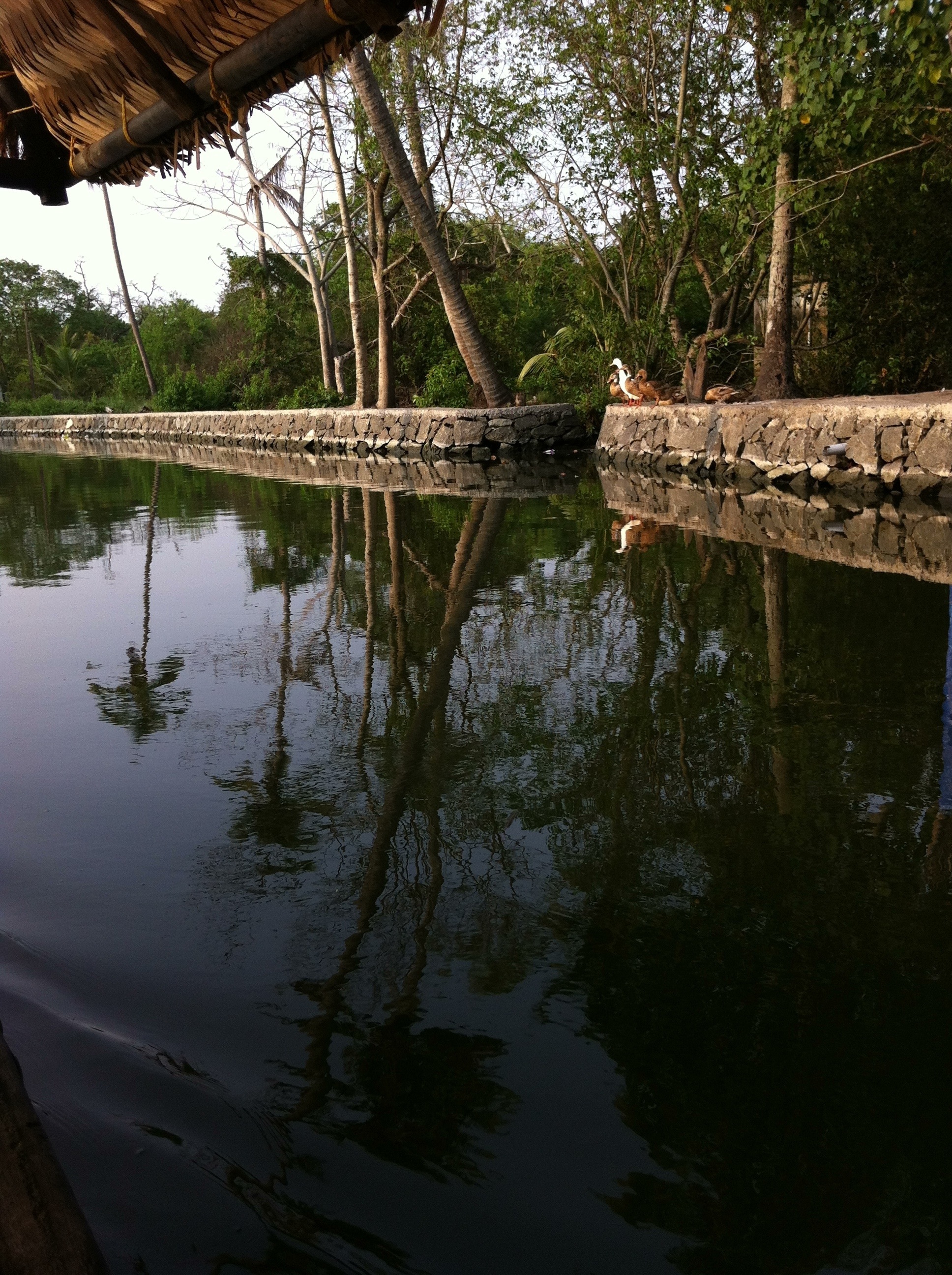
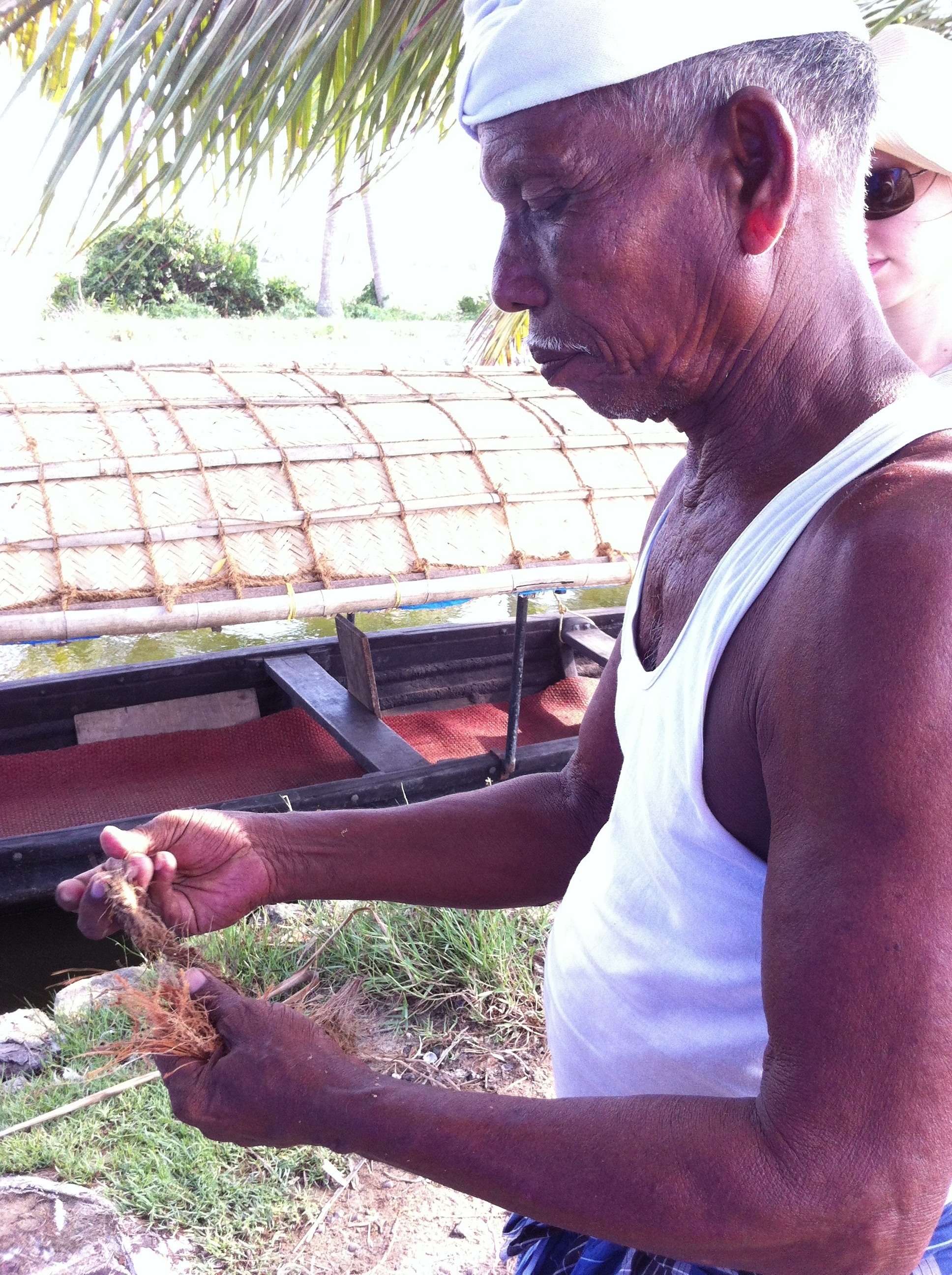
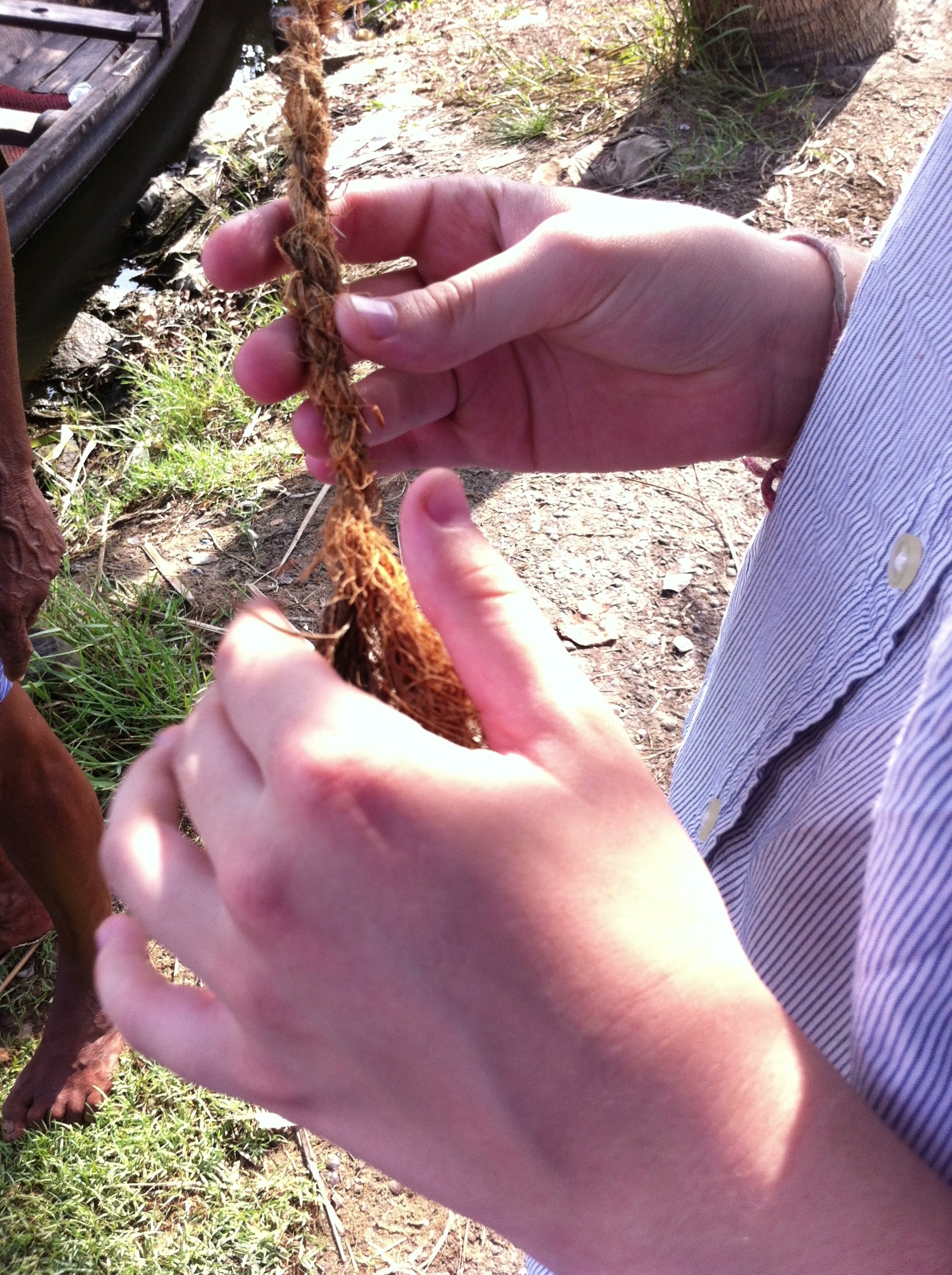
Other pics include sad chickens (in a cage), happy ducks. Our boatman also stopped to show us how coir is braided – taking raw coconut fiber from a discarded husk and after shaking and cleaning by hand, rubbing it into a rough braid.

My daughter’s hat (inherited) has an ink stain in back.

20130414-175509.jpg

20130414-175543.jpg

20130414-175558.jpg

20130414-175624.jpg

20130414-175637.jpg

20130414-182221.jpg

20130414-182255.jpg

20130414-182330.jpg

“Resort” To Kerala

April 13, 2013

A prime reason to stay in a luxury resort hotel is comfort. The expectation is that the extra cost will protect you from some of the less pleasant aspects of life–fishy odors, power shortages, the need for a large pink mosquito net over your bed and the sight of a small hot calf tethered to the front porch. A resort hotel typically also provides little extras in the bathroom–shaped soap, shampoo samples, conditioner, and, you know, a ceiling.

We are in the Kerala backwaters not staying in such a luxury hotel. (When an idealistic person, such as a certain co-traveling family member, works a while for an Indian social welfare organization, the idea of paying the kind of prices charged by such hotels becomes highly objectionable.) So, we are having a much much cheaper eco-friendly experience.

It is lots of fun, mainly.

Well, right now as I retype this post onto my daughter’s teeny computer from my iPad because there’s no real wifi, while sitting under the mosquito netting, while firecrackers from a Hindu festival across the water feel like they are pounding at our door, it is a little less fun. And neither of us are truly looking forward to the rooftop-less shower. (It is more than fairly buggy here.)

But it is a lot of fun, mainly.

Turns out, of course, that the fishy smell isn’t actually the byproduct of staying by the riverbank, but the result of the hotel owner also operating a small fish processing plant on the property. The key for me – other than the odor – were the faded stenciled letters on the outside wall – “Finished Product Chute”.

But it’s truly a very small fish processing plant. Next to very small greenish pools outside. Staffed, it seems from the silhouettes of the small assembly line, only by women. And India needs all the rural employment it can get.

I cannot also say that it is super quiet here, as promised by the tour person who booked this for us in Cochin. There is one Hindu temple just below us that has hosted microphoned chanting all day, and one across the water that is celebrating a holiday with fireworks tonight. The prawn workers around the bend do not have a true building to work in, but do have a very loud speaker system–generally, they’ve played a mix of Bollywood and classical Indian; the children here of the hotel owner have a TV.; the adults another one. (The prawn workers’ music is actually sort of cool as is the chanting.)

BOOOM. (I won’t comment on the firecrackers.)

Still, there certainly is a kind of peace here beyond the heat stupor. (Boom zap zap.) In the daytime. And on most OTHER nights.

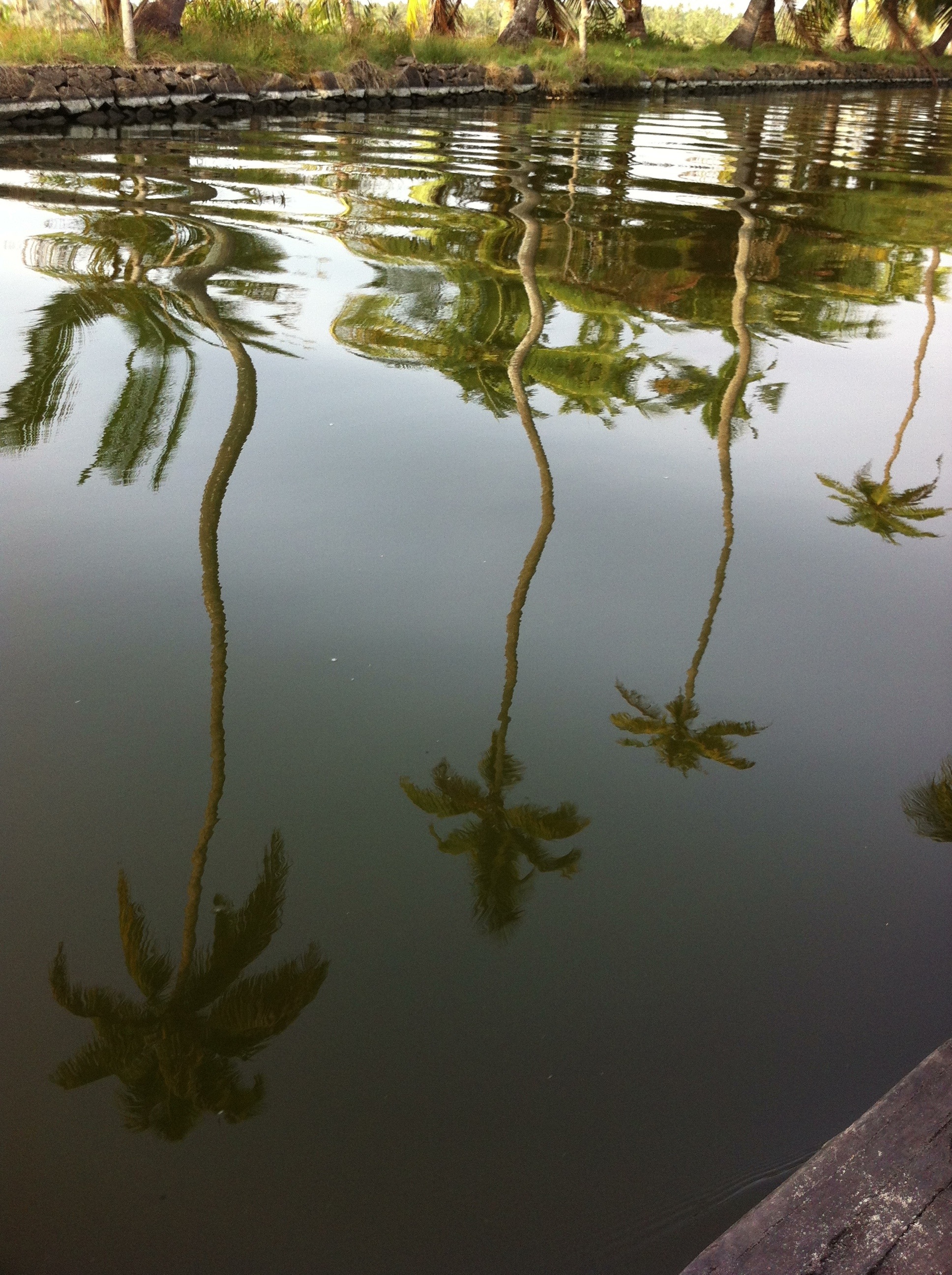
The canals shimmer with reflected palms.

And this particular little fishfarmhouse is also not so bad– the food is delicious and generous, the little calf does not seem ill-treated–it’s tether moves with the shade; when the power goes out, it usually goes on again quite fast(BOOOOM), and (BOOM BOOM BOOM), and though it is very very very hot outside, it is also incredibly beautiful. Green on green.

Still, one night instead of two, we’ve decided.

(I should clarify that the fireworks mainly just go bang; far fewer flares and sparkles.).

(Also I don’t know how many pictures I can post with the wifi situation. I may just get up the view from the toilet. Below. Tomorrow I’ll put up some of the ACTUAL backwaters .)

20130413-212124.jpg