Archive for March 2010

Possible Spoiler Alert – “Remember Me” – Reasons For Sinking Feeling Pre-Ticket Purchase

March 12, 2010

As followers of this  blog know, I am an embarrassed fan of Robert Pattinson.  (It’s the smile, the eyes, the hair, the cheekbones, the….)  As a result, I have to,  I have to, get myself to his new film Remember Me, opening today.   Unfortunately, after reading a few reviews (mixed), I have a bad feeling in the pit of my stomach.  Here’s  why:

Reasons For Sinking Feeling Pre-Remember Me

1.  That Rob really will prove to be a not very good actor and I won’t be able to blame it on the Twilight scripts.   (Rob not a very good actor?  Does not compute.)

2.  That Rob’s hair will be flatter than Edward Cullen’s, and even though I thought Edward’s was ridiculous, I will somehow feel crest fallen. (Like the hair.)

3.  That the movie will be ponderous. (Likely.)

4.  That he’ll smoke cigarettes non-stop.  (Ugh.)

5.  That his American accent will make him seem dopey.  (Does it matter?)

6.  That the movie will have some kind of heavy-handed 9/11 ending–maybe the cop father of Emilie de Ravin is killed, maybe one of Emilie or Rob is killed–and that this will make me feel truly sick, upset, and manipulated, even as it will inevitably move me.  (This seems a strong possibility and is extremely worrisome.)

Oh well.   In the interest of not being a true spoiler, I will try not to let you know.

“A Man Steals A Bicycle….”

March 11, 2010

Big Bicycle, Small Silver Box

Like many New Yorkers, I sometimes buy an egg sandwich in the morning from a little stainless-steel cart parked outside of my office building.

I love these stainless steel carts; my daughter calls them “boxes.”  While she was in high school, she would go out every morning at a time that was somehow called lunch, and buy “box coffee.” It was reasonably good, very cheap, reliably hot.

The carts remind me of little, square, Airstream trailers, everything silvery and compact, the glass of the little windows, as slightly dulled as the 1950’s, showing the Art Deco curve of crullers; the boxes of tea displayed on the top shelf, even green tea, brightly anachronistic.

My particular silver box guy is named Nick; he is from Greece.  For some years, I thought he was from Macedonia, and, trying to be nice, commiserated throughout the late summer of 2007 about the forest fires there.   But I have finally gotten it into my head (after several bemused corrections) that Nick is from the Peloponnese (Olympia).

Nick would be unlikely to make a corresponding mistake about where I am from.  Like almost every silver box guy I’ve ever dealt with, he has a memory akin to Borges’  Funes the Memorious.   He knows the caffeine, dairy, egg, ketchup, bagel and doughnut preferences of a few hundred regular customers, many of whom simply greet him with a grunt, or (the more polite ones), a nod.   (People waiting for coffee tend to be quiet.)

Nick and his some silver box occupy my corner every single weekday, rain or shine.  His only vacations come when the police cordon off the street.  His is one of the few businesses, other than Goldman Sachs, that has done well  in the economic downturn.  His prices for a substantial breakfast are so much cheaper than lunch prices in mid-town that, over the last year, more and more people fill up early in the day.

I really like Nick.  He treats everyone with friendly respect, never even rolling his eyes at  their requests for eight sugars, or their bacon sausage cheese, grape jelly, and ketchups on a roll.

Besides all that, I look like his mother.

He has told me this a couple of times.  I’m never sure whether to be insulted or touched.  (Nick is younger than me, but not that much younger.)  (He also once made a guess of my age, a wrong guess;  we don’t talk about that time.)

I asked Nick today about his mother.  He laughed and said that he had told her about me.    (This time I actually did feel touched.)  Then we moved on (it takes a while to cook eggs) to the Greek economy.  He shook his head sorrowfully, murmuring about the tough time people were having, the tough times that were expected for a while; higher taxes, higher expenses.

“A man steals a bicyle, he goes to jail,” he said.  “He steals a million dollars, he goes to…” he shook his head.

“The Ritz,” I finished.

We bemoaned stealing and dollars (both millions and the lack thereof).

I asked him if he could visit Greece soon; he wistfully shook his head ‘no’ again, wrapping my sandwich in thin silver foil, passing it through the small silver space.

“A man steals a bicycle, ” he said again, “he goes to jail;  he steals a million dollars….”

(Note re above post:  it’s not intended in any way as a criticism of what Obama has done, or is trying to do, with respect to overseeing and regulating financial system, executive compensation, etc.  )

Blocking Writer’s Block – Ironing Out Problems With Confidence

March 10, 2010

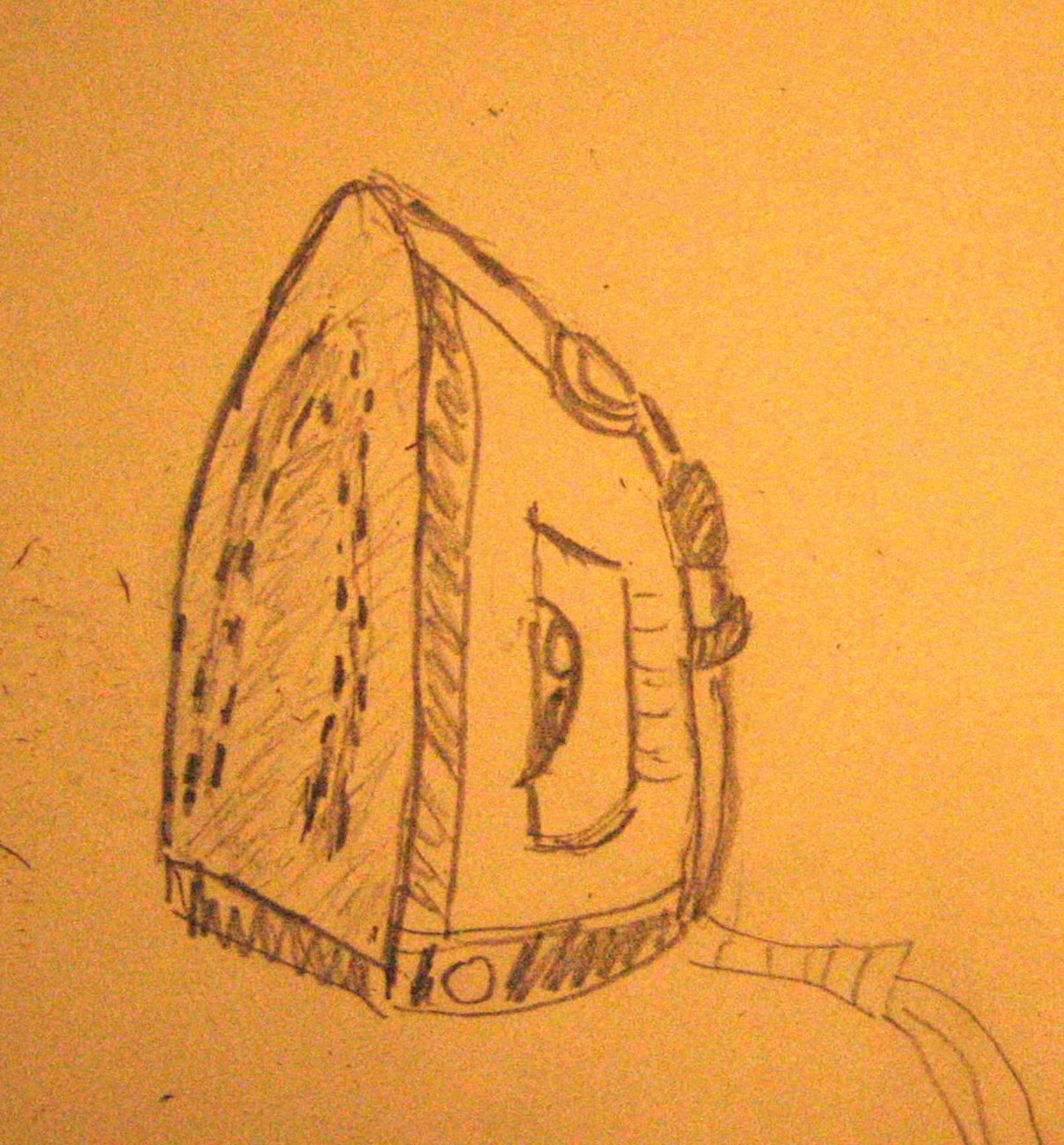
Iron

I walked back home from my subway stop this morning (a trek) thinking I’d left my iron on.  I imagined my old, blinding, dog, Pearl, knocking it down (the iron was sitting on the floor in a far corner of  one room of my apartment).  I imagined terrible damage to Pearl, and then, in the ensuing conflagration, the destruction of all my worldly possessions .

Even as I hiked back to my apartment, getting later for work than ever, I knew this scenario was unlikely.  First of all, I’ve left the iron on before and its heating element always turns off quite quickly automatically.    Secondly, Pearl diligently spends just about all day in her “office”, that is, my closet, which is far far away from the nook where the iron sits.

When I let myself back into my apartment, I found the iron already unplugged, cool.

We tend to doubt ourselves.   This doubt not only affects our lives, it also affects our writing, actually any artistic endeavor we may try.

Some people (often the young) believe that every thing they produce is terrific.  They save every napkin doodle; they keep copies of every draft–bags and bags of them, whole old computers’ full.  Often, however, as both rejection notices and non-writing responsibilities mount, we tend to lose confidence in whatever voice works its way through our fingers.

This  self-doubt can lead to writer’s block, or at least, writer’s….lethargy.  We tell ourselves that if we only had a contract, an editor, a salivating agent, we’d produce tons of stuff, but we don’t feel adequate authority to keep working on our own.   What’s the use?  How can we keep up our confidence if  the only light at the end of the tunnel seems to be another blank page?  ( Blank screen?)

Two tools jump to mind (other than the one I’m always citing which is, well, discipline.)

1.  Knowledge.  Knowledge is power here; luckily, knowledge can be acquired a lot easier than other kinds of power.  By knowledge, I mean, knowledge of what’s out there in your field; knowledge too of human nature.

To get that knowledge, read.  Read good writing;  read “bad” writing.  Read intellectual texts, if you like;  don’t forget popular schlock.  Broaden your sense of the types of expression that are considered “valid”; think of how you fit in, how much better you feel than some writers, how awed and humbled you feel by others, consider what you can learn from everyone.

In addition to reading different kinds of work, consider reading about the lives of writers and artists.    Understand that your travails  may be your strongest basis for a spiritual camaraderie.

2.  Connection.  Learning about the lives of other writers is part of developing a sense of connection.   But it’s also useful to be in actual contact with actual living people.   If you write poetry (or even if you write prose that you can read paragraphs of in a poetic manner), go to open mike readings.  Make yourself read aloud.   The other poets may not make you feel liked, and you may not like them;  remember that you are not necessarily looking for friends, but a sense of validity.    Make yourself go more than once.  (Poets are a finicky, stand-offish, bunch; they may need to know you pretty well before they even smile.)

If there is no open mike in your area, consider a class.  Or host a little writing session. Try an internet site where you can post work.   In seeking a compatriot, an audience (even just an audience of one), look for  a person who is also interested in writing.  A non-writer is likely not to understand your problems with confidence and may, accidentally, make you feel worse than ever.  A fellow writer will respond to your work with some measure of attention simply in the spirit of quid pro quo.  (Take what you can get.)

Finally, even if the people with whom you try to connect don’t seem to like your work, don’t be discouraged.  (The differences in peoples’ taste is a source of continual amazement. )  Check to see whether you like their work.

Remember through all of this that you did turn off that iron, or, at least, you did not burn down your apartment, or damage your dog.  Translation:  you do too do some things right.

For more on writer’s block, check out posts in that category from the ManicDDaily home page;  for more on Pearl, check out posts re dog.

Mid-March Resolutions (Easier For Me Than Obama)

March 9, 2010

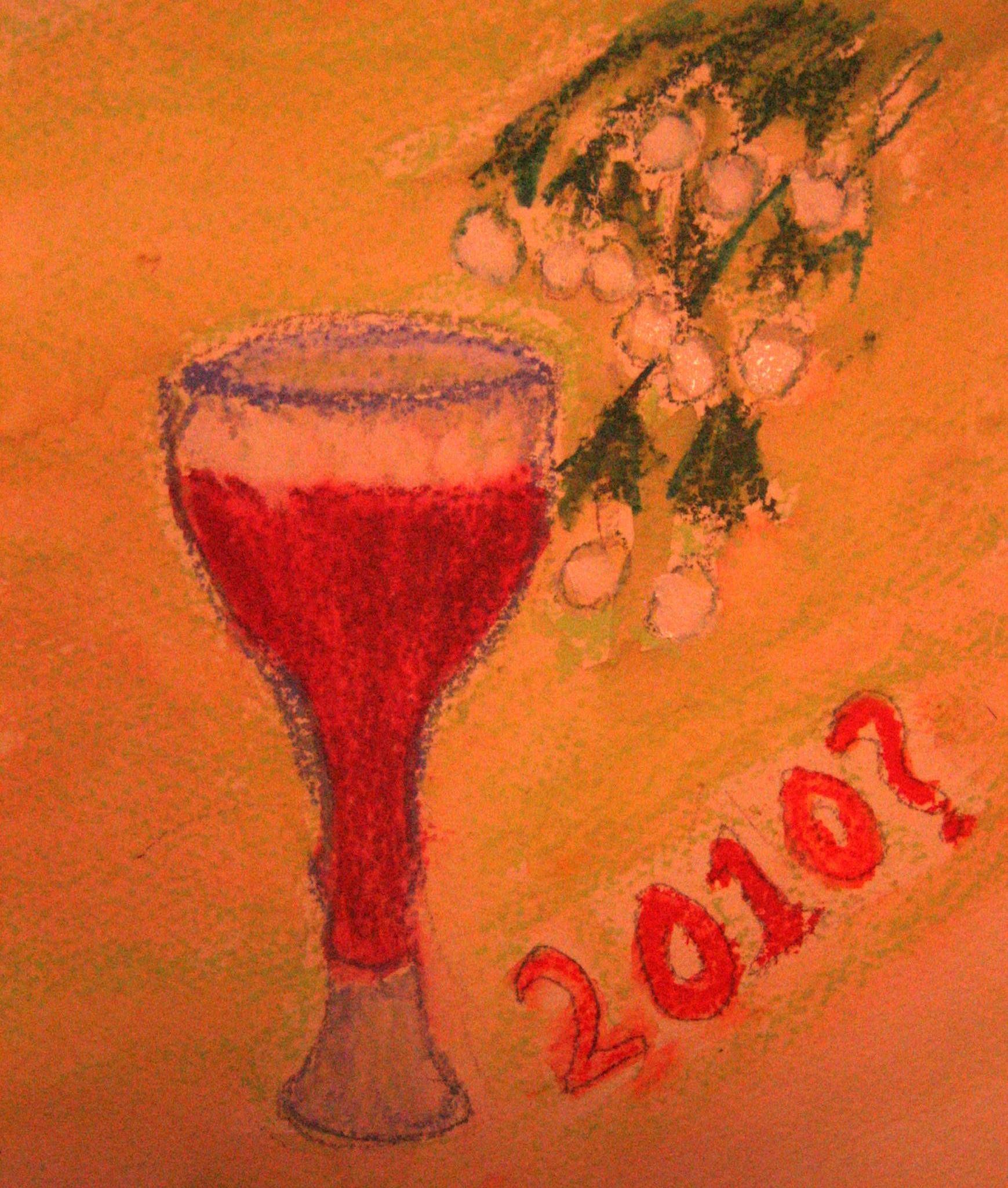
Snow Drops and Red Wine

This morning I saw snowdrops (honest-to-goodness clumps of little white flowers) blooming behind the iron fence that runs along the esplanade in Battery Park City.  (Flowers in public spaces seem to be kept behind bars in New York City, I guess, to keep them from becoming flowers in private spaces.)   The snowdrops, combined with what was really a glorious morning, made me worry that I was too harsh about the month of March in yesterday’s post.  I called it the cruelest month.

March really isn’t cruel; it’s just, you know, brusque, brutal (think Ides).

It’s all a matter of timing.  Even to the jaded, January feels like a new start; the year is fresh;  change seems genuinely possible.  (Sort of like Obama’s inauguration.)  But, hey, it’s just January.  You’re a little tired from Christmas (the election); you want to be kind to yourself (bipartisan),   and besides, you’re still working on getting the digits on your checks right (i.e. the collapsing banking system).  You feel like you can take a little time for the life changes.

Then February hits.  But, hey, it’s February.   Cold, grey, stormy (the continuing worrisome instability of the economy), and above all, short.  Nobody really expects you to make life changes in February.

And then, suddenly… it’s March.  Not just March, mid-March.  And suddenly, the year doesn’t feel so new any more.  The stores don’t even have half-priced calendars.   (The banks are doing okay, but now everyone worries about budget deficits, or uses them as political cover.)

In March, change feels very hard.   Obligation looms (i.e. taxes) (i.e.  budget deficits) and the scent of Spring in the air seem to bring up the repeating cycle of the season as much as “newness”.   That sense of cycle (another winter over, another year already mid-swing) feels more relentless than reviving.  (Can one have schadenfreude towards a season?  Can politicians let go of their schadenfreude for other politicians?)

For all of you feeling left behind by Spring, and by time itself, I have good news: first, a new and fairly extensive study conducted by researchers at Brigham and Women’s Hospital in Boston shows that women who drink alcohol regularly, particularly red wine, are significantly less likely to gain weight and become obese than non-drinkers. Secondly, spending on cosmetic plastic surgery, such as breast augmentation, tummy tucks, and liposuction, dropped significantly last year.

One would like to think that the drop in spending on such cosmetic procedures was a result of people coming to their senses—hard economic times making them realize what was important in life—but the drop may simply mean that hard economic times gave people less money to spend.  This later view is unfortunately born out by the fact that spending on less expensive treatments, such as Botox injections, actually rose in 2009.

Nonetheless, nonetheless, both studies offer hope, at least to me.  At last, there are some health resolutions and fashions I should be able to adopt in the coming year (even beginning as late as mid-March)—(i) drinking more red wine, and (ii) not getting expensive cosmetic surgery.     Definitely doable.

I wish it were as easy for the President.

“Marching Orders” From My Dog Pearl

March 8, 2010

Pearl Being Exuberant

T.S. Eliot said that April is the cruelest month.  I tend to think it’s March.

March is a teaser.  You step out in the mornings into air that feels suddenly, caressingly, warm.  Your heart lifts.   Then, after maybe a minute,  you become aware of a damp undercurrent.   You realize, unless you manage to collide with an angle of absolutely direct sunlight, that the caress was like the touch of a best-selling vampire wearing gloves.   All it truly is, is warmer than it’s been.

It’s dark when you get out of the subway after work–still dark.   Your eyes fixate on the big hard mounds of extremely gritty snow in the middle or on the edges of certain pubic spaces.

You just know it’s going to start raining soon (probably on the weekend.)   You imagine big pools of water collecting at street corners,  pools so murky that people will risk injury by veering taxi cab rather than get close to them, even people who have spent monsoon seasons in Calcutta.

You tell yourself that this is March, predictably unpredictable, that Spring really is coming.  But, since you are stuck inside for the nice parts of the day, it’s hard to feel good.  In fact, you feel pretty lousy.

At times like this, I tell myself that I should emulate the one great sage I know, that is, my dog Pearl.

Pearl is a very old dog.   She seems, unfortunately, to be going blind.  She sees my shape moving from living room into kitchen with absolute clarity.   But once she tracks me into the kitchen, she can’t always tell if I’m holding a treat in my hand or if I’ve dropped it in front of her, or if I have dropped it in front of her, where exactly.  On evening walks, she’ll almost bump into things (like park benches) or  halt in sudden fear or disorientation.

That part is pretty sad.

Most of the time Pearl is beyond sedentary.  (Sedentary derives from the word “to sit”;  Pearl doesn’t bother with sitting; she’s generally stretched out flat.)    But there are moments, on a nearly daily basis, that still  bring out a joyful puppydom.    These often follow that difficult evening walk.   There is a stretch of carpeting in  my building’s hallway, between elevator and my apartment door,  that she has always found to be an irresistible running track—the carpet is firm,  and at that point in the walk, she’s free–of leash, of whatever “business” took her outside, of any further duties for that day.

She goes, to put it mildly, bananas—running back and forth, circling, grinning a weird canine side grin.   She will run until she’s almost choking, and then (she’s not the smartest creature in the world),  run a little more.

What Pearl seems to understand is that new energy comes from the expenditure of energy,  new joy from old joy, from jumping into joy, and  that joy doesn’t need to be saved up, it just needs to be savored.

Some might say I’m anthropomorphizing.  Some might say that I’m not, that what Pearl does is simply easier for a dog.   Either view seems to offer me something palpable:   to find exuberance, be exuberant (even about the routine, the mundane,  especially about the routine, the mundane);   to get through March, march right on through it.

Of course, once Pearl is back in the apartment, she usually collapses again.  (After one more quick exploration of the kitchen.)

That part sounds good too.

PS – for a poem about Pearl’s exuberance, check out this.

“Live Blogging From the Academy Awards!”

March 7, 2010

Star

I start to type up a blog about Barack Obama tonight, when lo and behold! I realize that the Academy Awards are on.

I don’t really go to many movies.  I have a hard time with violence.   I can only manage most modern movies if I can persuade someone who’s already seen the movie to go a second time and let me hide my eyes in their shoulder until they tell me it’s okay to look again.

And, then, well, there’s the busy-ness factor.   There are just so many other things to do these days.    You can, for example, live hooked up to a computer.

Not seeing many movies  limits my interest in the Academy Awards.  But I watch some of the show simply for the nostalgia factor.  It’s a show that my parents let me stay up for as a child.  My mom loved movies, loved Hollywood;  memories of seeing favorite movies were some of her happiest.

As the Oscars played, I’d sit near her feet on  our living room rug while she went on and on about how old or young somebody looked.  (Actually, usually what she talked about was how old someone was and how young they looked.)  My dad usually stretched out on a further place in the rug and snored.

So far (and I, thankfully, missed the beginning) this seems to be kind of a boring Academy Award show.  I like Alec Baldwin and Steve Martin, but the show seems stripped down, less sillily glitzy.

Costumes are boring; dresses predictable (no one’s wearing a swan!)   Many of the stars are amazingly poor at reading from teleprompters.  (In the old days, when the presenters read from index cards, there was at least the interest of seeing them holding the cards far or close to their eyes, fanning themselves when they gave up on getting the words out, and then, of course, the occasional wonder of reading glasses stuck briefly on the bridge of some celebrated nose.)

Secondly, there is a huge number of commercials (and these are not Super Bowl commercials.)  Many of the little films and clips on the show itself seem like commercials.  It’s as if the Academy is desperately trying to sell us on how important it and its products are.

So the awards go on.  There’s some interest in seeing how weirdly big earrings can be; how whittled down actresses can get themselves.

Then too, there  is the contagious emotion of some award recipients.  It’s very hard not to be moved by Monique and the winners from Precious, and also those from The Hurt Locker, relative newcomers to the glittery scene.

One guy has just said that what he likes about short films is that they are short.  Unfortunately, that’s not one of the sterling qualities of the Academy Awards Show.

Still, I’ll give it a little longer.  (Like so many of those recipients, in honor of my mom.)

UPDATE at end of Oscars:  I lasted through it!  So glad Hollywood came through for The Hurt Locker and not Avatar.  (I tend to go for the ex-wife.  And Cameron was hard enough to stomach even from his seat.)

Cherry Pie (Not Like George)

March 6, 2010

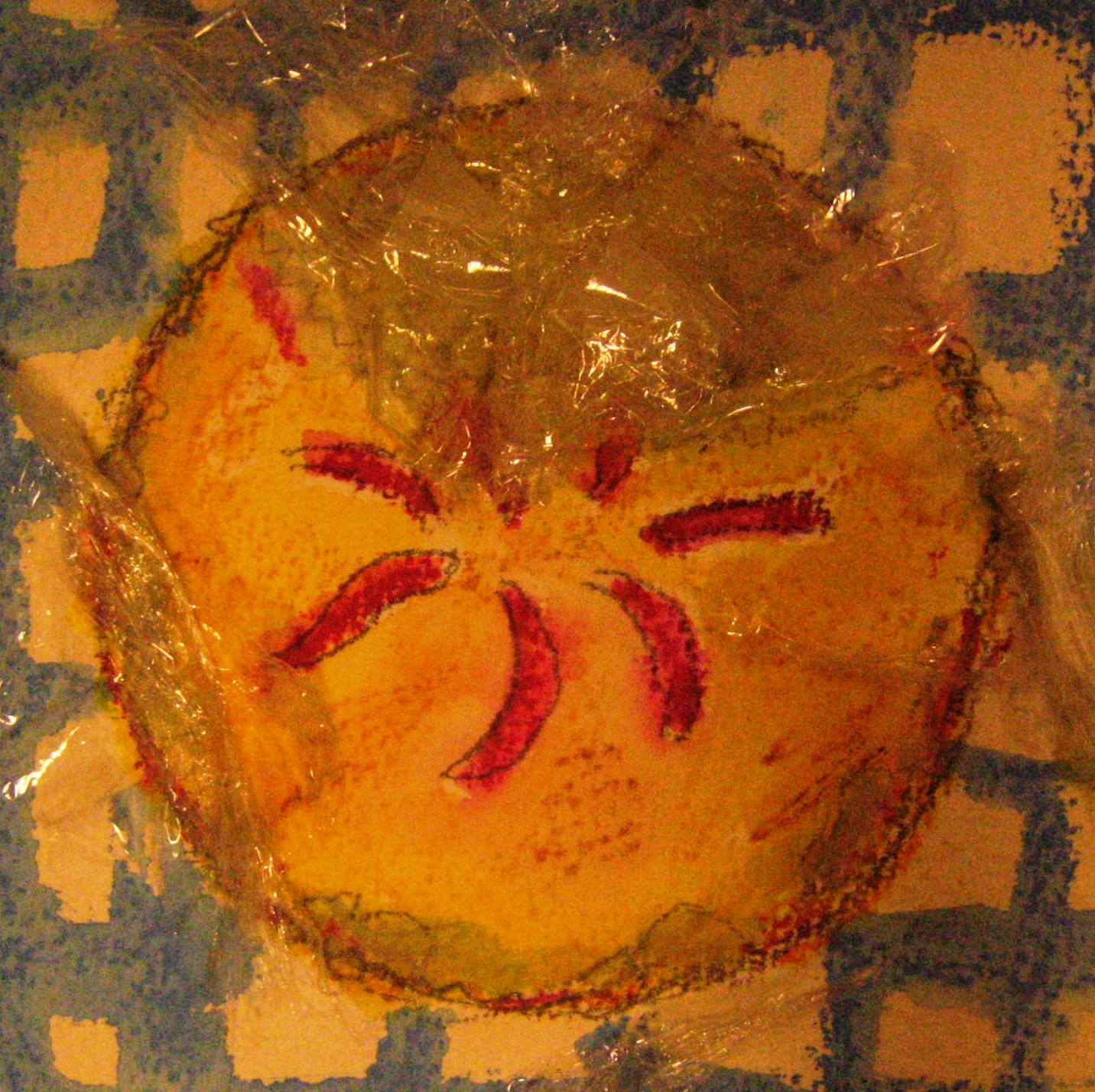
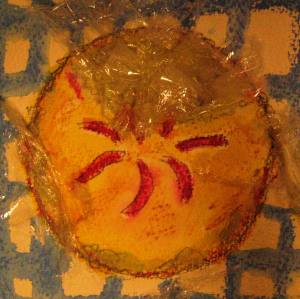
Cherry Pie With Cellophane

Thinking about greed today.   And urges.

Early this morning, bleary-eyed and blind (I was stumbling around my apartment without my glasses), I tore a frozen cherry pie from its box and put it on a baking sheet.  I have been thinking about cherry pie ever since President’s Day, the modern stand-in for George Washington’s and Lincoln’s birthday.  (See e.g. portrait of GW with Cherry Pie.)

As I turned on the oven to pre-heat it, I delighted in the home-made aspect of the frozen pie—that is, the lopsided puff of its upper crust, the slight pucker to one side.  It took me a minute, with my uncorrected vision, to realize that the pie box must have been bumped slightly (there was a crimp on one side of the aluminum pie plate) which seemed to be what was responsible for the asymmetry.  I told myself that the pie still looked wonderful.  I was absolutely determined to like it.

I hurriedly stuck the pie in the oven, deciding that it was preheated enough.

Approximately fifty minutes later when I pulled the pie out (with my glasses on), I found a crumpled partly-melted ripple of plastic sticking to one side of its top crust.

I lifted the large crumple of melted plastic off first, hardly able to believe it.  Concerns about both my vision and idiocy filled my mind, but, then as I noticed suspiciously shiny bits on the ripple of outer crust, these concerns took second place to worry over the pie.

The pie!

Does plastic get smaller when it’s melted?  Could those bits and the big piece really be all there was?

I pictured a residue of cellophane dripping down through the beautiful slits in the golden crust, throughout the ruby of cooked tart cherry.  I felt sick (besides blind and idiotic.)

My husband, more of an optimist than I, was sure the pie was fine.  Especially after we lifted off the whole outer perimeter of crust, even the parts that didn’t have shiny bits sticking to them.  Even after we took a bunch of plastic off the bottom of the pie plate.

“What’s if some of the plastic’s melted down?”  I asked.

“It hasn’t melted down.” he insisted.

With the confidence of a mother, that is, a woman who feels like she can try anything (even poisonous or boiling things) as long as she is doing it fast and supposedly to protect  someone else, I tasted one of the upper cherries.

I was sure I felt a soreness instantly start in my throat, though I was equally sure that the cherry tasted absolutely delicious.

Even though I said, repeatedly, that the pie should be thrown away, that I would get another, my husband served himself a big piece with vanilla ice cream. (We are still talking breakfast.  He has an excellent metabolism and really likes pie.)  And then I ate two or three bites of his piece.  (Since bites of someone else’s food have absolutely no calories, they are very hard to pass up.)

Then my throat began to hurt some more.  And then, a few minutes later, I became convinced that a bitter aftertaste of plastic coated my tongue.

“It’s the tea,” my husband said.

“I drink a zillion cups of tea a day,” I insisted.  “How can it be the tea?”

“It’s the…tannins,” he said, “in the tea.”

But, now his throat was hurting too.  “It’s my cold,” he said, “and the tea.”

He went back to the kitchen to throw out the pie.

“My throat really hurts now,” I called after him.

“It’s psychosomatic,” he called back.

“It’s melted cellophane,” I replied.

“They can’t possibly allow them to put poisons in plastic like that,” he said.  “People must eat it by mistake all the time.”

“We didn’t do it by mistake.  We even saw it.  We just wanted that cherry pie too much.”

“Yes,” he agreed.

“George Washington wouldn’t have eaten it,” I said ruefully.  “He would have resisted.”

“Yes,” he said. “George Washington would probably have resisted it.”

There didn’t seem to be much else to say.

St. Sebastian Poem – “Art Appreciation”

March 5, 2010

St. Sebastian

Art Appreciation

Sebastian run with arrows pierced the halls,
reaming eye and mind’s eye too
with piteous wounds, his pale trunk like
the finest china except it dripped.
The visitor, a child, struggled to replace him with
inspired skin, a hand around
a candle, glow within.
(Georges de la Tour plunged in.)
Farther afield (a continent and several galleries away),
she found a Joan of Arc, whose eyes beamed
kaleidoscopically against Pre-Raphaelite bark,
a silvered willow.  Caught
inside that psychedelic gleam,
she became a connoisseur.

(All rights reserved.)

Blocking Writer’s Block – The Pen Is Mightier than the Word*

March 4, 2010

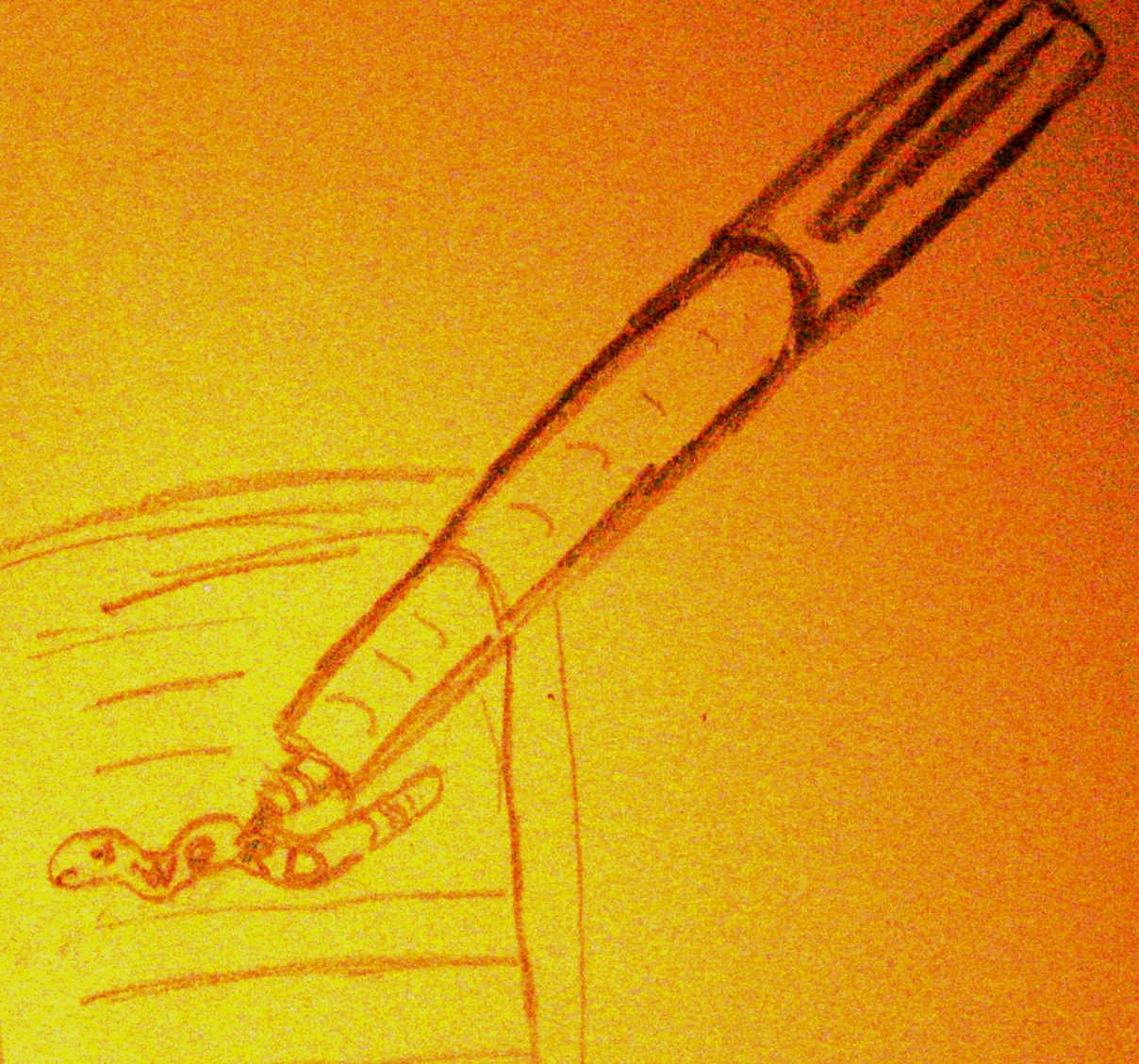
The Pen Is Mightier than the Wor(d)

The downside of being manic is, well, the down side.  There can be depression, of course, but what  I am writing about tonight is simple fatigue:  what’s left when the exhilaration, silliness, determination wears down.

For those who write, this fatigue can function (or cause not functioning, as the case may be) like a kind of writer’s block.  The feeling is not so much paralysis as apathy, apathy colored by exhaustion.  When this fatigue descends, you may feel as if the whole of your forehead (frontal cortex) is taken over by a block of blankness.  If the blankness takes the trouble to enunciate anything at all, what it usually tells you is that (a) you have nothing to say, and (b) even if you did, you’re too tired to say it.

Here are a few tools that can help when this blankness descends:

1.  Habit/Discipline. Forging a daily habit of writing, and disciplining yourself (with soulless rigidity) into maintaining that habit helps to carve a chink of opening in writer’s fatigue.   The writing habit will probably need to be started and cultivated during the non-blank times.  This sounds easy, but unfortunately, when writing is going well, you may not feel a need to set up any habitual framework for it.    Still, it’s useful to try, even when working well, to set some requirements for yourself, such as amount of time you want to devote, an amount you want to produce, a time of day, a place or notebook that you habitually use.   These requirements (even just one of them) can operate as a groove you can slip into when the blankness descends,, a practice you can use discipline (rather than inspiration) to maintain.  Use this discipline to get yourself to pick up your notebook or turn on your computer and set yourself down to it.

2.  Trust/ Let Go. After mustering the discipline to set yourself down,  let go of that same disciplined, planning, decision-making part of your brain.   Pour what’s left of yourself into your fingers, your pen, your keyboard.  Try not to think about what you are going to write, just write.   Move ink (real or virtual) across the page.

The thing to remember is that the pen is mightier than the word.   The fingers (unless you have been doing carpentry or weaving or playing Scott Joplin or Chopin on the piano) are generally less tired than the mind.  And the unconscious is usually quite happy to take over for if you allow it.

How do you access the unconscious?   How do you allow it to move into your hands?  For some this is easier than others.  Probably the most important step is to stop being your own audience.  The unconscious is shy.  It doesn’t like to interrupted; it doesn’t like to be judged.    Of course, once you start writing, your conscious brain (even your fatigued, blocked, conscious brain) will sit up and take notice;  still try to keep this conscious brain to the sidelines.  Make it a silent, unobtrusive witness, a deaf-mute who, sadly, never learned sign language.

These techniques may not give rise to deathless prose (though you may surprise yourself).  But they will help you work through the fog of fatigue (both true mental tiredness and a tiredness of the spirit).   And usually, once the unconscious mind moves into the open,  the fatigued, blocked, conscious part of your brain will also pretty quickly wake up, become engaged.    (It doesn’t really like being a deaf-mute.)

This, frankly,  is when your problems may really begin.  Your unconscious mind may be a much better writer than the conscious mind; they may have different techniques, subject matters.    But at least these are problems with writing, and not with not-writing.

*I have to give credit for the phrase “the pen is mightier than the word” to my husband, Jason Martin.

PS- I have written many posts on blocking writer’s block.  Check them out by going to that category on the ManicDDaily Home Page.

Sometimes The Batteries Just Run Down

March 3, 2010

Tonight is one of those times.

(PS–the above painting is from “Pantoum”, part of A Definite Spark, a sometime-to-be-published guide to formal poetry for children, parents, and pachyderms, by Karin Gustafson.  In the meantime, please check out 1 Mississippi on Amazon.)