Posted tagged ‘stress and creativity’

Stress and–TaDa!

June 3, 2010


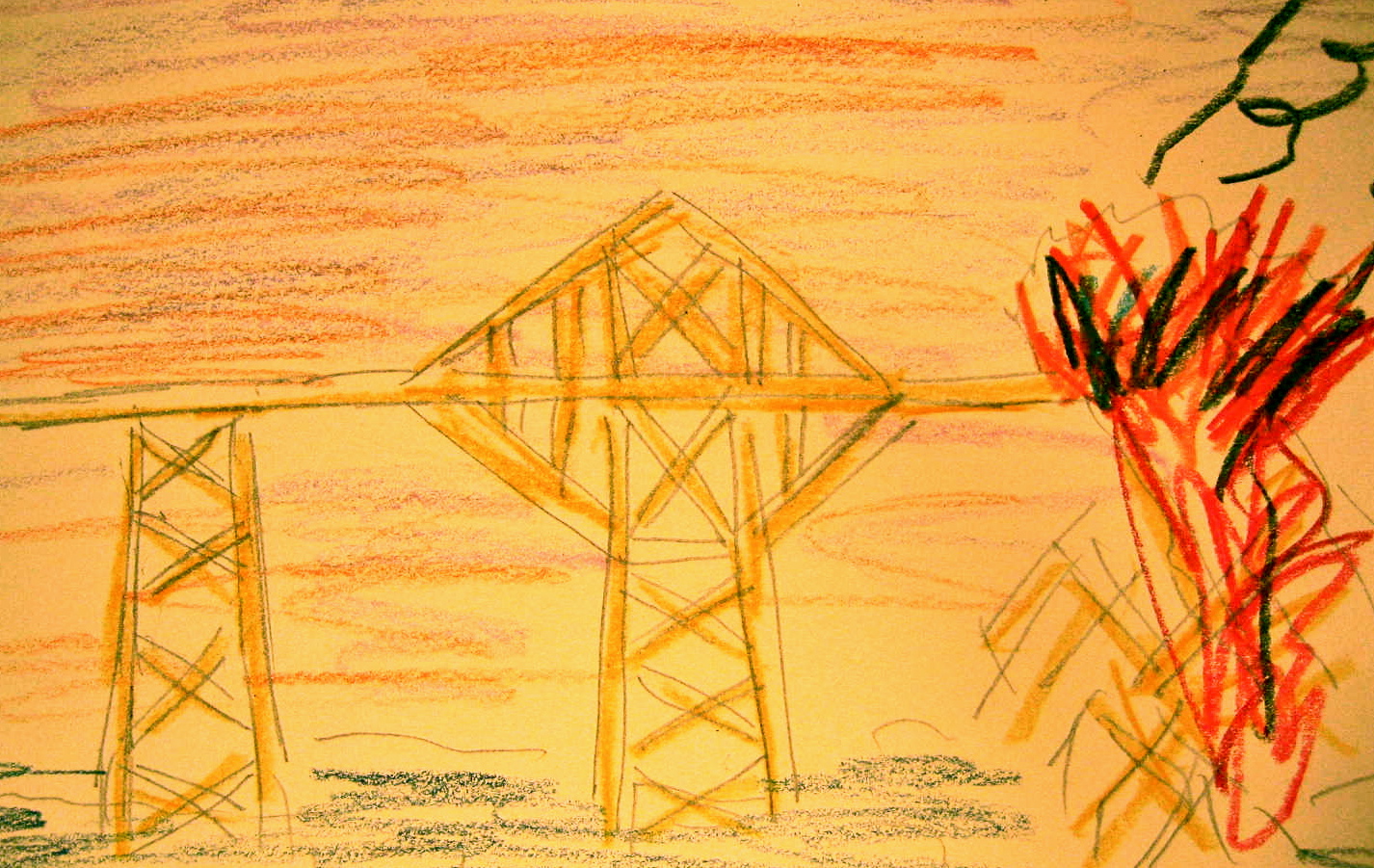
Bridge over River Kwai (Sort of)

I’ve written a lot on this blog about creativity and stress, and also about just plain stress. I’ve also written a fair amount about rhyme.  But what about something that rhymes with stress (sort of)?

Success!  (TaDa!)

Some people consider stress and success as opposite sides of the coin; some (particularly those who have good physical health) even seem to believe that success—I mean here, financial success, or, its great proxy in our culture, fame—will solve major problems.  We all know this isn’t really true;  we all know many successful people who are neither relaxed nor happy.   Still, if you are a creative person, success can feel like one sure way to reduce stress, especially if it means that you no longer need to hold onto your “day job”  and can, instead, devote your energies totally to your creative/artistic endeavors.

It’s certainly true that time, as well as acknowledgement, interest, praise, are great goads to creativity.  But if you do not have success, there are a few compensatory factors which it may help to keep in mind–factors other than a sense of martyrdom and/or the illusion that truly original art is never recognized in its time.

First, of all, day jobs (other than, perhaps, those that involve the postal service), often keep people sane. They tend to get you out of the house (unless you are a housekeeper), put roses on your cheeks (unless you are an office worker), keep your feet on the ground (unless you work for the airlines.)  Most people’s “day jobs” also involve some accommodation of others on a relatively frequent basis.  This interaction with people makes one more human (if more frustrated), and (unless you work for an investment bank) less grandiose.   The skepticism, impatience, and sometimes downright contempt, of co-workers, customers, students, can promote deep self-examination, always a useful pastime for the artistic.

Creative work, on the other hand, is often both solitary and unstructured, which can lead to real head-aches by late afternoon when you either simply have to (i) stop working, or (ii) get working.

Moreover, while a day job may involve a certain amount of self-discipline (i.e. getting there), it often (once you’ve held it for a while) requires little self-promotion.  Achieving and then maintaining even a modest artistic success, in contrast, seem to require vigilant self-aggrandizement; the image must be burnished; the door to opportunity propped open; staleness stubbornly refuted.   While the embarrassing failures of the unsuccessful can just sink into oblivion, the failures of the successful are known and mocked by all.  (Note, in this regard, Sex in the City 2. Even someone like me, who has never seen a single Sex in the City show ever, is making fun of it).

All of which goes to say (as was said in The Bridge Over the River Kwai, a really great film about the conflicted nature of achievement), be happy in your work.  Be glad of what you don’t have (yet.)

Stress and Creativity–Making Choices (Arranging the Lives of Characters Not Family Members)

June 1, 2010

Space

My newly discovered focus on stress and creativity has energized the part of me that loves to give advice.  The one caveat I would make to those reading my advice:  “do as I say, not as I do.”  It is infinitely easier to dish out good counsel than to follow it.

Life is stressful, particularly in the modern world where many play multiple roles; there are the stresses of all that must be done to maintain a job, home, family;  then, there is the added stress of distraction, so many possibilities for avoidance.  Right at the tips of our fingers are the means to while away huge amounts of time—email, Facebook, worldwide news services, horoscopes, blogs, video clips, even favorite TV shows.

In my experience, creative people find it extremely easy to justify giving in to distraction.  We characterize it as “inspiration,” “research.”   We persuade ourselves that it is necessary “keeping up,”  important “networking.”

Some of these justifications may be valid, up to a point.  But the problem is that creativity needs space, a bare spot in the brain to flop around in.  Sure, a brainstorm can arise during a tumult of activity and distraction, but accomplishment (that is, finishing something) generally needs a bit of concentration; time; solitude.

Even if we can restrain our fingertips, nipping computer distraction at the knuckle, there is also the problem of … people; the real live human beings in our lives.  Creativity thrives on people; it wants to speak to people, to impress people, entertain them, awaken them.  Even the most narcissistic artist usually has some genuine sensitivity and empathy.

Still, usually you can’t actually make something (other than perhaps a baby), if you do not cultivate a certain reserve.   By reserve, I do not mean coldness or apathy.  I mean, once again, time, space, quiet, focus.   Given such needs, you may sometimes have to distance yourself from people, to make a choice not to be involved in every family or community drama; to try not to “fix” people (other than your characters).

I should step back here: creativity comes in many different forms.   Some people find their creative expression in mediation or entertainment, in, for example, preparing the perfect family reunion or dinner party.  I had an aunt like this who expressed herself through her elaborate celebrations; I have a cousin who manages to send cards to a wide variety of people not only for their birthdays, but for Christmas, Easter, Thanksgiving, Mother’s Day, etc.

But if you want to focus on something more egotistical– poetry, writing, painting—and you are not making a living from this work—then you simply have to make choices.  Arranging other people’s lives, or even the perfect dinner party, may not always be possible.  Accept that.   (And you may just find that the other people in your life benefit from this choice as much as you do yourself.)

Longterm Focus – Stress and Creativity – Pearl!

May 31, 2010

Pearl - Habit and Engagement

The other day I worried that I really didn’t have a focus for this blog; something to orient  both me and any readers I may be lucky enough to snare.   What have I been I writing about?  What subject do I even have to write about?

Then I suddenly realized that the general subject of this blog has been stress and creativity.  If I wanted to sound official, I’d say the interface between stress and creativity, but since I can’t say that with a straight face (or interface), I won’t.

What does this mean?  I guess the question for me is how one, in this manically depressed stressful modern world, maintains some kind of creative effort?  How can one use stress as a source for creativity rather than as a wet blanket for its termination?  (How, also, can the manic avoid using creativity as a further source of stress?)

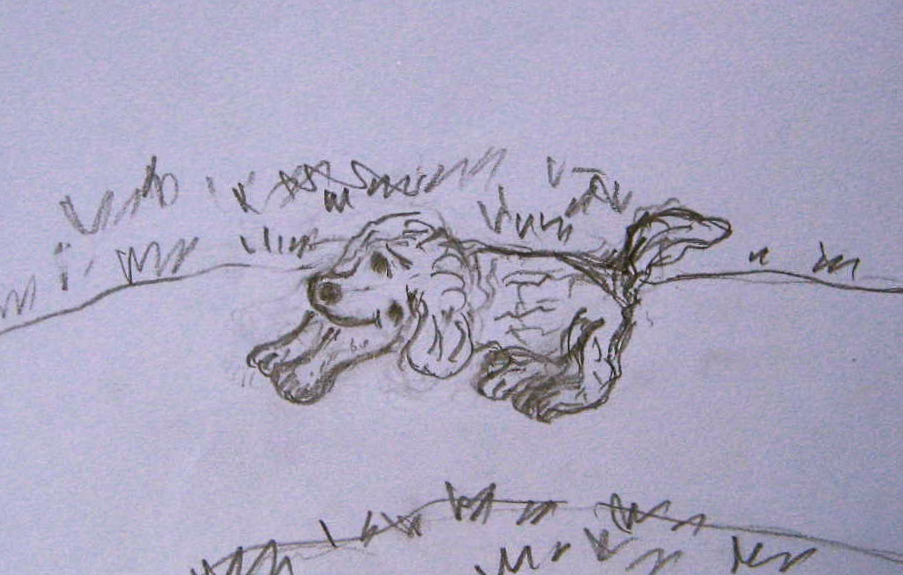
For my first conscious exploration of this subject, I turn to the teachings of my old dog Pearl.  Pearl was struck by a sudden spine problem a couple of weeks ago that paralyzed her from the dog-waist down, rendering her hind legs both insensitive and immobile.  Amazingly, with the help of steroids, she has recovered some use of her legs: she can wobble along now, though she moves like the proverbial drunken sail—dog.  (BTW, after reading several Horatio Hornblower books last week, I now feel enough “expertise” to understand that the unsteadiness of a drunken sailor is archetypical because it arises from at least two sources—(a) alcohol and (b) sea legs, i.e. legs accustomed to the sway of waves that are suddenly posited upon dry land.)

Pearl’s up in the country this weekend, and her reaction to it is a lesson in the maintenance of creativity under stress.  (For these purposes, I’ll consider Pearl’s outdoor explorations and general cuteness her “expression.”)

Pearl still has trouble even walking, and yet, here, in a country place she has loved since puppydom, she wobbles, skips, trots.  What motivates her, what keeps her going, seems to be two factors:  habit and engagement.

There are certain places (a long dirt driveway), and certain times of day, in which Pearl has always run here.  That habit (plus steroids) is so strong that when I put her down on these spots, and at those special times, her legs just move.

Where habit runs out, engagement takes over.  The scent of a place where a deer has recently bedded down will lure Pearl, sniffing, into tall grass, pull her through reeds, propel her into Heraculean effort.  I can only derail her lopsided enthusiasm by physically picking her up and putting her back on her track, where, out of habit, she quickly wobbles off again.

Which brings me back to the creative human mind dealing with stressful obstacles–all those drags upon the consciousness.  How to avoid paralysis?  How to dart and trot, dig and ferret?  How to just keep going?

This (I think) is this blog’s inquiry.

Thanks so much to those who have been following.  Stay tuned.