Aha! A plan forms, vaguely, during my brain’s optimal thinking time, which is in those moments in the night when my eyes flutter open because “god,I’m thirsty” (I have a phobia about drinking water and really have a hard time with it), or have to go to the bathroom, or “god, I’m just incredibly thirsty.”
All the time what I was really thirsty for (aside from fluids) was a plot, a plan, a narrative structure.
My eyes didn’t flutter quite enough, and the plan is admittedly still extremely vague. It is a bit like a egg not sure if it will fry or scramble or even turn out to be a lightbulb.
And where will that egg cook? I have an idea–Las Vegas, a placehot enough to cook the egg all right, even on the pool deck–but it’s a place I last visited thirty years ago, and I really am not sure I know it well enough to use it.
Can the whole take place thirty years ago? I suppose. (Let’s say it’s one of those really old eggs that never actually smells rotten.) But doesn’t there have to be some reason for that?
In the last few weeks, the news of the elections has been so dispiriting I resolved simply not to care any more. My external groan was ‘what will be, will be,’ but internally, I felt too disappointed with the muddled message and mission of Democrats, and even President Obama, to feel very motivated to defend them.
A part of me told myself that at least I have no children in the school system, that maybe I’d enjoy buying stuff with tax cut dollars, and that, at least, I’d probably die before the planet was destroyed.
But watching President Obama’s interview on the Daily Show with Jon Stewart yesterday, reminded me of why I love, respect and support him.
The guy is smart, articulate, practical, honest, careful, thoughtful, realistic.
Yes, conditions in this country are terrible. But people forget how much worse they were when he took office.
As Stewart emphasized, many voting for Obama feel that he has not brought promised change, but the fact is that we live in a very conservative country that has been going through a gut-wrenching crisis. While a crisis may potentially bring opportunities for change, it raises an immediate panic that clings to the known. (In the middle of a torrential rain storm, everyone wants the roof to be patched, few want it to be dismantled and replaced, and only the most calm and foresighted welcome a discussion of solar panels.)
A lot of persuasion is needed.
Which takes me to my point: in our channel-changing, gotcha culture, aura often takes the place of substance.
Obama has substance. But all the badmouthing, falsehoods, and difficult compromises have tarnished the glow that enveloped him at the time of the election. This tarnish is difficult for Obama to dispel simply by being measured, intelligent and dignified. (Especially while being dignified.)
Those on the more liberal side have contributed to this loss of aura by their contempt for the doable, fortifying the notion that ther eis no difference between parties and candidates.
Unfortunately, the adoption of this type of hopelessness is a gateway for a longterm series of abuses. (See e.g. Berlusconi in Italy.)
So, how about some enthusiasm, people!? Does anyone really want to play the role of angry Prom Queen whose suitor got the corsage but not the limo?
And, of course, vote! Even if you are not thrilled by your choices, make one!
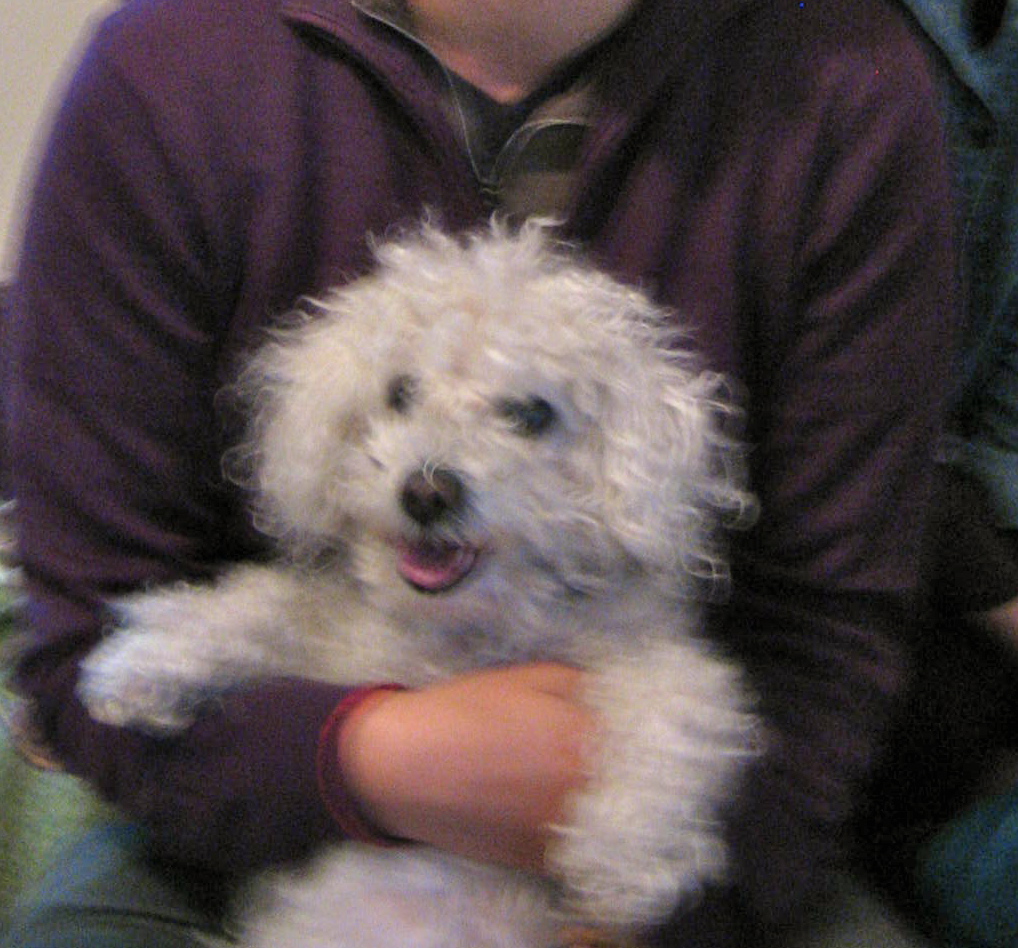
PS – I want to send out best wishes to Jon Stewart and Stephen Colbert for their rally. I really wanted to go but alas my old dog Pearl is not allowed on Amtrak and is a little too frail right now to be left behind, even with a good friend.
Three days and very very few hours until November and Nanowrimo begin and I still haven’t spent a moment mapping out a plan.
Nanowrimo, as you may know, is National Novel Writing Month–a month in which any one of the writing persuasion is justified in caving in to all anti-social, anti-utilitarian, and Auntie-Mame tendencies in order to pound out a novel (or 50,000 words) in thirty days.
Technically, you are not supposed to put a word to paper (okay, screen) prior to 12:01 a.m. November 1.
Planning is allowed, however: outlines, mapping, character sketches, thinking.
(The deadline is self-imposed. No would actually know if you cleverly converted outlines into written text… a week or so before November 1.)
But here I am. Not planning anything yet, because, in my ManicDdaily way, I am grappling with personal and professional issues that feel in the instant like matters of crippling importance. (In fact, it’s probably the feelings that are crippling, the matters less so.)
Enough said. What do you do when you don’t have a plan for a novel and you really really want to write one anyway?
First of all, be honest. You say you don’t have a plan, but is there nothing kicking around your cranial closet? What about an old plan, discarded plan, some plan that seemed at one point impossible to you?
When you come up with that old plan–and seriously, just about everyone has one–think about whether you could commit to it for a month. More importantly, could you have fun with it?
Don’t pass over a plan because you think it’s stupid or impossible, but only because you are genuinely not interested. And even then, think twice. (The novel loves narrative–it really is helpful to have an idea for one.)
If you can’t come up with a plan, you can always try just writing. Start with a scene, a place, a person, a feeling, relatively random words set down upon the page. (The human mind’s love of narrative is so strong that a story is likely to take over even when using this method. Eventually.)
But take care. This kind of writing (which the Nanowrimo staff calls writing “by the seat of your pants”) can feel emotionally satisfying at its inception (like therapy) but can sometimes bog down (like therapy), especially if it wanders too much into the territory of a roman a clef.
Which brings up another important point. Whether you are a “pantser” or a planner, try to let go of the angst. There may be a nobility to enduring suffering, but few people want to read pages and pages of how you have endured yours. Whining tends to be very hard to shape.
Besides, what fun is it avoiding the trials and tribulations of your personal life for a month if you’re going to spend your whole time writing about them?
I woke up today feeling terribly depressed. Yes, it’s probably my chemistry (the down side of the m-word), but, as I browsed through the online New York Times, I also feltthat I had every right to blame my hopelessness on the world in general.
Everything seemed to bring up Reagan’s old (deficit-producing) supply-side economics; they seemed not just to have been swallowed by the American people but to have become an integral part of the body politic–its eaten-out heart (as in “eat your heart out’); the idea that compassion is bad while greed is good (for society as well as the greedy), almost a moral imperative.
There was the article about the refusal of politicians to support improvements in infrastructure despite the terrible need both for the improvements and the jobs the improvements would provide. Then the negativity towards healthcare (in one, a Florida politician whose company was indicted for massive medicare fraud.)
Then there were the little children bullying other little children, seemingly egged on by parents who are happy, primarily, that their kids are at the top of the popularity heap.
I don’t want to detail the stories of truly horrific brutality, stories where even the words “lack of compassion” can’t be squeezed in.
Normally, I try to spend Saturday re-writing one of my old children or teen novels. (I have a few that for years have seemed sort of finished, and yet still aren’t quite “done.”) But, suddenly, my little fictional tales seemed ridiculously trivial. Sure, they all promote compassion; but they are also, due to my lack of talent and vision, not particularly life-changing, society-changing. Not even, perhaps, life or society-nudging.
Of course, one would like to write life-changing books! But what if you just don’t/can’t.
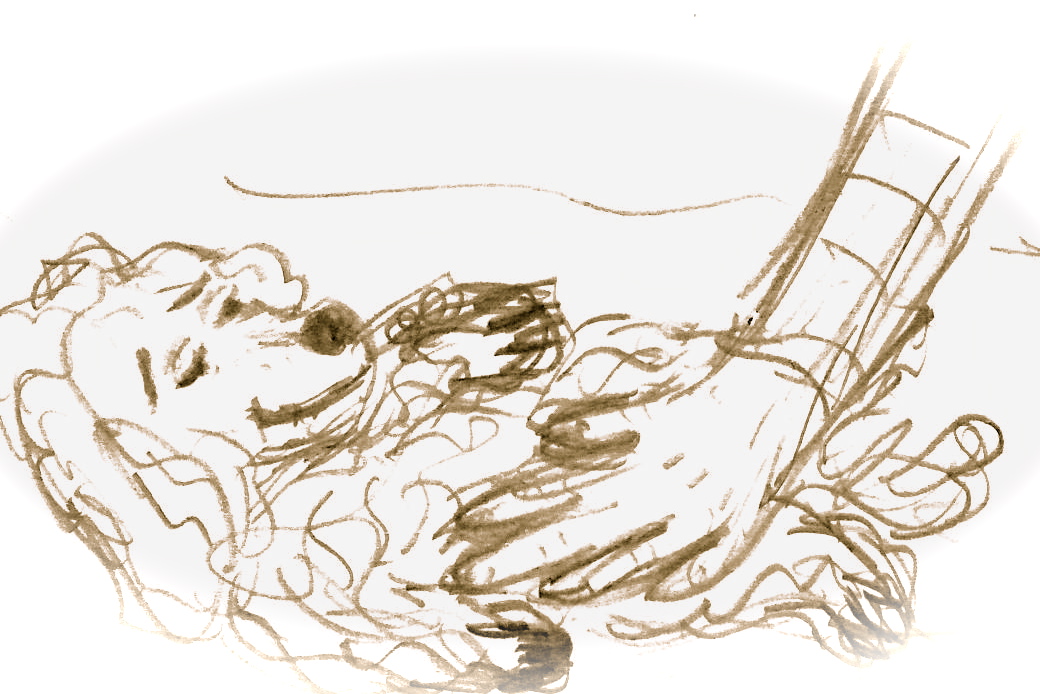
Feeling grandiosely whiney, I looked over at my very conveniently located muse–that is, my good old dog Pearl, snoozing at the bottom of my bed.
Talk about a lack of grandiosity! Talk about forging ahead!
Pearl might very well like to be a noble dog, a celebrated dog (a Balto!) even just a big, strong dog. But she was born cute and fluffy and a little bit clownish.
Pearl might even like to be young again, with fully functioning limbs.
Nonetheless, Pearl presses doggedly through life each day, doing what she does as best as she can. And not doggedly just in the sense of persistently and dutifully–but with a joy us non-canines (and blocked writers) can only wonder at.
Writing Beside Pearl (Only She Usually Maintains A Slightly Bigger Private Space.) (Also, sorry for Apple plug...)
Yesterday, thinking about yoga and my dog Pearl, I wrote about blocking writer’s block through finding a seat in your blank page. Mulling over these issues further made me think about the time, some years ago, when I stopped going to yoga classes.
I practice Astanga yoga and had gone to six or seven classes a week for some years. Then suddenly, it all got too expensive, and more importantly, too stressful.
It is very easy in a Guru-oriented practice like yoga to fixate on your teacher–to obsess over whether you are pleasing him or her, to (on the inside) constantly beg for approval. It is easy to fixate on your fellow students too. (Why are they getting all the assists? Does my teacher even like me? Is it the sweat?)
These types of thought patterns can turn one literally into a downward dog, sniffing constantly for a simulated treat. (Think “spaniel”.)
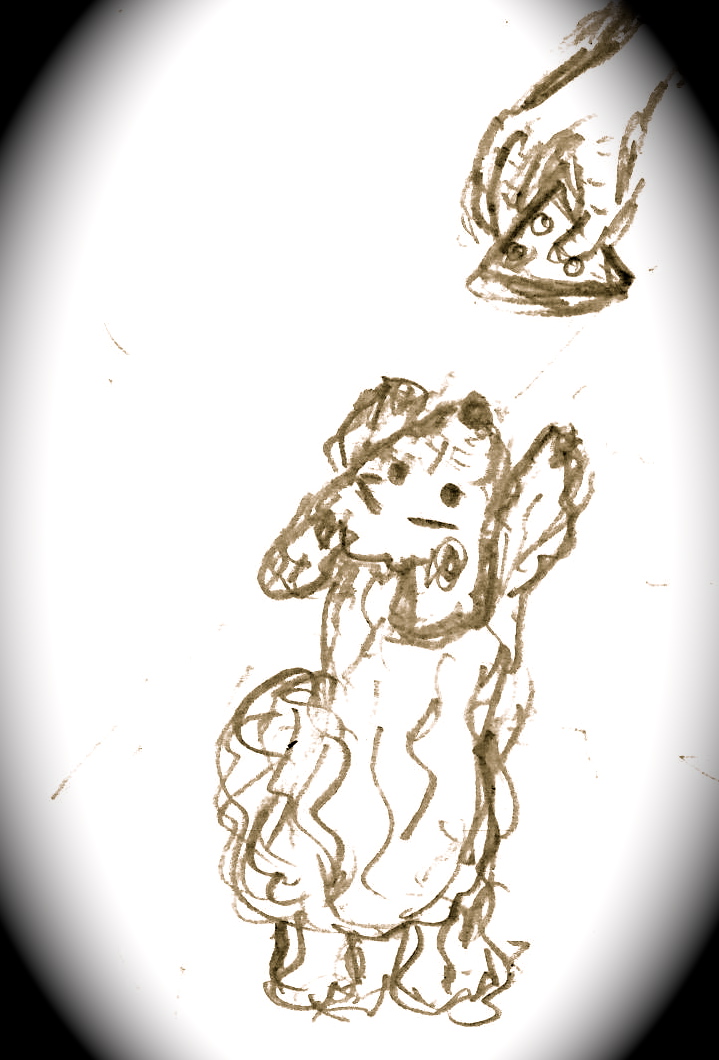
Now, Pearl, my fifteen-year old dog, is a very different kettle of canine. She is not averse to pats, but she won’t perform for them. (It’s cheese or nothing.) She likes to be quietly near her human; but she doesn’t grovel. (Except, that is, if there’s cheese, and, perhaps–if you start it–the occasional belly rub.)
Perhaps A Belly Rub
Doing yoga to score points with a cool teachery type (at least two earrings in one of his ears, one nose stud for the female nostril) is clearly unyogic, but doing yoga in isolation is also pretty difficult. Often I feel sluggish and apathetic. Even so, I generally can make myself go through the motions because of three basic reasons: (i) it is what I do; (ii) it makes me feel good, and (iii) it is one of my few clear channels to a greater Self.
Writing is very much like that (if you leave out the sweat.) It is fun to take a writing class; it is fun to write with a buddy–but how do you keep going without the pats of your colleagues; without acknowledgement, and no certainty of an audience.
First, you have to tell yourself that writing is simply what you do.
Secondly, you have to focus on the physical pleasure of writing–the flow of energy through your arms, the dance of your fingertips. You have to let yourself understand that even writing “tada tada tada” can be a sensual experience. (Much less the word “sensual.”) And what about the elation of scribbling off that last sentence? (Tada!)
Three–you have to let yourself enjoy your greater Self–the mind’s eye that reads what you write before you even get it down.
Finally, find your inner Pearl–that part of you which will not shy from a pat, but won’t perform a trick for it. This is hard, but recognize that when you just let your self write–the physical pleasure, the verbal company, and the sheer satisfaction of doing what you do–will be enough to carry you forward.
(And, probably, to maintain integrity, you should maintain a safe distance from…cheese.)
Cheese!
For more on blocking writer’s block, click here or check out the category from the ManicDDaily homepage.
I’m back to blocking writer’s block today, inspired by two main muses–yoga (my practice) and Pearl (my dog).
The Sanskrit term for a yoga posture is “asana,” meaning seat. As many yoga teachers will tell you, to get into a posture–even a standing pose–you need to find your seat. This does not mean to find the spot where you are at ease, but a spot where, over time, you may find ease–that is, a posture that you steadily maintain for that time.
Pearl, my fifteen-year old dog, is a master of finding such ease even in the most precarious of positions–the edge of a bed, the center of a stack of clothes folded into a suitcase, the bag that we jam her into when we are trying to sneak her into some dog-free zone.
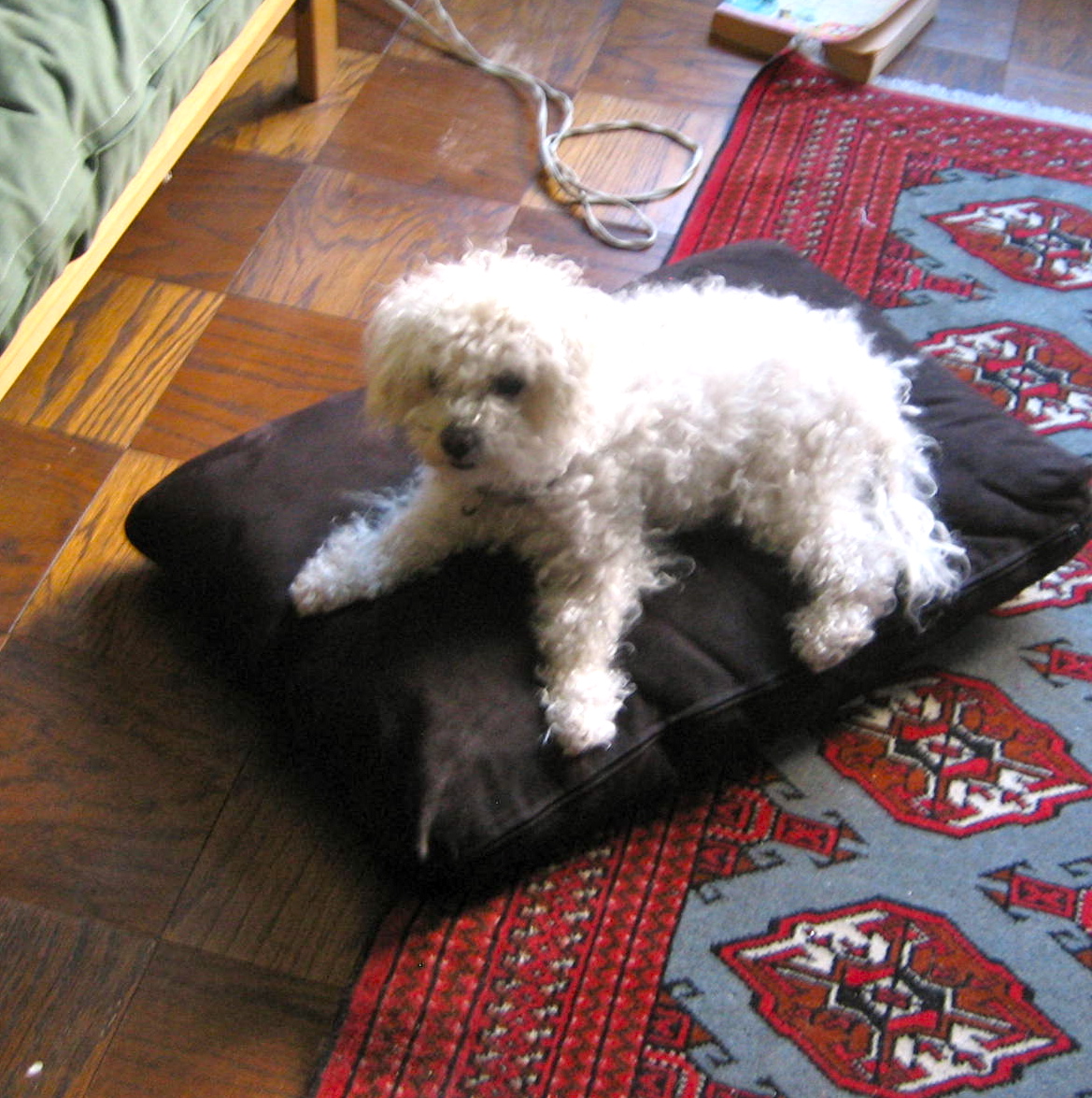
Despite her adaptability, however, Pearl can be quite particular about her chosen “seat.” If left to her own devices, she will almost always seek out the softest spot–the one place on the bed where she can get down to some high thread-count sheets, the piece of paper or pillow that has inadvertently dropped onto the floor.
Pearl Left To Her Own Devices
Neither Pearl nor many great yogis suffer much from writer’s block. Their presence alone tends to be their message, their written words immaterial. Nonetheless, they offer valuable lessons to the struggling writer: learn to make yourself comfortable wherever and whenever you are. Your seat is your page. Settle into it without too much regard to external circumstances–in a subway car, for example, or train; while waiting in line or for a doctor’s appointment; whenever you have a moment–even when you are not sure whether you have an idea.
In the midst of your openesss to circumstance, however, be choosey! Like Pearl, exercise a certain discrimination as to where you and your page physically plant yourself within the parameter of anywhere. On the subway, for example, if one seat feels better than another–for me, it’s the ones at the ends of the cars–sit in that seat. If one side of a cafe isn’t working, change to the other.
Up to a point, that is! The yogi takes his asana slowly, careful of alignment and placement, and then, when all that’s as good as it will get, the yogi makes, through his breath, space. (BTW, by his, I mean, her.)
Use your writing as a kind of breath to open up your physical and mental space, as a breath to make your page a place where you can survive.
(If you feel like someone is looking over your shoulder, congratulate yourself on finding a reader.)
The other day I worried that I really didn’t have a focus for this blog; something to orient both me and any readers I may be lucky enough to snare. What have I been I writing about? What subject do I even have to write about?
Then I suddenly realized that the general subject of this blog has been stress and creativity. If I wanted to sound official, I’d say the interface between stress and creativity, but since I can’t say that with a straight face (or interface), I won’t.
What does this mean? I guess the question for me is how one, in this manically depressed stressful modern world, maintains some kind of creative effort? How can one use stress as a source for creativity rather than as a wet blanket for its termination? (How, also, can the manic avoid using creativity as a further source of stress?)
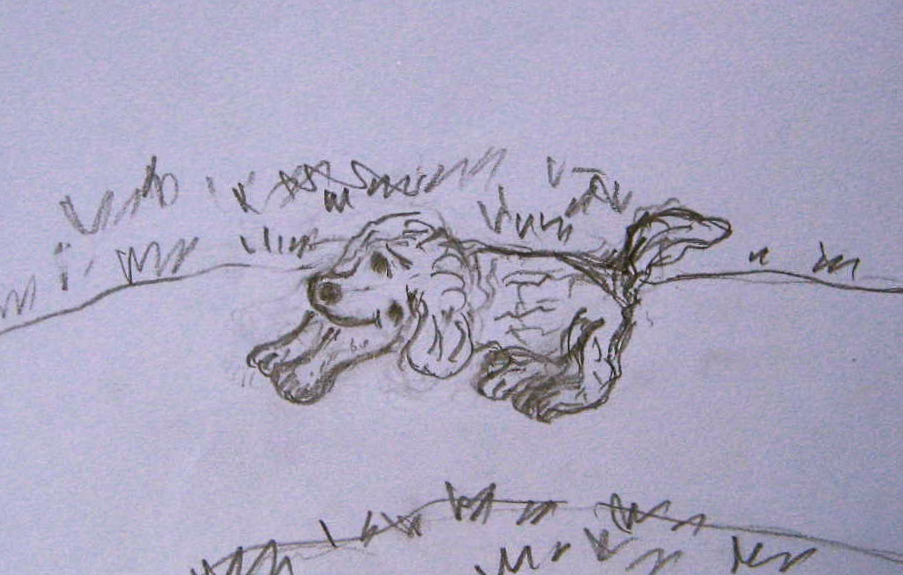
For my first conscious exploration of this subject, I turn to the teachings of my old dog Pearl. Pearl was struck by a sudden spine problem a couple of weeks ago that paralyzed her from the dog-waist down, rendering her hind legs both insensitive and immobile. Amazingly, with the help of steroids, she has recovered some use of her legs: she can wobble along now, though she moves like the proverbial drunken sail—dog. (BTW, after reading several Horatio Hornblower books last week, I now feel enough “expertise” to understand that the unsteadiness of a drunken sailor is archetypical because it arises from at least two sources—(a) alcohol and (b) sea legs, i.e. legs accustomed to the sway of waves that are suddenly posited upon dry land.)
Pearl’s up in the country this weekend, and her reaction to it is a lesson in the maintenance of creativity under stress. (For these purposes, I’ll consider Pearl’s outdoor explorations and general cuteness her “expression.”)
Pearl still has trouble even walking, and yet, here, in a country place she has loved since puppydom, she wobbles, skips, trots. What motivates her, what keeps her going, seems to be two factors: habit and engagement.
There are certain places (a long dirt driveway), and certain times of day, in which Pearl has always run here. That habit (plus steroids) is so strong that when I put her down on these spots, and at those special times, her legs just move.
Where habit runs out, engagement takes over. The scent of a place where a deer has recently bedded down will lure Pearl, sniffing, into tall grass, pull her through reeds, propel her into Heraculean effort. I can only derail her lopsided enthusiasm by physically picking her up and putting her back on her track, where, out of habit, she quickly wobbles off again.
Which brings me back to the creative human mind dealing with stressful obstacles–all those drags upon the consciousness. How to avoid paralysis? How to dart and trot, dig and ferret? How to just keep going?
This (I think) is this blog’s inquiry.
Thanks so much to those who have been following. Stay tuned.



 ManicDDaily
Recent Comments