Posted tagged ‘Karin Gustafson poetry’

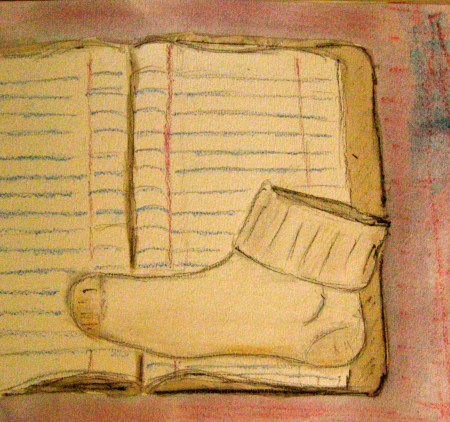
Writer’s Block (Sock) Sonnet

January 31, 2012
Blank Page and Sock
 

Writer’s Block (Viewed from Page and Foot)

A blank page is not like a plain white sock.
It won’t warm cold feet in the night
and fits poorly into your shoe. You can’t tuck
your pants into its margins to fight
Lyme’s Disease–no, no,  it won’t allow ease
of any kind–won’t cushion the impact
of the concrete;  won’t offer you release
from a sweaty stance–so much less tact
has the blank page  than the ribbed cotton sock
(though also white and sometimes subtly lined)
that it will talk at you (snarkily), mock, 
allow no wiggle room, quite shush and bind
you, reciprocally capping all sound.
You resist?  Then it will stare you down.


The above is a re-draft of an old poem, posted for dVerse Poets Pub Open Link night.  (And, yes, to followers of this blog–I seem to have an obsession with socks.) 

I went with this particular poem because I am desperately trying to rewrite and revise a fantasy novel right now.  (The idea that I will finish the revision is its own form of fantasy!)  In the meantime, if you are at all interested in silly novels written by Manicddaily, check out NOSE DIVE, a cheap, light, fun, escapist read.

“Going Home” With a French Ballade

January 26, 2012

20120126-112008.jpg

The wonderful dVerse Poets Pub has a “form for all” challenge today to write a French Ballade .  The pompt, hosted by Gay Reiser Cannon, gives clear instructions but, frankly, I found it a pretty difficult form.  For me, the hardest part was the syllabic line (8 syllables), since I tend to write in a modified pentameter (which allows for a bit of play in the number of syllables.)

At any rate, here’s mine.  (It’s still kind of a draft–suggestions welcome!)

Going Home (Last Hospital Stay)

Though angled with no special care,
the tape stains spoke of intention,
as if, by cantilever, there
had been some trick of physics done,
some framework lifted, battle won,
a scaffolding’s dismounted trace–
of orange (glue)–and, too, a notion
of failing beams across a face.

But skin was sore now it was bare
of bands of tube that had just run
from nostril curve to curl of ear
to squeeze and ease the oxygen,
to silently let go let come
what let the lungs slow down their race,
and countenance reflect a sun
of failing beams across a face.

They rushed us home through open air–
each stretcher bearer was a son–
and cold it was, so cold out there–
and you, my dad, my only one–
I put my coat, my hat, upon
you too, though they looked out of place,
their blues too sprightly, too much fun,
with failing beams across your face.

You worried whether I was warm
and offered back, with age-old grace,
all to be had that day near done,
its failing beams across your face.


(P.S. – have edited since I first posted.  A process this!)

“Girl’s Beast Heart” (“Ophelia, Ophelia Syndrome”)

January 24, 2012

20120124-022407.jpg

I am diabolically busy this week, so am combining my response to two wonderful online prompts: Magpie Tales, hosted by Tess Kincaid, and dVerse Poets Pub open link night.    (The above is my rendering of Tess’s photographic prompt, its mood slightly offered and the “rice” more or less gone)   I urge you to check out both sites.

And here’s the poem, with a cautionary note that the language is more “adult” than typically posted here, i.e. stop right now if you don’t like that sort of thing.

Ophelia, Ophelia Syndrome

Girl’s beast heart, age ten, swims sky,
arms swinging wings, she springs
till body turns spy—
Where does complete go?
Drips from woman’s breast, ass, thigh.
She loves pining, the yearn,
craves the kiss, lick, fuck,
finds contempt, klutz lust, mucks
about in briny shyness.
Making boy-man God-king
slits wings.  Rubs a zipper
into her skin to mend it,
hoards opalescence.


Further notes–the poem was inspired from a discussion, popular a few years back, about many girls’ loss of confidence at a certain age.   It was actually written as part of a “magnetic poetry” exercise (for a party), in which only words on a specific list could be used.  For those interested in the mechanics of prompts and the wayward mind, the other poem I wrote from that same list deals with peeing in the ocean.  (Both poems are in Going on Somewhere, available on Amazon.)


(I am also postinf this for Jingle poetry picnic on http://gooseberrygoespoetic.blogspot.com.)

(Sort of) 1960’s “Block” Poem

January 17, 2012

"Block" (Poem by Karin Gustafson, Image by Diana Barco, from GOING ON SOMEWHERE.)

I have been thinking about the 1960’s, perhaps because of Martin Luther King, Jr.’s birthday yesterday, so here’s a (sort of) 60’s poem (though not about MLK Jr.)   The poem is also published in my book of poetry, Going on Somewhere.(Check it out!)  I am posting it here for the wonderful dVerse Poets Pub open link night.

Block

Right-angled in the newer areas,
our curb was smooth, sloping into
a chenille of pebbled tar
that bubbled below our skate wheels,
grinding up to spine,
a gravelly shiatsu.
Bare knees as gravelly, the memory of
scrapes embedded in skin, we sat with them up
till the white truck jingling
fairy dust turned in, spreading both
joy and panic, then ran for
quarters.

I had a working mom and so
had funds enough for a drumstick, real
ice cream, but
hid the extra change deep in a pocket
where only straight fingers could
touch bottom, joining
Patty and Susie and Celeste, the
Catholic kids, with houses of siblings,
chores, and, hovering in their stories, nuns
(rulers at the ready)—
Patty the pretty, Susie the plain,
Celeste Celeste
Celeste, who, arms outstretched, could walk across
practically anything,
Celeste with the six brothers
who constantly rat-tat-tat-
played war—panting for the
popsicle of the day.  Sometimes it would
be root beer, that sweet-strange amber we hardly
dared lick; pink lemonade a purer thrill
in our specific honor.
The new houses started at the next
corner but no one sat in front of their
flatter spindly-treed lawns.
Did those houses even
have kids?

Later our side changed too.
Patty only came out to dry
her nails; Susie didn’t feel
like playing; and Celeste, Celeste,
Celeste’s father came back from
Vietnam, a different man.
Her brothers who’d crawled under bush,
up tree, their finger guns poised,
were not to be seen.
It was dark behind
their screens, words heard only as
vibration, things shaken.

The street still,
except on the rare
blue evening as fall fell,
when a boy we’d fought in
war, lorded over on skates,
stepped out from the curb, tossing
a football hand to hand.  Slowly we’d
all appear, copping moves scribbled
on his cupped palm.  Our feet
slapped hard against the
pavement, voices loud that, yes, we had
touched with two hands.

We played until car lights glared and our
bodies smelled of cold blown leaves.
But that would be it.
We would not come out again
for some time.

(If you’re interested in a more comic take on teenagerdom, please please please check out my comic novel NOSE DIVE!   It’s a lot of fun and very very cheap both in paperback and kindle.)

Botero (With Elephant) — Courbet (In Verse)

January 14, 2012

20120114-082115.jpg

dVerse Poets Pub has a poetics prompt based on Fernando Botero this week (hosted by Victoria C. Slotto.)

I like Botero’s images (one of which I’ve adapted above), but every time I thought of writing a poem about one, I pictured a person being swallowed by their own flesh.  Instead I’m opting for an older poem about other (more traditional) flesh-favoring artists:

Courbet

All I can say is that
it’s a good thing we have museums
hanging Courbets,
Rubens,
Rembrandts,
the occasional Italian,
with their depictions of swelling bellies,
dimples gathered around spines, flesh rippling
like Aphrodite’s birth foam,
the creep of pubic hair juxtaposed by coy hands
whose curved digits
pudge, slightly sunken cheeks (above, below),
spidery blood vessels
rooting beneath the patina. 
All I can say, as I catch
my face in the glass,
glance down at my folio
of torso, is that
it’s a good thing. 

(This is from my collection of poems, Going on Somewhere.  Check it out!   Also check out my new comic novel–Nose Dive,  a fun look at truth, beauty and the pursuit of harmony–available in paperback and on Kindle for just 99 cents!)

Sad Day

January 5, 2012

My beloved father died this afternoon.  He was conscious and loving and consciously loving until his last breath.  I feel lucky to have known him, much less to be his daughter.

I will probably write about both his life and death more in the future.  For today, I’ll settle for an older poem, a sonnet of sorts.  It doesn’t really describe that much about him, just a habitual moment in our lives.

My Father

My father knelt beside my bed; his round head
reflecting the bedside lamp with the look
of lighting within.  “And the genie,” he said,
“came out of a big blue jar.”  Not from a book
were the stories he told me at night.
Always of genies who were big-blue-jarred
and did fairly little, only the slight
magic of minor wishes, often ill-starred.
But the stories were just a warm up to
our prayers.  “Our Father,” those would start,
the words heading for hallowed, trespass too.
Interlocking like a spell he knew by heart,
they croakingly invoked a wished-for will
that the blue genied jar could never fulfill.

Open Link – Another Villanelle – Things Past and Present –

December 27, 2011

20111227-020858.jpg

The Christmas season frequently brings up the ghosts of Christmases past. (Charles Dickens really hit on something there!)  Here’s a villanelle I am posting for dVerse Poets Pub Open Link Night, which concerns that focus on the past.

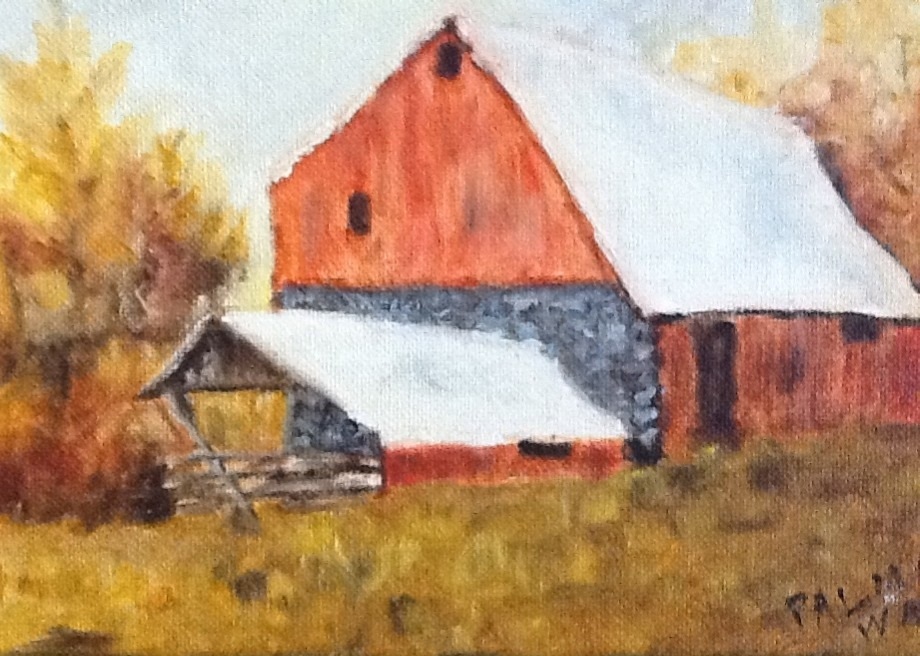
As a preliminary note, I’d like to say that my mother’s mind keeps its objects in a very clear array.  (Seriously, Mom, “disarray” sounds more poetic!)   Also, the painting above, very poorly cropped in my photo, was made by one of my grandmothers.

My mother’s mind

My mother’s mind’s a disarray of lives
she tries to sort like bank statements or socks,
the memories of grandfathers, farms, old wives.

Land sold, cash lost–those tales as sharp as knives
that wound the dead–bringing anger that unlocks
my mother’s mind.  A disarray of lives

whose weave she’s sure will warp without her tithes,
her tributes to hard work (also hard knocks),
the memories of grandfathers, farms, old wives.

She rallies around their wits–ambition drives
her past more than her future-as time’s tick rocks
my mother’s mind, a disarray of lives.

Can’t bring them back; no, that’s not what she tries.
Simply to make them last, pry from pine box
those memories of grandfathers, farms, old wives–

substantiating them–so she too thrives.
Throat fills with tears she seeks, with fears she blocks–
my mother’s mind, a disarray of lives,
memories of grandfathers, farms, old wives.

(If you are interested in villanelles, check out my comic “Villain-elle” with elephants.  If you are interesting in checking out, then look up NOSE DIVE, my new comic novel, illustrated with Jonathan Segal.  A lot of fun!)

No Stopping It

December 17, 2011

20111218-121525.jpg

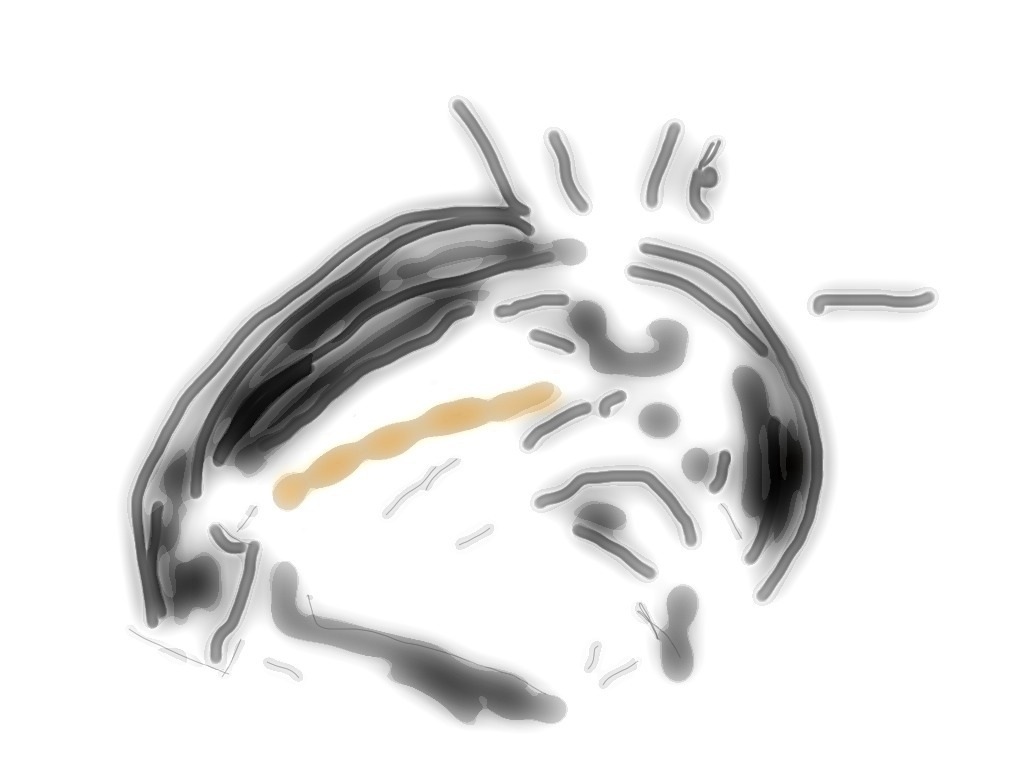
DVerse Poets Pub has a graphic prompt today, hosted by Brian Miller, with drawings by Tera Zajeck. The drawings are lovely and detailed–you can see some of them on Tera’s site, Olive Hue Designs, but I tend to like to use my own art, so have done my own rather muddled version of one of them.

And here’s a sonnet (of sorts).

No stopping it

I learn each day there’s no control to be had.
The wind will roar, the jacket that you wore
will be too thin. Joy turns sour, smiles sad,
what used to fire his passion now’s a bore;
children that you carried look askance.
Remember how they hated to let you go?
Now they leave without the merest glance
while you soothe your heart with how it must be so.
It’s not all lost, you find such sweetness too–
the cake you share, the couch where you two sprawl–
but still no holding fast, no straight course true,
no certain grace to mitigate the fall–
only the moment, that present but distant shore,
that you know must be enough, for there’s no more.

Ballad? Maybe. (Song, or Rather Sing-song–Yes!) Morning Ballad

December 15, 2011

20111215-082732.jpg

DVerse Poets Pub, hosted by Gay Reiser Cannon today, has a prompt to write a ballad, carol or lullabye.  I do not think this is a true ballad, but it may be an entertaining effort.  (Also a bit of an homage to Robert Frost.) 


Morning Ballad

You woke up that morning–
you woke up that day–
wanting to see me
in the worst way.
You saddled your horse
and you rode fast and true
though the rain, it was washing
the sky through and through.

You rode beneath storm clouds
and past lightning’s strike,
past water high-rising—
we’d never seen like–
while your horse, she was frightened,
you held fear at bay,
riding on as rain threatened
to wash all away.

When you came to my window,
and murmured my name,
the sun seemed to rise
though it rained all the same.
Come quickly, you whispered,
we’ve not time to stay
if the road we must take
does not wash away.

I stole to the barn and there,
soaked to the bone,
we clung close together
in lovers’ sweet moan.
Then just as you mounted
high up on that horse,
we heard the dread sound
of my father’s stern voice.

Betrothed to another–
that’s what he said,
and that other’s I’d be
if he saw me dead.
You reached for my arms,
but duty held sway
for I feared that his anger
would ne’er wash away.

He swore that he’d kill you;
you heeded him not.
Till I told you I wanted
what that other had got:
a rich farm with cattle,
a tea set of ‘plate
servants aplenty
to wash and to wait.

Tears hammered my heart
like rain at the roof,
but my face was a desert
my manner aloof—
Oh, I was so clever
that though you did look,
you no more could read me
than a tightly-closed book.

I woke up this morning
like I woke up that day,
wanting to see you
in the worst way.
But what I said then
I cannot unsay.
cause the road not taken
was washed away.

I think of your fingers.
I think of your hands.
They’re farther now
than the farthest of lands.
A heart that’s forsaken
is here for to stay,
while the road not taken
is washed away.

Oh I woke up this morning
like I wake up most days,
wanting to see you
in the worst way.
A heart that is broken
is here for to stay
while the road not taken
is washed away.

P.S. –I am also submitting this poem for the Thursday Poet’s Rally.  And please please please check out Nose Dive!  New comic novel!

Rewoven – Revising Blogged Poems– “Born Blind (circa 1927)”

December 13, 2011

20111213-075300.jpg

Here’s a revised version of the poem I wrote last Saturday for Victoria C. Slotto’s dVerse Poets prompt about quilting and the fabric of life.  I posted the poem then as a draft under the title “Against the Weave,” and although I received very kind comments, I felt certain that I had not conveyed the real kernel of the poem, which is perhaps sadder than the original draft.

This issue of drafts and re-drafts is one of the hard things about blogging poetry.  I, for one, get a strong urge to post quickly, especially when working with a publicized prompt.  (One never wants to be too far down on the link list!)

Don’t get me wrong, prompts are terrific.  They spark one out of one’s groove.  One problem of a premature posting for me, however, is that I find it mortifyingly difficult/embarrassing to revisit work once it’s gone out into the world.

I also worry that it’s a bit of a burden to followers to repost revised work.  (I’m not sure how many people are that interested in my creative process.)

All that said, I’m very thankful for the supportive community (dVerse Poets mainly, Jingle, and of course, my non-virtual friends!) who have given me the nerve to review, revise and repost.  (Ha!)

(Please note that the details of the poem are all imagined/changes come mainly in middle.  Also, sorry it’s so long.)

Born Blind (circa 1927)

The convulsive flicker
could just hook onto the gap
between white and black but
other spectral shifts–
cadmium to indigo to green–
could not be seen, nor shapes–
except those looming or not there–s0
he chose his shades by smell mainly: some washed
with the salt of fresh ham, others imbued
with a kind of must, a corner of the
barn where the planks rotted.
An occasional skein smelled
new mown while others
he could barely stand to sniff, their acrid
sharpness testifying to strident dyes, the warp
of fresh uniform–he remembered when his brothers
had gone off–even the diluted stink
of the slaughtering pen.

Then there were the webs
of cloth that he twisted before weaving;
their original patterns–the chintz or pink
geometry–converted on his cellar loom to
a knotted crisscross, stripes
that would hold up to years
of sun or shadow, feet and floor–and
those, when his quick hearing was sure
of isolation, he would cleave close–
donations mainly, they smelled
of the cleanliness of some other
farmhouse, run by some other
woman, girl, who wore a drape of skirt
over thighs unseen by all, and,
even in those rough crinkles
of sweat that refused to vacate the
joints of blouse or dress, carried softly tensile
traces–if only the ghost
of a fold–whose feel he craved
in the sameness of night/day,
beneath the clack-clack
of shuttle and loom.

He stood
like someone tied to a chair, chest
in seeming strain, hands
to sides, shirt,
like a boy’s, buttoned right up
to the chin, belt loops slightly
puckering.  He’s very bright, you know,
they whispered insistently.

Eyelids fluttered
beneath a pale high
forehead that seemed to squint
in compensation.  But meeting him,
one (turning from eyes,
forehead) was drawn to
those hands, with their large
chiseled knuckles.
Hard to realize from their
stiff dangle how very fast they could
weave.  For he got
good at it, a past-time
allowed a blind man
when sons were meant to plow
straight furrows.

(P.S. – don’t forget to check out NOSE DIVE, new novel by Karin Gustafson, illustrated by Jonathan Segal.  Thanks!)


I am also linking this piece to Imperfect Prose since it’s almost more a story than poem.   in the hush of the moon