Posted tagged ‘Going On Somewhere’

dVerse Poets Open Link Night “After It’s Fallen”

January 3, 2012

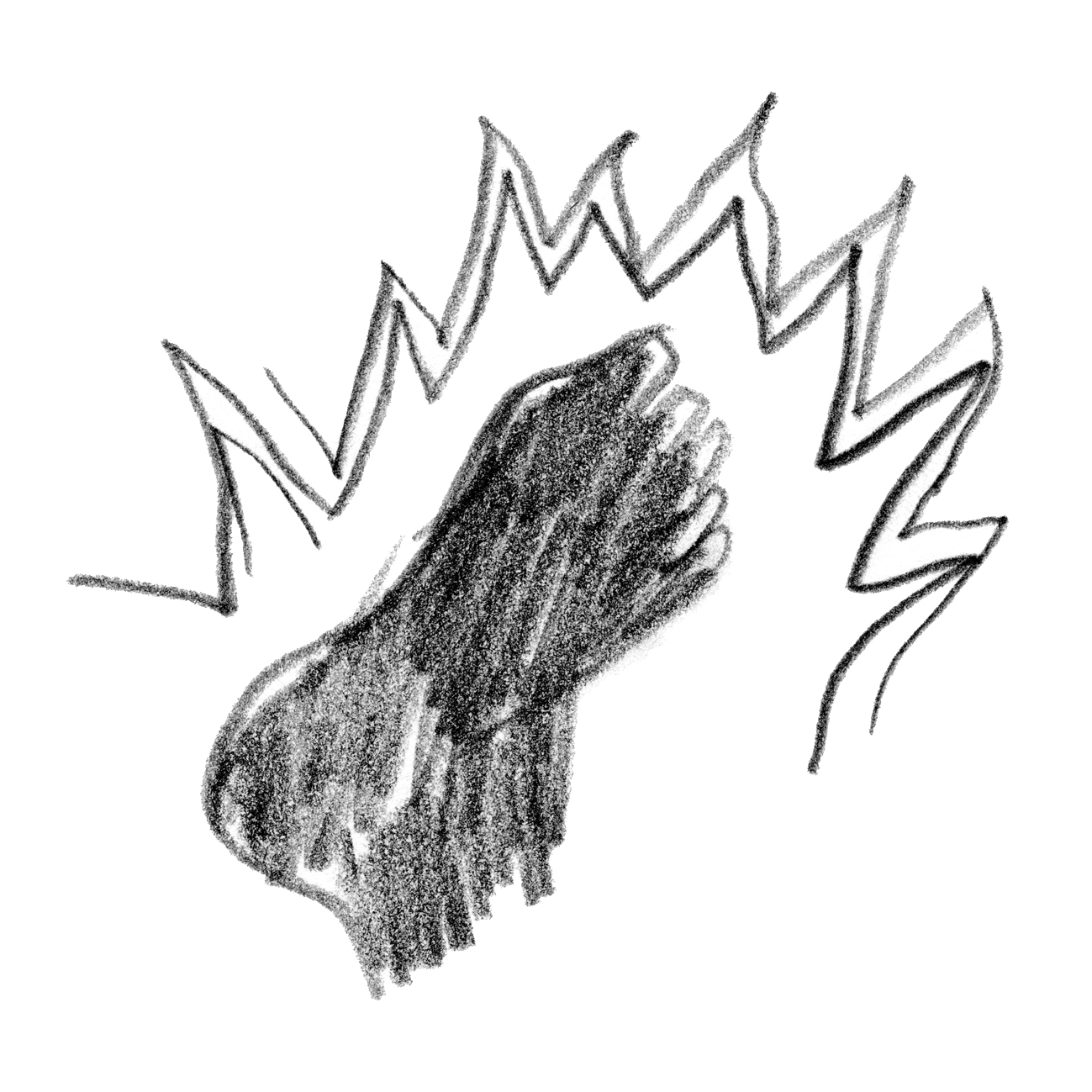
This is an older poem about the burning ghat in Varanasi (Benares), India.   The picture above is by Diana Barco, from a book of my poetry called Going on Somewhere.    I am posting it for dVerse Poets Pub open link night as well as the Poetry Palace Poets Rally and for Victoria C. Slotto’s blog, liv2write2day (for a prompt about memory.)  All are great resources for poets and those who love poetry.

After it’s fallen

In Benares, the tenders rake the fallen feet back into the flames.
The first time we watched them, I was horrified.
How you would know that foot, I kept thinking,
your father’s soft purply big-veined foot.
My father’s feet have always seemed too small to me.
When he walks he seems to go on edge, as if they
can hardly carry him.
The toes of his shoes turn up strangely,
even after he’s had them just one week,
Something from the war, he’s always said.

In Benares, the feet are the last parts to be burned.
They overhang the pyre and simply
wait there, smoking slowly
until the shins are completely charred.
Their full flesh too heavy for the burned legs,
they fall, eventually, to the ground.
They never fall together, but one first, pointing randomly,
the other still flexed in the air.

When one of the tenders notices, he
pushes the fallen foot back into the flames.
He uses two long poles, the
green bamboos of the bier.
Sometimes he has to lever the foot
to reach the flames again, crossing the poles
like huge chopsticks.

They have dark feet in Benares,
darker than my father’s would be,
smooth and brown.
I couldn’t stop looking at them, thinking how you would know
that foot on the ground there, that foot.

Taboo/Provocative Sonnet? (“Spy Games” )

October 18, 2011

One of my (many) faults is a tendency to second guess myself.  In the world of online poetry sites, this tends to arise in the context of ‘why did I post that poem, link, story, or picture?’ when I should have posted a completely different one.  (The different one, of course, would have been much more cool, likeable, wowie-zowie.)

This past weekend, dVerse Poets Pub, a wonderful online poetry site, urged poets to post something taboo or provocative.  Needless to say, I spent all weekend castigating myself for the poem I put up (about an important seaside activity.)

So, here it’s Tuesday, dVerse Poets “open link” night, and instead of moving on, I’m going to post another “taboo” poem, a sonnet, in, I think, a Spenserian format.   I am also posting this poem for the Poetry Palace’s poetry rally.  Here goes:

Spy Games

We played spy games galore in the basement.
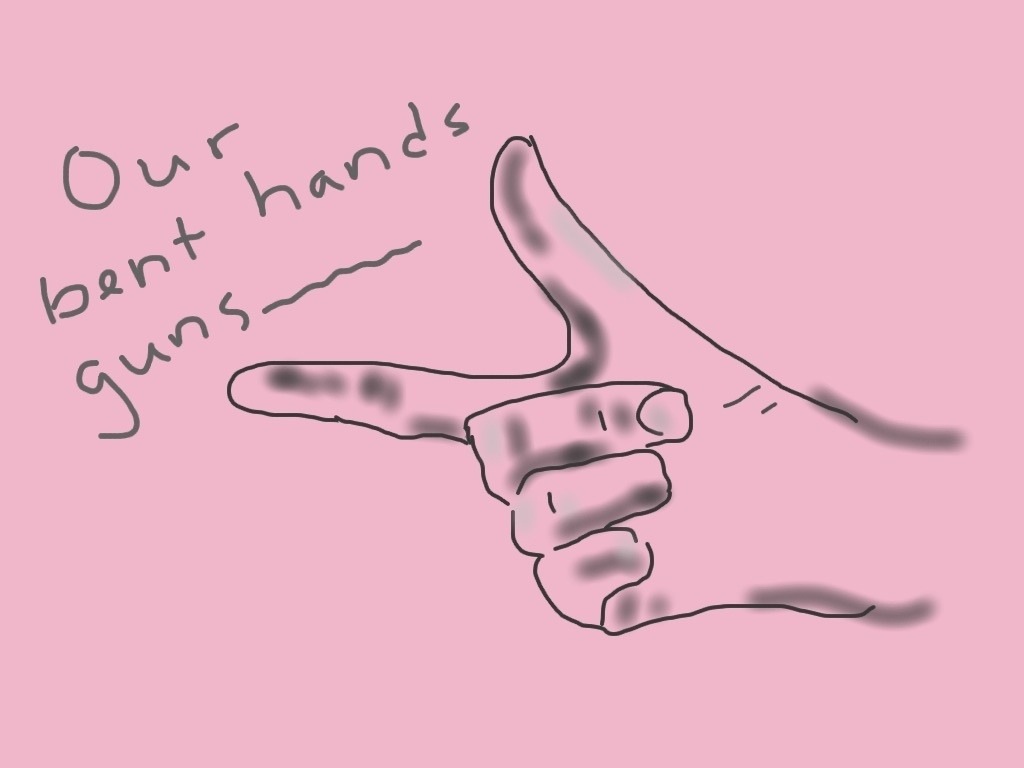
Running spy games with the boys, our bent hands
guns, till sweating we lay down on cold cement,
shirts pulled up, chests hard.  Not much withstands
the leaching chill of earth, the buried sands
beneath a downstairs’ room, except perhaps
the burn of nipple, the future woman’s
breasts.  Our spy games just for girls had traps—
some of us played femmes fatales, poor saps,
while the leader girl was Bond—0-0-7.
She hung us ropeless from the bathroom taps,
then tortured us in ways that felt like heaven,
the basement bed our rack, what spies we were,
confessing neither to ourselves nor her.


The poem is published in Going On Somewhere.  (The header is a detail from the cover by Jason Martin.)  Check it out!

Taboo? (Maybe…) Poem (Yes!) (“A Woman Needing to Pee”)

October 15, 2011

Woman Needing To.... (image by Diana Barco)

The below poem is posted as part of dVerse Poets Pub, Saturday Poetics prompt, hosted today by Kellie Elmore. The prompt was for a poem that is provocative or deals with a subject that’s taboo.  As a (believe it or not!) slightly shy person, I find it very hard to post something both new and taboo, so am posting an older poem (one, that I’ve had time to get used to.)

A Woman Needing to Pee

A woman needing to pee,
she steps into the sea, knees
salt, a piercing balm, her
shaved legs grimace, gasp
cold, still she strolls thighward,
as far as she is able, needing to pee,
squats needing to hide it,
rubs water over her arms to hide it better,
acting out a woman too timid
to go out far, a woman
needing to cool herself.  But
she craves warmth and secretes it,
a secret warmth, wet-warming
all the sea.

Stretching tall
and cold now only where air
licks skin, she dives
into the afterglow,
a woman who swims.

A little background:  the poem was originally written as part of a “magnetic poetry exercise,” a kind of arbitrary but freeing exercise.  It can be found in my first book of poetry, Going on Somewhere, poems by Karin Gustafson, pictures by Diana Barco, cover by Jason Martin.  Check it out!

(PS – the new header above is from the cover of Going on Somewhere,  by Jason Martin.)

Sestina – “Pink” – and Little “How-To”

September 22, 2011

20110922-034822.jpg

This is an old poem that I am reposting as part of dVerse Poets Pub formal poetry exercises and also for Jingle’s prompt re color. It is a sestina, one of my favorite forms (though I don’t do them enough.)

I’ve included a little information about my take on the form below.

Pink

Trees full of blossom, the night smells pink
though it’s black, a thick summer darkness
barely held back by window screen.
I hear dishes in the sink, a familiar clatter,
and think of the summer kitchen
of my youth (my grandma’s), where the women wiped

the dishes, too many for the rack, wiped
the oilclothed table too; the men, skin pink
from glossy food, escaped the kitchen
glare, slinking into the darkness
of the den, the chatty t.v. clatter
a sound fluorescence against the dim screen.

There too, we were protected by a screen
from bites, buzz, wing, and the wind that wiped
that stretched-flat land, a soft clatter
of night and grass and damp that blew towards the pink
edge of dawn, an engine of chill darkness
that was only truly blocked by the glow of kitchen

yellow. I watched one aunt in the kitchen,
amazed that she never even tried to screen
her keen sense of life’s darkness.
When she looked at my grandmother, she often wiped
her eyes, and sniffing, face too pink,
cleaned with a banging clatter.

Though she was always a center of clatter,
that aunt. She had a kind of two-walled kitchen
in her own house, open; and wore hot pink,
played jokes, charades, a half-hearted screen
of despondency, still, the good housewife, she wiped
the smallest speck from her counters. Her own darkness

seeming inevitable, it was a darkness
she hurried towards, smoking, drinking hard, the clatter
of uncertainty (as to timing) wiped
her out. In the meantime, she cleaned-—my grandma’s kitchen
after her death, and, at the Funeral Home, made a quick screen
of the corpse. “That lipstick’s way too pink,”

she hissed, then wiped my grandma’s lips like a kitchen
stain. Despite the clatter in my brain, I served as screen,
a guard in the blossomed darkness, as she rubbed off pink.

(All rights reserved. Karin Gustafson – from Going On Somewhere, available on Amazon.)

The sestina is an extremely “ordered” form of poem with a strict line structure that focuses on six repeating “end words,” (that is, the last word in each line.) Thankfully, these end words do not have to rhyme.

There are six six-line stanzas, and six repeating end words. At the end of the six six-line stanzas, there is a three-line stanza (the “envoie”), in which the six repeating words are used again, two per line.

The hard part is not just repeating the six words, but repeating them in the right order; each stanza turns itself partly inside out for the next one. The music of the poem comes from the shifting, and sometimes surprising, echo of the repeating words. If the meaning and tone of the words can also shift through the poem, a kind of irony can be found.

Here’s how the form works:

For notation purposes, I’ll assign each end word a number – 123456. That is the order of the first stanza.

The second is 615243. The third is 364125, the fourth 532614, fifth 451362, and finally 246531. You’ll notice that the last line of each stanza becomes the first of the next, the second- to-last line, the third, etc. It helps to think of the stanzas as interlocking or clasped hands, with the clasp between the fingers moving up the hands with each stanza. (I guess they’d have to be Anne Boleyn-style hands – six fingers.)

There are different forms for the order of the words in the last three-line stanza; my favorite puts the words in reverse of their original order, meaning 65,43,21.

The form is hard, yes. A tip: once you’ve decided on your repeating words, write them down in the prescribed order for the entire poem. (This means that you’ll have a nearly blank page or so, with just a column of numbers and words on one side.) This list will not only help you keep your focus; it will also avoid the frustration of having a nearly finished poem that, you suddenly realize, did not quite follow the rules. (If it’s a great poem as is, terrific. But if you wanted to write a great sestina, this can be upsetting.)

It is useful to pick end words with flexible meanings and usage (meaning words that can be either nouns or verbs, even homonyms). Commonplace words are easier, but less interesting.
Elephantasm?

February 8, 2011

Really?

Attributed (minus elephant) to Juan de Valdez-Leal (1622-1690).   Exhibited at Williams College Museum of Art, Williamstown, MA.

PS – there’s still time before Valentine’s Day to order “Going on Somewhere” by Karin Gustafson, Diana Barco, Jason Martin.  Or, if you like elephants, try 1 Mississippi, a counting book for lovers of light and pachyderms.

Fine Art With Elephants

February 3, 2011

The sun is so bright through my window this morning as to block out almost everything shadowed and worrisome in my and the world.  Which leads me to Fine Art.  With Elephants.

Check out, if you haven’t seen them, the last few posts.  A trip to the Metropolitan Museum has led, so far, to:

Picasso With Elephant

J.M.W. Turner With Elephant

Cezanne with Elephant

Courbet with Elephant (and little white dog i,e, Pearl)!

I’m concerned that this is only the beginning.   Have brush (or Brushes app), will elephant.

(For original fine art, check out the wonderful illustrations of Diana Barco in my new book of poetry “Going on Somewhere”, by Karin Gustafson, Diana Barco, and Jason Martin on Amazon.  And buy it for someone for Valentine’s Day!  It has lots of love poems and is cheaper, even, than reasonable chocolate.)


PS – I’m not quite sure why the links are different colors.  (Agh.)

A Gnashing of Teeth (State of the Union)

January 26, 2011

Obama must really frustrate the GOP.   For months, some have painted him as an anti-American (as well as non-American) totalitarian mastermind determined on jamming things down America’s throat in order to bring her to her knees.   (Stephen Colbert had a wonderful rif on this after Obama’s speech in Tucson accusing Obama of causing him to be moved by Hitler.)

Obama’s inherent “otherness” has contributed to this caricature:  his mixed race, his articulate and complex intelligence, his Hawaiian birth, his school experiences overseas, even his bony physique are atypical of U.S. politics (and not exactly “Reaganesque”.)   On top of this, his intense decorum, which sometimes translates into a kind of aloofness, have kept him from directly responding to the kind of crazy character-assassination that has dogged him through the last election cycle.

But he has taken the national stage at some very charged moments recently-from pushing through compromises at the lame duck session, to the Tucson Memorial, to last night’s State of the Union–and unmistakeably (and on television) shown himself to be compassionate in ways that are tied to religious as well as moral precept, and to be open, thoughtful, serious, pro-progress, and notably unvengeful, petty, or throat-jamming.

One imagines a great gnashing of teeth (some of them tea-stained.)

PS – Although, at first, I found it a little disconcerting, I was happy for the absence of endless applause lines in the speech.  Also, I was very glad that O. left out the traditional phrase  = “the state of the union is strong.”  Yes, I want it to be strong, but I’ve always found this phrase to be somehow, well, childish, as if the president were playing doctor.

PPS – don’t forget to check out “Going on Somewhere” by Karin Gustafson, Diana Barco, and Jason Martin on Amazon!   (The state of its poetry is strong!)

You Can Find Them Anywhere (With a Careful Eye)

January 22, 2011

You Can Find Them Anywhere (With a Good Look)

In my beautiful home city of Washington, D.C. today, walking by the Potomac–amazing what you can see down here.

PS – ManicDDaily elephants make no particular reference to Republican party symbol.  (I just happen to like elephants.)

PPS – remember to check out “Going on Somewhere” by Karin Gustafson, Diana Barco, cover by Jason Martin at Amazon.com.

King’s Birthday – Private Epiphany

January 17, 2011

Attempted Portrait

One of the great things of not watching much TV is that you get to have your own private epiphanies–sudden realizations that would probably be hammered into your brain if you were habitually tuned into to some 24-hour news channel, but which you get to somehow happen upon in non-television meanderings.

I happened onto one of these realizations today–I was lucky enough to receive an email from Leonie Haimson who runs Class Size Matters, an organization that focuses on trying to improve the New York City school system, in part through reduction of class size.  In today’s email, Ms. Haimson embedded a video of an interview of Martin Luther King Jr. with Martin Agronsky in 1957.

The interview, conducted at Dr. King’s church in Montgomery, Alabama (made only a couple of years after Rosa Parks’ arrest) is incredibly impressive.  King is articulate, thoughtful, carefully analytical, profound and generous.  And so so young.

My “revelation” (undoubtedly more of a remembrance than a true epiphany) was about King’s youth–the youngest recipient of the Nobel Peace Prize at 35, assassinated at just 39, in his twenties in this particular interview.

I always think of him as having that kind of slightly rounded face that doesn’t show age, but the fact is that he didn’t attain a very old age.  Just 39 at death.  So impressive, so young.

The interview (embedded in Ms. Haimson’s blog) can be found here.

PS – Sorry to self-promote, but please please please check out “Going on Somewhere” on Amazon, and if it’s not a strain, get a copy!  (If it’s a strain, drop me a line and I’ll send you one at a heavy heavy reduction.)

Big Announcement! (Poetry Book – “Going On Somewhere” on Amazon)

January 14, 2011


After many glitches (some probably yet uncovered), my book of poetry Going On Somewhere is available for purchase on Amazon.  Here’s the link.


The wonderful interior illustrations for the poems are by Diana Barco, an artist, architect and social activist living in Colombia.  The cover painting (above) is by Jason Martin, an artist, hiker, sweet person, living in the Catskill Mountains.   They really are worth the price of the book (which is modest by today’s standards.)


The poems, of course, are mine. (Karin Gustafson)  Some you have seen if you follow this blog regularly; they are better edited in the book.  (I hope.)  And there are many others that you will not have seen.


There really is a painful side to finally getting a project to fruition.  It is a lot of work – not just artistic but bureaucratic–and the result (to the workers) may seem a bit slim.  But my sense is that those feelings are “writer’s remorse.”   It really is a lovely book, and I urge you to check it out.


I also want to thank all who’ve followed the poems on the blog and sent suggestions and encouragement.


PS  – Also check out 1 Mississippi on Amazon, my children’s counting book.  I was able to get the price lowered.  A great book for those who like elephants and numbers.