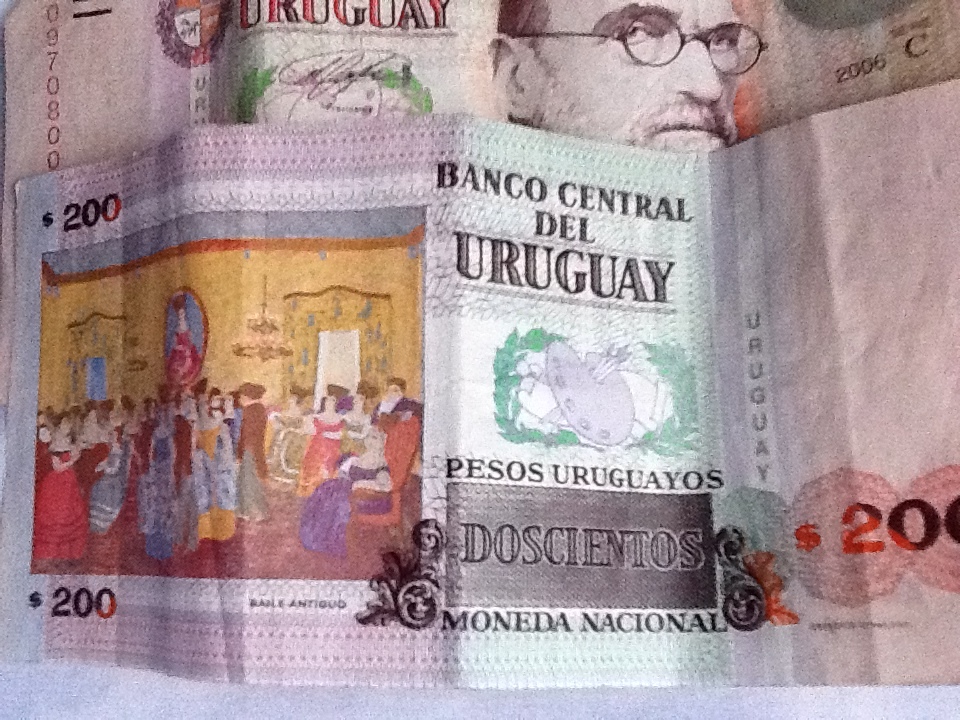
One of the hard things for me in traveling in Argentina/Uruquay is the prevalence of a cash economy. Effectivo (the real stuff) is what people want.
When I had young children in my house, and hired sitters, and took the kids to farmer’s markets for outings (okay, okay, there was also a playground there), and was late for everything (thus needing cabs), I used to carry a fair amount of cash. But I have slowly morphed into a New Yorker who buys groceries online and pays for even subway fares, much less taxis, by credit card.
The transition to cash is especially confusing when moving from country to country, especially given the various unclear fees that are attached to whatever transactions produce effective cash. Here in Uruguay, for example, one can get either dollars or Uruguayan pesos from the ATM machine, or if one finds a store that will take credit cards, one can charge in either dollars or pesos. But here’s the rub–are you converting from dollars to pesos back to dollars? And so multiplying fees? Or, by using dollars, are you skipping the 3% that most U.S. banks charge as a commission for transactions in a foreign currency and also skipping any other exchange fees?
Then, there’s the whole issue of the exchange rate that the particular establishment is offering in terms of the translation of price. In one Uruguayan restaurant, for example, one could pay in cash only, but in Uruguayan pesos, Argentine pesos or dollars. There, for some reason (an old menu?), the Argentine peso was valued at significantly more as against the dollar than in Argentina itself.
One would like to think that this confusion would make one pause before spending any money at all. Alas, it doesn’t seem to be effectivo, for that.
 ManicDDaily
Recent Comments