Archive for the ‘writing’ category

Blocking Writer’s Block – Ironing Out Problems With Confidence

March 10, 2010

Iron

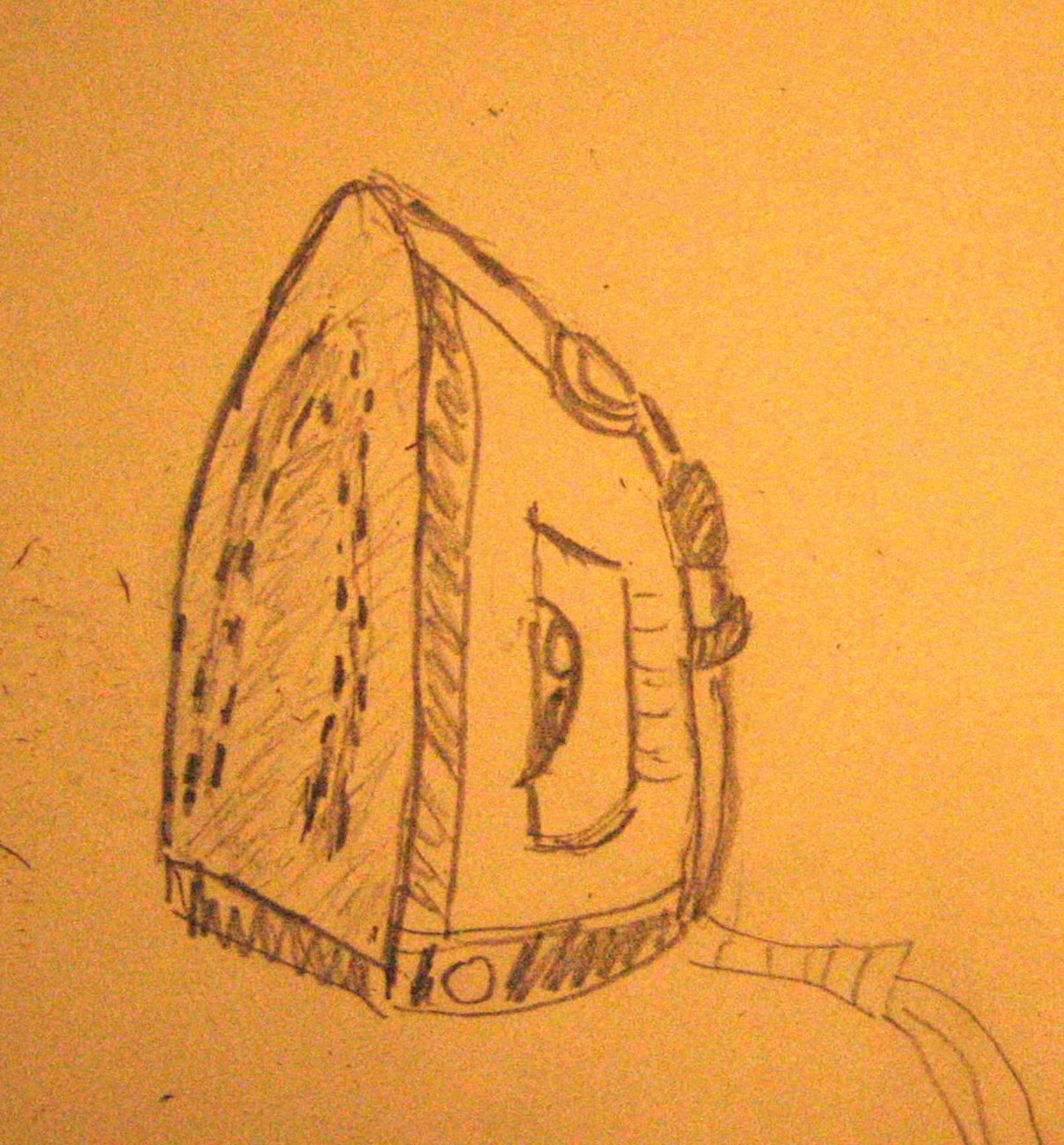
I walked back home from my subway stop this morning (a trek) thinking I’d left my iron on.  I imagined my old, blinding, dog, Pearl, knocking it down (the iron was sitting on the floor in a far corner of  one room of my apartment).  I imagined terrible damage to Pearl, and then, in the ensuing conflagration, the destruction of all my worldly possessions .

Even as I hiked back to my apartment, getting later for work than ever, I knew this scenario was unlikely.  First of all, I’ve left the iron on before and its heating element always turns off quite quickly automatically.    Secondly, Pearl diligently spends just about all day in her “office”, that is, my closet, which is far far away from the nook where the iron sits.

When I let myself back into my apartment, I found the iron already unplugged, cool.

We tend to doubt ourselves.   This doubt not only affects our lives, it also affects our writing, actually any artistic endeavor we may try.

Some people (often the young) believe that every thing they produce is terrific.  They save every napkin doodle; they keep copies of every draft–bags and bags of them, whole old computers’ full.  Often, however, as both rejection notices and non-writing responsibilities mount, we tend to lose confidence in whatever voice works its way through our fingers.

This  self-doubt can lead to writer’s block, or at least, writer’s….lethargy.  We tell ourselves that if we only had a contract, an editor, a salivating agent, we’d produce tons of stuff, but we don’t feel adequate authority to keep working on our own.   What’s the use?  How can we keep up our confidence if  the only light at the end of the tunnel seems to be another blank page?  ( Blank screen?)

Two tools jump to mind (other than the one I’m always citing which is, well, discipline.)

1.  Knowledge.  Knowledge is power here; luckily, knowledge can be acquired a lot easier than other kinds of power.  By knowledge, I mean, knowledge of what’s out there in your field; knowledge too of human nature.

To get that knowledge, read.  Read good writing;  read “bad” writing.  Read intellectual texts, if you like;  don’t forget popular schlock.  Broaden your sense of the types of expression that are considered “valid”; think of how you fit in, how much better you feel than some writers, how awed and humbled you feel by others, consider what you can learn from everyone.

In addition to reading different kinds of work, consider reading about the lives of writers and artists.    Understand that your travails  may be your strongest basis for a spiritual camaraderie.

2.  Connection.  Learning about the lives of other writers is part of developing a sense of connection.   But it’s also useful to be in actual contact with actual living people.   If you write poetry (or even if you write prose that you can read paragraphs of in a poetic manner), go to open mike readings.  Make yourself read aloud.   The other poets may not make you feel liked, and you may not like them;  remember that you are not necessarily looking for friends, but a sense of validity.    Make yourself go more than once.  (Poets are a finicky, stand-offish, bunch; they may need to know you pretty well before they even smile.)

If there is no open mike in your area, consider a class.  Or host a little writing session. Try an internet site where you can post work.   In seeking a compatriot, an audience (even just an audience of one), look for  a person who is also interested in writing.  A non-writer is likely not to understand your problems with confidence and may, accidentally, make you feel worse than ever.  A fellow writer will respond to your work with some measure of attention simply in the spirit of quid pro quo.  (Take what you can get.)

Finally, even if the people with whom you try to connect don’t seem to like your work, don’t be discouraged.  (The differences in peoples’ taste is a source of continual amazement. )  Check to see whether you like their work.

Remember through all of this that you did turn off that iron, or, at least, you did not burn down your apartment, or damage your dog.  Translation:  you do too do some things right.

For more on writer’s block, check out posts in that category from the ManicDDaily home page;  for more on Pearl, check out posts re dog.
Blocking Writer’s Block – The Pen Is Mightier than the Word*

March 4, 2010

The Pen Is Mightier than the Wor(d)

The downside of being manic is, well, the down side.  There can be depression, of course, but what  I am writing about tonight is simple fatigue:  what’s left when the exhilaration, silliness, determination wears down.

For those who write, this fatigue can function (or cause not functioning, as the case may be) like a kind of writer’s block.  The feeling is not so much paralysis as apathy, apathy colored by exhaustion.  When this fatigue descends, you may feel as if the whole of your forehead (frontal cortex) is taken over by a block of blankness.  If the blankness takes the trouble to enunciate anything at all, what it usually tells you is that (a) you have nothing to say, and (b) even if you did, you’re too tired to say it.

Here are a few tools that can help when this blankness descends:

1.  Habit/Discipline. Forging a daily habit of writing, and disciplining yourself (with soulless rigidity) into maintaining that habit helps to carve a chink of opening in writer’s fatigue.   The writing habit will probably need to be started and cultivated during the non-blank times.  This sounds easy, but unfortunately, when writing is going well, you may not feel a need to set up any habitual framework for it.    Still, it’s useful to try, even when working well, to set some requirements for yourself, such as amount of time you want to devote, an amount you want to produce, a time of day, a place or notebook that you habitually use.   These requirements (even just one of them) can operate as a groove you can slip into when the blankness descends,, a practice you can use discipline (rather than inspiration) to maintain.  Use this discipline to get yourself to pick up your notebook or turn on your computer and set yourself down to it.

2.  Trust/ Let Go. After mustering the discipline to set yourself down,  let go of that same disciplined, planning, decision-making part of your brain.   Pour what’s left of yourself into your fingers, your pen, your keyboard.  Try not to think about what you are going to write, just write.   Move ink (real or virtual) across the page.

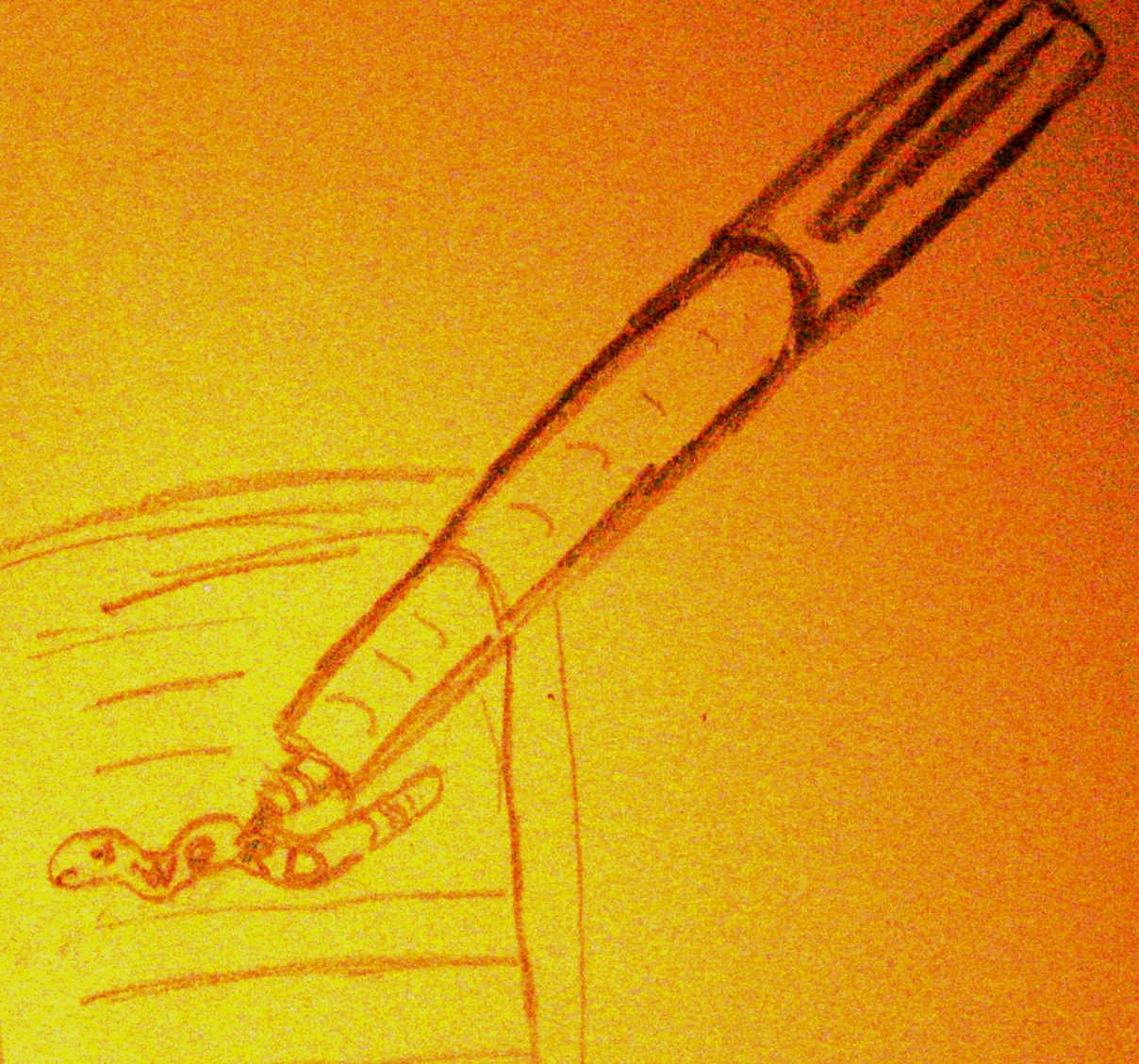
The thing to remember is that the pen is mightier than the word.   The fingers (unless you have been doing carpentry or weaving or playing Scott Joplin or Chopin on the piano) are generally less tired than the mind.  And the unconscious is usually quite happy to take over for if you allow it.

How do you access the unconscious?   How do you allow it to move into your hands?  For some this is easier than others.  Probably the most important step is to stop being your own audience.  The unconscious is shy.  It doesn’t like to interrupted; it doesn’t like to be judged.    Of course, once you start writing, your conscious brain (even your fatigued, blocked, conscious brain) will sit up and take notice;  still try to keep this conscious brain to the sidelines.  Make it a silent, unobtrusive witness, a deaf-mute who, sadly, never learned sign language.

These techniques may not give rise to deathless prose (though you may surprise yourself).  But they will help you work through the fog of fatigue (both true mental tiredness and a tiredness of the spirit).   And usually, once the unconscious mind moves into the open,  the fatigued, blocked, conscious part of your brain will also pretty quickly wake up, become engaged.    (It doesn’t really like being a deaf-mute.)

This, frankly,  is when your problems may really begin.  Your unconscious mind may be a much better writer than the conscious mind; they may have different techniques, subject matters.    But at least these are problems with writing, and not with not-writing.

*I have to give credit for the phrase “the pen is mightier than the word” to my husband, Jason Martin.

PS- I have written many posts on blocking writer’s block.  Check them out by going to that category on the ManicDDaily Home Page.

Blocking Writer’s Disorganization

January 26, 2010

As some of you know, I’ve written several posts on blocking writer’s block.  (Check out that category!)  But in the last couple of hours/days, I’ve been dealing with a different problem.  Writer’s disorganization.

Mine centers on one of the least-cited negative qualities of working on a computer – the  ability to save multiple, vaguely distinguished, drafts.

It sounds wonderful in principal.  The ability to “save as,” repeatedly, means that you never have to throw anything away.  You can experiment with all kinds of revisions.   Unlike a visual artist working on a single canvas, you rarely have to irrevocably choose what works best.

But combining (i) revision with (ii) indecisiveness can be disastrous over time.  Especially if you are cursed with (iii) an aging memory, and (iv) an ability to reel off pages.

Which is the best draft?  The final draft?  The one you want to send out?

The dates should provide a clue (if you save them by date!);  however, indecisive, moody, and interrupted, rewriting may mean that your very last draft is far from your best.   (If you started changes that you didn’t carry through, your last draft may not even be fully coherent!)

If you confine the drafts to your hard drive, some trees may at least be spared.   But some of us (whose names will not be mentioned here) have developed the concept of “print only” drafts (as opposed to “read only” files), meaning that certain drafts may be  printed,  even copied, but never actually perused.  (Why is it that once one gets used to reading on a screen, the printed page seems so naked, painful, exposed?)

I certainly have yet to solve this problem.  But here are a few suggestions which, like multiple drafts, sound good at least in principal:

1.  Slow down.  When you revise, read changes carefully, maybe even aloud.

2.  Take yourself seriously.   Put your bunches of drafts in separate computer files.   If you are working with a longer piece, you might even take the time to type some little commentary at the top of the draft.  (I’ll never do this, but it sounds good.)

3.  Consider actually destroying redundant drafts.

4.  When you do print, put little footers on the pages so you know which version it is.  Put the printed copies in a little notebook, rather than a plastic bag in the back of a closet.   Label them, show them, look at them.

5.  If this is all too difficult, maybe you should just blog.  If you do it daily, you won’t have time for multiple drafts.   (Aahhh.)

Blocking Re-Writer’s Block. Keep the Faith. And the Moocow.

January 9, 2010

I have written several posts in the past about blocking writer’s block.  (If you are interested, these can be found by clicking the category “writer’s block” from the ManicDDaily home page.)

I am extremely lucky that I don’t typically suffer from writer’s block.  I can usually write something. The quality of that something may not be great, but I can put words down on the page.   A harder problem is re-writing.

The wonderful glow that comes from a first draft, or even a first edit, is generally not available in the hard, repetitive, slog of revising a major project.   When one first writes something, one often feels happy simply at finding coherence, flow.  For someone who grew up before the days of the computer, there’s a wonder simply in seeing one’s thoughts set out in typeface (rather than scribble).

But as one’s investment and expectations grow, the re-writing can become onerous.  Questions plague every re-writing session.  They tend to run along the lines of:

1.  What else can you cut?   (It’s still too wordy, boring.)

2.  Have you cut too much?  (You’ve squeezed all the life out.)

3.  Are you really making it better?

4.   How can this take so much time?

5.  It was a dumb idea to begin with.  (And that’s not even a question.)

6.   Maybe you should just quit.  (After all this time?)

Avoiding the burden of extensive revision is one of the joys of a daily blog.  (While you have to worry about coming up with something all day long, at least you know you won’t have much time to re-write it!)

But if you are a attempting a novel, a story, even a poem, you usually have to rework it quite a bit.   And, unless you are lucky enough to have a deadline and an editing staff, this process simply takes as long as it takes (often long enough for you to get thoroughly sick of it).

Sometimes you have to cut out whole sections, sections that you have labored over for weeks, sections that you had a particular love for.  (These may be the most suspect.)  You will feel a bit like you are working on a  crossword, and a whole corner needs to be erased.  (Only, frankly, you’ll likely feel much much worse.)

For me, the most important rule in re-writing is simply to keep faith with yourself.  You must be open to cutting, but if you constantly question the worth of your entire project, you will not be able to go through the hard slog of making it better.

Perhaps the concept is not worthy of James Joyce.  (But remember, A Portrait of the Artist as a Young Man, begins: “once upon a time and a very good time it was there was a moocow coming down along the road…”  This, though recognized as great prose now, undoubtedly took a fair amount of ego and faith on Joyce’s  part.)

Even so, you must accept that you write about the kinds of things that you write about.   Even the moocows.  (Especially the moocows.)

Try, at least, to make your writing the best that it can be before giving into the urge to throw it away.   (Even then, keep the moocow.)

Silliness Recalled – “Hit and Run Night Stand”

January 2, 2010

As any of you who are regular readers of this blog must realize, I am a great believer in silliness.  Not the silliness of anger that won’t back down, or pride that won’t unclasp, but antic, self-mocking, ego-abandoning, silliness.  (The best example may be the many posts about Robert Pattinson, who, by the way, is (i) apparently not truly attached to Kristen Stewart, (ii) once chipped a tooth while flossing, and (iii) didn’t shave while staying with his family over Christmas.)

I like being silly, in part, because it is simply exhilarating.  Being silly makes you feel like the word and action “frolic,” like the word and action “skinny-dip,” like you yourself are the first bite of a cupcake, the sidestep in an impromptu tapdance, the profiled Egyptian hand in a Monty Pythonesque walk.

Being silly, if done wholeheartedly, makes you feel young and carefree and as if you really do have choices in life, or, at least, in the moments right in front of you.

I have been extremely lucky to have known others who, though not perhaps as independently silly, were willing to be silly alongside of me.  One of these was a roommate in, of all places, law school.  Although a serious student—she already had a Ph.D., beginning law school—she was perhaps one of my greatest compatriots in silliness.

How does this silliness manifest itself when you are both blonde, reasonably attractive (she was actually beautiful), weighed down by the travails of law school (more interested, that is,  in the plaintive than the plaintiff)? What form does it take when one of you has an electric organ left in storage by a brother who had once studied at the same University, and the other a guitar?  When one likes to sing, and the other, from Mississippi, has long been infatuated with George Jones and Tammy Wynette?

Write country music, of course.  Adopt country music names.  Go down to Nashville to make a demo tape.  Stay in the Country Music Hall of Fame Motor Inn.  And because you are both budding lawyers, but too busy to do full copyright registrations, mail lyrics to yourself via never-opened envelopes sent by certified mail.  (The idea was to document the date of composition.)

My dear friend and compatriot in silliness died a couple of years ago from cancer.  But I received today from her very kind husband a package holding a stack of unopened certified envelopes addressed (both sender and recipient) with our long-unused country music names (Gussie and Cindy Fay.)

Of course, receiving a package like this in the mail can knock the silliness right out of you.  I miss my friend more than I can articulate.   But, after absorbing what the package contained, I made myself open up all those old certified envelopes, and, reading the lyrics, well, it was pretty hard not to laugh.  There’s nothing like silliness, especially past silliness, silliness recalled.

We had many more titles that I remembered—”Romantic Fever,” “Bed and Bored,” “I always Let My Fingers Do the Talking (But You’re Already Walking Away), “The Paycheck Song” (written in the hopes of being picked up by Johnny Paycheck—we waited outside his dressing room at a show at the Lone Star Café),  “The Social Drinker,” “Dream House,” etc.  (All our songs, true to country music style and rebelling legal precision, relied heavily on puns.)

My favorite was always, “Hit and Run Night Stand.”  The first stanza:

“I’m a victim of a hit and run night stand,
I’ve been laid low by a truckdriving man,
His trucking is so good, I wish he’d make his truck stop here,
But that man is only happy, when he’s shifting gears.”

You’ve got the gist of it.

Silly silly silly.  Fun.

(All rights reserved.  Gussie Gustafson, Cynthia Fay Barnett.)

Blocking Writer’s Block – When Escapism Hits (Hard)

December 3, 2009

Sometimes the mind needs candy.  It just can’t bear to chew over ideas of substance; it’s too tired to wrestle with gristly debates; it doesn’t want to pick nuance from its teeth.

No sirree, what it wants are donuts.  (It’s not even up to “doughnuts”.)  And it wants them all night long.

Who knows what makes the mind revert to pablum?

(Actually, I think it’s stress, a rebellion from pressure, an internal decision not to bullied by one’s own sense of responsibility.)

During such periods, some minds, usually of the male persuasion, will watch sports  or play video games; some females will watch several seasons in one sitting of Grey’s Anatomy, even though they well understand that both McDreamy and McSteamy are McStupid, and that Meredith Grey would be more properly named “MiMi Beige.”

In my case, the reversion is to puerile, but somehow, entertaining books.  (And, of course, a certain new movie star whose name is only known to regular followers of this blog.)

I’m not quite sure what to advise when times like this arise.  I guess the most important question is—are you getting your work done?  By work, I mean your day job, your school work, your obligations to family, friends, dog, your toothbrushing and hairwashing, your eating and some minimum amount of sleep.  Hopefully, most of us can put down the mind’s donutty distraction for the hours it takes to perform the tasks that keep us in the daily life business.

But what about that creative work that we think of as a second career (or a true vocation)?

Unfortunately, it can be very hard for creative work to serve as a significant block to a donutty mindset, especially if you are not getting either money or acknowledgement for the creative work.

Luckily, the mind has some natural defenses:

  1. Boredom.  Most escapist fare does not, per se, hold an overwhelming amount of food for thought.
  2. Pride.  An OC (obsessive-compulsive) attraction to escapist fare can become really embarrassing.    It’s true that innocuous plastic book covers, and a Kindle can go a long way towards mitigating that embarrassment.  Still, when you mother keeps telling you how much she’s enjoying Cormac McCarthy while you are obsessively reading Charlaine Harris (author of The Sookie Stackhouse novels, the basis for the series, True Blood), it gets a bit much.
  3. Duty.  Trees.

While you are waiting for boredom, pride, and duty to kick in, here’s another trick:    try to find something useful in your mind candy.  Look at it from a “maker’s” point of view.  If you are interested in writing, read the dumb books with an eye for their plotting, their narrative structure, their momentum, their sex scenes (!)   (Yes, it’s all a bit of an excuse, but there can be some valuable lessons there.)

Finally try to just enjoy yourself a bit.    Be giddy, stay up late, read while you walk to and from the subway.   More importantly, get some much-needed confidence.     And don’t worry too much.   If you are truly interested in doing creative work, the angst will be back soon enough.

More On Blocking Writer’s Block – Discipline/Playfulness

December 2, 2009

Generally, I really do believe that discipline is the paramount tool  in (i) getting real work done; and (ii) achieving lasting happiness.  (A bit of a workaholic, I have a hard time imagining happiness in the absence of real work.)

Discipline is especially important if your real work is creative.  Inspiration is terrific, of course, but the tangible application of inspiration generally takes some putting of your shoulder to the wheel, nose to the grindstone.

And yet….   And yet…  creativity also requires play—the shaking free of the shoulder, the picking of the nose off the grindstone and thumbing it at the world, the off-beat syncopation of the song, the heightened leap of the dance,  the crazy invented rhyme, the stroke, if not of genius, at least of ingenuity.

Discipline/play—it’s a pretty crazy balancing act, strength and elasticity, practice and spontaneity, muscle and frill.

Actually, I’m not sure that “frill” is the right word.  Maybe “flow” works better.  “Flow” sounds pretty darn creative, and yet unchannelled flow can also end in puddles, swampland, ditches, floating you away, sinking you in muck.  (Yes, I’ve probably taken that metaphor too far.)

Still, the point is that you need to figure out a balance–a way to discipline your use of time, while remaining playful within that time.  It’s important too, even while disciplined, to remain open to obsession, crazy tangents.   Adhere only to discipline and you could end up writing computer manuals, or worse, you could self-implode, and become simply escapist, reading vampire novels all night.

Too much playfulness, on the other hand, can also lead to complete self-indulgence, ending up in mindless haiku.   (Sorry, good haiku.)

Unfortunately, after a lot of discipline, I’ve moved into to the escapist mode in the last few days.  As a result, I’ll end this right here so I can go back to my nighttime reading.

(For more specific suggestions on blocking writer’s block, or other creative blocks, check out my posts in this category from the ManicDDaily home page.)

What Makes Young People (And Some of Us Others) Re-read

October 27, 2009

For those of you who actually follow this blog, and don’t just click on a link that happens to mention Robsten or the Twilight Saga, I’m sorry!  There’s not been much poetry over the last couple of days, but a lot of clicks.

Yes, I like the clicks.  (And, strangely, “Robsten” seems to generate a whole bunch more than, let’s say, “sestina.”)

But I want to explain to you (who may not understand why in the world I write about this stuff) that I truly am interested in a couple of facets of Twilight mania (besides each of Rob’s cheekbones.)

First:  despite all the poetry I’ve posted on this blog, I am mainly a fiction writer, primarily for children and young adults.  As a result, I am fascinated by the question of what makes people read a book again and again.  And I have to say (without mentioning anything about my own experience) that the Twilight mania proves Twilight et al. to be a set of those much re-read books.

It’s a given that books that generate this type of obsessive re-reading are not always particularly “good” books, i.e. well-written.  In fact, many “good” books, that is, really profound, original, heart-wrenching, or poetic books, are not the most dog-eared at the end of the day (or lifetime.)  It’s almost as if such books are too sharp, too bitter, too stinging, to be savored again and again (in the same way that grapefruit is not typically considered a comfort food.)

This is not to say that much re-read books are poorly written!  (Charlotte’s Web and  Harry Potter are much re-read great books.) Only that good writing alone does not make a book a good re-read.  (Nor does a good plot, good jokes, good suspense, even though one or more of these is likely to be present.)

So what does make a book a good re-read?

To me, the distinguishing factor is that the book creates characters with whom readers like to spend time, sometimes, too, a world in which readers like to spend time.

Reading a book is a commitment.  It means hours in which you are not conversing, i-ming, watching TV; hours, in other words, in which you are alone.  Sometimes, in fact, a book is a way to be alone, a path to privacy in a place with hard-to-place boundaries, such as a subway, or, if you are a child, a family dinner.

Because of the inherent solitude of reading, it is important that the main character is good company—fun, cool (but not too cool as to be unempathetic), willing to share confidences.  Being admirable is helpful too, as long as there are also sympathetic and/or humorous failings and idiosyncrasies.  (Sam Vines, Captain Carrot, Granny Weatherwax in Terry Pratchett, even Hercule Poirot in Agatha Christie.)

The world of a much re-read book can, of course, have its dark side.  But it is hard to repeatedly spend time in a world that is overwhelmingly creepy or frightening. (The Road, by Cormac McCarthy, and even Cold Mountain, by Charles Frazier, are obvious examples of wonderful books in which the worlds created, or re-created, are just too horrific to motivate re-reads.  On the children’s shelf, similarly, the later tomes of the wonderful, His Dark Materials by Phillip Pullman, that is, The Subtle Knife and The Amber Spyglass, also, with the exception of certain scenes, get both too threatening and rarified for a child’s immediately repeated visits.)

Ideally, the created world, even if dark, has a fun, semi-magical side.  (Hogwarts, obviously; the barn in Charlotte‘s Web, Florida, as seen by Carl Hiassen, Discworld, as envisioned by Terry Pratchett.)

Re-reading is a particular practice of the young and the young (or perhaps, immature) at heart who can repeatedly find sustenance in something that’s already well-digested.  (Sort of like baby penguins.)   This may be because the young (and not young, but immature) are themselves subject to (i) so much fluctuation, and (ii) so much beyond their control, that they find special comfort in the predictability of a “known” fiction.   The combination of the familiar with the fantastical may be especially appealing.

Romance makes a great re-read as well.   First love is a story that has been told again and again and again; is it any wonder that some people don’t mind re-reading the exact same version of it?

Which brings me back to Twilight.

Tomorrow or in the near future (if I get time),  I’ll write about the second facet that I find interesting—that is, what makes people re-see a movie, as opposed to re-read a book.

In the meantime, check out 1 Mississippi by Karin Gustafson on Amazon.

Sticking To Villanelles (For Today) – How To Write Them

September 8, 2009

A lot of things seem to be a bit stuck right now (at least to me) or moving in molasses motion, i.e. health care reform, opposition to Obama’s verbal waylaying of U.S. school children (ridiculous!), even the ever reliable Derek Jeter.   People running in the Democratic primary in New York are calling me every other minute, and I can’t rouse the energy to even listen to their messages.  (Not even the one from Ed Koch!)

Yesterday, I promised to continue to blog about villanelles, but frankly, this stuckness made the prospect about such an arcane, “out-of-the-loop” subject seem trivial.   Surely, I thought, there had to be something more exciting I could come up with.

Then, I walked home past Ground Zero—I live in downtown Manhattan—through all the barricades that are already set up in preparation for Friday, stepping between the policemen, already manning those barricades, past the cranes and lights and dirt pit, and, suddenly, blogging about something as possibly boring as how to write a villanelle really didn’t seem so terrible to me.

I also believe in keeping promises.

So:

How to Write a Villanelle:

The most important tip I can give to anyone writing any formal verse is to feel free to cheat.  For example, if rhyme is required, don’t worry about not being able to come up with perfect ones.  Use “almost rhymes” or “slant rhymes”  (that is, “not quite rhymes”).  Besides giving you more words to choose from, this will keep the poem from being so sing-songy.

If repeated lines are called for, as in the case of the villanelle, don’t worry if you have to vary them a bit, that is, if your repeating lines don’t in fact exactly repeat.   Remember that meaning always trumps form.

It’s helpful to think of the form as a kind of a map, a means to music.  It’s useful to have all the streets laid out, but occasionally, when you want your poem to actually reach a destination, you have to cut through some back yards.

The only place where I think cheating can truly backfire is with rhythm.  Your lines don’t have to scan exactly, but if they are really off, the poem just won’t sound well.  Respecting rhythm does not mean that you have to be stick to iambic pentameter, but some attention to line length, numbers of feet or syllables, should be paid.

All that said, you can’t cheat till you know the rules.  Here are the basics:

A villanelle is a seven stanza poem, that works with rhyme, meter and repeated lines.  There are two lines that repeat through the poem;  they also rhyme with each other.  For notation purposes, I call the first repeated line “A1” (like the steak sauce) and the second repeated line “A2” (not to be confused with the Pakistani mountain).   (Under rules of poetic notation, these are both referred to as “A” lines because they rhyme with each other, the “A” rhyme.)

Other lines which rhyme with A1 and A2, but which are not the repeated lines, are denoted below as just plain “A”.

The remaining lines of the poem, which do not rhyme with the A lines, but which rhyme with each other, are denoted as “B”.

Here’s the basic form:

A1
B
A2

A
B
A1

A
B
A2

A
B
A1

A
B
A2

A
B
A1
A2

An “easy” way to remember the form is that the all the stanzas. except the last one, have three lines.  The first one begins with your A1 line and ends with your A2 line;  the next four stanzas are in a kind of order with the first ending with A1, the second A2, the next A1, the next A2 again.  (It’s sort of like shampooing your hair—”wash, rinse, repeat.”)  The B lines intersect each stanza (sort of like a basting stitch.)

The last stanza has four lines, ending with a couplet made up of A1 and A2.

It sounds a lot more complicated than it is.  As mentioned in yesterday’s blog re Villanelles and Banana Pudding, the great thing about writing a Villanelle is that you really don’t need to come up with all that many lines.  You do need to think through your repeating lines though—to make sure that they are flexible, and also that they work as a couplet.

Ideally, you also want the meaning of the repeated lines to shift as the poem progresses, and not to simply repeat in a rote manner.  You do not want the repetition to feel formulaic, but somehow illuminating.

Punctuation can help here—it can be useful, for example, for the repeated lines to sometimes feed directly into the following line or stanza and not to always end with the pause of period or comma.

And of course,  cheating can be invaluable.  Shifting the words slightly, for example, so that the lines sound almost the same, but are a teensy bit different, can help your poem actually mean something.

If this is your first villanelle, pick relatively easy rhymes.  I also find it useful to list on a separate page, all the A rhymes and B rhymes that I can think of before I move on too far with poem.  I make the list in a completely dumb way, writing down every single rhyme or near rhyme I can come up with, without regard to the poem’s subject, simply to accumulate choices.  This sounds very “unheartfelt”, but such lists can really open up your thinking, helping you to come up with much more creative and meaningful combinations than you otherwise would.

Which brings up a final point.  Yes, the form is constraining, but the constraints force you out of your typical ruts.  To write a villanelle (or any formal poem), you have to work with something other than your normal brain patterns.   This seems, to me at least (Manic-D-Daily)  invaluable.)

Here’s another one of mine:

Burned Soldier (A Mask For Face)

He tried to smile but found that skin would balk;
a mask for face was not what he had planned.
Right action should give rise to right result,

saving the day as it called on God to halt
all burn and bite of bomb as if by wand;
he tried to smile but found that skin would balk.

When they talked of graft, he always thought of molt,
as if his flesh held feathers that could span
right action, then give rise to right result—

cheeks that were smooth but rough, but loose but taut—
it all had been so easy as a man.
He tried to smile but found that skin would balk.

Hate helped at times; to think it was their fault.
But how could “they” be numbered? Like grains of sand,
like actions that give rise to like result,

like eyes that fit in lids not white as salt.
This lead white face was not what he had planned.
He tried to smile but found that skin would balk;
right action should give rise to right result.

(All rights reserved, Karin Gustafson)

Ten Reasons Not To Blog

September 6, 2009

Six weeks ago when I first started “ManicDDaily”, I wrote (as my third post) “Five Good Reasons To Blog.”

I still admit to neophyte status as a blogger.  (I have yet to fully investigate the varieties of graphics and the word “widgets” just brings up strange math word problems.)

Even so, I now have enough experience under my belt to understand a bunch of good reasons not to blog.   I list ten of these below:

1.  If the word “daily” is in your title, your blog will cloud your brain for a significant portion of every single day.  On a very lucky day, it’s the cloud of a brain storm.  On a frustrating day, it’s just a plain old storm cloud (without the brain part), in which you thunder at anyone (a child or husband) who threatens to disturb your computer time.  On a normal day, it’s more like a heavy fog, thick and unnavigable.

2.   The blog (which comes with “Stats” as to the number of views per day) provides a whole new way in which you can feel rejected.  A bad day can go right on the failed marriage, questionable career, dwindling stock portfolio heap.  It can bring to mind, with really uncanny vividness, particular manuscript rejection letters,  poetry contests lost, that boyfriend in law school who (unbeknownst to you) had a real girlfriend, and even all those 4th of July swimming pool beauty contests that your mom made you enter from age 6-10 despite your increasingly poor track record.

3.  A good day (lots of views) brings a certain zing to the old step, but it also raises the question of whether the credit is truly owed to Robert Pattinson.  (See e.g. numerous posts on same.)

4.  You suddenly notice that you never have any time to do your “real writing”.

5.  And what happened to all those cute little paintings you used to make?

6.  Your family would really really like you to make dinner before 10, at least 11.

7.  Your boss would really really like you to get in before 10, at least 11.

8.  Your body would really like you to have a bit more energy for the gym.  (The stationary bike was not actually meant to be a notebook and pen bike.)

9.  Your personal yoga practice could really use a bit more focus.  Breaking off mid-pose, repeatedly, to check on early morning “Stats” rarely leads to Nirvana.  (See e.g. Reason No. 2 – a whole new way to feel rejected.)

10.  Your dog would really really like your laptop, charger, electrical cord, and notebook, to stop hogging the bed.

    Poor dog.

    Write you tomorrow.