Archive for January 2012

Borders – Here She Once was There

January 21, 2012

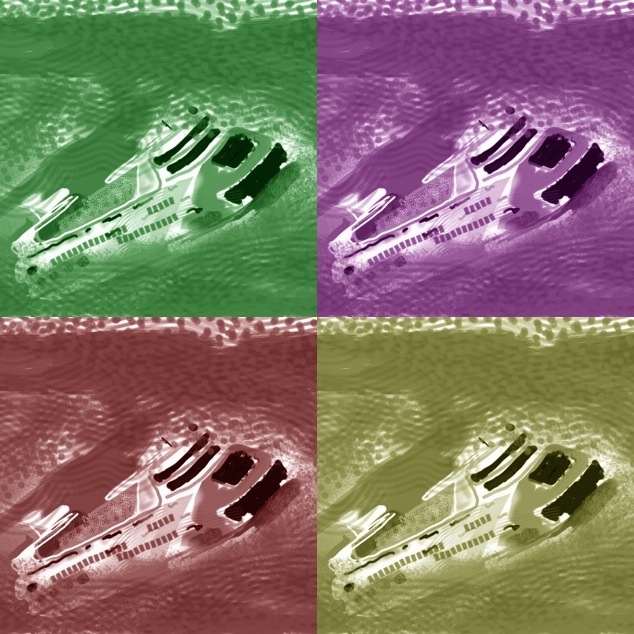
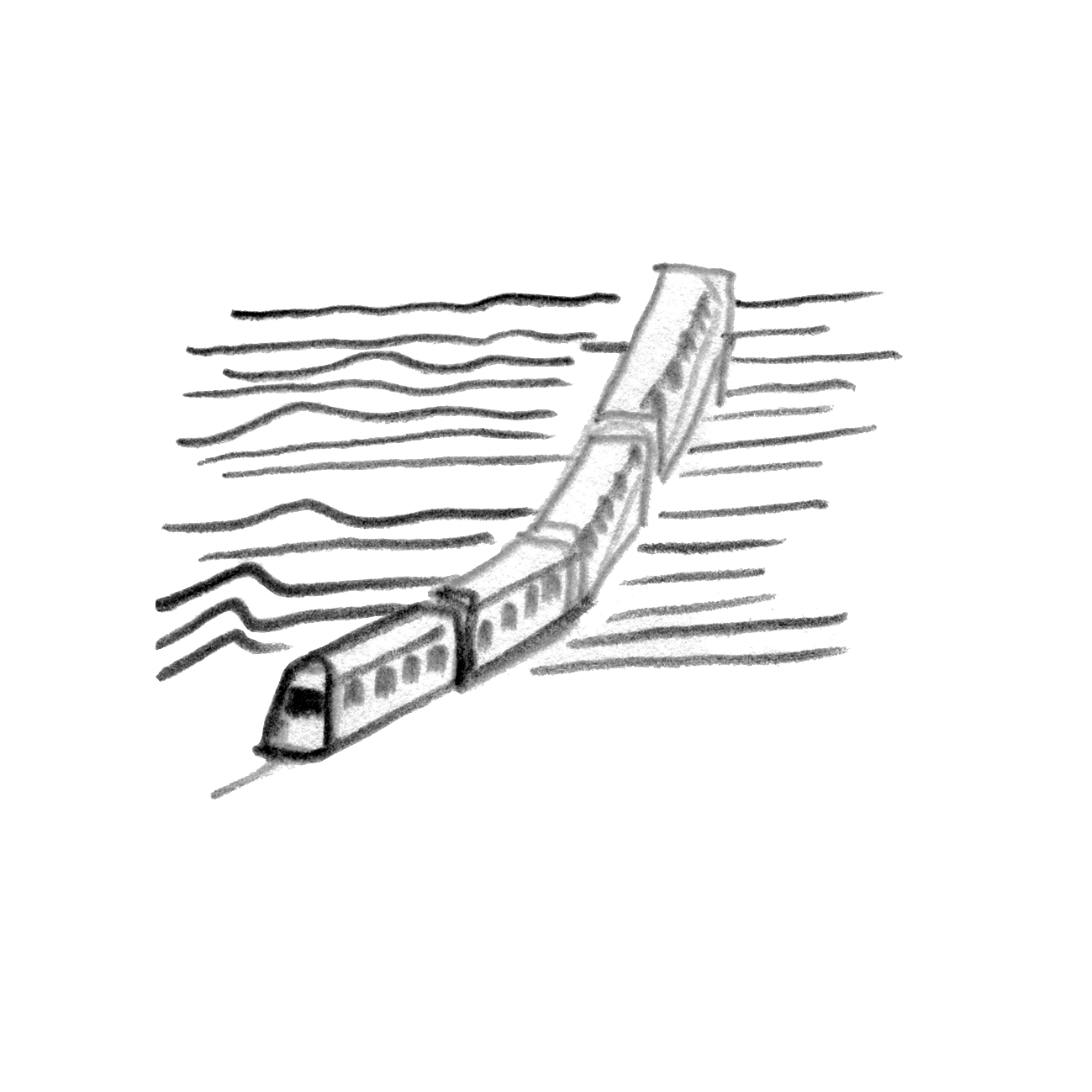
I am posting the poem below (a sonnet) for a dVerse Poets Pub poetics prompt to write about borders.   I thought of posting a more more risque, i.e. erotic poem, as this would somehow represent crossing a sort of personal online- publishing border,  But the fact is I kind of like the poem below, though it is not rique or erotic.  The drawing above, by Diana Barco, is from Going on Somewhere.

East Indian Trains in the Catskills
(For Jeannie Hutchins)

As lilacs cast their fragrance on wet grass,
she thinks of trains and dust, the smell of hot spiced chai,
maroon banquettes, babbled cries en masse—
muffled by shutters echoed Hindi words for buy,
the soles of porters’ shoes so flat and white and pointed,
her own were thick, protection sewn by Clarks,
the baseline of what made her feel anointed—
when her hand waved at the window, it left sparks.
She sparkled just for coming from the West
(with cash, pale eyes, and shockingly blonde hair).
But now she feels a different specialness:
no matter where she is, she once was there,
so that even on this Catskill-scented lawn,
mind resonates with Indian trains at dawn.

Friday 55- “Note to be Stored on Mental Loudspeaker” – If on a Ship Whose Lists Are Not Just of Passengers

January 20, 2012

20120120-095724.jpg

Note To be Stored on Mental Loudspeaker

If you–repeat–
are on a ship whose lists are not
just of passengers, but onto its side–

(Or in a building
whose neighbor’s aflame–)

do NOT–repeat–remain
at your table
(or desk), even
if so instructed, BUT,
without shoving or pushing, 
pass Go–
repeat–
Pass Go.
(This will not–
repeat–
be a game.)

This is for the G-Man’s Mr. Know-it-All’s Flash 55, and I don’t mean it to sound glib (recent events are horrific) but as an exhortation!

Have a safe and happy weekend and thanks so much for reading, commenting, just being here.

“Imagism” in Tube Socks

January 19, 2012

20120119-092731.jpg

Victoria C. Slotto, hosting dVerse Poets Pub’s “Meet the Bar” today urges participants to try to write poems in the style of “imagism,” that is, in the spare concrete and imagistic mode of William Carlos Williams, H.D., or Pound.  (Victoria has a wonderful article much more fully describing the movement.)

This is a difficult challenge for very wordy me.

Here’s my attempt:

Tube Socks

How, in near night
grass, do
white cotton
socks
pulse light?
Right
(left right)
at our feet.

P.S. I have not been much involved in the bookselling busiess lately due to all the turmoil in my life, but please please please check out NOSE DIVE, a very silly comic novel written by me and illustrated by Jonathan Segal.  At 99 cents (on Kindle) it’s an incredible bargain.  Also available on paperback for a bit more.  Thanks much!

Fair Use and SOPA (Save the little elephants?!)

January 18, 2012

20120118-113539.jpg

I have mixed feelings about SOPA, the “Stop Online Piracy Act.” 

On the one hand, the level of internet piracy is mammoth; many companies make big advertising bucks out of stolen content.    This lawlessness degrades consumers’ views of intellectual property rights, and, I believe, makes it increasingly difficult for artists to make a  living off their work.

On the other hand, the internet is about the only thing in our culture that is free.  And this freedom is not just in terms of cost.  There’s a great freedom for people to make and post art–some of which is undeniably derivative.   I, for example, make a lot of little paintings, some of which sponge images from other people. 

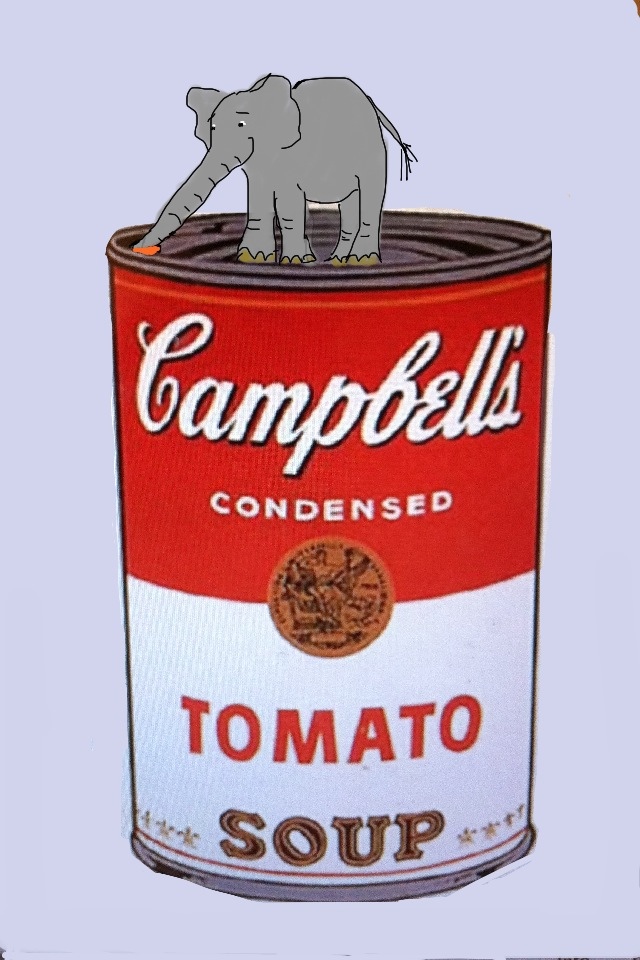
I sincerely believe that the types of things I do are either (i) “original” or (ii) “fair use,” and that they do not infringe copyright.   (Note that I feel a particular absence of guilt over Andy Warhol, one of the biggest appropriators of all time.)

However, interpretations of laws are always multiple, and it is awful to think that SOPA,  if drafted as broadly as everyone says, could be used not to just curtail my little elephants, but WordPress itself for letting me post them.

And here’s one of the rubs–even if government is not interested in shutting down my little elephants (or donkeys, for that matter), and I, perhaps naively, do not believe that it is–I can easily imagine a situation where access-providers could over-zealously apply the law to protect themselves. 

And, of course, government could also get into the act.

So, while I am not particularly interested in protecting the pirates–and I do think some thought needs to be given to protecting property rights– I’m very concerned about maintaining freedom for my little elephants and big elephants, and other people’s too.  SOPA seems to pose real risks.

P.S.  my elephants have no relationship to any political party or even to Babar.  (I just like elephants.)

(Sort of) 1960’s “Block” Poem

January 17, 2012

"Block" (Poem by Karin Gustafson, Image by Diana Barco, from GOING ON SOMEWHERE.)

I have been thinking about the 1960’s, perhaps because of Martin Luther King, Jr.’s birthday yesterday, so here’s a (sort of) 60’s poem (though not about MLK Jr.)   The poem is also published in my book of poetry, Going on Somewhere.(Check it out!)  I am posting it here for the wonderful dVerse Poets Pub open link night.

Block

Right-angled in the newer areas,
our curb was smooth, sloping into
a chenille of pebbled tar
that bubbled below our skate wheels,
grinding up to spine,
a gravelly shiatsu.
Bare knees as gravelly, the memory of
scrapes embedded in skin, we sat with them up
till the white truck jingling
fairy dust turned in, spreading both
joy and panic, then ran for
quarters.

I had a working mom and so
had funds enough for a drumstick, real
ice cream, but
hid the extra change deep in a pocket
where only straight fingers could
touch bottom, joining
Patty and Susie and Celeste, the
Catholic kids, with houses of siblings,
chores, and, hovering in their stories, nuns
(rulers at the ready)—
Patty the pretty, Susie the plain,
Celeste Celeste
Celeste, who, arms outstretched, could walk across
practically anything,
Celeste with the six brothers
who constantly rat-tat-tat-
played war—panting for the
popsicle of the day.  Sometimes it would
be root beer, that sweet-strange amber we hardly
dared lick; pink lemonade a purer thrill
in our specific honor.
The new houses started at the next
corner but no one sat in front of their
flatter spindly-treed lawns.
Did those houses even
have kids?

Later our side changed too.
Patty only came out to dry
her nails; Susie didn’t feel
like playing; and Celeste, Celeste,
Celeste’s father came back from
Vietnam, a different man.
Her brothers who’d crawled under bush,
up tree, their finger guns poised,
were not to be seen.
It was dark behind
their screens, words heard only as
vibration, things shaken.

The street still,
except on the rare
blue evening as fall fell,
when a boy we’d fought in
war, lorded over on skates,
stepped out from the curb, tossing
a football hand to hand.  Slowly we’d
all appear, copping moves scribbled
on his cupped palm.  Our feet
slapped hard against the
pavement, voices loud that, yes, we had
touched with two hands.

We played until car lights glared and our
bodies smelled of cold blown leaves.
But that would be it.
We would not come out again
for some time.

(If you’re interested in a more comic take on teenagerdom, please please please check out my comic novel NOSE DIVE!   It’s a lot of fun and very very cheap both in paperback and kindle.)

Martin Luther King, Jr. Birthday– Growing Up Outside D.C.

January 16, 2012
20120116-072957.jpg

My Not Very Good Depiction of Martin Luther King, Jr.

I grew up just outside Washington, D.C.  I don’t want to reveal exactly how decrepit I am, but let’s say that I have pretty clear memories of what some consider the halcyon days of this country, that is, the years pre-1968.

They were really not all that halcyonish.

Yes, there were some aspects which today seem kind of wonderful.  Kids played outdoors, often in back yards, often on not-very-trafficked streets, generally without need of adult supervision, and with zero electronic in-put.  Parents seemed to keep marriages intact (even when one or both was not all that happy).  (I understand that that last bit is problematic.  I’m certainly not advocating unhappy marriages!  I would point out, however, that people who are divorced are also not always that happy.)

But there were other aspects to these times. In my little suburban town, for example, virtually all of the African Americans lived on one run-down road, in wooden broken-down houses, in very conspicuous poverty.  Of course, there were African Americans who were much more prosperous, but they did not seem to live in my town.

It is hard to imagine what kinds of expectations kids living on that road had.  Certainly, from the back window of my parents’ car, which, until the desegregation of local schools, was my main view of that road, life looked very difficult.

Then came Martin Luther King, Jr.  Listening to him was like listening to Prometheus–someone who held the secret of fire–someone who was aflame inside–someone who with that fire and flame would bring true change to humankind.

In an age of hype and spin and bloated political correctness and rabid anti-political correctness, it is difficult to understand how revolutionary and inspirational King was.  Here’s to him today.

It is difficult to mourn a pet clam.

January 15, 2012

20120115-032636.jpg

The above is my pictorial take on a photographic prompt of Tess Kincaid, of Magpie Tales, which, in turn, is a photograph of a sculpture by Jason deCaries Taylor.  The picture looks a bit grim–my tale, below, is actually on the humorous side. 

Pet Clam

When I was a young child, desperately wanting a pet to pat and love and call my own, I got a clam.

He or she (with mollusks, it’s hard to tell) sat on the crushed ice in the blue enamel shelf of the old A&P shellfish section.  The lobsters who crawled around the murky bubbling tank in that area of the grocery store were clearly alive, but somehow I learned that the clams sprawled on the ice lived too, and one of them, stonily asserted itself, ‘pick me.’  With the permission of my mother,  I brought him home and the next day took him into school for show and tell==(how the clam has suddenly become male, I’m not sure).

I don’t remember if he actually made it to show and tell.  Only that at a certain point in my first grade afternoon, his jaw (as it were) drooped, the shell opening in my desk in the trough reserved for pencils, while dribble, like that that sometimes collects at the corners of the lips of the infirm, glimmered along the edges of his crack, his body a velvety mute tongue.

As an adult, I used to like to joke about the episode, until one morning when my own child was small, I pointed to a basket of clams sitting woodenly beside the counter of an old-fashioned Brooklyn fishmonger–we breathed through our mouths because of the reek–and told her that the clams were still alive–the merchant concurred–and how I myself had one owned one as a pet.

An awe=struck light filled her eyes.

I’m not sure what came over me.  Typically, I try to be a good parent, shielding my children from heart-ache.  Yet, in this instance, I invited it in–perhaps telling myself she needed experience of the world, perhaps tired of hearing requests for pets, perhaps because I thought she too would eventually join in upon the joke.  I let her pick one.  She chose carefully from the slats of the basket labeled Cherrystone.

In my defense, I did emphasize that clams were not in fact great pets, listing the obvious.  She carried it proudly, gently from the store, in a paper bag which she peeked into often on the walk home, deciding upon the name of Cherry Merry Clam, a variation of her own name mixed with Cherrystone.  (And Clam.)

Once home, she carefully alternated Cherry’s sojourns in the fridge, where it stared blindly up from the metal rack, with short visits to the couch, an old beigish velour, with a square back and arms that served as good ledges for the clam’s rounded bottom (and top).

Every few minutes of fridge time were punctuated by a request of whether Cherry could come out again.  When she was released, my daughter stroked the clam’s ridged grey surface with a small forefinger, and spoke to it in those high-pitches reserved for coddled infants–babies, puppies, now clams.  Occasionally, she would pass a finger over the line where the shell closed, telling me she thought it was smiling.

Guilt filled me.  I replayed my own distress at the open clam languishing in my first grade desk.  I warned my daughter of the clam’s vulnerability.  Which, beyond serving as warning, raised the question of its care.

I realized that I knew nothing of clams.  Did they drown/suffocate in the open air? Did they, inside that hard shell, suffer?

We rinsed Cherry in the sink.  (Wait–what about the chlorine?)  We put Cherry in a bowl of salted water.

As if glued to destiny, I let my daughter take Cherry to nursery school the next day where, despite best efforts and the school fridge, the clam opened, and the assistant teacher pronounced its passing.

It is difficult to mourn the death of a pet clam.  There is a passivity about the creature that makes one’s grief seem ridiculous.

But grief is manifest in the mourner, not the bemoaned, and the loss of something imbued with love, whether or not it even smiled back, is grief-worthy.

So when I think of Cherry Merry now, I feel a true sadness–first, of course, for my daughter who genuinely suffered that day, then too, for myself–both as first grader, but more as guilty mother–the grief of any mother conscious of her mistakes and faced with their consequences.

And then, there’s a sadness simply at the death–not for the clam (no, not for the clam!) but for the struggle, or at least, the image of struggle–the seemingly gasping shell.  (What does the clam do when it opens?  What does it do when it shuts, for that matter?)

The visage of human death comes to mind–the fight for breath, the seeming drowning in air, the moment when this Earth (as one has known it) is no longer one’s element.  Or maybe it’s the here and now that can no longer be processed at death–maybe that’s what can no longer be negotiated when our life escapes its shell in that unwilled opening.

P.S.  Linking this to Imperfect Prose for Thursdays (Emily Weiranga’s meme.0
Botero (With Elephant) — Courbet (In Verse)

January 14, 2012

20120114-082115.jpg

dVerse Poets Pub has a poetics prompt based on Fernando Botero this week (hosted by Victoria C. Slotto.)

I like Botero’s images (one of which I’ve adapted above), but every time I thought of writing a poem about one, I pictured a person being swallowed by their own flesh.  Instead I’m opting for an older poem about other (more traditional) flesh-favoring artists:

Courbet

All I can say is that
it’s a good thing we have museums
hanging Courbets,
Rubens,
Rembrandts,
the occasional Italian,
with their depictions of swelling bellies,
dimples gathered around spines, flesh rippling
like Aphrodite’s birth foam,
the creep of pubic hair juxtaposed by coy hands
whose curved digits
pudge, slightly sunken cheeks (above, below),
spidery blood vessels
rooting beneath the patina. 
All I can say, as I catch
my face in the glass,
glance down at my folio
of torso, is that
it’s a good thing. 

(This is from my collection of poems, Going on Somewhere.  Check it out!   Also check out my new comic novel–Nose Dive,  a fun look at truth, beauty and the pursuit of harmony–available in paperback and on Kindle for just 99 cents!)

“What You See” – On January 12th-13th, 2012

January 13, 2012

20120113-104505.jpg

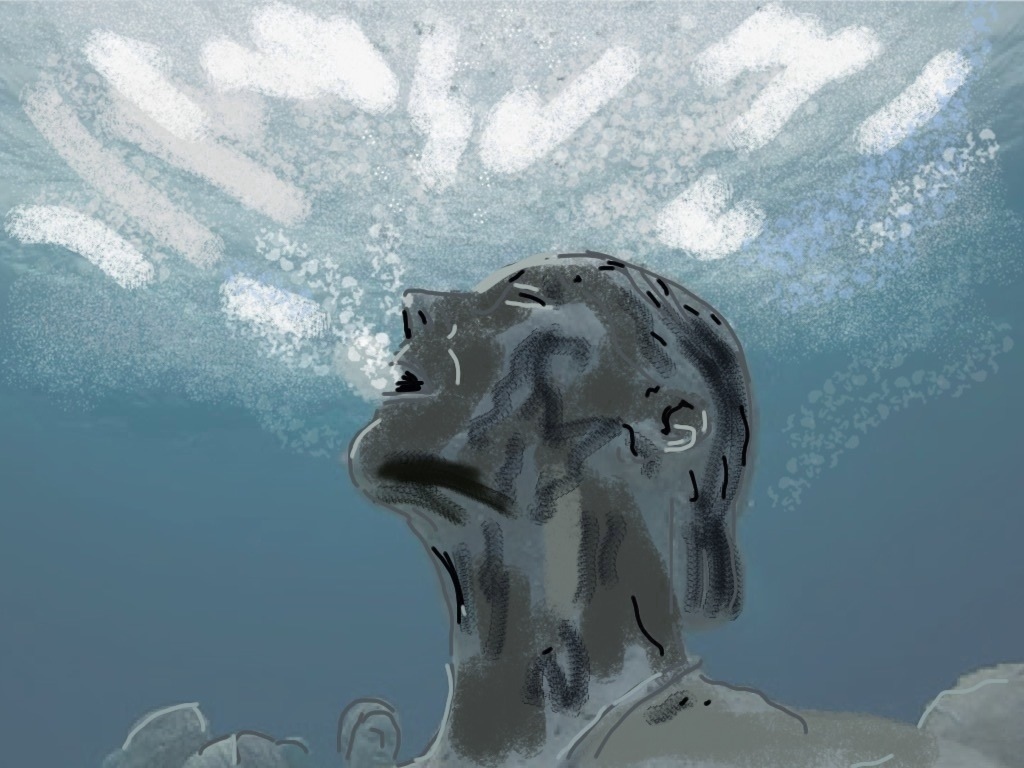
As followers of this blog know, my beloved father died a little over a week ago, and I’ve been going through various post-death machinations down in Florida where he lived, some difficult, some wonderful, some tedious, some eye-opening.

Here’s a poem written this a.m. (still perhaps a draft):

What You See

When you shut your eyes after the sight
of death, even
contained, the lidded
darkness tells you
to change your life–
”you there.”

You’d think
it would urge self-fulfillment–
all that grandiosity–but no–

“be kind,”
the darkness whispers.

“Kinder,” urges
that depth behind the eyes.

“Try,” it insists.  “Every
single day, every
next day.”

Though you stand in a grey box
of a room, looking out, variously, at a refrigerator
tank and an incinerator’s
portal, you still feel it–kindness–
it’s all you can breathe actually–
as it waits patiently for you to inhale,
inhale again.

Ode Not To Autumn -Eau’d Not to Autumn (“Swimming in Summer”)

January 12, 2012
The wonderful dVerse Poets Pub has a “form for all” challenge tonight to write an ode.  The prompt hosted by Gay Reiser Cannon cites Keats’ “Ode to Autumn.”  I’m not in great circumstances to write a new poem today, but the Keats brought up the closest thing I have to an Ode. Or should I say,”eau’d.”   (Sorry! And sorry too that some of you may have seen this villanelle before.  It is from my poetry book Going on Somewhere.  Check it out, and with it, my new comic novel NOSE DIVE.)

Swimming in Summer

Our palms grew pale as paws in northern climes
as water soaked right through our outer skin.
In summers past, how brightly water shines,

its surface sparked by countless solar mimes,
an aurora only fragmented by limb.
Our palms grew pale as paws in northern climes

as we played hide and seek with sunken dimes,
diving beneath the waves of echoed din;
in summers past, how brightly water shines.

My mother sat at poolside with the Times’
Sunday magazine; I swam by her shin,
my palms as pale as paws in northern climes,

sculpting her ivory leg, the only signs
of life the hair strands barely there, so prim
in summers past.  How brightly water shines

in that lost pool; and all that filled our minds
frozen now, the glimmer petrified within
palms, grown pale as paws in northern climes.
In summers past, how brightly water shines.