Archive for September 2010

Ocean/Overmedication

September 13, 2010

One good thing about these days in Florida–the ocean.

One bad thing about these days in Florida–overmedication.   (Thankfully, not of me.)

I am recovering my “sea legs.”  I use the term in a completely made-up sense which has nothing to do with walking up and down the deck of a ship.  (The problem with me and ships is not my lack of sea legs, but “sea stomach.” )

I’ve gotten completely furious at doctors here.

My sea legs are legs that are willing to rush into the surf and dive below the next incoming wave.  This can be dangerous–not so much because of the force of the wave–but because, lately, my determination to achieve the sense of freedom the dive imparts has led me to take it at a depth of two feet.

I am more and more convinced that many of them (doctors) substitute treatment for attention.

I’m still not as brave as I once was.  Years of having my mother trail out to the beach after me shouting fearfully “you have children!” have taken their toll.

By that, I mean that they (doctors) often seem not to review cases or listen or attend to patients, but to simply prescribe tests and medication.  Loads of tests, loads of medication, for years.

But my mom stays at home these days, and I swim!  (Not just wade.)   And I’m often the only one–the only sea-borne human on the entire horizon!

One question that arises is whether doctors are more likely to overtreat the heftily insured. .  And what happens to patients who don’t have an advocate?   Someone to say, for example, “gee, if his blood pressure is 65 /42, maybe he shouldn’t be on two separate types of blood pressure lowering medication.”

So strange–the waves are not large this time of year, the jelly fish are not bubbling, the water temperature is pretty perfect (cool on initial entry, then immediately comfortable.)

Can the over treatment actually be intended to protect the doctor?  Document attempts to try everything (whether needed or not)?

Is it the school schedule?  The fact that this is the opposite of Spring Break?

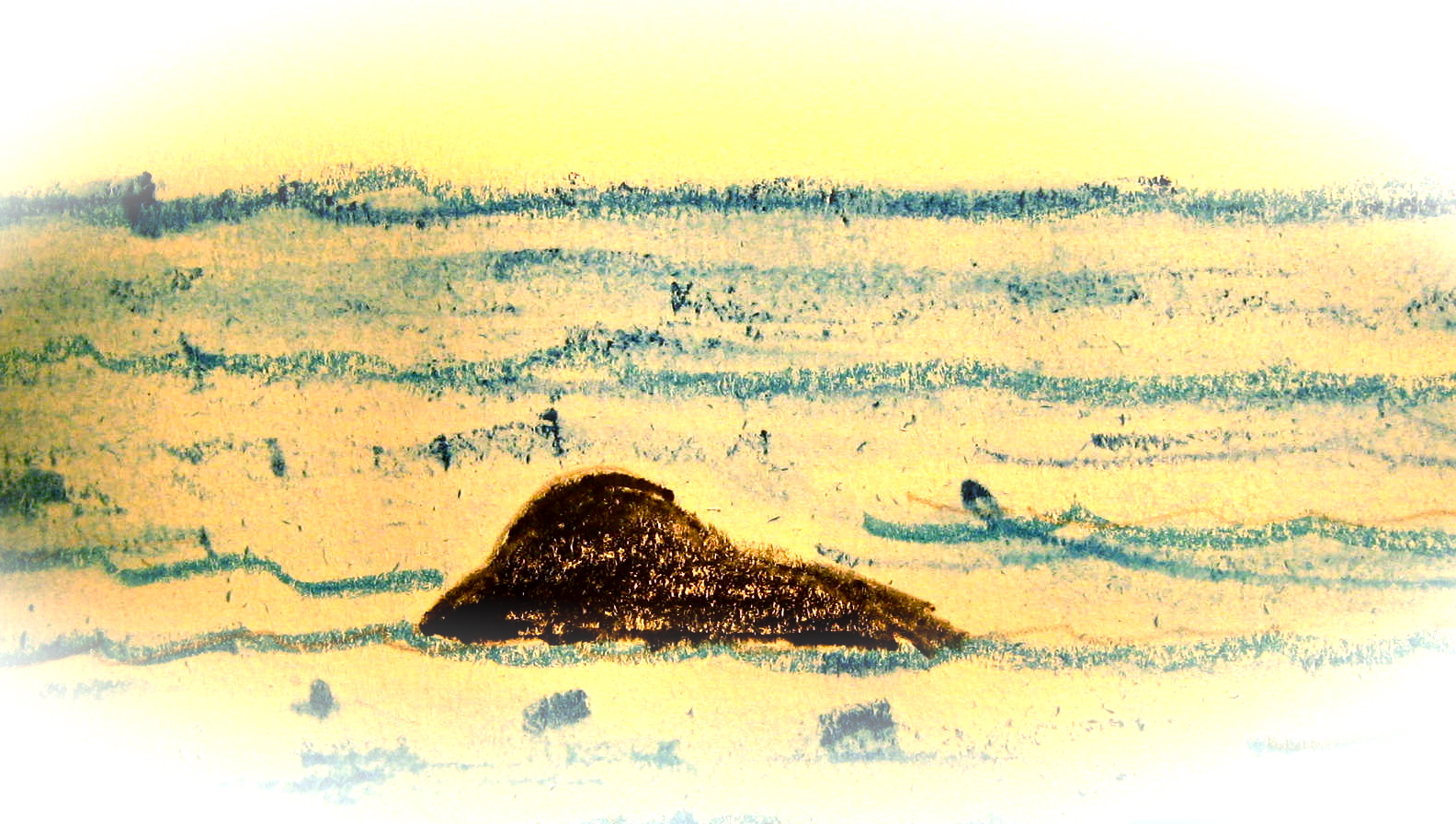
Or, maybe…maybe… it has something to do with the big black fin I saw both this morning and yesterday, that dark rhythmic curve above the waves?

I hesitate to call them sharks.

First Time Away From New York on 9/11 – Missing Bagpipes

September 11, 2010

This is the first 9/11  since the 9/11 that I have not spent in the City.  (I’m guessing I don’t have to tell you which one.)

I don’t particularly like 9/11 in the City.  I live a block or so from Ground Zero.  It is a somber difficult place on the anniversary, full of detours and no-crossing barricades.  The only thing good are the bagpipes.

There is always the question of whether or not to go to the ceremonies.  I usually just listen to the bagpipes–the sound travels–and then don’t go, or if I do, it is by chance, walking past the site to work while some of the names are being read.

This is not because I don’t respect the names or the day.  I simply find them too sad.

I realize this evening that I have never been away before because on every other 9/11 I’ve had a child living in the City, and I’ve felt, silently, that I could not risk being away from a place and time that reverberates with crisis if one of my children is there.

I know that if something (something else) happened, I would not necessarily be able to help my children, no matter how many cars mothers are supposed to be able to lift.   But there it is–something that 9/11 has left with me, not only the sense of past loss, the understanding of potential loss.

Away from the City, there is television coverage.  It too is sad–the footage of the actual day completely intolerable– but also maddening–actual commemoration nearly outweighed by posturing, schmaltz, sensation.   With only the barest wheedle of bagpipes.  Bagpipes are really not the same on tape.

For a poem (a villanelle) about 9/11 and also children, click here.

By the Sea – Words Outside the Bottle

September 11, 2010

Words Outside the Bottle

This morning brought one further occasion (aside from the state of my own writing) to bemoan the demise of the English language.

Two people were sitting on the boardwalk steps as I walked up from the beach at about 9.  I wasn’t trying to eavesdrop, but every day that I spend in Florida helping my folks seems to make me older and more decrepit (sorry, Folks!) and I was having a hard time getting my sandals which were lodged just below the boardwalk.   This meant that I spent a fair amount of time in the vicinity of these two individuals.  One was a going-to-seed, slightly greasy, youngish man with a large half-empty bottle of beer by his hand; the other an already-at-seed, slightly pudgy, youngish woman with a half-knowing (I will not say “empty”) grin.

“It’s cause you said that,  you know, what you said.” (from the woman.)

Man: “Nah, I never said that s—.  I told him, you know that other s—.”

Woman:  “No you said, you know, what you said.”

Man: “I didn’t, I said, whatever, you know–I said, uh-huh all that.  I wasn’t going to play that game of his.”

Woman: “Oh yeah.”

Man:  “S—, no.   I said, whatever.”

At this point, my sandal strap almost on, I couldn’t help but get quite close.  I thought they’d stop talking with me at their feet, but things actually picked up.

Man: “I was just telling him what kind of ho’s are ho’s.  That’s all I said.”

Woman:  “That it?”

Man:  “Not you….”

Woman:  “Whatever.”

Man:  “Good morning.”  (This addressed to me.)

Woman:  “Have a good one.”  (Also to yours truly.)

A part of me really did want to intervene at this point.  I don’t want to sound patronizing, but I was just aching for more, you know, words, and also, uh, directness.

Look, I wanted to tell the guy, just tell her that you want to get into her pants, and think that she’ll probably agree in the end because she’s sitting out here arguing with you.

To her: so, he really is kind of sleazy and opportunistic.  The question is how lonely are you?

Needless to say, I shuffled on in my silent, decrepit way, sandals (sort of) affixed.

Religious Outrage – Elephant Dung

September 10, 2010

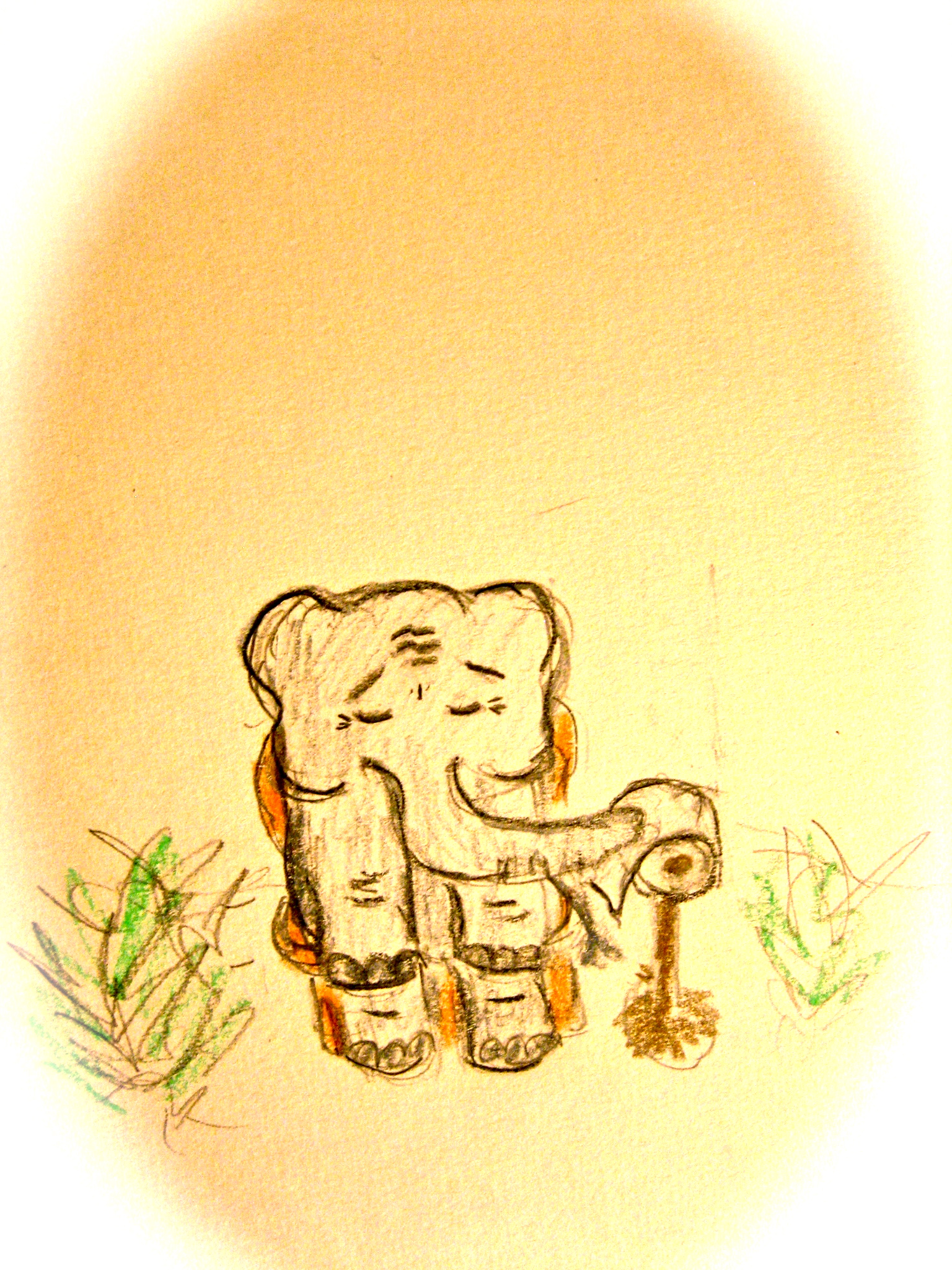
We live in a country where you can use the Bible as toilet paper.  You can even post a video of this use on youtube.  (I hope not.)

It’s a country where you are allowed to draw horns on the President, a country where you do not generally have to memorize poems for fear that your scribbles will be discovered by the local police.  (The downside of this is that no one is much interested in poetry.)

It’s also a country where silly self-promoters, like Terry Jones and several other copycat “ministers”, have a right to do silly self-promoting symbolic things.

Of course, the rules that allow for Jones are also the rules that allow for artists and writers, museums and collectors, many of whom are also self-promoters, some of whom are also foolish.  (Some not.)

Remember Chris Ofili and the Virgin Mary painted with Elephant Dung, part of the Brooklyn Museum’s 1999 show Sensation, which exhibited works from the collection of Charles Saatchi.  Ofili’s Virigin Mary caused such a….sensation that it inspired then Mayor Giuliani to start a lawsuit to evict the Museum, the Museum to countersue Giuliani, and all kinds of politicians, artists, religious groups and concerned citizens to speak out.  The U.S. House of Representatives (typically!) passed a nonbinding resolution to end federal funding for the Museum, the City of New York actually stopped the Museum’s funding; a federal judge restored it.

I am not sure that people around the world, Muslims particularly, understand this aspect of our culture.

I’m not sure that many of us always understand it.  Especially some of the ones doing silly symbolic things.  (And why do so many have to center on 9/11?  Ground Zero?  Do these people even like New York?)

But what do you do?  We live in a country (thankfully) where people do not have to swallow their poetry, but can post it on the internet.  Even though no one is terribly interested in it.  With or without elephant dung.

More tomorrow.

The Media – Jonesing For Controversy

September 10, 2010

A bunch of thoughts rush through my still very tired head tonight, many of them focusing on the idiocy of Terry Jones and the U.S./global news media.  Then, sneaking in, comes a sense of the real lack of understanding between Islam and the U.S.

The media make me maddest–so busy jonesing for drama and controversy that they bloat the ambitions of an attention-seeking idiot.   No, Terry Jones makes me maddest, for being an attention-seeking idiot.  No, the media for absolutely fanning the flames of the controversy; no Jones himself (idiot) for threatening to light those flames…

And then I think about the part of Islam in this story.  Certainly, Muslims are entitled to be enraged by idiots like Jones, but there is also something extremely unsympathetic in the idea that Islamic outrage at the insignificant, if idiotic, Jones would be so extreme as to genuinely put lives at risk across the world

A lot of anger, a lot of attention-seeking, worrisome.

Writer’s Fatigue – Watch Out For The Burn.

September 8, 2010

Washcloth washcloth burning bright!

I’ve written a lot about blocking writer’s block; usually I’ve talked about blocks caused by insecurity or fear of failure, indecision, just plain stuckness.   I’ve advocated various exercises to limber up pen-holding or keyboard-typing fingers.

What about writer’s block caused simply by fatigue?

Sinking eyelids, molasses mind, slurring fingers.

I inadvertently set a washcloth on fire a few minutes ago.  In two places.  That kind of fatigue.

It’s not all that easy to set a washcloth on fire.  It wasn’t even on fire until I took the symmetrically charred fabric out into the night air and lay it down on some stiff, humid Florida grass–really called  Bermuda grass–grass that my crabbed mind thought would dampen all embers.

But something about that combination of night air/grass/stretching and glowing washcloth out set off actual flames.

That kind of fatigue.

That kind of block.

Avoid, during such moments, writing while operating heavy machinery.

Assisting Aging Parents – Who, What, When, Where, How, Why?

September 7, 2010

I recently rushed down to Florida to help take care of, and maybe say goodbye to, a father who might be dying.  On one level, of course, we all of us are dying and might be doing it soon.   But the possibility of his end seemed to be not so philosophical, more, possibly, immediate.

My mother who is both staunchly independent and optimistic (especially when it comes to belief in her ability to get my dad through any setback) was anguished.  (Me too.)  Getting here sooner rather than later seemed imperative.

But the body is a funny organism.  Thankfully, my dad’s seems better right now; and the possibility of what might be, or not be, is again a little more remote.

Some family members, religious, attribute the improvement to prayer.  I’m glad enough of prayer, but also think some stern, but cheerful, cajoling (of my father, not the Almighty) may have had something to do with it.  Whatever – something has triggered a re-pivot of mind which allows the body to hang on again.

Typically, what complicates everything, aside from the worry and sadness, is practicality.  Helping aging parents feels, at times, like the reporting of a news story–full of who, what, where, when, how.  Who can/will help?  What can they do?  Where can I find them?  When will they come?  And then, most importantly, how will we get the sick person, and especially his wife, i.e. my mother, to accept such help?  (Why is it so difficult?)

The very qualities that may help long-term survivors survive make them nearly impossible to assist.   You find yourself arguing endlessly with that stubborn making-the-best-of-it-on-your-own endurance – a characteristic that you value in yourself and almost anyone else.    (And, truly, secretly, in them too.)    (Ssshhh…..)

Foregoing Fear of Big Brother For the Fast Lane

September 6, 2010

I’m thinking again about Orwell today, in part because of a comment received setting forth a particularly dire quotation from him.
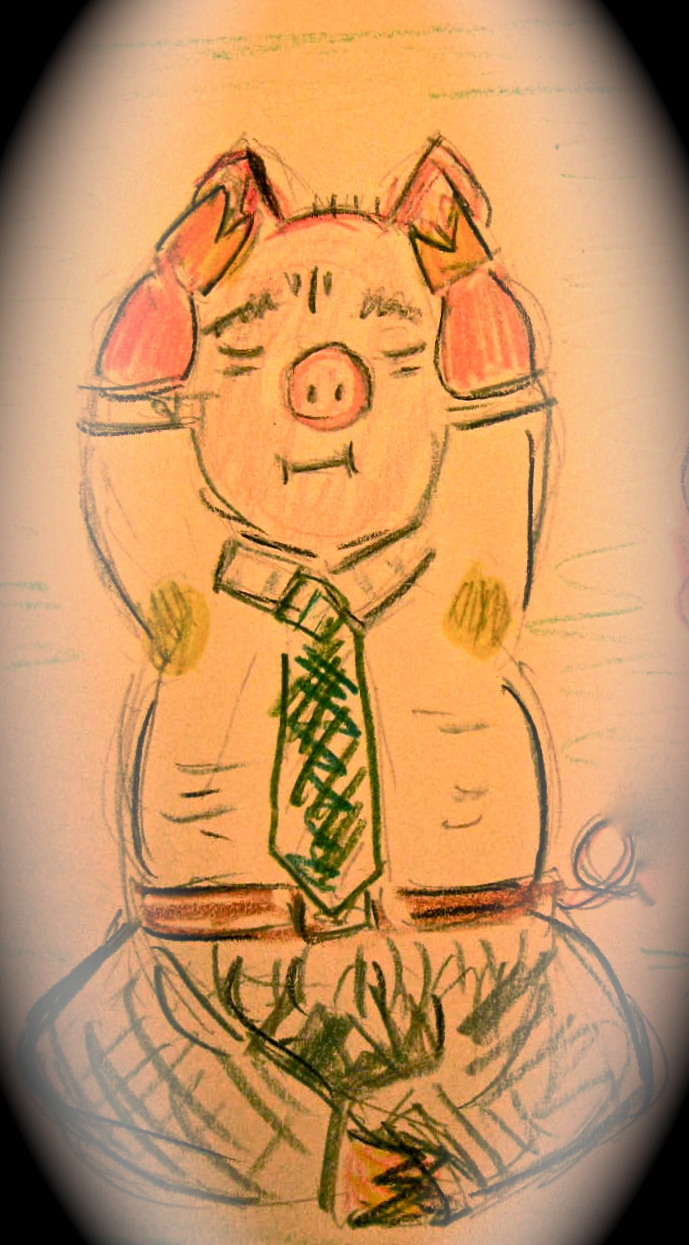
I confess to being, well, too optimistic a person to be terribly comfortable with Orwell’s dire quotations.  I do have great admiration for Orwell;  his ability to distill political phenomena into both momentous narrative and an original and precise vocabulary–newspeak, groupthink, Big Brother, thought crime–may be unparalleled.

And (though some readers may doubt it), I do have some understanding of the fear of governmental/official power and legally tolerated unfairness.  Official power, unfair laws, a lack of economic and political clout, are things that have oppressed my sex (female) for centuries, and still oppress women (as well, of course, as many others) throughout the world.   Ironically, I just finished reading a decidely pre-Orwellian novel, Wilkie Collins’ 19th century mystery, The Woman in White, in which one of the heroines (the beautiful one) is dispossessed of her identity and her estate by a fraud, supported by legal authority, that is only finally reversed by her bearing a son.  (The novel’s other heroine never actually has a chance to be so oppressed due to her physical ugliness.)

So. As any reader of novels (much less history) knows, abuse of individuals and groups by statute and authority is not particularly new, not only a product of totalitarianism, and something of which to be wary.  That said, it seems as if Orwellian ideas are frequently trotted out and then turned on their head in today’s media and political speak.  People adopt the idea of conspiracy at the drop of a hat (the sleight of a hand).  Glenn Beck traffics in this readiness with crazy illogic:  see e.g. Lewis Black’s Glenn Beck’s Nazi Tourettes–“Glenn, get a grip — they came for the Jews to kill them; they came for the banks and car companies to give them 700 billion dollars!”

My most recent experience with this kind of Orwellian mood came a couple of days ago in the person of an upstate New York car service driver who, grumbling about Big Brother, characterized EZ Pass as a government conspiracy designed to know exactly where he was at all moments.  I was a bit concerned about his vehemence against EZ Pass since we were on our way to JFK (on various toll roads) with very little time to spare.

Still, I was (sort of) sympathetic.  It’s very possible that EZ Pass evidence has been admitted in criminal prosecutions. I’ve also heard that some jurisdictions use it as a tool for dishing out speeding tickets when drivers cover distances in times that are not possibly legal.   (I have not researched these issues.)  Even so–and I may be naive–the only conspiracy I can see in EZ Pass’s original conception and in the way it’s generally administered in today’s world of strapped state governments seems to be to relieve the State of a certain number of low-paying toll jobs.  (And possibly to earn revenue in speeding tickets.)

I pointed out to my driver that people who were concerned about being tracked on EZ Pass could simply pay for their tolls in cash.  And then, watching the clock, I immediately bit my tongue.  Maybe he was one of those truly principled types who would steer us into one of the long slow lane of other principled (or disorganized) non-EZ drivers.  Maybe I was even encouraging him to do that.

But, for all the grumbling, the driver drove straight into the EZ pass lane, then, when the light went green, sailed on through.

Finding Good In the Very Alloyed

September 5, 2010

Enjoying What's There

The other day I wrote about not waiting for “unalloyed” enjoyment.    The idea, more or less, was not to be distracted by the proverbial “fly in the ointment” but to try to conjure up your own “fly-free ointment” – something that would allow you to whoosh above all the pettiness that blocks appreciation.

I am frankly not terribly good at this.  My eye (and heart too, I suppose) hook onto almost any deficiency.  Contentment is not just marred by a fly in the ointment, but by the idea of flies, even, perhaps, by the need for ointments.

But right now I’m sitting on a flight to Florida–actually I’m sitting on a plane that is, in turn, sitting on a runway, hopefully, aimed for Florida.  Something that seems like an emergency is going on in my family.  Weakness happens.

It’s an amazingly sunny day outside the lozenge window.  What’s even more amazing is that, in the midst of my worry, I am actually noticing it:   the clouds are elongated for Constable, but might just qualify for Tiepolo;  the blue certainly would.

I was given an aisle seat even though I bought this ticket an extremely short time ago. and lo and behold, the window seat (it’s a two seater) is empty, and now I’ve moved just into the shaft of light there, with plenty of room to sit cross-legged.

I find myself able too to enjoy a certain bizarre satisfaction at the success of ManicD quickness–bag packed, difficult arrangements made, JFK navigated, all with unimagined speed – it turns out that the words “my father’s sick” coupled with boarding pass can get you immediately to the front of the security line.

These are not exactly pleasurable moments; they are, however, the ones that currently encapsulate my experience of time.   And here are these wonders– a plane made, no baby crying, a book in hand, blue sky outside, clouds.

R U Really Talking of Orwell This Labor Day Weekend?

September 5, 2010

Some Animals Are More Equal than Others (And Some Don't Want to Hear About It)

Sarah Palin tweeted, after Obama’s Iraq speech, something to the effect that ‘u should get out ur old Orwell books.’  She was implying, I guess, that Obama was trying to steal Bush’s credit for the invasion of Iraq.

I, for one, am happy to give Bush credit for Iraq.  If Obama was trying to claim credit for anyone else, I think it was mainly U.S. troops and commanders.

But my real interest in Palin’s tweet–aside from the “u’s” and “ur’s” (how can someone make any claim to thoughtfulness with “u’s” and “ur’s”?)–is the mention of Orwell.

On a Labor Day weekend, the Orwellian phrase which most comes to my mind is the modified commandment from the Stalinist-type commune satirized in Animal Farm, “All animals are equal but some animals are more equal than others.”

We live in a society that is increasingly stratified.  While equality is touted, and each human life is (on a speechifying level) deemed equally priceless, the fact is that some people’s lives are valued exponentially much more highly than others.  Some people’s work, for example, is deemed to be worth millions, others less than minimum wage.  These values don’t seem to always correlate to talent, effort, difficulty==sometimes they simply arise from the luck of being in a job that generates cash.

The ability of certain people to make stupefyingly large amounts of money in our culture seems to be viewed by Palin and other Tea Party types as a sign of our freedom.  But it’s unclear to me that the rank and file American, especially those angered by what they view as handouts to the poor and underserving, fully understands the level of wealth of some in this country and the increasing disparity between classes.   It’s also unclear whether the damage such disparity inflicts on both a society and an economy has been much thought through.  (Both Robert Reich and Bob Herbert have interesting articles about this in the last day’s NY Times.)

Another new mantra appears to be “Taxes Bad–Any Business Good”.    People seem to forget that taxes fund street lights, firemen, schools, police, our national defense–all those troops everyone wants to support–parks, clean food, clean water, help for the handicapped, Social security, Medicare;  taxes also give people access to such services.     And, of course, a progressive tax system is one means of redressing some of the issues of wage and access imbalance, i.e.  the differences between the equal and more equal.   But woe (or should I spell it, WO) to any politician who dares mention such an idea – U R risking instant Orwellization.  (Or worse.)