Archive for August 2010

Internal Shake-Up, Changing Blog (I’m not sure how), Looking For Keepers

August 5, 2010

Keeper?

As followers of this blog know, my summer has been difficult due to the loss of a close friend.  It’s shaken me.  Aside from the grief,  and, of course, the gap – the missing counselor–there’s the internal spotlight.  Could it happen to me?  (Yes.)    How would I feel?

This question of how I would feel is not aimed at the obvious, i.e. sick, terrified, probably nauseated, very very sad.  The question is how I would feel about how I lived my life?  What, in other words, would I regret?

The big regrets – for me at least—would be unkindness and unhappiness:  those times when I was needlessly unkind (and, frankly, it’s hard to come up with any instance in which unkindness was needful); those times when I was needlessly unhappy.

Again, “needless” may the wrong word—those times in which I was unhappier than circumstances warranted—unhappy because of kvetching, perfectionism, issues of control, jealousy, lack of appreciation.  (As in the case of unkindness, circumstances probably rarely warranted the unhappiness that I was able to come up with.)

Putting all that aside—admittedly a big that—another thing I’d regret very much is not allowing myself time to do my work, that is, my true work –the work that feels like my work.

I don’t mean my day job, (which, Boss, is a great job and one that I frequently genuinely enjoy).

I wouldn’t regret not doing profound work, or revolutionary work.  I’ve long ago accepted that I’m not a particularly profound person, and I try to keep a lid on the grandiosity.

I mean the silly children’s novels, silly teen and more adult novels, the slightly odd poems and prose poems, whatever little drawings come my way.  Being able to point to them as “done deals”, “keepers”—I would very much regret not having given myself the time to do that, or more of it.

So where does this blog come in?

It’s truly wonderful to have daily readers (thanks so much), and to get something out every day.  But I’m a person, like every single one of you, with limited time in life.

I am not, just yet, discontinuing the blog (though I’m not sure I will continue it on a daily basis).  But I do need to find a way to make it serve my general purposes a bit more.

Which means what?  Maybe posts that are more purely creative, or connected, or connectible, to bigger projects?  More draft poems?  Prose poems?  Writing exercises?  Novel excerpts?

What’s hard, of course, is that drafts can be a bit personal, raw, embarrassing,  and possibly uninteresting, certainly to random Internet browsers, who are much likely to be attracted by the names Robert Pattinson or Sarah Palin.  My task, I suppose, is to try to look on that part as liberating and not paralyzing.

(I hope you’ll stay with me while I figure this out.)

“Know-Nothings”, “Know-Not-Enoughs”, Breastfeeding, Obesity, Food

August 4, 2010

The “Know-Nothings” has always been my favorite name for an American political movement.  It just seems so forthright. (In fact, the 1850s movement got its name not because of the self-awareness of its members but because, if questioned about their affiliation, they were supposed to answer, “I know nothing.”)

Realistically, no one today is likely to adopt a name as truthful as that, even sarcastically.    I’d settle for a movement called the “Know-Not-Enoughs.”

This comes up for me today not in the context of politics, but health.   It’s raised by two unrelated articles in the Times – one about new discoveries of further merits of breastfeeding (“Breast Milk Sugars Give Infants A Protective Coat” by Nicholas Wade); and one about the unsolved problem of the rising rates of obesity in the U.S. (“Obesity Rates Keep Rising, Troubling Health Officials” by Denise Grady.)

The breastfeeding article talks about how undigested complex sugars in breastmilk have now been found to play an important role in providing beneficial intestinal bacteria for infants.  The findings have made the researchers more sharply aware of the evolutionary miracle that is breastmilk:  “It’s all there for a purpose, though we’re still figuring out what that purpose is,” Dr. [David] Mills said. “So for God’s sake, please breast-feed.”

I have always been a major proponent of breastfeeding but the doctor’s strong urging still surprised me.  For many years, health professionals seem to have routinely mentioned the benefits of breastfeeding, but then everyone seemed to quickly change the subject to personal preferences.  No one wanted to make a new mother feel guilty or pressured; no one wanted to step on cultural toes, even if they were not traditional cultural toes. especially if the preferences seemed to correlate to any ethnic group or educational level.  There has been a feeling, as in much of dialogue about just about everything, that everyone was entitled to their opinion or preference, and that all of these opinions and preferences were wonderfully equal on some vast universal scale.

I don’t let scientists off the hook.  When I grew up, scientists creating and even pushing infant formulas  were the opposite of “Know-Not-Enoughs.”

Now, among other things, we have a society that’s obese.   Putting aside any specific causal connection between the reduction in breastfeeding and obesity, there are certainly parallels between the substitution of formula for breastmilk, and the replacement of fresh, traditional foods, with fake “know-everything” food.  For the last few decades, people have eaten as if food could be manufactured, and as if such manufactured foods could satisfy all nutritional needs (which were also considered to be more or less known.)

No wonder people eat and eat;  no wonder flesh clings to what it ingests.  Bodies seem to know something is missing, but not where or how to get it.

The BBC, Mitch Miller, Insularity of U.S. News (Mommy Kissing Santa Claus)

August 3, 2010

Mitch Miller? (Looking for Mommy)

I’m a New Yorker.  I tend to read the New York Times and feel proud that it’s not the Post. But every once in a while, I feel a need to go further afield, usually to the BBC, partly so I can just listen to news rather than read it.  (If you don’t already know, the BBC has a wonderful site, in multiple languages with non-stop online “radio” choices.)

An hour of listening quickly changes one’s world view.  For one thing, it converts it into a world view.

This morning, for example, the BBC news stream gave time to the Papauan dissident with whom it had snagged an exclusive interview.  It reported the flooding in Pakistan; it quoted the South African judge sentencing a mendacious police chief; it interviewed the little Yemeni girls whose family took them from school when WHO stopped trading wheat for attendance and the girls’ mother who had to give them blood a couple of times against malnutrition.  It discussed a new novel about Afghanistan, some controversy involving Mossad, the current violence in Karachi.

Some of these stories were also reported in the New York Times, but when I looked at the online Times this morning, my eye kept hooking onto Mitch Miller’s goatee.  (Today’s article on Mitch was actually about an unsuccessful attempt to interview him.  Hmm….)

Sorry.  I actually love human interest stories;  I also loved Mitch Miller.  (Not just the Christmas hits; not only the happy accordian rifs–I will remember how my six-year-old heart twanged to The Prisoner’s Song till my final rest in the arms of my poor darling.)

What strikes one in listening to the BBC is how big the world is, how busy.  What is striking too is how local the many conflicts are–even as they are related to more universal issues of economics, religion, race == how they are played out in so many very local, very complicated ways.  In discussing the killings in Karachi, for example, the BBC talked of the number of Pashtuns in the city.  (To be fair, the Times mentioned Pastuns in their Karachi article too, but in a somehow more muted way.)    And me, I think “Pashtun”, that they are in Central Asia, Afghanistan.  Green eyes come vaguely to mind.

But what I am mainly impressed by is how little I know.  Like, sadly, most Americans.

What also impresses me is how much our regular news  (and I really don’t mean the Times here) often seems to reinforce our insularity and our ignorance of the world rather than dispelling them.   So that we can convince ourselves that we are well-informed simply because our homes have some kind of news feed 24/7–when often all that feed is telling us is about the time Mommy was seen kissing Santa Claus, or worse, suspected of kissing Santa Claus.

Headaches – Pictorial Guide (Partial)

August 2, 2010

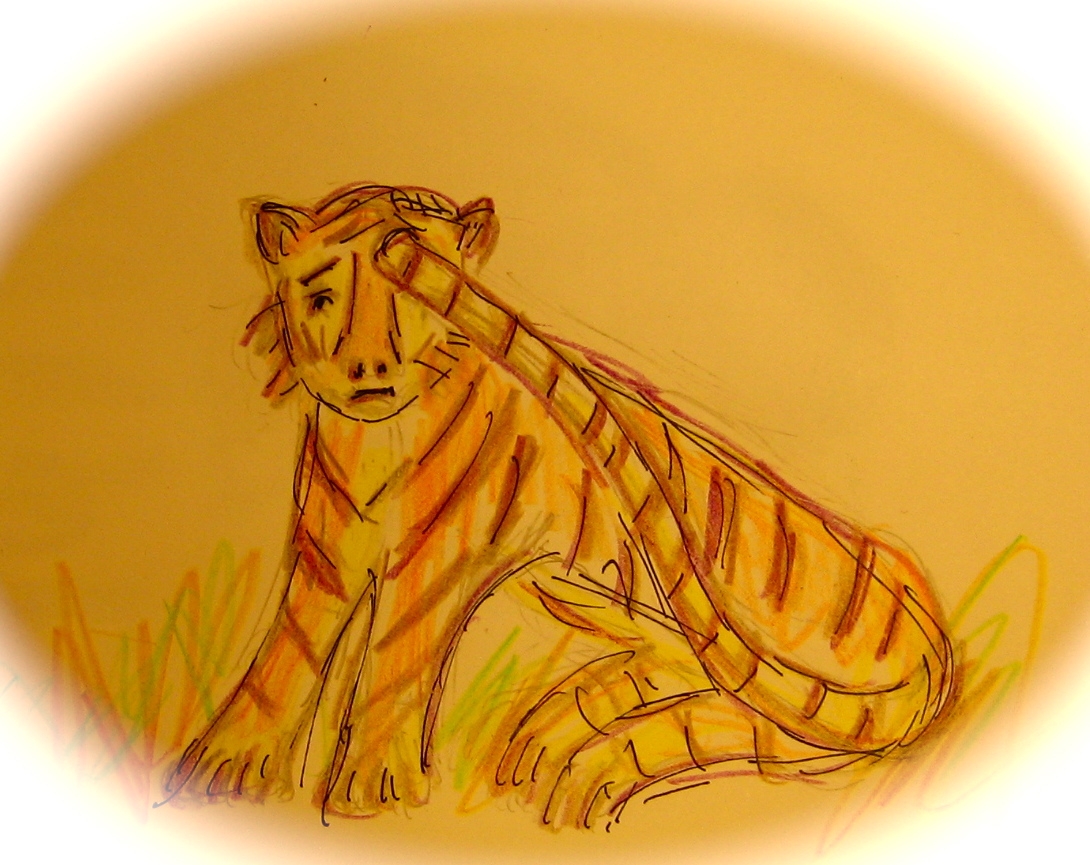
Huge Headache

Ferocious Headache

Pounding Headache

The Unkind Cut (Loss of a Friend in Western Culture)

August 1, 2010

Opening Up To Pain

Still coping (expect to be coping for some time) with the death of a friend.

Sometimes when we experience loss, we get mad at the culture.  It didn’t prepare us for this.  It pushes death so far to the sidelines that it somehow masks its inevitability.

If you are like me, you may even feel that the culture’s dissonance with death has an economic underpinning–that it (the culture) wants to catch people up in the samsara of production and consumption with the implied promise that they will have some period of retirement, some deferred time, in which they can give importance to the less-material aspects of life.

If you are like me and already have a propensity to Eastern religions, you may think about the Buddhist practice of cultivating an awareness of death.  Traditionally, Buddhist monks would visit cremation grounds, expressly inhaling death and decay as part of their training.

If you are like me, you might compare that awareness with Western culture’s focus on youth and unbridled exuberance.   You may feel especially misled by the Western “can do” philosophy, the incipient moral of so many stories, fables, movies, news stories, that if one simply tries hard enough, the attainment of all goals, the extension of life itself, is possible.

If you are like me, you may blame this mythology for causing you pain, as if a big part of what you are feeling is the inability to make things right (especially difficult to accept when you have been conditioned to give tasks your all, and then to receive some positive result).

In some ways, this anger is comforting.  It shields you, at least for a while, from focusing on how painful the loss itself is; from understanding that the ongoing pain really doesn’t have all that much to do with the culture (however, misleading the culture might be).

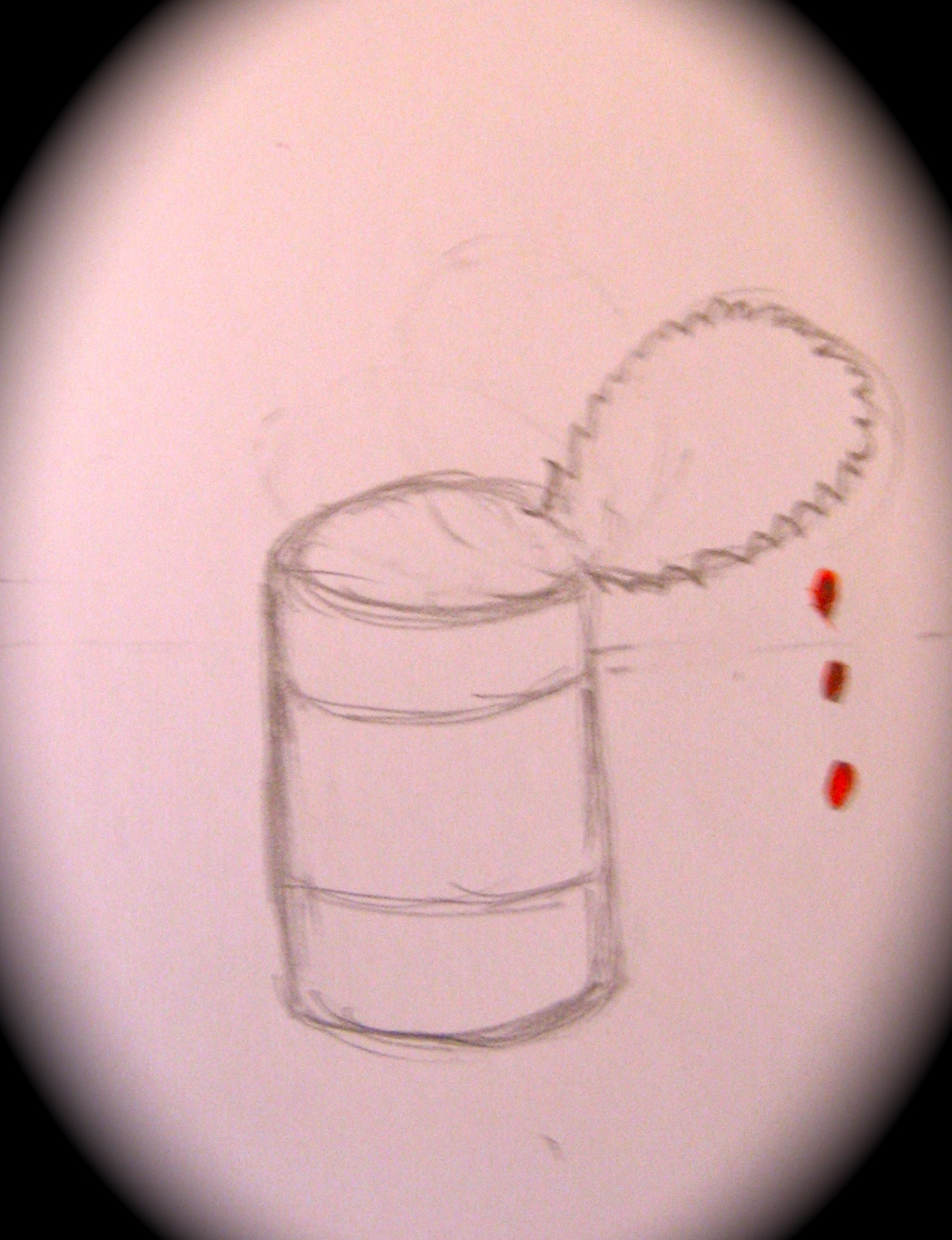
All I can come up with as an analogy is cutting yourself while opening a can.  Yes, you can blame the can opener, the can manufacturer, yourself too;  you can be mad about how badly the whole thing is made, about how clumsy or ignorant you are; about how poorly schooled you’ve been in can-opening.  But putting aside all that, the cut just hurts.