Posted tagged ‘ManicDDaily painting’

Draft Sonnet, Cold House – Choosing the Wrong Train

December 11, 2010

I’m typing up this post in a freezing (closed-for-winter) house which happens to have an Internet connection.

A sonnet!  A draft sonnet!   Because my teeth are chattering, fingers growing stiff, I am posting this before making final decisions about the poem, especially the last lines.  I’ve posted a few alternatives.  Any preferences let me know.  Any suggestions–absolutely let me know!

In a Hurry, Choosing the Wrong Train

I worry that, in my forgetting much,
the best route from here to there eludes
me.  I overthink, then blurrily rush
to a train I barely know that broods
upon the track while my regular line
goes whoosh (in my mind).  Beneath the slow chug
of this one’s start and stop, tremorous grind,
ears burn with trains not taken that speed snug
along their rails.  All for some two or three,
maybe four, saved blocks–my brain’s too tired
for the calculation.  The part of me
that invents tests it hopes to ace, that’s wired
for glee in a glide, tick-tocks by the door,
longs for time itself to open, offer more.

Some alternate last lines:

longing for time to open, offer more.

longing for time to spare her, feeling sore.

longing for time to spare it, feeling sore.

longing for time to open, time to spare.

Is “spare” close enough rhyme to door?


Virginia Thomas- Not Over The Hill?

October 19, 2010

I am torn between feelings of anger and pity for Virginia Thomas (wife of Clarence Thomas).

Mrs. Thomas apparently called Anita Hill’s office at 7:31 a.m. on the Saturday of Columbus Day Weekend to leave the following message:  “Good morning Anita Hill, it’s Ginni Thomas.  I just wanted to reach across the airwaves and the years and ask you to consider something. I would love you to consider an apology sometimes and some full explanation of why you did what you did with my husband.  So give it some thought. And certainly pray about this and hope that one day you will help us understand why you did what you did. OK, have a good day.”

Ms. Thomas later portrayed this message as “extending an olive branch,” also saying that “the offer still stands.”

Let’s start with the anger/irritation piece.  (That’s usually more fun.)   I would tend to characterize a request that someone apologize and pray about all the bad things they supposedly did as more of a hickory switch than “an olive branch.”  Do olives grow on pricker bushes?  (Slight pun intended.)

Which begs the bigger question: why does Mrs. Thomas think Ms. Hill should apologize?   Ms. Hill was the one harassed.  Mr. Thomas got a celebrated job for life.

And why does Ms. Thomas want an explanation of what Ms. Hill did “with” her husband?

Ah–now pity/compassion springs into gear.    One can only think that the woman must live in continuing doubt, anger, delusion.

As further evidence of these extremely uncomfortable states–the recorded message.   Surely, Mrs. Thomas must have understood that it would likely become public, and too, that it would highlight the very incidents that seem to haunt her.

One would think that she might also have realized that the call would draw further attention to her political activities, as head of Liberty Central, a Tea Party-esque group, in receipt of hundreds of thousands in unidentified donations.  (Just in case you were wondering, the group, according to its chief operating officer and general counsel, has “internal reviews and protections to ensure that no donor causes a conflict of interest for either Ginni or her husband.”)

Oh good.  (One can only pray, and hope, that “conflict of interest” is not interpreted through the same lens as “olive branch.”)

PS – In fairness, I worry that the message as reported may not be accurate.  Maybe Mrs. Thomas actually said that she certainly prayed and hoped that Ms. Hill would meet her request and not that Ms. Hill should pray and hope.   This would change the tenor of the message; if I’m passing on misinformation, I genuinely do apologize.

Mid-October? What’s Happened? What’s Coming? National Novel Writing Month!

October 14, 2010


Blank Page


It is mid-October already.  Mid-October!

This means a variety of pleasant and not-so-pleasant things:

1.  That, since I can’t remember what in the world I was doing at the beginning of October, I must be getting… (I don’t want to use the o-word or the s-word or the A-word)…. forgetful.

2.  Leaves must have already changed in Upstate New York, or even fallen.  ( I seem to have some vague memory of red and yellow.  Is that where I was a couple of those lost days?)

3.  Your last chance for last year’s tax return is about to expire.  (Oops!)

4.  Didn’t the World Series use to be over by now?

5.  I’m not going to say anything about upcoming mid-term elections.  (I’d like this to be post to be cheerful.)

6.  Nanowrimo–National Novel Writing Month (the month of November) is just around the corner!

Nanowrimo was the conception of Chris Baty, a writer in the San Francisco Bay Area, who realized in a brainstorm that the one thing non-professional writers lack that professional writers have is a deadline.  He also postulated that the imposition of a deadline (a firm deadline, even if arbitrary) could be an important step to blocking writer’s block, i.e. getting the old fingers/pen/keyboard working.  Fast.

Nanowrimo gives would-be writers a very public start date and end date–November 1 to November 30–to write a novel of approximately 175 pages (50,000 words).

The goal (remember you only have a month!) is quantity.

I urge all of you to go to the Nanowrimo website–www.nanowrimo.org–to learn more about this endeavor/torture.  All I can say is that if you can commit to it, it’s a lot of fun/torture.  There is something wonderful/torturous about writing madly with the virtual company of thousands of other crazed/tortured people, all of you racking your brains and up your word count.  (Yes, I too can sense a theme developing.)

I haven’t quite decided how to handle the blog this November.  There’s the temptation to post current Nanowrimo output, but I will resist that.  If you are writing a novel in a month, you need to be free to be ridiculous.    (There’s a limit to how much torture can be borne!)

More soon.

Rescuing Miners/Minors

October 13, 2010

Thank you Chile, and you Chilean (and Bolivian) miners for an inspiring story of stamina, hope, organization.  Thanks too for heartwarming imagery–you and your loved ones weren’t only sincere and brave, but wonderfully photogenic!

Now, trying to piggy-back on that wonderful Chilean glow (sorry!):

1. In the U.S., we are going through an election where (despite the collapse of much of the private sector about two years ago), many are touting the absolute superiority of private (for-profit) efforts to accomplish virtually any task.  It’s interesting to note, in this context, that it was the Chilean government that arranged the massive rescue effort of the miners, though the San Jose mine is privately owned.  Also worth mentioning is the fact that the mine-owning company, Empresa Minera San Esteban, had a poor safety record even before the current mine collapse, receiving 42 fines for safety violations between 2004 and 2010.   (Sound familiar?)

I’m not mentioning this because I’m against private enterprise!   I’m just not sure that, in a dire situation, I’d want my health and safety to rely primarily on the efforts of a large company which is closing watching its P and L.

2. As part of the speechifying after the rescue, Chilean President Piñera said that the most important celebration “is the one in our hearts, in our conscience.”  This was a situation in which people could feel both that something right had been done and that something had been done right.

Human beings seem to like to save other human beings; people crave heroism,  especially when it happens relatively quickly.

In contrast, the slow, trudging, mundane types of rescue seem often to sap the conscience, even as more commonplace victims fail to get the benefit of national adrenaline.  I’m thinking now of minors, as opposed to miners–kids whose families are stuck in a cycle of poverty; whose teachers labor in schools with few supplies and less support.

A massive and coordinated effort, one involving organization and stamina and courage, is sadly needed.  Unfortunately, an increasingly large number of Americans seem to have convinced themselves that you can’t rescue other people, even young ones, at least, not with their tax dollars.

There are legitimate questions as to how adequate funds for education are best spent, but the bigger question at the moment is one of adquacy,  a question of conscience.

I don’t mean to diminish the truly wonderful, and well-handled, rescue effort in Chile.  But, I do sometimes wonder whether the fact of it having been made is as extraordinary as has been presented.  When it was discovered in August that the miners were alive, but trapped, what was Chile to do?   Could the country really just stand by under those circumstances?  Try to forget that the minors were still there (until they died)?

Again, there is a lesson.  Those minors trapped in poverty and poor education in the U.S. are not going to disappear just because we don’t feel like dealing with them.  Even if we try to keep them out of our hearts, we will not be able to just put them out of mind.

Body of Apricots

July 26, 2010

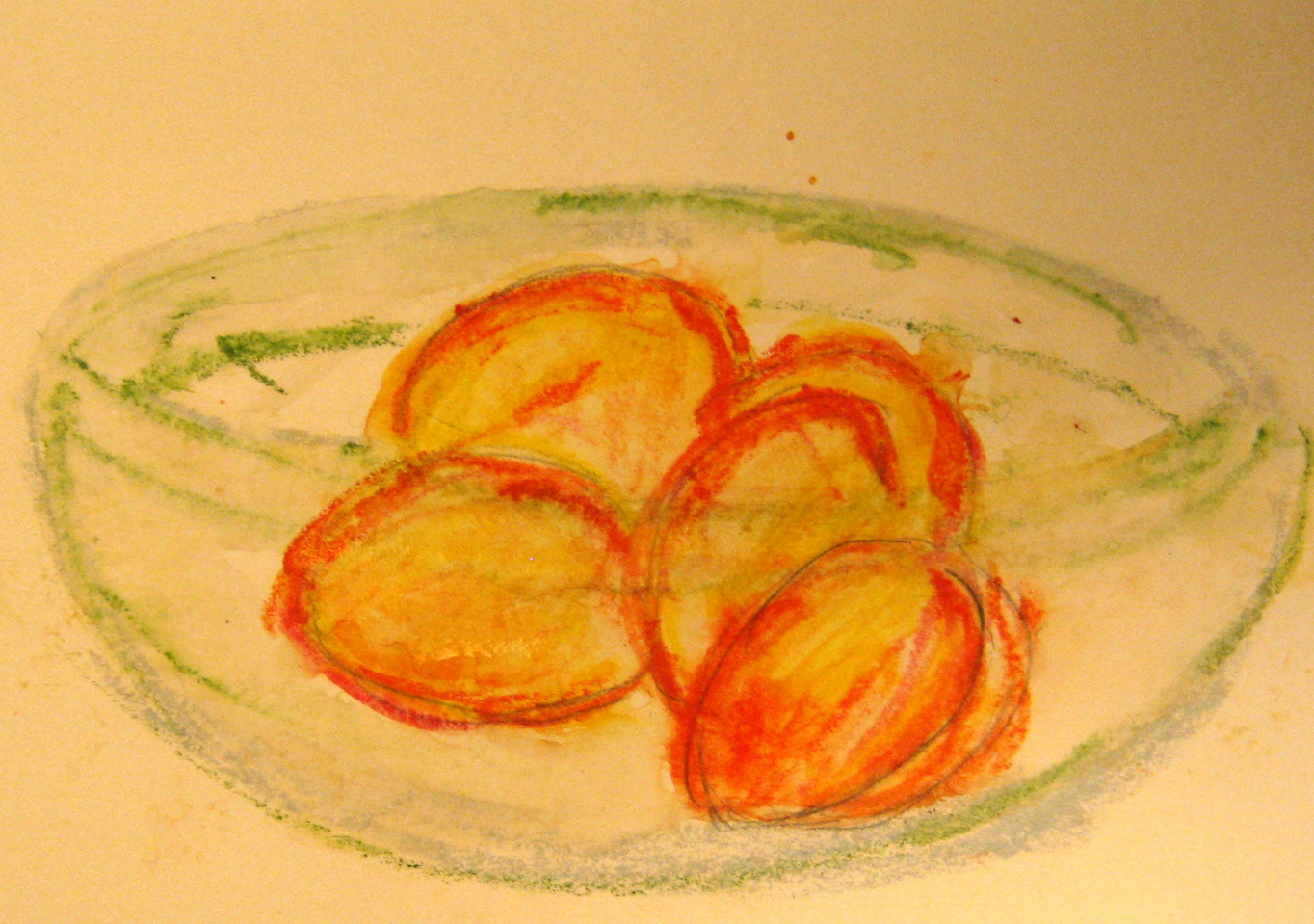
Apricots

Hard to adjust to a new day after the death of a friend.  The burden of sadness seems to sink into one’s joints (not to mention eyes, chest, forehead).

All day yesterday, I was poignantly conscious of the joy of a body.  What a delight it is when it works.  To simply move — to move simply– is an actual physical pleasure when all the parts are in order, more or less.  To stretch one’s legs, swing one’s arms, feel gravity beneath the feet.  To be touched by air, much less another person.

To eat!

Apricots!

Even less than ripe apricots!

So tart, almost like plums.  (Less than ripe plums.)  With that same inner coolness, but a soft blushed cheek.  Peel.  Skin.  Body.

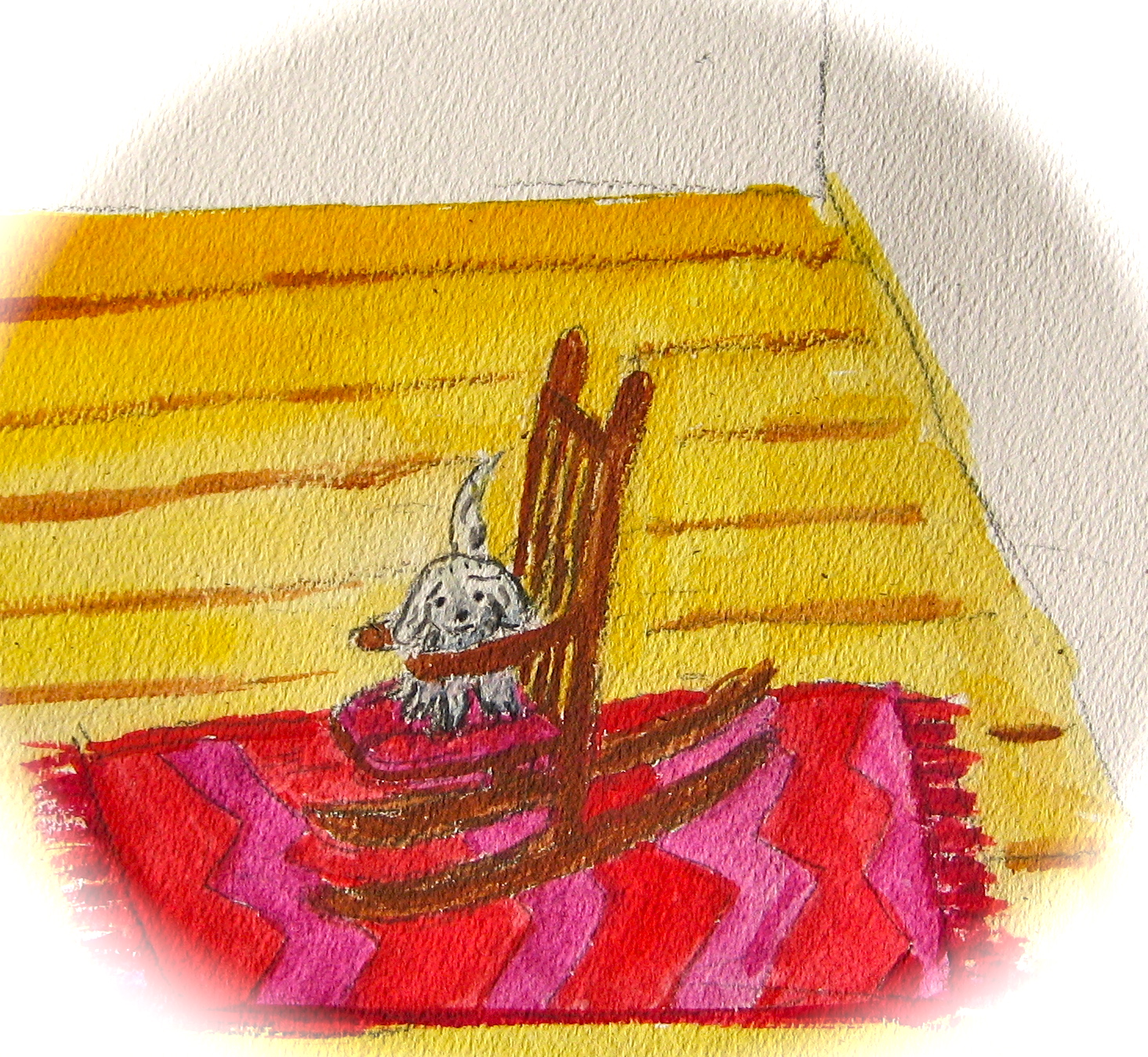
On a More Cheerful Note – Dog in Rocking Chair

July 18, 2010

Comfy?

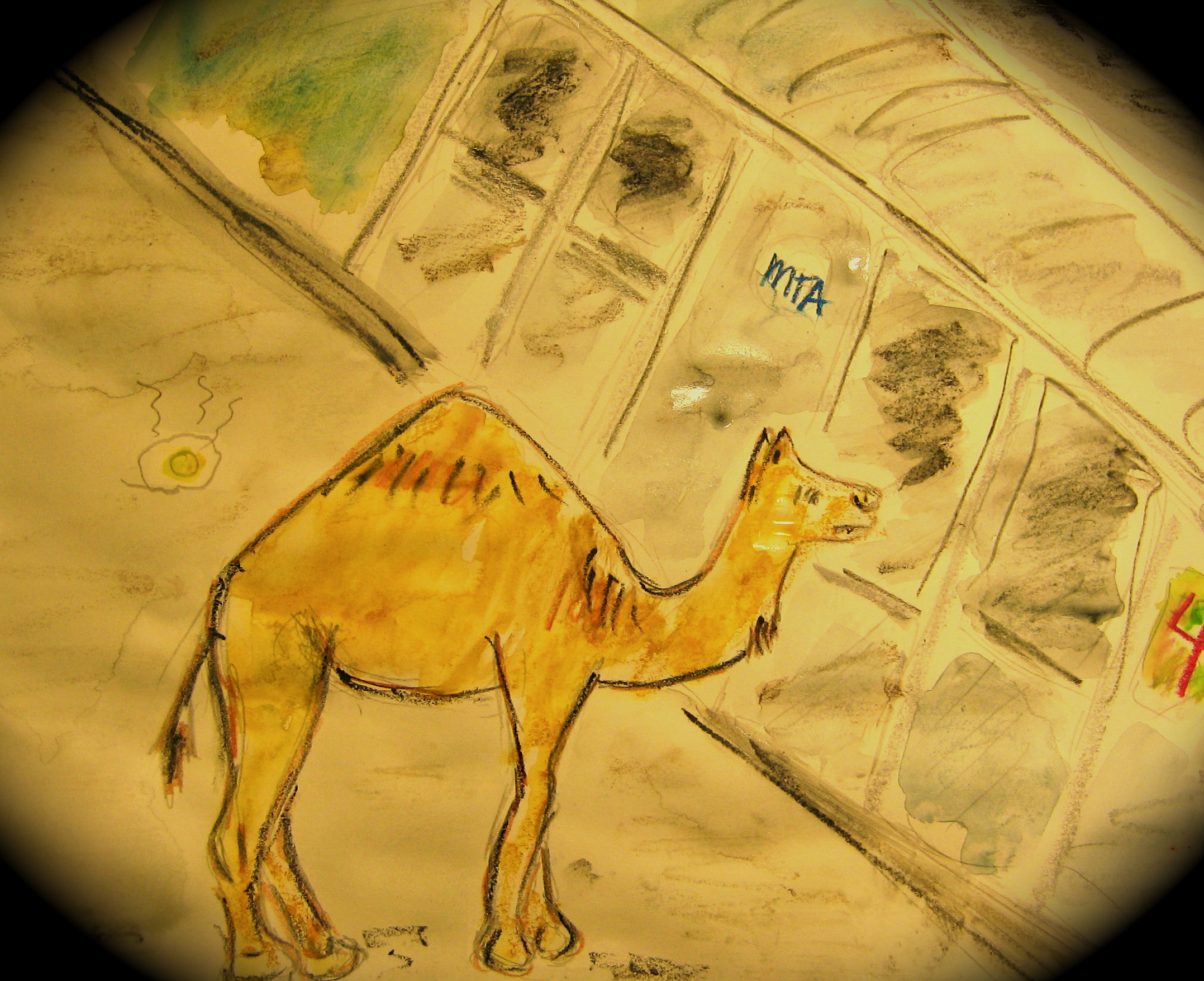
The Only One Engineered To Handle New York City Subway Platform

July 16, 2010

Prepared for Mid-July Subway Platform

Stay cool!  And hydrated!  (If you are thirsty, breathe deeply–there’s more than enough moisture in the air.)

Have a nice weekend.

Quatorze Juillet – French Burnt Peanuts, Fraternite, Kemp’s Ridley Sea Turtles

July 14, 2010

Oh brother how are thou?

A lot of disparate elements to pull together on today, July 14th, Bastille Day, the French national day.

My only Bastille Day actually spent in France was in Nice at age 8.  Its most memorable element was not the fireworks over the Mediterranean (although I can still picture one beautiful arc of flash) but the French burnt peanuts bought from a street vendor on the nighttime beach.  It was the first time I’d ever tasted French burnt peanuts and they were like fireworks in my mouth–hot, sweet, crinkly, crunchy, touched so delicately with salt that it might have just been the taste of the sea air on my tongue.   The nuts were, despite several prior days in France, my first real evidence of the deliciousness of French food–my parents, traveling on a strict budget, made us eat a lot of ham sandwiches put together by my mother in the car.

My next most important memory of Bastille Day is not actually my personal memory, but one recounted to me by members of my husband’s family—a patriotic group who’d lived through and/or fought in World War II, serving with the U.S. forces.  On one July 14th, during the height of DeGaulle’s France First approach (and U.S. furor at his perceived ingratitude), my in-laws and some friends celebrated  by lying down on the floor to sing the Marseillaise.  This (the floor part) was deemed to show the highest disrespect, although, for my part, I was always impressed that they cared enough about France to actually know all the words.  (Also reflecting a longstanding U.S. love-hate relationship with the French, a/k/a Freedom Fries!)

I personally never learned the full Marseillaise, but was taught the slogan words of the French Revolution – Liberté, Egalité and Fraternité.   Liberté and egalité were expected (except for the “g”) but “fraternité”  – brotherhood  – always took me aback (and not only because I was a girl.)   The American Revolution talked of freedom and justice for all (except for slaves), but did not (at least in my limited understanding) give the same emphasis to this kind of connection among people.  (My off-the-cuff, uninformed, explanation is that the American colonies were already already somewhat united against a common “foreign” enemy, while the French Revolution, more akin to a civil war, needed to emphasize alliance.)

But I don’t want to write today about the French Revolution; what I want to write about are sea turtles.  There is a very sad, if interesting, video piece in the New York Times today about forensic efforts to uncover the exact cause of the huge rise in turtle deaths in the Gulf since the BP oil spill.   (Brent McDonald, Kassie Bracken, and Shaila Diwan.) The oil is an obvious culprit, but deaths also seem to result from sea turtles drowning in shrimping nets, particularly in Louisiana which apparently does not enforce Federal law regarding escape hatches in the nets for turtles.   One thought is that, in addition to poisoning the turtles, the oil may drive them into areas that are inhospitable and unfamiliar;  the spill may have also changed the conduct of fishermen.

Many of the turtles dying are the endangered Kemp’s Ridley turtles; their life span would otherwise go into the decades.   They are beautiful, their faces seemingly embued with a thoughtful intelligence.

Which brings me back to Bastille Day—not because of Louisiana’s French roots – but because of the French Revolutionary tenet of fraternity.  It seems to me increasingly unlikely that much will be done to save turtles or any non-human species, the environment, or even the planet itself, unless and until people feel a meaningful connection with creatures other than themselves.  I don’t mean simply the sentimental connection of how endearing the creatures are (although that’s a start).  I mean a connection that be real enough to inspire actual care and sacrifice.

I don’t mean to diminish people’s concerns about their jobs, what they eat and the temperature at which they keep their dwellings.   But at the moment, there is another kind of love/hate relationship going on here (more serious than the one with the French.)  We love the idea of saving wildlife, the environment;  we hate to actually do anything about it, to change our lives.  Some kind of better balance needs to be reached between short-term, individual concerns, and longer-term, world-wide needs, an understanding that humans may not do very well in a world in which sea turtles are dying in droves, that these creatures deserve lives free from molestation and torture, that the death of a sea turtle is a death in the family.

Mixed Feelings About the City

June 25, 2010

Full Moon in City

It was a great relief, at first, to step into the warm summer evening.  Not only was it Friday evening—the air conditioning in my New York City office is cold enough to leave one, after a long day or week, chilled through.

In the embrace of the sultry air, I decided, on a lark, to walk all the way from mid-town on the East Side down to the West Village where I was meeting someone for dinner.  How wonderful, I thought, to live in a  city I could walk, a city with sidewalks, avoidable tunnels and throughways, a city that allowed for random exercise.

A few blocks later and I began to wonder  if the good effect of the exercise  was not counterbalanced by the negative effect of the pollution.  Plus my eyes were grainy with soot.

But I had told myself I was going to walk, and, as followers of this daily blog may sense, once I make a commitment, I am not readily shaken from it.

Soon, I was thinking of Horatio Hornblower, and how, in one of the novels, his feet become so blistered he can hardly hobble.

Still I kept a steady pace, even in places where the crowd was thick enough to warrant the regular dodge, and a hand clamped hard on my purse.   I kept it up through hoards of shoppers, cafe-gazers, people pushing into and out of subway entrances.  I kept it up even when my slightly rapid, attempting-a-light-heart pace, felt very out of place.  Although, truthfully, there is nothing like a walk in the streets of New York City to make almost anything odd about yourself  seem as run of the mill as an annual 5K at a Gold Medal Flour factory

“Characters” abound.  Some of them fill you with wonder; some pity; some dread.  Most you just don’t want to stare at too long.

Around mid-town, for example, there was the seemingly elegant woman wearing a fur-lined mad bomber hat.  Her walk stately walk was burdened by bags from such high-end stores that, at first, I wondered whether she was someone traveling from a Northern place, or, perhaps, in the midst of moving, someone, who, despite the 90 degree day, simply felt like wearing her mad bomber hat instead of packing it.  Then I saw her face.

Then there was the guy sitting on sidewalk, propped up against a mailbox, on an extremely crowded 34th Street.  It took me a moment to understand that a large black dog was lying (on its back) between his legs, its wandering muzzle seeking out the large slice of pizza he balanced on his chest.

After supper in the village, I felt so stuffed with Ethiopian food – there’s something about those spongey pancakes – I felt the need to walk some more.  It was cooler now that it was dark, less gritty though the wind had picked up.   A huge, beautiful, orangish, full moon hovered just above the shorter buildings, blocked by most others.  I pointed it out to one trio who waited with me at a stop light (they thanked me), did not point it out to the guy in the small park who, for no reason except perhaps to show off for his friends, called me a very nasty epithet (I figured that he wouldn’t thank me),  did not even think about it when I dashed across one street in Tribeca to avoid the darting dark shadow near my footsteps (yes, I know what it was and they terrify me!), and, finally, as the street corners became a little more open at the bottom of the Island, found it again.

Fell into a doze almost immediately when I finally got home, shoes off.  The cooling summer night that now wafted through my open windows felt somehow softer from the other side of a screen, from inside four walls, and I tried not to think too much about that man, that woman, that curse, that dog.
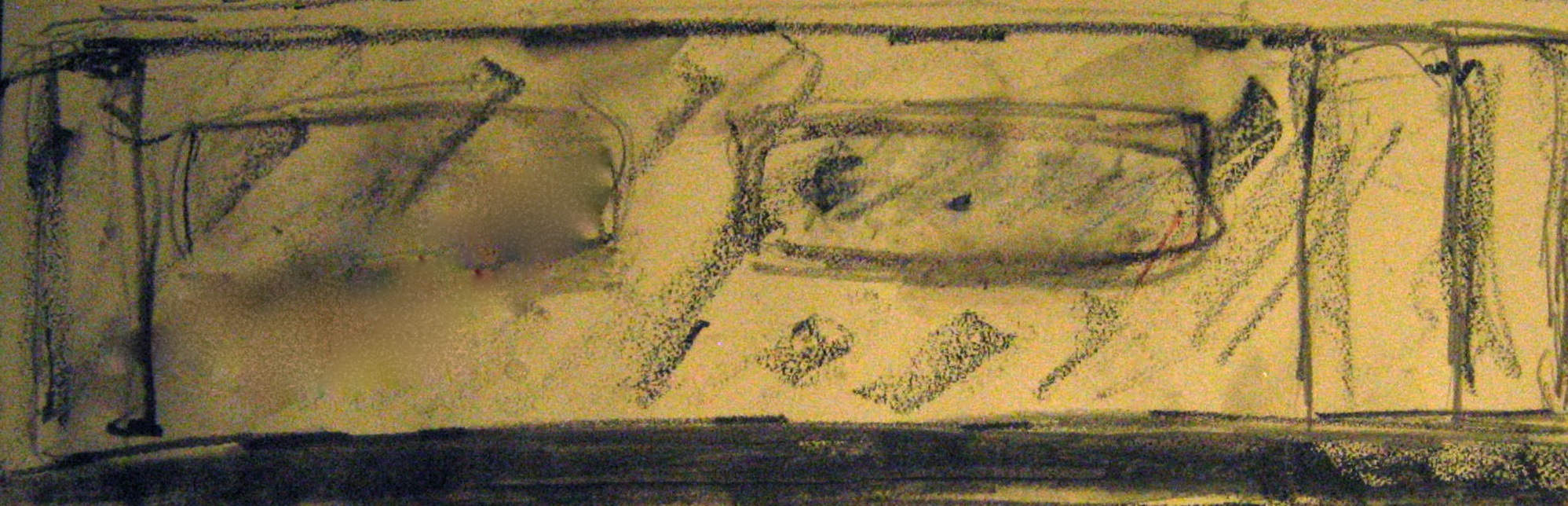

Gritted (Pleasing) Teeth–Important Tool In the Kit for Women Seeking Raises and TIME.

May 14, 2010

Pretty Please

Although I really do try to keep my work life separate from my blog life, I wanted to weigh in on an interesting article by Tara Siegel Bernard in today’s New York Times, “A Toolkit for Women Seeking a Raise.”

I’ve never asked for a pay raise.  This reflects well on my employer, who I have always believed to be both generous and tolerant.  But it is also apparently typical of women, even more typical (I fear) of women of my age and  and generation (middle/end of baby boom, beginning of feminism).

On the other hand, I am someone who, years before it was fashionable, negotiated flexible work arrangements due to the different pulls of child care, creative life and work life.

I’m not sure if these factors truly equip me to comment on the article, but here I go:

Two things jump out at me: first, a new study conducted at Harvard’s Kennedy School of Government, which found that women “need to take a different approach” than men to requesting pay raises, an approach which is “more nuanced” and “avoids undermining their relationship with their boss.”

As Hannah Riley Bowles, an associate professor at Kennedy says, “we have found that if a man and a woman both attempt to negotiate for higher pay, people find a women who does this, compared to one who does not, significantly less attractive…. Whereas with the guy, it doesn’t seem to matter.”

Sorry, but, DUH!

Anyone who has followed Hillary Clinton’s political career knows how difficult it is for women to assert themselves in our culture and still be considered very likeable, (as opposed to “likeable enough”.)

The range of what is considered attractive, both on a physical and a behavioral level, is simply narrower for women than men.   This range does not allow women much leeway for self-assertion.

What Professor Bowles seems to say, in fact, is that in order to negotiate a pay raise and keep a boss’s good opinion, a woman needs to grit her teeth (but not visibly), and please.

To give Professor Bowles credit, her advice is based in pragmatism.  Still, there’s something awful about it.

Another point of the article that struck me discussed women’s negotiations on child care issues.  Bernard  here cites Paula Hogan, a Milwaukee based financial planner, who tells women to take responsibility for a need to be with children.  As Ms. Hogan points out, most companies are not going to say, “Gosh, I notice you have three kids now. Would you like Tuesdays off?”  Women need to think through what they want and then ask for it.

Of course, Ms. Hogan is right.  One additional piece of advice I would offer is that once you figure out a solution, and (if you are lucky), get your employer’s agreement, then you need to grit your teeth again, and stick to your agreement.

I cannot overemphasize the “gritting your teeth” part of this equation.   The fact is that employers may be fair-minded enough to agree to a certain amount of flexibility—but that doesn’t mean that they will be thrilled by your late arrival (because you took your kids to school), or assist you in meeting an early departure (so you can pick up your kids at school).   Nor will your employer feel particular sympathy for the fact that, even with the flex-time, you are still gasping for breath.

As a result, in order to keep this kind of split arrangement going you may have to give up on some of the pleasing, and just take the agreed flexibility.

One further piece of advice:  once you do leave the office, be very very sure that when you are with your child to enjoy that walk (or drive)  home from school.