Posted tagged ‘cancer’

Cancer – Fight For the Miraculous – Hard with Cannons

July 24, 2010

Trying to regroup a bit today, not to think too much about sad things, after the death of a dear friend.  Cancer does keep popping to the brain, though in a curiously disengaged way.  Not so much why people get it – that one’s a bit too scary.  As an inhabitant of New York City who’s ingested all kinds of particulate matter, and still makes decisions that are not proactively anti-carcinogenic, I prefer not to think of it.

What comes to mind more easily is how people fight cancer, and why?

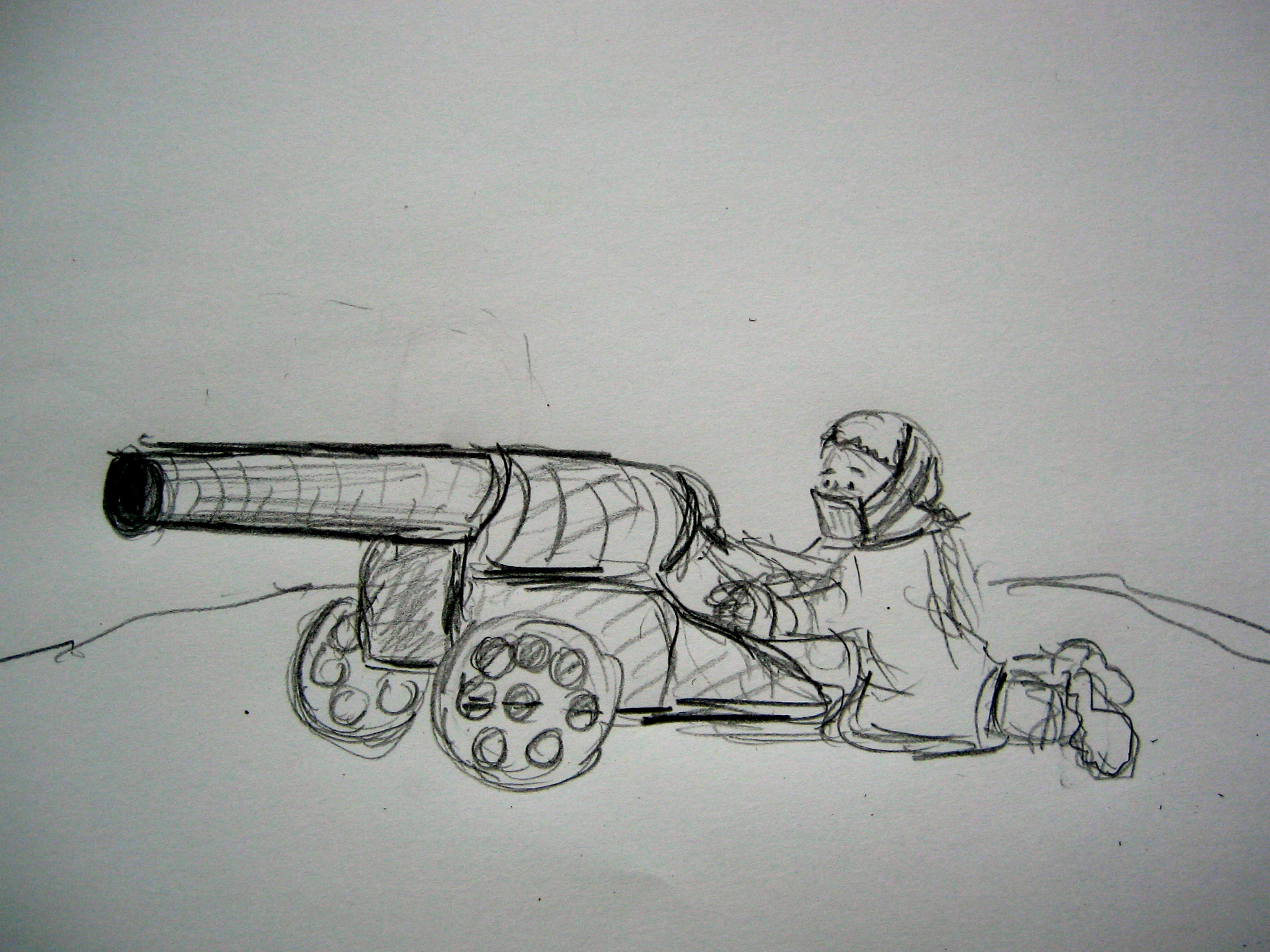
I, thankfully, have not had a personal reason to study these issues minutely, but I have to confess to some general bias against Western medicine.  It’s always seemed to me to specialize in cannons;  approaches to illness that involve heavy artillery used on a landscape (the body) which is nuanced and delicate (despite all those limbs and outgrowths), a landscape which one would just as soon save more rather than less of.   I am skeptical enough that the concept of a “surgical strike” seems hardly more precise to me when conducted by people in masks around an operating table than by pilots over a tableau of largely civilian dwellings.

I don’t mean to say that modern surgeons aren’t capable of precision (the whole skill seems to me to be absolutely amazing).  But I do think that the medical profession sometimes underrates the complications attending the procedures, the truly difficult healing processes and side effects.  The body is so complex and self-regulating;  it doesn’t particularly like to be messed with (even when its systems are out of whack.)

Pharmaceutical applications seem even less precise.  Dealing with my father’s diabetes has been an interesting lesson in this, his blood-sugar-lowing medication having been the prime cause of every emergency room visit and hospitalization over the last few years.

So complicated.  Does early detection of cancers save lives, or does it just extend the counting period?  How much good do chemotherapy and radiation do against aggressive cancers?  Does this good outweigh their stress on the healthy parts of the body, the body’s own defense mechanisms?  Or would the healthy parts of the body be weakened even faster by the cancer itself? Does the fight for extra time actually give extra time or just wear the patient out?

Of course, each case is different;  results are not fully knowable in advance.  And though experts seem to be getting better at identifying really aggressive cancers, those marked by a terrible predictability,  they have to allow for the slim chance; some possibility of unpredictability, some miraculous outcome.   Of course, it’s difficult to force the miraculous, but, as modern Americans – proud fighters, believers in belief itself, and above all, dutiful family members  – we cling to these slim chances, feel bound to try for them.

A difficult arena.

Acknowledging Sadness

July 15, 2010

I said goodbye to a dear friend this evening.  I very much hope to see her next week but life and health are uncertain, and it seemed best not to leave things unsaid.

It is always amazing to me how important it is to say things.  Granted, I’m a talker.  (Anyone who writes a daily blog probably has to be.)  But even a “talker” (maybe especially a “talker”) can have a great deal of difficulty saying important things.

I was raised by people, Scandinavians, who did not like to draw attention to emotional circumstances.  I’m not saying that they were cold—but when my father kisses my mother, it is a highlighted, discussed, moment (and never publicly on the lips.) My parents’ parents were the kind of people who blanched even at a reference to where a childbirth took place, and would take great pains to avoid discussion of the deemed uncomfortable.  So, for example, they never mentioned blindness to a sightless cousin, or prior spouses to a divorcé or widow, or anything that might occasion offense, even if it really wouldn’t.

But my parents, for all their inherited diffidence, were somehow able to get the important words out–I love you, I’m proud of you, I’m so sorry that this has happened.

I’ve rarely found those important things to be out of place.   When sadness is in the room—not just there—when sadness fills the room, I’ve rarely regretted acknowledging it, if I can make myself.   It can be extremely difficult to make one’s self—the painful is not just awkward in our culture—human nature would truly rather it wasn’t there.   We don’t want to hurt feelings; we don’t want to do something wrong.

I guess the thing to keep in mind is that in some circumstances, sadness is there no matter what you do, feelings are hurting; things are, in fact, wrong.  Better to take on the unrecoverable moment than to let it drape you in stone; the moment itself is not stone, not lasting.  The acknowledgement of the sadness certainly won’t take it away, but at least it can offer the balm of connection, shared tears, the clasped, dear, hand.

Blocking Writer’s Block – First Assignment – Sample “I remember”

August 9, 2009

In yesterday’s post, I suggested “I remember” as a writing exercise.  It’s a place where almost anyone can start writing any time.

I did my exercise in a beauty salon waiting for a hair cut.  I have to confess I cheated a little.  Because I knew I’d assigned it, I started the exercise in my head en route to the salon;  I also had to write down the last few sentences after they finished the haircut.  (They wouldn’t let me hold my notebook once the shampooing began.)

I did try not to erase or cross out when I wrote, or since this is an exercise, to edit, when I typed (though I did change names.)

Finally,  I didn’t intend to make the exercise itself about writing exercises and writing buddies, but because I was thinking about the blog, that’s what came to mind.  Which was fine.   The point of the exercise, if you try it, is to write about what you remember at the moment you sit down.  So here’s what I came up with 1:30 p.m., August 8, 2009.

“I remember”–

I remember when I first started these writing exercises.  It was years ago now;  I was invited into a group, a women’s group; I guess it was inherent back then that it was partly about writing, partly about “empowerment.”

There was Barbara with frizzy black hair and a dark green minivan; Helena who was Finnish, made documentary movies about anti-abortionists, and lived in a heavily subsidized mouth-watering West Village apartment right next to the Hudson.  (I never could figure out how she finagled that one.)  There was Evelyn who had long Auburn hair and a fey Pre-Raphaelite pout to her lips and who already, she told us later, borrowing sunblock, had had a melanoma removed.  There was Carrie, who I think was my original contact and who later came up to my house in the country one summer weekend with new husband in tow.  It was an unusually hot weekend and she insisted on dragging a mattress from the atticky bedroom I’d assigned them, down the stairwell and onto the screened porch that was just outside my window.  It’s an old house; it was an equally old mattress.  Mouse droppings littered the stairwell marking the path the mattress had lumped down.  The next day, still hot, she walked around most of the morning in a loose sweater with no underwear (pants either) making coffee for the new husband.  I’d recently gone through a wrenching separation from my own husband.  Suffice it to say, I never invited Carrie back again.

Then there was Agnes.  Agnes who was slender and small and upright in every sense of the word.  A dancer, an editor, a reader, a disciplined person, her back was straight at all times; her clothes trim and unwrinkled even if somehow vintage, her wavy hair pulled back, sometimes with tortoise shell combs which seemed in my mind to have the authority of reading glasses.

Helena, the one doing the documentaries about anti-abortionists, seemed to me to write about blood;  Evelyn, sex, Carrie, irritations, Barbara, the family life, Agnes, the physical and mental world, accreting images with great precision.  And me, probably pain at that point in my life (wrenching separation, remember?)

It was fun.  We usually met at Carrie’s or Helena’s since they’d managed the best apartments.  We ate chips, but since this was New York and either the West Village or the Upper West Side, they were special chips, like Blue chips (blue organic corn) or vegetable chips (sweet potato or taro), served with, you know, hummus.

Slowly, somehow, I don’t know how long it took–maybe Carrie’s bottomless weekend in the country precipitated it, it ended up being Barbara and Agnes and me.

We met at coffee shops, restaurants, choosing places for their lack of, or low, music;  their lack of, or slow, service; their lack of, or little interest in the fact that every few minutes we would each read aloud.

Barbara died a few years ago.

I remember her writing about braiding her daughters’ hair, the luck that her own was so curly (the girls were half African-American, she wasn’t), what that gave them in common.

I remember her writing about the slap of her feet in her Karate dojo.  There was a host of square shouldered men at her funeral—black belts, I thought.  The sweat that gathered in the crease inside her elbow. The joy of a kyaii.

I remember her writing about sex; her husband coming home too late, proffering her his cock.

You get to know your writing buddies very very well.

You know about the times they fought with their parents, their boyfriends in back seats, the times they lied to themselves and others, the times they told the truth.

I remember a last writing session.  I don’t know what we wrote about.  Barbara made mango-scented green tea.  She was drinking a lot of green tea those days though the cancer was irretrievably advanced.  She dragged equipment behind her around the apartment, black plastic sacking on wheels.  She’d always been someone with dimples.

Agnes and I still write together when we have time.