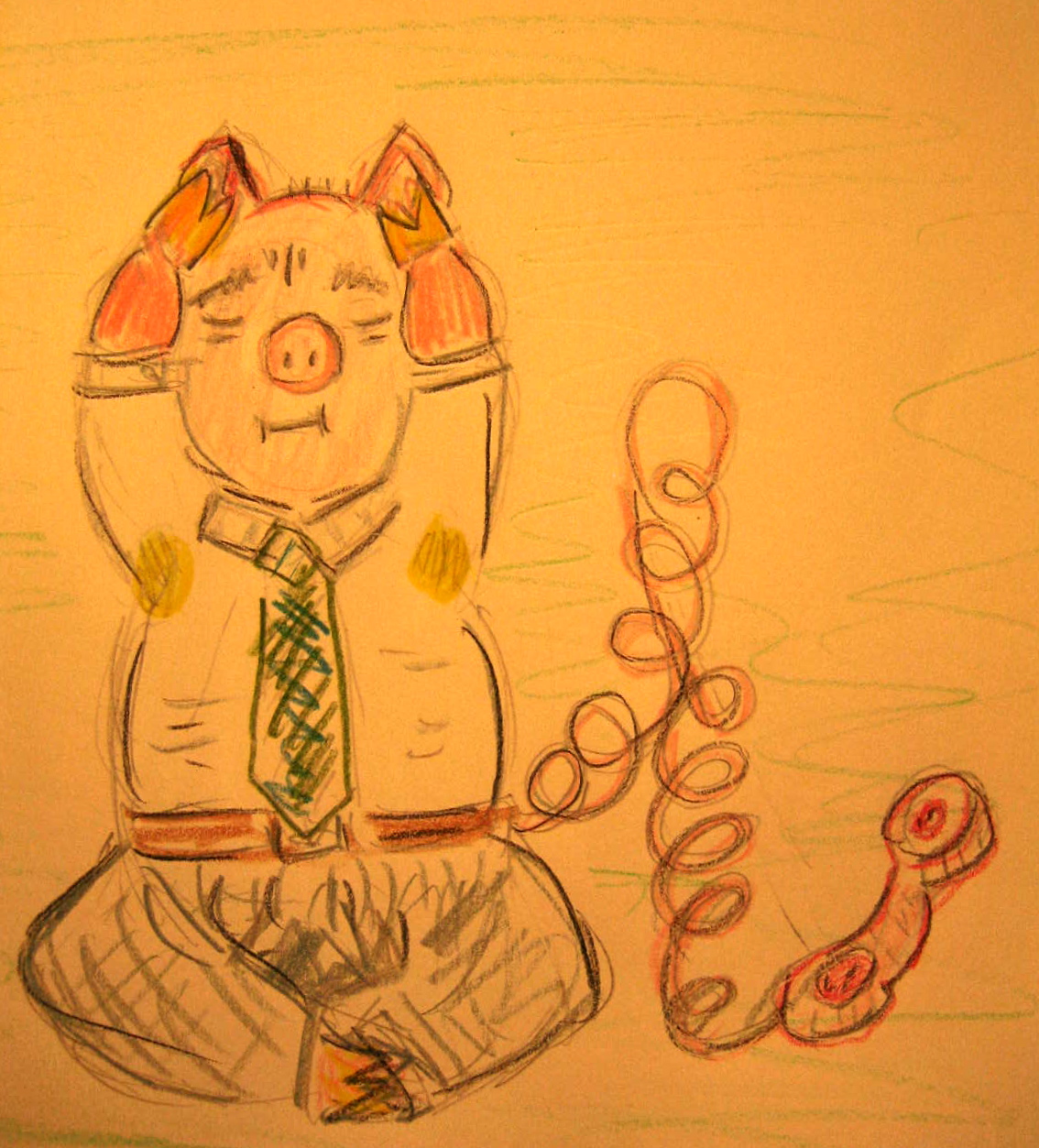
Bank Phone Customer Service (Hear Nothing, See Nothing, Do Nothing)
We all know the big reasons why people hate big banks. They were major players in the recent destruction of the U.S. economy; they were supposed to be slow, plodding, cautious, institutions, but instead tried to behave like growth stocks. However, their “products” were not actual innovations like iPads or Lattes, but beguilingly packaged jigsaws of future losses, i.e. unsecured debt. ( As Lloyd Blankfein put it, they were packaging “risk.”)
Then, of course, there’s the fact that they needed to be bailed out so that would not sink the rest of us.
But still got bonuses.
All of the above has made me plenty mad, but what’s made me actually hate banks is something much more mysterious and mundane: their amazingly inept compartmentalization. That is, the zillions of separate departments, none of which (even if reached) can ever help you (because it’s not their department).
I don’t mean to attack bank officers in branches. In my experience, actual people in actual banks try to be helpful. But often, they can’t help you, because they, like you, are relegated to searching, on the phone, for the right department.
The large banks are like countries, no, continents. Drifting continents full of separate bureaucracies, none of whom know each other’s name (or language). They are united, if at all, by a single computer system, which they consult like a gospel. But while the gospel has actual TEXT, descriptions, lessons and commentary, this computer system has only options, little boxes that are checked. The system allows for no commentary; no context; and no record, it seems, of the ten previous conversations that you have had with the bank on the very same subject.
The phone system of the bank is even worse than the computer system; any variation from set words gives rise to an outraged robotic voice, then disconnection.
Last year, I had interactions concerning identity theft, committed through (and possibly by) a bank teller. (The bank would never tell me, or the New York City Police Department, the exact circumstances.) Even weeks after the initial complaint, after weeks of laborious paperwork, I would find out, in my dogged follow-up that a particular required form had not been given to me; or did not cover everything, or was not sent to the right place. The bank officers at my local branch were frankly as clueless as I was, and, like me, with every call to some distant Fraud Department, needed to go through a full re-explanation of circumstances.
In my more recent dealings with a large bank, days have been spent trying to reach one employee whose name was given on a regular bank statement as a contact person, but who apparently follows a practice of never actually picking up his phone; it was only after several days of emailing and messages that he let me know he didn’t actually deal with questions related to the account on the statement and that the bank had no incentive for helping in any case. He then gave me a number for customer service, which, unfortunately, was actually customer service for WalMart. (Not a bank subsidiary, last time I checked. )
Since then I have been on the phone with bank employees more times that I’d like to count. One person put me on hold for a few minutes, during which my call was picked up by a completely new person (Dixie in Manila), who once more needed to be filled in on my inquiry. Letters I have faxed and emailed to about five different bank employees have not yet been noted on the holy computer system. One fax number I was given failed to accept faxes. (Now, there’s a way of reducing paperwork.)
The New York Times had a recent article about people in foreclosure who simply stopped paying their mortgages, and stayed in their homes, forcing their bank to go through the laborious legal process of trying to get them out. Many people seemed to feel a certain satisfaction about this situation, first because they are saving money, and secondly, because they’ve finally found a way of sending a message to a bank that is being heard.
 ManicDDaily
Recent Comments