Archive for the ‘writer’s block’ category

National Poetry Month- National Poetry Exercise Month (Blocking Writer’s Block)

March 31, 2010

April Poetry Clock

April is National Poetry Month.  This “tradition” was started in 1996 by the Academy of American Poets.

I guess the idea was to hook people’s love of targeted celebrations to poetry.  April seems to have been chosen because it followed Black History Month (February), and Women’s History Month (March), and because it did not include Halloween, Thanksgiving, Christmas, or New Year’s, was during the school term (schools are natural candidates for the celebration of poetry), but not at the busy beginning of the school term, or at its tousled end.  (Of course, Easter and Passover sometimes fall in April, but as religious holidays, these are not big competitors for concentrated school celebration time.)

April may have also been chosen because it already reverberates with specific poetic associations.  Yes, it’s the cruelest month, but it also (and perhaps more popularly) hosts “shoures soote.”  It’s (presumably) when lilacs last in the dooryard bloomed, and at least one of the times when it pleured in Verlaine’s coeur.

April also seems to be a popular month for relatively new, made-up, sorts of holidays like April Fool’s Day, Professional Administrative Assistant’s Day (the fourth Wednesday) followed by Take Our Daughters and Sons To Work Day (the fourth Thursday, perhaps intended as payback to Administrative Assistants), Earth Day (April 22nd), Tax Day (April 15th).  While “Tax Day” is not exactly a holiday (unless standing in a long line at the post office is your idea of a good time), it is a day of national observance.

Then there are other newish April holidays that seem too obscure to warrant mention, but are just too goofy to leave out: Zipper Day, National Honesty Day (date of George Washington’s inauguration), Girl Scout Leader Appreciation Day, National Pineapple-Upside-Down-Cake Day, National Read a Road Map Day, and, my personal favorite No Housework Day (April 5th), which also falls on World Health Day.   (In keeping with these holidays, April is also Stress Awareness Month.)

In celebration of National Poetry Month (and perhaps also Stress Awareness Month), I am proposing to replace the daily ruminations I post on this blog with a new poem, or truly, the draft of a new poem, each day of the month.

This will be an interesting exercise for me; and I hope you’ll find it one as well.  It is intended to follow up on the various posts about blocking writer’s block, the theme being how to write poetry with no clear inspiration other than a (relatively short) deadline.

This may also be a way of celebrating April Fool’s Day (all month long.)

If any one has topics, suggestions, poems of their own, please note them in a comment!

Blocking Writer’s Block – Post-Partum Embarrassment

March 25, 2010


Circle of hell for one's own work


Embarrassment is not so much of a problem when one is writing as when one has written. Shortly after the piece is more or less “done”, the excitement, the satisfaction, the engagement, of doing the work peters out.

Okay, sure, there’s a moment of “whew”.  Maybe even “wow.”  And then, like carefully-cut fruit turning brown around the edges, the whole thing seems  tawdry, sour, over-ripe.

This feeling often sets in around the time you start showing your work to others. When you glance at the piece through their imagined eyes, you wonder how you were ever satisfied.  You feel exposed, ridiculous.

It’s worse than seeing one’s self in a bad photo, in a brightly-lit mirror, at one’s worst angle.  When looking at a depiction of one’s physical self, feelings of inadequacy are often tempered by surprise, even disbelief—( Is that really what I look like?)  Even as one cringes, one’s image is so different from the self one imagines it hardly feels possible.  Besides that surprise, we are most of us well trained enough in the idea of people not being able to help their looks to have some grudging acceptance of our physical aspect.  (Other than of our fat, I suppose.)

A special circle of hell is saved for the sound of one’s own voice, either heard or read.

This hell, this embarrassment, can make it almost impossible for a writer to get his or her work out in the world.

Despite the daily appearance of blog, I really do have some problems with this.  Nonetheless (with typical “do as I say, not as I do” bravura), I’ll posit some suggestions:

1.  Collaborate.   Share the work process before your work is finished so that it’s less of a struggle to share it afterwards.  There are many different levels of collaboration, which may or may not include co-authorship.   The simplest may just be doing writing exercises with someone—writing at the same time as they are, then reading your writing aloud to each other.    (This is like taking your clothes off absolutely simultaneously with someone else.  Easier if you both pull down the pants at one time. )

The frigid sea (of exposure) also feels better if you hold hands with someone and run into the surf together.  Meaning, if you want to try to read in public fora—poetry readings or slams—go with a writing buddy first;  make yourselves both sign the sign-up sheet.  No turning back.  Clap loudly for your friend.

2.  Shut your eyes.  Get your piece as good as you can, send it into the world,  and then, if you can’t bear to face it again, don’t.  Don’t re-read it endlessly once you start circulating it (at least not for a while.)   If it’s published, and you can’t bear others to know, just don’t tell them.

3.  Understand that you are not your work.  It is, at most, a glimpse of your brain’s inner workings for one relatively short period of time;  a simulacrum of a synaptical dance.  If someone doesn’t like it, it doesn’t mean they don’t like you.  If someone reads it, it doesn’t mean that they actually know you.  Distance yourself from the content of the work;  distance yourself from the feelings of exposure.   This takes discipline.  Don’t wallow.

4.  Don’t worry that everything you do may not be your best work.  People’s taste run wide gamuts.  Sometimes you/they are in the mood for brown rice; sometimes you/they are in the mood for whipped cream;  sometimes for oranges.   (i.e. you can’t please all the people all the time;  actually,  you can’t even please some of the people all the time.   And maybe, well, you should worry a little less about pleasing. )

5.  Be happy that you have completed some work at all.  Always keep in mind how wonderful that feeling was when you first finished, how wonderful to have just slogged through.

Blocking Writer’s Block – Ironing Out Problems With Confidence

March 10, 2010

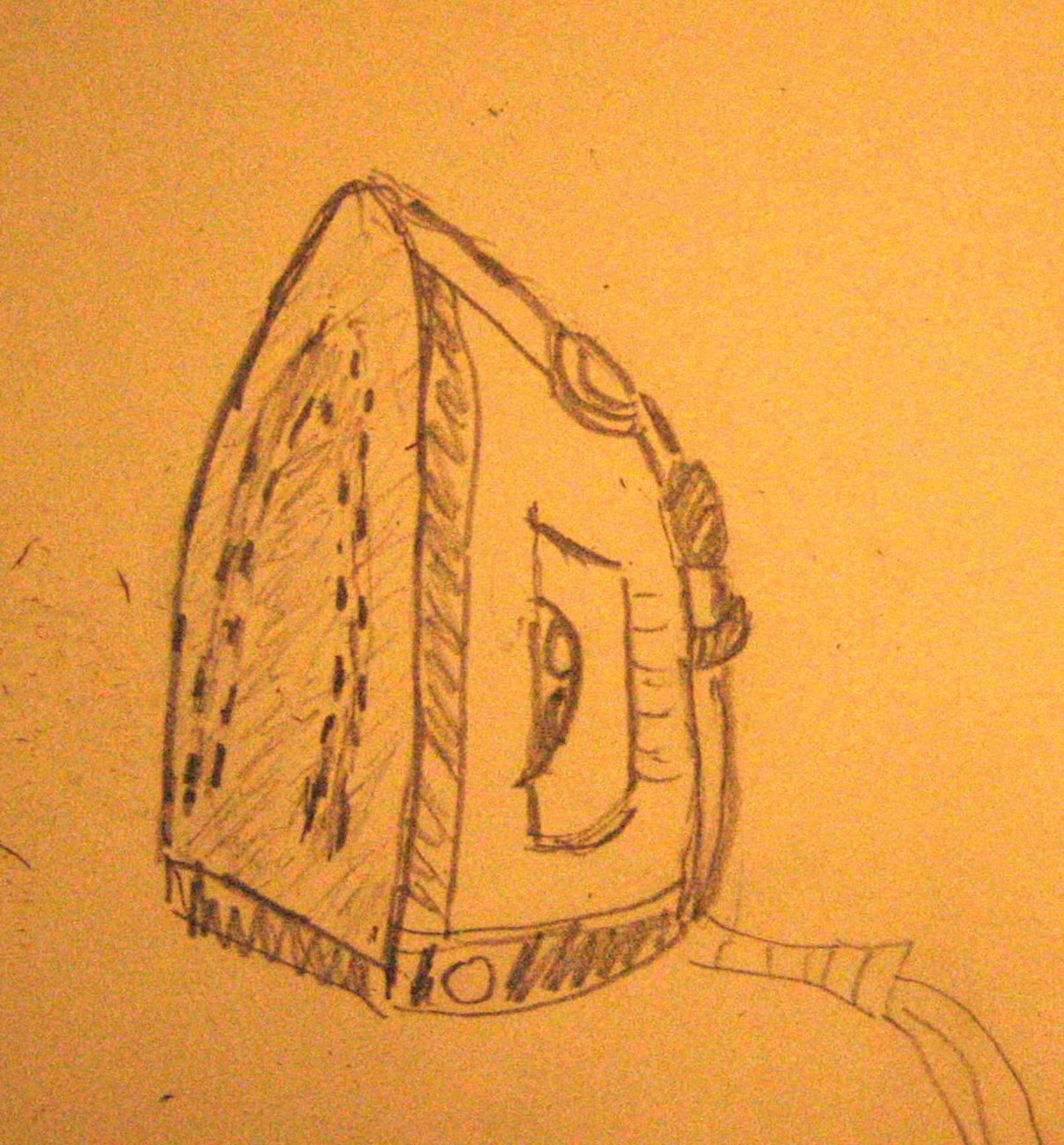
Iron

I walked back home from my subway stop this morning (a trek) thinking I’d left my iron on.  I imagined my old, blinding, dog, Pearl, knocking it down (the iron was sitting on the floor in a far corner of  one room of my apartment).  I imagined terrible damage to Pearl, and then, in the ensuing conflagration, the destruction of all my worldly possessions .

Even as I hiked back to my apartment, getting later for work than ever, I knew this scenario was unlikely.  First of all, I’ve left the iron on before and its heating element always turns off quite quickly automatically.    Secondly, Pearl diligently spends just about all day in her “office”, that is, my closet, which is far far away from the nook where the iron sits.

When I let myself back into my apartment, I found the iron already unplugged, cool.

We tend to doubt ourselves.   This doubt not only affects our lives, it also affects our writing, actually any artistic endeavor we may try.

Some people (often the young) believe that every thing they produce is terrific.  They save every napkin doodle; they keep copies of every draft–bags and bags of them, whole old computers’ full.  Often, however, as both rejection notices and non-writing responsibilities mount, we tend to lose confidence in whatever voice works its way through our fingers.

This  self-doubt can lead to writer’s block, or at least, writer’s….lethargy.  We tell ourselves that if we only had a contract, an editor, a salivating agent, we’d produce tons of stuff, but we don’t feel adequate authority to keep working on our own.   What’s the use?  How can we keep up our confidence if  the only light at the end of the tunnel seems to be another blank page?  ( Blank screen?)

Two tools jump to mind (other than the one I’m always citing which is, well, discipline.)

1.  Knowledge.  Knowledge is power here; luckily, knowledge can be acquired a lot easier than other kinds of power.  By knowledge, I mean, knowledge of what’s out there in your field; knowledge too of human nature.

To get that knowledge, read.  Read good writing;  read “bad” writing.  Read intellectual texts, if you like;  don’t forget popular schlock.  Broaden your sense of the types of expression that are considered “valid”; think of how you fit in, how much better you feel than some writers, how awed and humbled you feel by others, consider what you can learn from everyone.

In addition to reading different kinds of work, consider reading about the lives of writers and artists.    Understand that your travails  may be your strongest basis for a spiritual camaraderie.

2.  Connection.  Learning about the lives of other writers is part of developing a sense of connection.   But it’s also useful to be in actual contact with actual living people.   If you write poetry (or even if you write prose that you can read paragraphs of in a poetic manner), go to open mike readings.  Make yourself read aloud.   The other poets may not make you feel liked, and you may not like them;  remember that you are not necessarily looking for friends, but a sense of validity.    Make yourself go more than once.  (Poets are a finicky, stand-offish, bunch; they may need to know you pretty well before they even smile.)

If there is no open mike in your area, consider a class.  Or host a little writing session. Try an internet site where you can post work.   In seeking a compatriot, an audience (even just an audience of one), look for  a person who is also interested in writing.  A non-writer is likely not to understand your problems with confidence and may, accidentally, make you feel worse than ever.  A fellow writer will respond to your work with some measure of attention simply in the spirit of quid pro quo.  (Take what you can get.)

Finally, even if the people with whom you try to connect don’t seem to like your work, don’t be discouraged.  (The differences in peoples’ taste is a source of continual amazement. )  Check to see whether you like their work.

Remember through all of this that you did turn off that iron, or, at least, you did not burn down your apartment, or damage your dog.  Translation:  you do too do some things right.

For more on writer’s block, check out posts in that category from the ManicDDaily home page;  for more on Pearl, check out posts re dog.

Blocking Writer’s Block – The Pen Is Mightier than the Word*

March 4, 2010

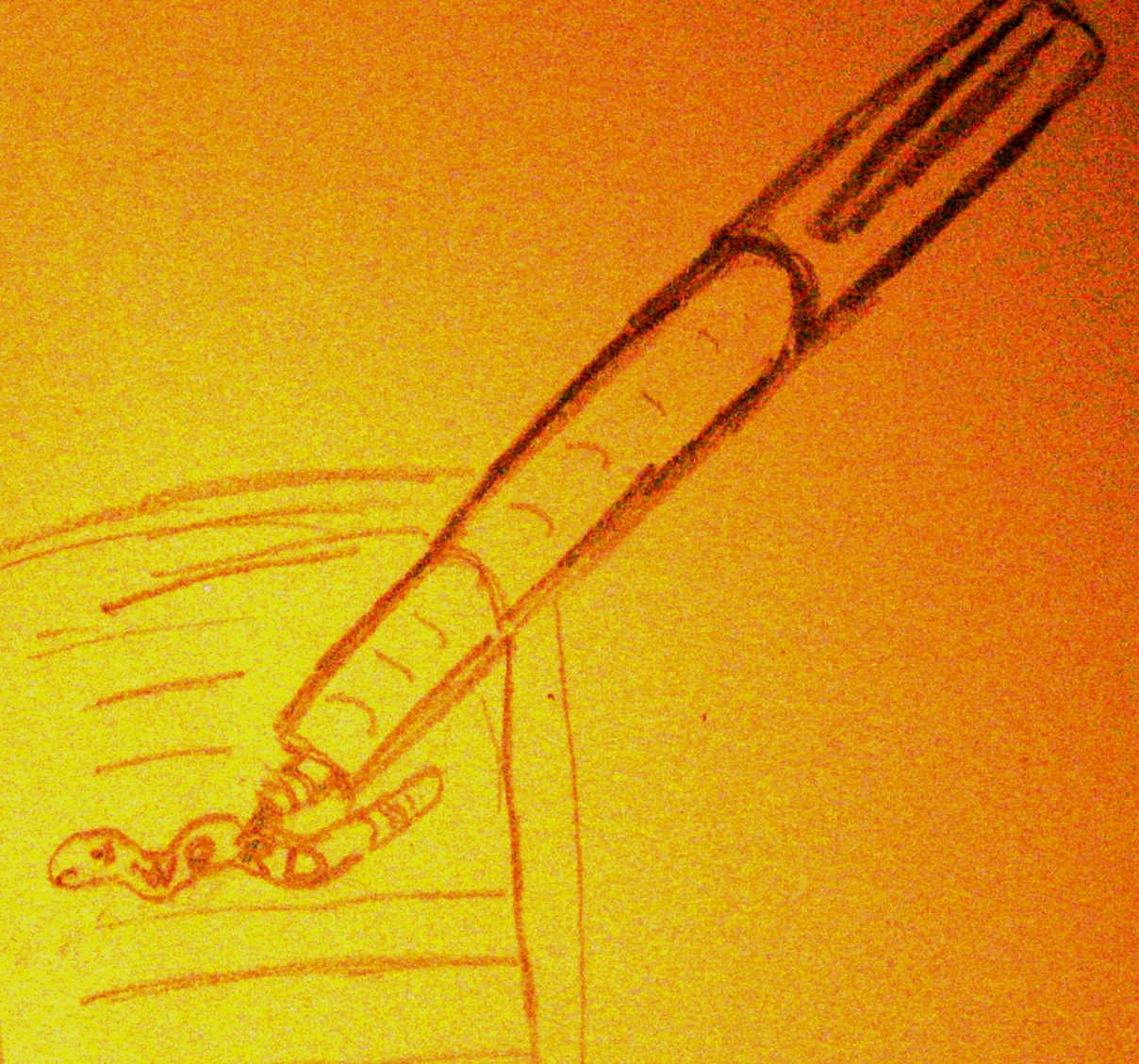
The Pen Is Mightier than the Wor(d)

The downside of being manic is, well, the down side.  There can be depression, of course, but what  I am writing about tonight is simple fatigue:  what’s left when the exhilaration, silliness, determination wears down.

For those who write, this fatigue can function (or cause not functioning, as the case may be) like a kind of writer’s block.  The feeling is not so much paralysis as apathy, apathy colored by exhaustion.  When this fatigue descends, you may feel as if the whole of your forehead (frontal cortex) is taken over by a block of blankness.  If the blankness takes the trouble to enunciate anything at all, what it usually tells you is that (a) you have nothing to say, and (b) even if you did, you’re too tired to say it.

Here are a few tools that can help when this blankness descends:

1.  Habit/Discipline. Forging a daily habit of writing, and disciplining yourself (with soulless rigidity) into maintaining that habit helps to carve a chink of opening in writer’s fatigue.   The writing habit will probably need to be started and cultivated during the non-blank times.  This sounds easy, but unfortunately, when writing is going well, you may not feel a need to set up any habitual framework for it.    Still, it’s useful to try, even when working well, to set some requirements for yourself, such as amount of time you want to devote, an amount you want to produce, a time of day, a place or notebook that you habitually use.   These requirements (even just one of them) can operate as a groove you can slip into when the blankness descends,, a practice you can use discipline (rather than inspiration) to maintain.  Use this discipline to get yourself to pick up your notebook or turn on your computer and set yourself down to it.

2.  Trust/ Let Go. After mustering the discipline to set yourself down,  let go of that same disciplined, planning, decision-making part of your brain.   Pour what’s left of yourself into your fingers, your pen, your keyboard.  Try not to think about what you are going to write, just write.   Move ink (real or virtual) across the page.

The thing to remember is that the pen is mightier than the word.   The fingers (unless you have been doing carpentry or weaving or playing Scott Joplin or Chopin on the piano) are generally less tired than the mind.  And the unconscious is usually quite happy to take over for if you allow it.

How do you access the unconscious?   How do you allow it to move into your hands?  For some this is easier than others.  Probably the most important step is to stop being your own audience.  The unconscious is shy.  It doesn’t like to interrupted; it doesn’t like to be judged.    Of course, once you start writing, your conscious brain (even your fatigued, blocked, conscious brain) will sit up and take notice;  still try to keep this conscious brain to the sidelines.  Make it a silent, unobtrusive witness, a deaf-mute who, sadly, never learned sign language.

These techniques may not give rise to deathless prose (though you may surprise yourself).  But they will help you work through the fog of fatigue (both true mental tiredness and a tiredness of the spirit).   And usually, once the unconscious mind moves into the open,  the fatigued, blocked, conscious part of your brain will also pretty quickly wake up, become engaged.    (It doesn’t really like being a deaf-mute.)

This, frankly,  is when your problems may really begin.  Your unconscious mind may be a much better writer than the conscious mind; they may have different techniques, subject matters.    But at least these are problems with writing, and not with not-writing.

*I have to give credit for the phrase “the pen is mightier than the word” to my husband, Jason Martin.

PS- I have written many posts on blocking writer’s block.  Check them out by going to that category on the ManicDDaily Home Page.

Blocking Writer’s Disorganization

January 26, 2010

As some of you know, I’ve written several posts on blocking writer’s block.  (Check out that category!)  But in the last couple of hours/days, I’ve been dealing with a different problem.  Writer’s disorganization.

Mine centers on one of the least-cited negative qualities of working on a computer – the  ability to save multiple, vaguely distinguished, drafts.

It sounds wonderful in principal.  The ability to “save as,” repeatedly, means that you never have to throw anything away.  You can experiment with all kinds of revisions.   Unlike a visual artist working on a single canvas, you rarely have to irrevocably choose what works best.

But combining (i) revision with (ii) indecisiveness can be disastrous over time.  Especially if you are cursed with (iii) an aging memory, and (iv) an ability to reel off pages.

Which is the best draft?  The final draft?  The one you want to send out?

The dates should provide a clue (if you save them by date!);  however, indecisive, moody, and interrupted, rewriting may mean that your very last draft is far from your best.   (If you started changes that you didn’t carry through, your last draft may not even be fully coherent!)

If you confine the drafts to your hard drive, some trees may at least be spared.   But some of us (whose names will not be mentioned here) have developed the concept of “print only” drafts (as opposed to “read only” files), meaning that certain drafts may be  printed,  even copied, but never actually perused.  (Why is it that once one gets used to reading on a screen, the printed page seems so naked, painful, exposed?)

I certainly have yet to solve this problem.  But here are a few suggestions which, like multiple drafts, sound good at least in principal:

1.  Slow down.  When you revise, read changes carefully, maybe even aloud.

2.  Take yourself seriously.   Put your bunches of drafts in separate computer files.   If you are working with a longer piece, you might even take the time to type some little commentary at the top of the draft.  (I’ll never do this, but it sounds good.)

3.  Consider actually destroying redundant drafts.

4.  When you do print, put little footers on the pages so you know which version it is.  Put the printed copies in a little notebook, rather than a plastic bag in the back of a closet.   Label them, show them, look at them.

5.  If this is all too difficult, maybe you should just blog.  If you do it daily, you won’t have time for multiple drafts.   (Aahhh.)

Blocking Re-Writer’s Block. Keep the Faith. And the Moocow.

January 9, 2010

I have written several posts in the past about blocking writer’s block.  (If you are interested, these can be found by clicking the category “writer’s block” from the ManicDDaily home page.)

I am extremely lucky that I don’t typically suffer from writer’s block.  I can usually write something. The quality of that something may not be great, but I can put words down on the page.   A harder problem is re-writing.

The wonderful glow that comes from a first draft, or even a first edit, is generally not available in the hard, repetitive, slog of revising a major project.   When one first writes something, one often feels happy simply at finding coherence, flow.  For someone who grew up before the days of the computer, there’s a wonder simply in seeing one’s thoughts set out in typeface (rather than scribble).

But as one’s investment and expectations grow, the re-writing can become onerous.  Questions plague every re-writing session.  They tend to run along the lines of:

1.  What else can you cut?   (It’s still too wordy, boring.)

2.  Have you cut too much?  (You’ve squeezed all the life out.)

3.  Are you really making it better?

4.   How can this take so much time?

5.  It was a dumb idea to begin with.  (And that’s not even a question.)

6.   Maybe you should just quit.  (After all this time?)

Avoiding the burden of extensive revision is one of the joys of a daily blog.  (While you have to worry about coming up with something all day long, at least you know you won’t have much time to re-write it!)

But if you are a attempting a novel, a story, even a poem, you usually have to rework it quite a bit.   And, unless you are lucky enough to have a deadline and an editing staff, this process simply takes as long as it takes (often long enough for you to get thoroughly sick of it).

Sometimes you have to cut out whole sections, sections that you have labored over for weeks, sections that you had a particular love for.  (These may be the most suspect.)  You will feel a bit like you are working on a  crossword, and a whole corner needs to be erased.  (Only, frankly, you’ll likely feel much much worse.)

For me, the most important rule in re-writing is simply to keep faith with yourself.  You must be open to cutting, but if you constantly question the worth of your entire project, you will not be able to go through the hard slog of making it better.

Perhaps the concept is not worthy of James Joyce.  (But remember, A Portrait of the Artist as a Young Man, begins: “once upon a time and a very good time it was there was a moocow coming down along the road…”  This, though recognized as great prose now, undoubtedly took a fair amount of ego and faith on Joyce’s  part.)

Even so, you must accept that you write about the kinds of things that you write about.   Even the moocows.  (Especially the moocows.)

Try, at least, to make your writing the best that it can be before giving into the urge to throw it away.   (Even then, keep the moocow.)

Blocking Writer’s Block – When Escapism Hits (Hard)

December 3, 2009

Sometimes the mind needs candy.  It just can’t bear to chew over ideas of substance; it’s too tired to wrestle with gristly debates; it doesn’t want to pick nuance from its teeth.

No sirree, what it wants are donuts.  (It’s not even up to “doughnuts”.)  And it wants them all night long.

Who knows what makes the mind revert to pablum?

(Actually, I think it’s stress, a rebellion from pressure, an internal decision not to bullied by one’s own sense of responsibility.)

During such periods, some minds, usually of the male persuasion, will watch sports  or play video games; some females will watch several seasons in one sitting of Grey’s Anatomy, even though they well understand that both McDreamy and McSteamy are McStupid, and that Meredith Grey would be more properly named “MiMi Beige.”

In my case, the reversion is to puerile, but somehow, entertaining books.  (And, of course, a certain new movie star whose name is only known to regular followers of this blog.)

I’m not quite sure what to advise when times like this arise.  I guess the most important question is—are you getting your work done?  By work, I mean your day job, your school work, your obligations to family, friends, dog, your toothbrushing and hairwashing, your eating and some minimum amount of sleep.  Hopefully, most of us can put down the mind’s donutty distraction for the hours it takes to perform the tasks that keep us in the daily life business.

But what about that creative work that we think of as a second career (or a true vocation)?

Unfortunately, it can be very hard for creative work to serve as a significant block to a donutty mindset, especially if you are not getting either money or acknowledgement for the creative work.

Luckily, the mind has some natural defenses:

  1. Boredom.  Most escapist fare does not, per se, hold an overwhelming amount of food for thought.
  2. Pride.  An OC (obsessive-compulsive) attraction to escapist fare can become really embarrassing.    It’s true that innocuous plastic book covers, and a Kindle can go a long way towards mitigating that embarrassment.  Still, when you mother keeps telling you how much she’s enjoying Cormac McCarthy while you are obsessively reading Charlaine Harris (author of The Sookie Stackhouse novels, the basis for the series, True Blood), it gets a bit much.
  3. Duty.  Trees.

While you are waiting for boredom, pride, and duty to kick in, here’s another trick:    try to find something useful in your mind candy.  Look at it from a “maker’s” point of view.  If you are interested in writing, read the dumb books with an eye for their plotting, their narrative structure, their momentum, their sex scenes (!)   (Yes, it’s all a bit of an excuse, but there can be some valuable lessons there.)

Finally try to just enjoy yourself a bit.    Be giddy, stay up late, read while you walk to and from the subway.   More importantly, get some much-needed confidence.     And don’t worry too much.   If you are truly interested in doing creative work, the angst will be back soon enough.

More On Blocking Writer’s Block – Discipline/Playfulness

December 2, 2009

Generally, I really do believe that discipline is the paramount tool  in (i) getting real work done; and (ii) achieving lasting happiness.  (A bit of a workaholic, I have a hard time imagining happiness in the absence of real work.)

Discipline is especially important if your real work is creative.  Inspiration is terrific, of course, but the tangible application of inspiration generally takes some putting of your shoulder to the wheel, nose to the grindstone.

And yet….   And yet…  creativity also requires play—the shaking free of the shoulder, the picking of the nose off the grindstone and thumbing it at the world, the off-beat syncopation of the song, the heightened leap of the dance,  the crazy invented rhyme, the stroke, if not of genius, at least of ingenuity.

Discipline/play—it’s a pretty crazy balancing act, strength and elasticity, practice and spontaneity, muscle and frill.

Actually, I’m not sure that “frill” is the right word.  Maybe “flow” works better.  “Flow” sounds pretty darn creative, and yet unchannelled flow can also end in puddles, swampland, ditches, floating you away, sinking you in muck.  (Yes, I’ve probably taken that metaphor too far.)

Still, the point is that you need to figure out a balance–a way to discipline your use of time, while remaining playful within that time.  It’s important too, even while disciplined, to remain open to obsession, crazy tangents.   Adhere only to discipline and you could end up writing computer manuals, or worse, you could self-implode, and become simply escapist, reading vampire novels all night.

Too much playfulness, on the other hand, can also lead to complete self-indulgence, ending up in mindless haiku.   (Sorry, good haiku.)

Unfortunately, after a lot of discipline, I’ve moved into to the escapist mode in the last few days.  As a result, I’ll end this right here so I can go back to my nighttime reading.

(For more specific suggestions on blocking writer’s block, or other creative blocks, check out my posts in this category from the ManicDDaily home page.)

Newspeople, Bloggers, Blocking Writer’s Block

November 30, 2009

Yesterday, I wrote a kind of odd post about “Celebrity News” which focused on the addictive quest for celebrity in our culture.  I also discussed the intense craving of some newspeople, particularly TV newspeople, to be people “in the news” as well as people discussing it.

I felt a little guilty writing so dismissively about newspeople’s quest for attention.   It did not escape me that bloggers could be said to suffer from similar cravings.

I can’t speak for all bloggers—I only really know one.   Still, I think the average blogger’s pursuit of attention is somewhat different from that of the average TV newsperson.  First, the newsperson often seems to be embued by grandiosity;  a (perhaps inherent) narcissism has already been gorged by all the staff persons hovering– brushing their hair, checking their noses, patting their tummies—(wait a second, that’s spaniels–)

A blogger, in contrast, tends to be alone when working, either by choice or happenstance.  (The blogger’s family, losing all hope of a dinner at home, has gone out.)   The blogger, unlike the TV newsperson, or any TV persona, receves little coddling; their “stats” are a pretty good ego-toughener.   Moreover, the blogger knows that even the few that do “view” the blog may look for a second at most—the time it takes to realize that a mouthwatering tag like “Robsten” has led to no new gossip and questionable adulation.

As a result, the blogger must garner sustenance from the age-old wisdom of Gandhi, as quoted by that newly-minted sage, Robert Pattinson, in the trailer of his upcoming movie, Remember Me: “Gandhi said that whatever you do in life is insignificant, but it’s very important that you do it.”  (Sorry, but in the downswing from the manic side, I find myself studying this trailer.)

Which brings up what may be the most important difference between the TV newsperson’s motivations and the blogger’s.  The blogger (or at least the only blogger I know) does not crave attention so much as expression.  Yes, the blogger is thrilled when the number of hits rises, but his (her)  most engaging and happy moments, are those spent actually writing, typing, and cursorily editing, each post.  And then, of course, the pressing of the little button that says “Publish,” and the watching of that little button spin.

This is something for those with writer’s block to remember.   Try to get hooked on the process, and not to think too much of the impression that you, as the person engaging in the process, are making.  Of course, you need to keep your audience in mind.  You are trying to communicate.  You want your readers both (i) to be able to follow your work and (ii) to want to follow your work.   But try to keep the focus on the the writing, the message, and not on yourself as its deliverer.  Writing is not about getting your nose powdered, head (or tummy) patted, but about putting the words on the page.

Blocking Writer’s Block – Part X – Grow a Thicker Skin (But Not, Perhaps, A Carapace)

November 9, 2009

How do you inure yourself to criticism?  How do you view it as instructive rather than destructive?    (Note that when I  say “you”, I mean me.  This is a task I find truly difficult.)

When I first considered this question, I thought of a cockroach—something with not just a thick skin, but a hard carapace.  A creature that is at the height of evolutionary sustainability.  A survivor.

But I can’t quite stomach becoming more cockroach-like, and I don’t think I can advise it for you either.   Because, aside from its general lack of appeal, a cockroach scurries away from any bright light, which is exactly what a lot of criticism feels like–a too-bright light shone right into your eyes, or on your weak spots (that flap of flab at the back of a thigh.  Or worse, if you’re a writer:  those awkward transitions, that plot that just isn’t credible, that character, based on you, who’s simpering and inane.

The fear of criticism, or the experience of criticism, can be an old-style Berlin Wall to a struggling writer.  Not only is it an obstacle between your desire to work and your ability to work;  it is also a wall between the two halves of yourself—the half that really does want to learn and grow and improve, and the half which wants anything you do, no matter how flawed, to be called brilliant, at least, good enough.

Because I’m so bad at this, I can only give a few random clues as to how to get better:

1.  Don’t show work too early.  It can be both humiliating and paralyzing to have your reader point out problems that you would have caught yourself if you’d only waited a few weeks beyond the glow of completion.

2.   Take care to whom you show things.  It’s helpful if you truly believe that your reader respects you and your abilities, no matter what they say about the particular piece.

3.  Try to focus on what you can learn from a specific critique.   Keep in mind that even if some criticism may not be fully justified, it may still point out something that doesn’t fully work.

4.  After due consideration, if you feel your work is good, hold your ground.  Consider your reader’s perspective and taste.  Is it the same as yours?  Is it infallible?

5.  Distance yourself.  Those words on the page are not you.  What you wrote yesterday is not you today.  There are countless ways to skin a cat; it takes all types to make a world.  Which means—yes, you can revise it (no matter how impossible that feels).

6.  When all the above has been tried, and you really just can’t bear any more, scurry into a dark crevice.   But don’t just wait till it’s safe to come out again.  Work from there.  Keep working even from there.

For more on Writer’s Block, check other posts in this category.  And, as always, check out 1 Mississippi by Karin Gustafson, on Amazon or at link on ManicDDaily home page.