Archive for the ‘Vicissitudes of Life’ category

Shielded/Reaching Out – Woman in Clear Box in NYC

August 31, 2010

Woman in Box

I was wondering, yesterday, while walking on the street checking my email why people do this–i.e. check their email while walking on the street.

I tell myself that it’s because humans, in general, are a communicating species.

Communication brings a kind of acknowledgement (or at least a hope of acknowledgment).  It’s almost as hard for people (even people other than me) to live without acknowledgment as to live without air.  (Hence, the infamous rigors of solitary confinement.)

Is acknowledgement particularly important to humans.  Does any non-human animal ask whether a tree falls if there is no one there to hear it?  (How can we know?  If an animal doesn’t articulate such thoughts to us, do they actually think them?)

In old-time small towns, at least in my grandmother’s small town (as seen through my grandmother’s eyes), there was always someone watching–acknowledging, as it were–through a blinds’ eye gaze, even when the small streets seemed absolutely asleep.  (It can get hot in the mid-day mid-summer Midwest.)

This grandmother refused to let us hang out wet clothes to dry on an Tuesday afternoon.  Washing was for Mondays, or at least, mornings.  She couldn’t stand to have our disorganization noted.

This grandmother would not have texted or emailed while walking.

Cities offer the freedom of greater anonymity.  We city dwellers further this by training ourselves to avoid the gazes of those around us.

Extremely well-trained city dwellers walk around in little self-contained bubbles, boxes, hoping that our own clear walls will help hold up the walls of those around us.  (We’re a bit like little buildings; all self-contained, all nearly leaning against each other.)

But there’s still this communicating-species business, this need for acknowledgement.   So, as we move our little box around  (or, in the suburbs or country–our car),  we text, email, talk on the phone.

“What’s up?”

“How about you?”

Oddly, as I was writing this post, I happened upon what looked like a live woman (or realistic sculpture) in a plexiglass box standing just near the center of the Grand Central Station.

Many people had gathered around it.  It was as if a woman in a clear-walled box was something they’d hardly ever seen.

Neck In Knots

August 17, 2010

Knots

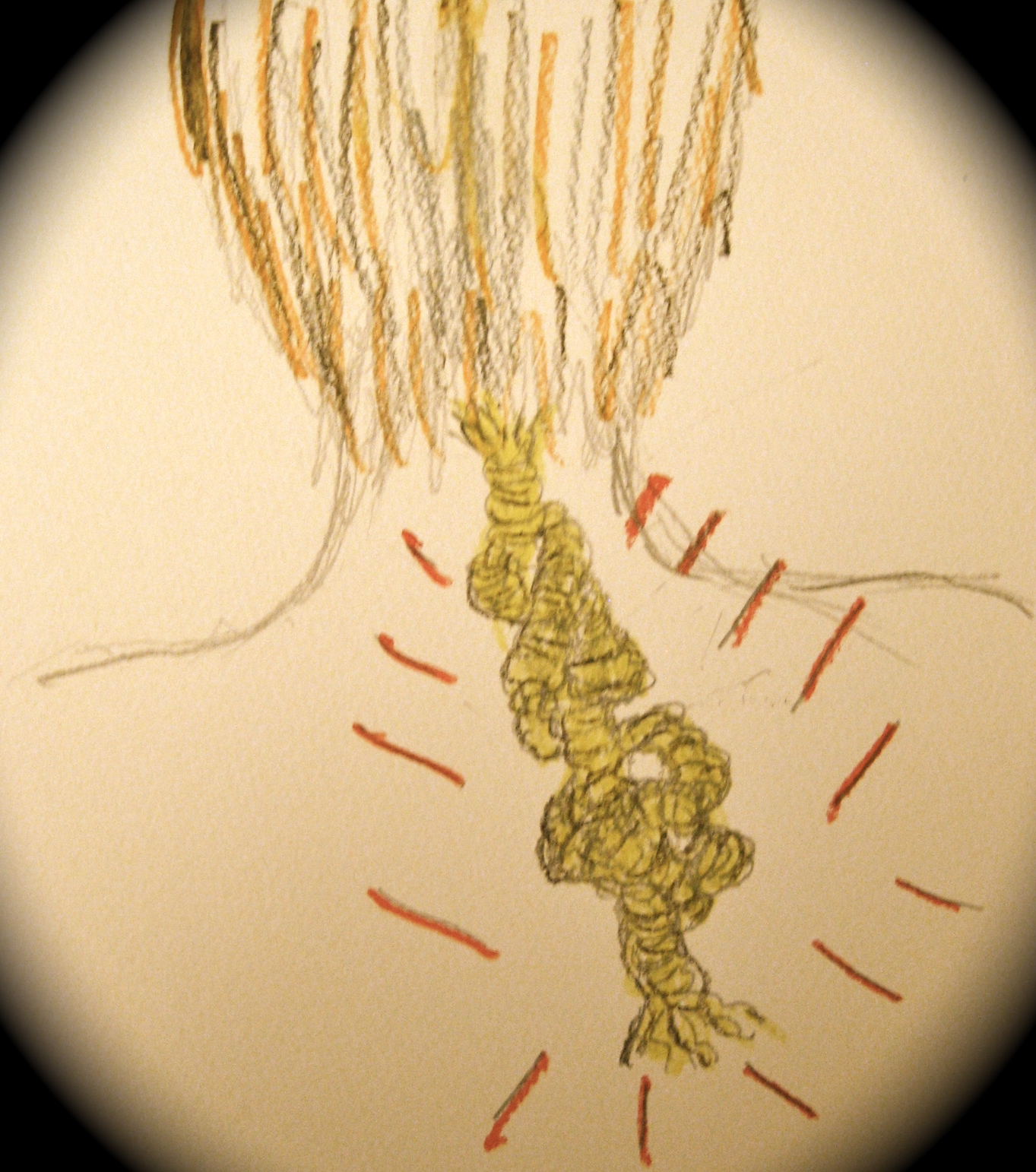
People who do yoga regularly (i.e. me, ManicDDaily) are not supposed to get painful knots in their necks and shoulders.   But people who do manicddaily yoga – i.e. speed yoga – and then do other manicddaily things  – like speed-hanging shower curtains, catching a speedy nap in a weird hard bed or in a hard airconditioned bus seat, hauling about loose weights (speedily) in an effort to squeeze in more exercise – do not have always have yogic protection from such painful knots.

When you get older (if you are like me), your mental memory is not all that seems to slip a bit; so does your bodily memory.  Meaning that you can’t remember exactly what gave you these painful knots that make it hard to sit up or turn over.

When you get older (if you are like me), your mental reaction time may also slow a bit;  so does your bodily reaction time.   Meaning that your body doesn’t tell you right away when those awful knots are being tied.

Meaning… ouch.

Soothing/Smoothing Heartache

August 14, 2010

Back Seat

They call it heartache/heart break.

You can find references to it in any romance novel (any novel?):  she/he felt as if her/his heart were breaking.

Even little children feel it.  At one point when we were trying to train our oldest child, a toddler then, to go to sleep in her own bed, by herself (i.e. without mom), she sniffed to the emissary who’d been sent to comfort her:  “tell mommy that my heart is full of tears.”

Okay, she was a poetic toddler, a toddler who had had a lot of classic books read aloud to her.

Still, even as a small child, she knew what scientists have only relatively recently confirmed–that grief actually manifests itself in the chest; that one’s heart really does hurt when one is sad.

What can be done about it?

Acknowledgement helps.  Even in the moments I’ve sat here and written about it, the pain feels a little bit soothed.

I hesitate to call this writing “art”.  But it is a kind of shaping, limning.  In writing or drawing at any level, you become an archetypical portraitist, leaning back (at least a bit) from your subject–one arm extended, one thumb up–literally getting perspective.

“Shaping” –  I think of a pair of hands handling clay–getting its dimensions, its contours, containing it, patting it.  There is, in those manipulations, a kind of caress.  Sort of like child’s forehead, in a mother’s lap now, in the backseat of a slightly old-time car (not particularly air-conditioned), the mother’s hands smoothing the forehead lightly, as the wheels turn.

My Own “Take This Job And Shove It” Moment

August 13, 2010

Should We Take The Guitar?

Thinking of Steven Slater brought me back to my own “Take This Job And Shove It” moment.  It really didn’t have much to do with shoving a job (I was raised to be very very nice).  It arose more in the context of seeking a job, and had to do with the Johnny Paycheck (the country music singer about whom I wrote yesterday).

This was back in my own country music days.  They were also my  law school days, but law school, as you may have heard, is not exactly scintillating, and my brilliant, beautiful, roommate, Cynthia, and I decided that writing country music would be a viable (and far more interesting) career alternative.

The problem with the music world is that it’s difficult to just decide to have a career in it.  Especially if you are not all that talented.  You need an “in”, a break, some significant help from the stars, both celestial and human; at least a hook.

Our hook came (we thought) in the form of the “Paycheck Song”, a song we wrote while interviewing for summer jobs.

It would be just perfect (we thought) for Johnny Paycheck, his next hit after “Take This Job and Shove it”.

But how could we get it to him?

We had the young and blonde part going for us; but we were far from Nashville.  (We were in school in New Haven, Connecticut.) Our efforts at groupydom were going to be significantly mitigated (to use a good law school word.)

Our chance came when Johnny Paycheck came to New York, to the Lone Star Cafe.

The show was on a weekday, but hey! this was important.  We took the train down in our best (in my case, only) Texas boots.  Cynthia’s had tassles.  Our hair gleamed, our eyes glommed, the lashes thick with mascara.  Our hopes were crazily high.

So many decisions to make:  should we should mention that we were in law school?  (No.  It would make us stand out, but might seem weird.)

Should Cynthia bring her guitar?  (No.  Her playing wasn’t that great, my singing worse.)

We would just give him the print version of the Paycheck song, with big smiles, a little enthusiastic crooning.

Johnny Paycheck was a short grizzled man back then; his skin had the slightly leathery look of hard living in hard weather–sun, wind, cigarette smoke.

He gave a great performance, but even in a small place like the Lone Star, the back stage was, well — way back.  I remember a glimpse of the dressing room; black cowboy hats blocked the wedge of open door, a make-up mirror was overbright behind them.   The people at the door didn’t seem all that interested in our page of sheet music.

Did we hand it to someone?  I think so, but we couldn’t really wait all night to see what happened to it.  We had a train to catch, class in the morning.

Revisiting The Past – Butting Up Against “Because”

August 11, 2010

Butting Up Against "Because"

Today, I had to go back to a neighborhood in which I lived for years, some years ago.  (Important years.)   I tend to really dislike this kind of journey.  In my ManicDDaily way, I often wax glowingly nostalgic about old haunts (from a distance), but succumb to a terrible grimness when I actually have to go back to them.  Such visits makes me revisit every road taken and not taken; also those roads that were somehow (seemingly unfairly) boarded up.    In the ensuing self-castigation and resentment, all past actions  (even those that turned out very well) take on the smudged hue of mistake.

Today, there was a news story that put these kinds of unuseful regrets and resentments into perspective:  this was about a guy, James Fisher, described in an article in the New York Times by Dan Berry. Fisher was held on death row in Oklahoma for approximately 28 years during which the question of his guilt (for first-degree murder) was never truly adjudicated.   After two trials were eventually overturned for for ineffective assistance of counsel, Mr. Fisher, though maintaining his innocence,  instructed a third attorney to seek a plea bargain;  on pleading guilty, he was released on the condition that he leave the State of Oklahoma immediately and never return.

Dan Berry’s article describes Mr. Fisher departure from Oklahoma, traveling, at one point ,with Stanley Washington, an aide from the Equal Justice Initiative, who himself served 16 years for non-violent drug offenses.  Fisher, in the hot winds of Texas, “vented for a while about his banishment from Oklahoma. He asked Mr. Washington why they would do that, but seemed satisfied by Mr. Washington’s answer of: Who cares?”

Maybe not a just answer, but a useful one for moving on.

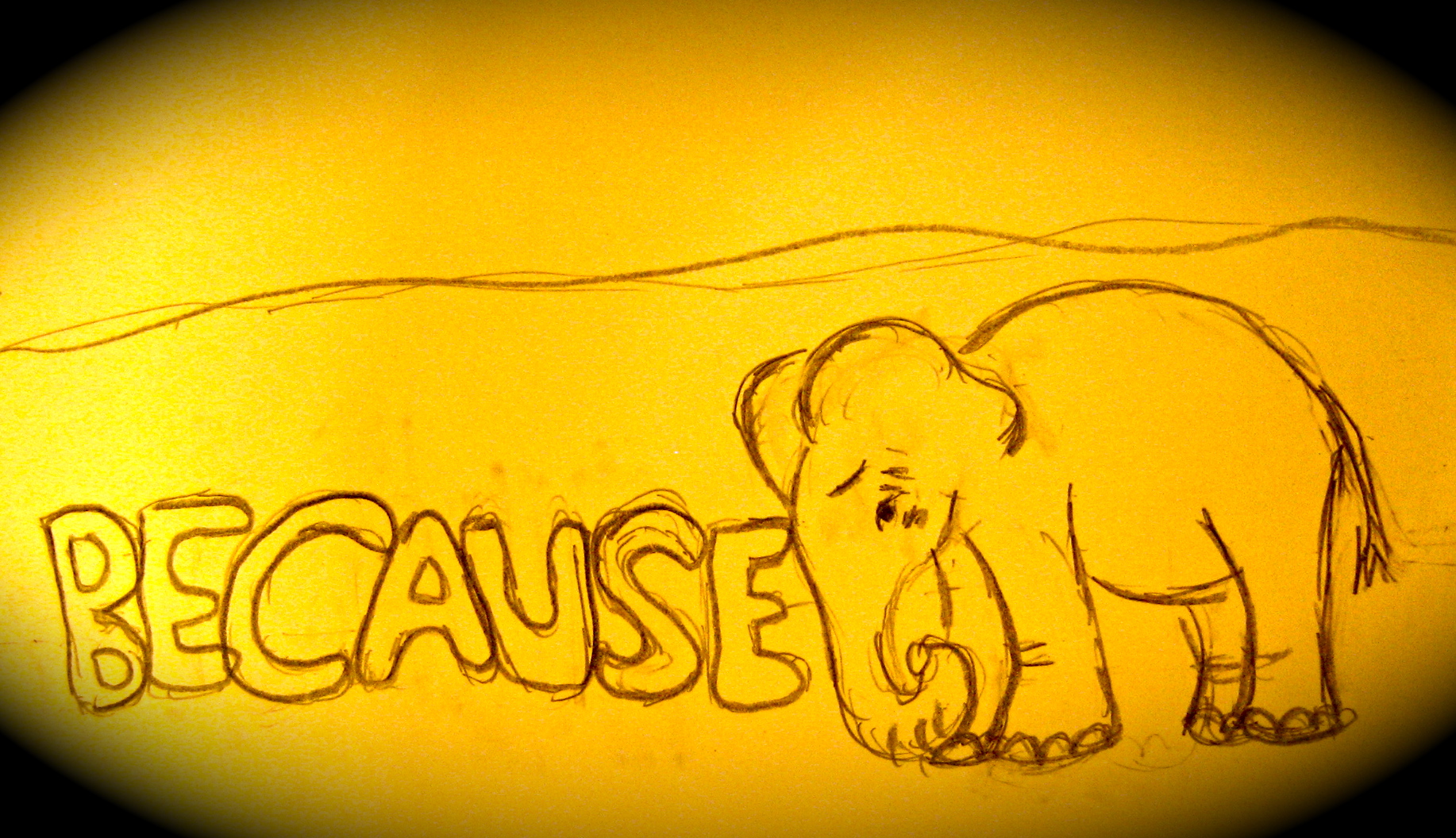
Why is what’s done done?  Why is what’s past past?  In The Thief of Time, the wonderful writer Terry Pratchett has another great answer to these types of questions:  “as you accumulate years, you will learn that most answers boil down to ‘Because’.”

Happy/Sad/Stolen French Fries

August 5, 2010

Feeling both happy and sad tonight:  happy because I went to a large art store early this evening – Pearl Paint – a large art store.  There is nothing like going to a large art store in a self-justifying, tax-deducting, frame of mind for delivering a certain wondrous satisfaction.  Forget about the visuals, though those are pretty great (nearly every imaginable  tint displayed in nearly every conceivable medium)==simply enjoy the smells–the paper, the graphite, the charcoal, the slightly musty cinderblocks–

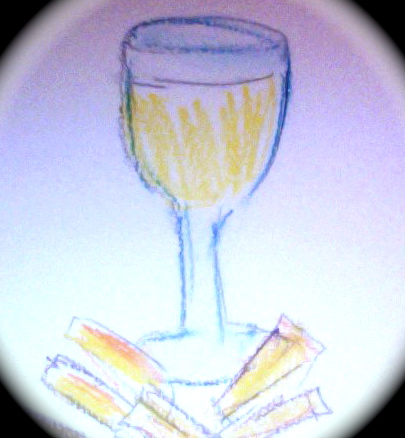
Then, I was taken out to dinner by a wonderful friend.  There is nothing like a really good Frenchified restaurant for making you feel as delicious as the food–yes, a lot of the other customers look slightly bored and eminently self-satisfied, and at least 65%, or more, of the women are dressed entirely in black (it’s New York!  It’s Soho!  Who cares that it’s 90 degrees) but hey! you’re in navy!  And you’re not bored at all!  And the wine was really quite good, not to mention the frise salad…

What makes me sad, of course, is my heightened sense, at the moment at least, that this is a world in which people die before they are ready, that they are swept away from the wine and the frise and the beautiful multi-aquamarine pencils.    It’s very hard for me to get this out of my head at the moment.  I am quite sure that I will get it out of my head.  Humans – American humans especially – have evolved for that.  But it’s sticking with me for now, like a perverse oatmeal next to my ribs, a knowledge that’s probably useful, still uncomfortable.

What to do about it?  Maybe be more vegetarian?  (As in not trying not to cause extra deaths yourself.)  That sounds doable but a bit superficial.

Maybe the answer is to be more grateful, more alive.  To be thankful, for example, that my host let me steal french fries off his plate.  At least until he rotated it slightly so the french fries were on the far side.

(Hey, did he actually do that?)

Hmmm…..

The Unkind Cut (Loss of a Friend in Western Culture)

August 1, 2010

Opening Up To Pain

Still coping (expect to be coping for some time) with the death of a friend.

Sometimes when we experience loss, we get mad at the culture.  It didn’t prepare us for this.  It pushes death so far to the sidelines that it somehow masks its inevitability.

If you are like me, you may even feel that the culture’s dissonance with death has an economic underpinning–that it (the culture) wants to catch people up in the samsara of production and consumption with the implied promise that they will have some period of retirement, some deferred time, in which they can give importance to the less-material aspects of life.

If you are like me and already have a propensity to Eastern religions, you may think about the Buddhist practice of cultivating an awareness of death.  Traditionally, Buddhist monks would visit cremation grounds, expressly inhaling death and decay as part of their training.

If you are like me, you might compare that awareness with Western culture’s focus on youth and unbridled exuberance.   You may feel especially misled by the Western “can do” philosophy, the incipient moral of so many stories, fables, movies, news stories, that if one simply tries hard enough, the attainment of all goals, the extension of life itself, is possible.

If you are like me, you may blame this mythology for causing you pain, as if a big part of what you are feeling is the inability to make things right (especially difficult to accept when you have been conditioned to give tasks your all, and then to receive some positive result).

In some ways, this anger is comforting.  It shields you, at least for a while, from focusing on how painful the loss itself is; from understanding that the ongoing pain really doesn’t have all that much to do with the culture (however, misleading the culture might be).

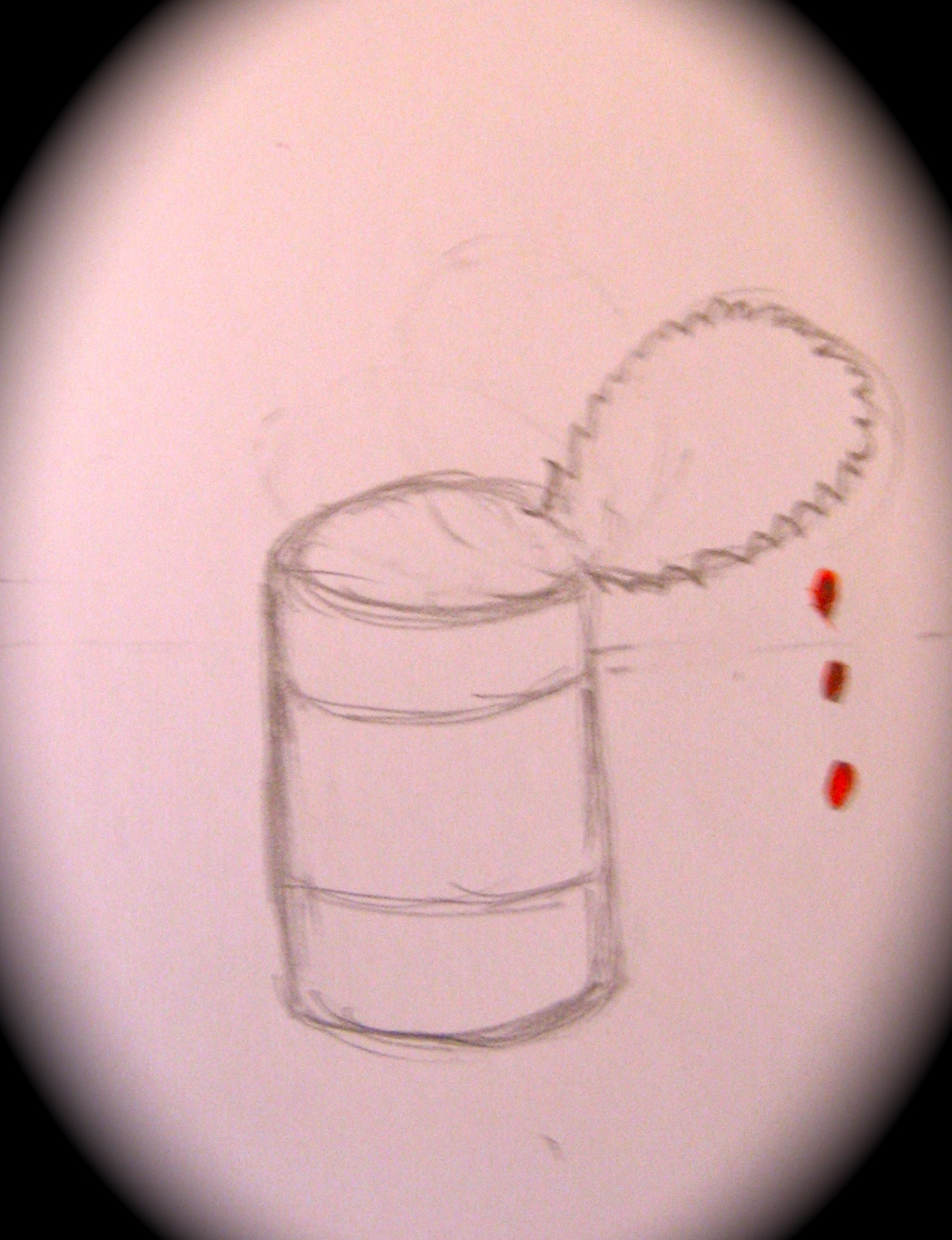
All I can come up with as an analogy is cutting yourself while opening a can.  Yes, you can blame the can opener, the can manufacturer, yourself too;  you can be mad about how badly the whole thing is made, about how clumsy or ignorant you are; about how poorly schooled you’ve been in can-opening.  But putting aside all that, the cut just hurts.

My Afghani (in Goa)

July 31, 2010

My Afghani's Nose

Last week I wrote variously about warmth, watermelon, Proust, Afghanistan.  With all that floating about, I thought today about my own experiences of Afghanistan.

They are extremely limited.  Haven’t even been there.  I only came close once, in the early 80s, on a bus that had an overland route from Delhi to London (the “Magic Bus”).  I got on in Istanbul, and was seriously tempted to head East.  But, aside from the fact that I had already overstayed my trip, there was a Brit continuing on from the Delhi/Pakistan/Afghan side who warned strenuously against it.  He was a tousled (and tired) young lad who, after getting very drunk in London after breaking up with his girlfriend, woke on a plane to Bombay.   With no return plane ticket, he’d ended up on the bus home, which, he shuddered, had gotten through Afghanistan only by chance.  Theyhad been pulled over—by Freedom Fighters?  The Taliban?–somehow he’d managed to hide the fact that he was British and get through.

I got on the bus for London, but my interest/passion for Asia was further inflamed.  Turkey had ignited it.   Some people just love the exotic, I suppose, and patterns –that wonderful conglomeration of patterns that I always associate with Central Asia had already captivated me – the layers of geometry – rugs, mosaics, scarfs, tunics, pants, arches.

Soon after, I was able to go to India myself.  And all those things I’d thought to find fascinating were, in fact, fascinating.  Also overwhelming.  A few months into my stay, I took a break in Goa.

Goa, back then, was not India.  Yes, it was legally part of the country, but well–women greeted my boat at dawn with gathered skirts and baskets of freshly-baked yeasted bread.   They even had sausages!  Sausages!  It was mindblowing (and I don’t even eat meat!)

The beachtowns were largely taken over by Westerners, if I can include Australians and Israelis in that category.  Sun-beached, sun-tanned people that seemed like stragglers from Haight-Ashbury, refugees from the 60s. Everybody was beautiful, welcoming, (at the beach) nude.

I soon discovered one important difference from Goa of the 80s and my sense of the hippified 60’s.  There was lots and lots of of heroin.  People, stupid people, had the idea that it would not be addictive if smoked, so they were constantly rolling it up into tobacco.

I’ve never been very interested in drugs, any drugs.   I suppose I was just too (a) unconsciously maternal (had to preserve the good old bod); and (b) concerned about my own inherent manic-d-daily tendencies, to want to take anything that could hurt me, or induce feelings I couldn’t just stop.   So trying to  steer clear of the drug scene, I quickly took a room outside of town, and focused on yoga.

Easier said than done.  My room turned out to be in a house, that yes, had a very nice Goan family in one half, but also had a group of young Himalayans in the back (they sold Hashish); a very helpful older British man in the front (he turned out to be financing his trip by being a mule), and, in the house next store, a group of Afghanis.  They were apparently the center of the heroin trade.

My Afghani was not one of the guys next door; he lived, he always told me, at the edge of the beach.  He was wonderful– tall, broad-shouldered, handsome in a non-movie star, real person kind of way, with a slightly hawkish nose, very thoughtful eyes, a sweet smile.  He was quite pale – well, pink–you couldn’t completely escape the sun in Goa even if you only came out late afternoons.

I met him in the late afternoons at a little straw hut that served tea and fruit (watermelon!) and little omeletty things.

He, like all the Afghanis, always kept his clothes on – those long tunic-like shirts that have a western style collar and sleeves but drape almost to the knees over billowing pants, always pastels.  I too always had my clothes on in that little hut.

Usually, we’d just sit and talk about literature and look at the sun setting over the Indian Ocean.  He loved Jack London.   “The Call of the Wild,” he’d smile, shaking his head.  The sun went down incredibly quickly when it got to the lip of the horizon, so slow so low so slow, and then, blip, disappearing in less than a glance.

He said he’d been a chemist in Afghanistan, but had to leave because of the war.  (This one with the Russians.)   He seemed to have fought, to have been particularly targeted, to have to leave.

He laughed a lot, gently.  Sometimes we watched a bunch of Germans, in the distance, who did nude calisthenics in the evening cool.  They were red, some wiry, some not–luckily a bit too far to see clearly.

It was an odd scene, Goa.

Because my Afghani did not live with the rest of the Afghanis, I never connected him with the heroin trade, but, now it’s difficult to imagine how or why he could have been there if he was not part of it.

My housemate, the drug mule, was furious with the Afghanis by the end of his stay, complaining how they followed people out to the beaches.  These were always people who were making a point of trying to quit heroin; who were avoiding the towns, the late night cafes, but, my housemate fumed, the dealers themselves would track them.

I used to think, as my housemate raged, that if these friends of his really wanted to quit, they should probably not stay in Goa.  But they didn’t seem able to leave.


This is reposted for Imperfect Prose.

in the hush of the moon

The Remembrance of Things Watermelon

July 29, 2010

Proustian Watermelon

Yesterday, I promised “Proustian.”  And watermelon.

 I have to confess to not having read much Proust.  I know about the alleged inspiration–the tea and the little cakey-cookies (which, in turn, always makes me think of the children’s book of the little girl who, with others, traveled in two straight lines.)

(In case, you are not a children’s book devotee, that’s Madeline.)

I do have a vague memory of the beginning of the Remembrance Of Things Past, in whichthe writer/narrator is in bed, remembering (I think) the shushing sounds of his mother’s feet in the hallway, and too, of a candle or lamp. 

I am right now in a bed, listening to the shushing sounds of people’s air conditioners.

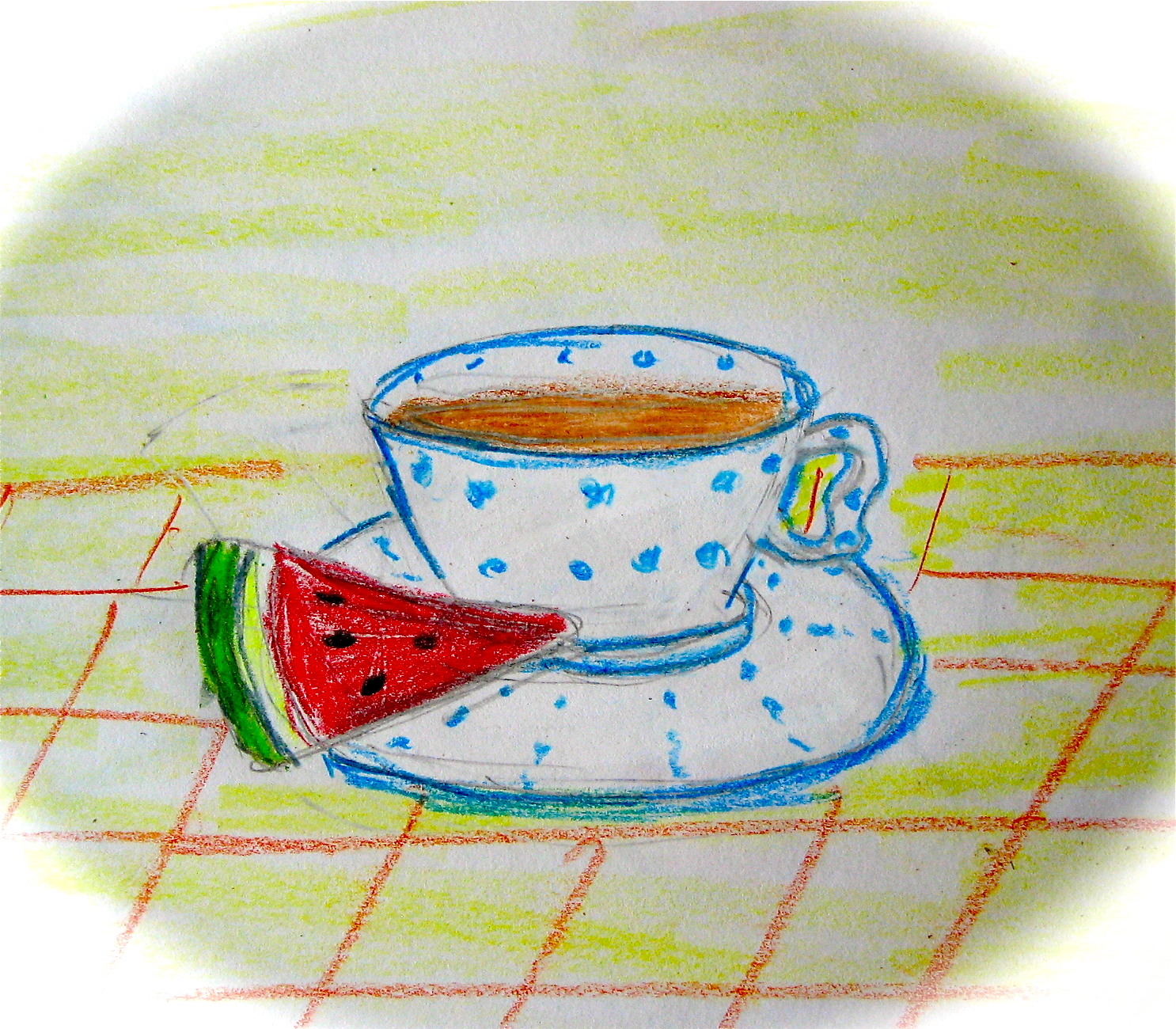
Watermelon is really great stuff, with or without Proust.

When I was a child, the melons were huge, and generally meant group activities, picnics, barbecues.  It brought a communal aspect even to a meal of just my family.    (I suppose that’s also the feeling that comes from sharing a roast, but a huge green and red fruit seems somehow merrier.)

I internally dubbed one Aunt a genius because of a fruit salad which she poured back into the scooped-out watermelon like huge oblong bowl, complete with rind handle.  (The salad was doused with a hefty quantity of rum, which probably also fueled my childish awe.)   Pre-sushi bars, cooks were not nearly so creative with presentation; this seemed extraordinary.

As I grew older, I had a more personal relationship with the fruit.   They were making them a bit smaller then a half-fridge size by then, and I would sometimes buy one even just for myself.  That was a time, both for me and the world, of wacky diets whose simplicity -you just ate one food, or one kind of food — was supposed to be somehow magical.   Now, they would probably call these cleansing diets, but, back then, we were fairly open about our goals  – melting pounds fast.

The watermelon diet.  It was hard to leave the apartment when following it.  Particularly if, like me, you followed it in a manic, stomach-bulging way.  (One further problem – even watermelon is not slimming if you eat enough of it.)

When my daughters were little, they were introduced to Wattamelon!  In Florida!  At Friendly’s!  It was a blend of dyes and sugar that looked amazingly like a wedge of the real stuff – lime, lemon, watermelon sherberts layered, then speckled with chocolate bits.  

It seemed to symbolize Florida for my kids  – a place where everything seemed bright,  flat, plastic, a place not just of Friendly’s, but Walmart.  (We didn’t have either in NYC.)  Of aisles, and lights, and brightness, and cheap largess.   Even the plants – palm trees – had a waxen, unreal, surface.

Summers were spent in upstate New York, a rocky, un-flat place, where my mother-in-law,  an extremely elegant woman, would relate a saying about watermelon at every picnic — it was an Italian saying (which she repeated in the original Italian, of course) about how it filled the stomach, quenched the thirst, and washed the face.    The last part was said with a curved smile, and slight caress of the chin and cheeks.   It was a story essentially told to make sticky guests feel at ease;  she herself could manage to eat the juiciest wedges without a single drip.

Connecting to Time – Summertime – With Watermelon

July 28, 2010

Watermelon Time

Despite the date, despite the heat, it hasn’t felt like true summer to me yet.  Partly this has been because of the lack of extended vacation time – that purposeful indolence that I always associated with summer as a child; partly this vagueness results from the general disengagement with time that seems to go hand in hand with growing older.  As you age, time seems to slip through your fingers like extremely gritty sand–with a fair amount of discomfort (itch/scratch/burn) but too fast to truly grasp.

And partly, I realized last night, my disconnect from this summer has  stemmed from an inexplicable lack of watermelon.

Where has it been?  Why haven’t I bought any?

I’m not exactly sure, but I suspect it has to do with too much rushing about, too much uncertainty.  The purchase of a whole watermelon is a commitment.

Whatever.  I had my first pieces of the season very very late last night and finally July felt somehow real, a part of my personal mosaic of “July”,  one more member of the conga line of continuum.

I love watermelon.  In a childhood without much A/C, it represented a hand-held cooling system.

And the piece I had last night (in a similarly unairconditioned, thirsty state) was just as sweet, delicious, cooling as I always remembered it.   I remembered a lot of it – the melon was like my own red/green, seedy, crunchy/soggy madeleine.  The inner fruit self-moistened, no tea necessary.

The “Proustian”—errr—ManicDDailean results tomorrow.