Archive for January 2012

One More Last Thing

January 11, 2012

20120111-100930.jpg

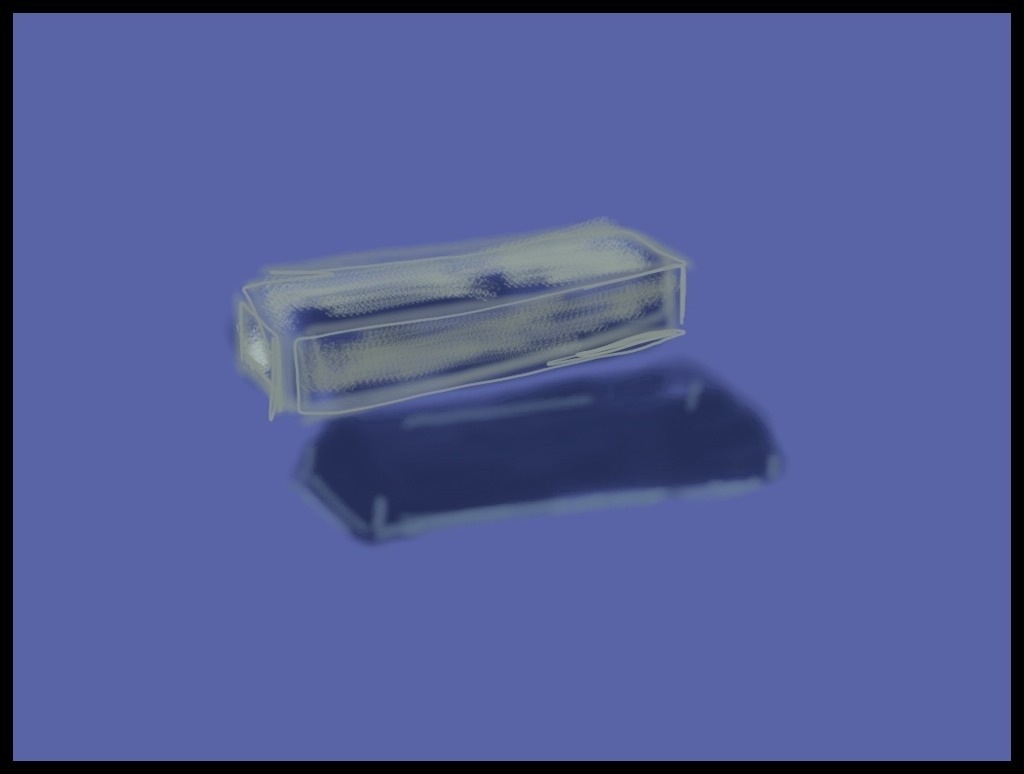
Getting up very early in the morning tomorrow to go to my father’s cremation. This sounds so strange even as I write it. Perhaps I should say that we (my brother and I) are getting up very early to go to the cremation of my father’s body, corpse, remains. (Though it is hard not to think of what is left as my father, since it is the only physical bit still present.)

Going to an event like this may sound ghoulish or unnecessary. (We have already had a very lovely funeral.) And yet it feels important to me to do it; one last chance to do one more/last thing for and with my father, even if it’s only seeing a longish sort of box, maybe putting a hand on a corner of it, or a corrugated side.

Pantoum – Slow Waltz “Last Anniversary Party (During the Chemo)”

January 10, 2012

Silver Slipper

Due to the death of my beloved father last week, I’ve spent the last few days somewhat focused on loss.  Here is an older poem, a pantoum, that deals with the loss of a friend.  (I posted a very early draft of this poem some time ago.  I think this version is much improved.  I am linking it to dVerse Poets Pub open link night.)

I’m not sure the poem quite works, even improved.  However, the pantoum form, which is by its nature a bit of an unwieldy dance (with all the repeating lines) seems to suit the subject.   (As with all my poetry, pauses in reading should be taken based on punctuation, not line breaks.)

Last Anniversary Party (During the Chemo)

She walked that night on the side
edges of silver slippers,
her smile stretched movie-star wide
above feet the meds had blistered.

The edges of silver slippers,
gathering (elasticized)
around feet the meds had blistered,
wedged in a slow waltz that defined

our gathering.  Elasticized
sweetness stretched around the bitter
wedge that their slow waltz defined.
With her husband, her too, we fitted

into that sweetness (stretched around the bitter
to make it last), pain astride.
With her husband, her too, we fitted
loss with all that sparkled fine

to make it last.  Pain astride
a smile stretched movie-star wide
lost none of that sparkle fine.
She walked that night still on this side.

Art Therapy (With Elephants)

January 9, 2012

20120109-111642.jpg

As followers of this blog know, I lost my dear father last week.  He had been declining for some time, but his death has still been very sad, especially for my mother, his spouse for over sixty years.  The above is a collaborative drawing of my mother, myself, my husband and my iPad2 done during the preparation of the first dinner we’ve actually been able to cook since my dad’s death.  (Doing normal everyday things like cooking is difficult after a death.  In my case, this difficulty is compounded by the fact that my mom has an electric stove, and I’m an absolute devotee of cooking with gas.)

One activity that is quite wonderful after a death, however, or perhaps after any trauma, is the making of visual art–even not-such-great art like the painting above. There is something absolutely engaging about making images, one’s own world, a new world–a world that, if you don’t have complete control over your medium, is full of surprises, and yet still self-contained.   It is probably more fun to do the art with paper and brushes, but those may be more dicey to whip out in the midst of food preparation.

As always, I recommend the Brushes App for those working on iPads.

Magpie Tale – Odd Poem on Baldness (“Arched/Domed”)

January 8, 2012

20120108-090040.jpg

This is an odd poem written for Tess Kincaid’s Magpie TalesMagpie Tales. Tess posts a photographic prompt. I prefer to use my own art in my blog, so do my own version of Tess’s photo. And here’s the poem:

Arched/Domed

There is arched baldness and there is domed baldness,
Polished baldness and (simply) overly-shiny baldness,
Smooth baldness and whiskery baldness,
Waxed baldness (hair shaved) and waned baldness (hair receding),
Diabolic baldness and sweet baldness,
Destroyer-of-worlds baldness and lab-scientist-with-oddly-ruffled-
sides baldness.

The sweet (domed) baldness sits above a chest on which
one feels safe to rest one’s head,
While the arched baldness overlooks an
appraising brow.

You may wonder how I know
so much about no-hair.
Wonder on.

Onomatopoeia on the MTA (Subway Song)

January 7, 2012

Opening of "Somewhere", Music by Leonard Bernstein, Lyrics by Stephen Sondheim

Sheila Moore working with dVerse Poets Pub has a wonderful poetics prompt on onomotopoeia today.  Boom!  A great excuse to escape from the heaviness that has characterized my recent posts.  (I am also linking this to Victoria C. Slotto’s poetry blog, liv2write2day, which has a prompt about music and words.)

The following is an old sonnet, posted before (sorry!), but somewhat revised.  I’m not sure that it quite qualifies as onomotopoeic poetry, but it does focus on sound, in this case an eerie music made by track and train car at certain subway stations on the IRT Lexington Avenue line.

“Somewhere” on the MTA

The subway sings its broken refrain:
the opening bars of “Theeeere’s aaa Plaaaace
For Us” from West Side Story.  The train
croons the first three notes as it leaves the dais
of the platform, the tune subsiding
then to squeak and wind and roar as we race
to a-harmonic levels, soon riding
at a speed without space for Bernstein’s trace
of tragic lovers defiant of fate
and family.  Yet…at every station…
there’s a plaace—again.  Who of those who wait
hear the song of that longed-for destination,
harmonic haven–beyond how, beyond where–
amazed that the Six Train nearly takes them there?


I am also linking this post to Gooseberry Garden’s Poetry Picnic.  (The prompt relates to NYTimes headlines–the subway? Hmmm…)

Food, Mattresses, Eulogy?

January 7, 2012

Too-quick drawing of my sweet dad

It is hard to explain how much there is to do after a death.  It is a crazy time, so rushed historically because of the fragile nature of the body, and now because of the difficult interplay of multiple schedules.

So what are some of the tasks?

Picking out clothes to take to the funeral home.  Something nice, but perhaps not too nice.  (You won’t get them back.)  In accordance with family regulations, you must make any family member near the same size try on selected outfits first  to make sure that any clothes chosen are not things that might have remained with the living.

Buying food.  More food.  Sandwiches?  Shrimp?  Is Champagne weird?  If not, should we get the one whose name is like that of an old friend?  (Yes.)

Calling people.  Writing people.  Sitting with those who come to visit.  Accepting hugs.

Cleaning.  Going into the decedent’s room and discretely taking out the more unpleasant reminders: rubber gloves–compressed oxygen.

Getting beds organized.   Airplane tickets.  Car pick-ups.  Mattresses.  Sheets.  More food.

Cleaning out the fridge–Ensures don’t need to be refrigerated and space is needed for all that food.

Negotiating funeral program.  Reading Bible verses.  Considering non-Bible Verses.   Hurriedly drawing sketch that can be printed on a small-town church printing system.

Music?

Of course, music.

Oh dear, music!

Photographs.

Helping to pick out clothes for the widow.  Promoting the benefits of hearing aids.  Assuaging grief.

Grieving.

Organizing more food.

And more clean up.

A eulogy.

Mattresses.

Long Day

January 6, 2012

20120106-121205.jpg

Long day’s night.  As followers of this blog know, it is the day after the death of my dear dad.

A lot to be done, a lot done. Not really done, but “arranged, ” i.e. set up to be done.

I find it very hard to use the term “passed away.”  I don’t like euphemisms to begin with, but also the word “pass” just seems too casual for such a sober event–how can I use the same word for the death of a loved one as I might use for requesting a bottle of ketchup, a throw of a football or a whole bunch of more awkward things?

It seems to me that “past, away” would work better, the person being both suddenly past and away.

Those remaining behind become extremely tired.

The good part is that some of the normal nervousness and fretting about doing things, i.e. preparing events kind of disappears for a while.

You just do your best, can’t worry.

Besides, there is plenty enough else to worry about–that which has passed, and is away.

Sad Day

January 5, 2012

My beloved father died this afternoon.  He was conscious and loving and consciously loving until his last breath.  I feel lucky to have known him, much less to be his daughter.

I will probably write about both his life and death more in the future.  For today, I’ll settle for an older poem, a sonnet of sorts.  It doesn’t really describe that much about him, just a habitual moment in our lives.

My Father

My father knelt beside my bed; his round head
reflecting the bedside lamp with the look
of lighting within.  “And the genie,” he said,
“came out of a big blue jar.”  Not from a book
were the stories he told me at night.
Always of genies who were big-blue-jarred
and did fairly little, only the slight
magic of minor wishes, often ill-starred.
But the stories were just a warm up to
our prayers.  “Our Father,” those would start,
the words heading for hallowed, trespass too.
Interlocking like a spell he knew by heart,
they croakingly invoked a wished-for will
that the blue genied jar could never fulfill.

dVerse Poets Open Link Night “After It’s Fallen”

January 3, 2012

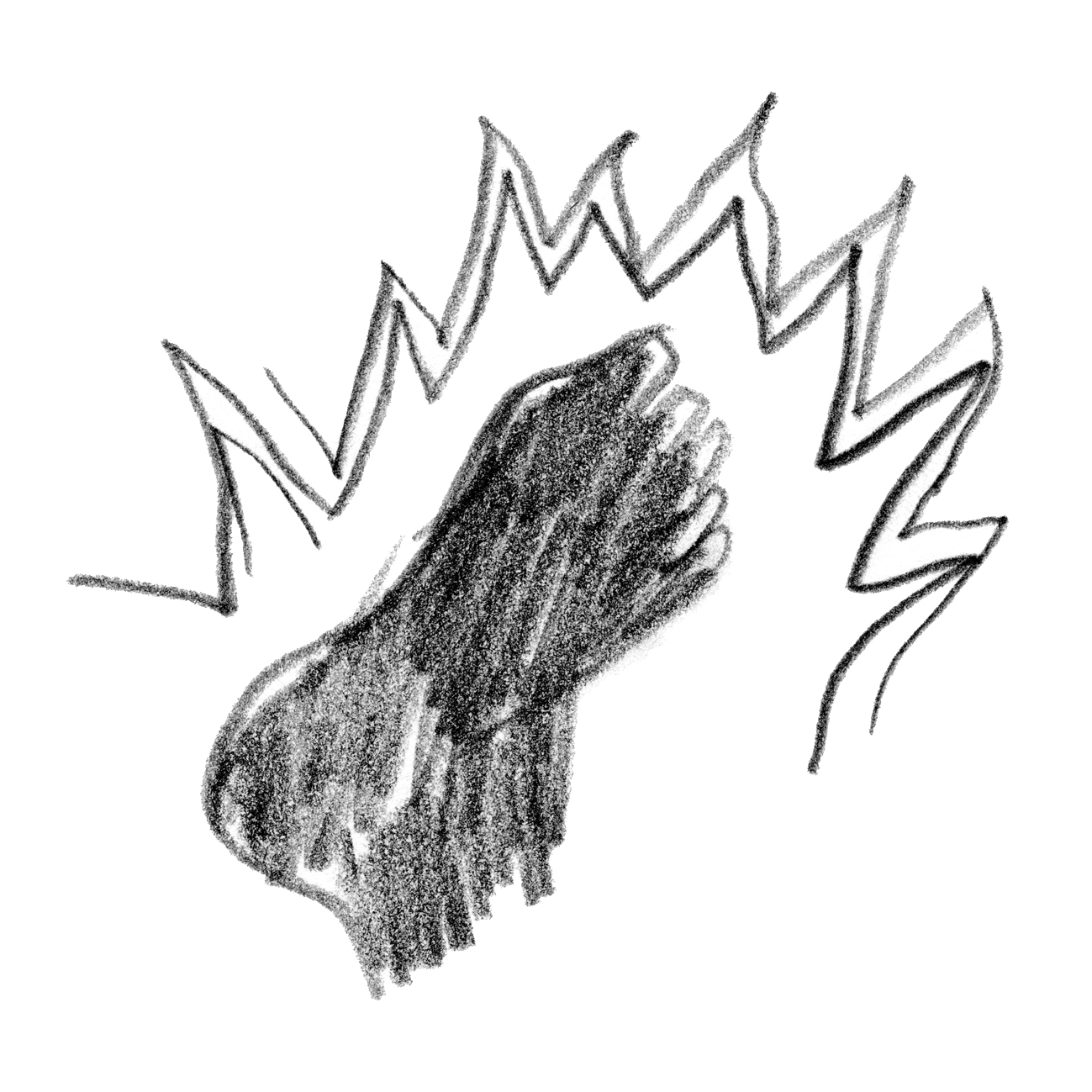
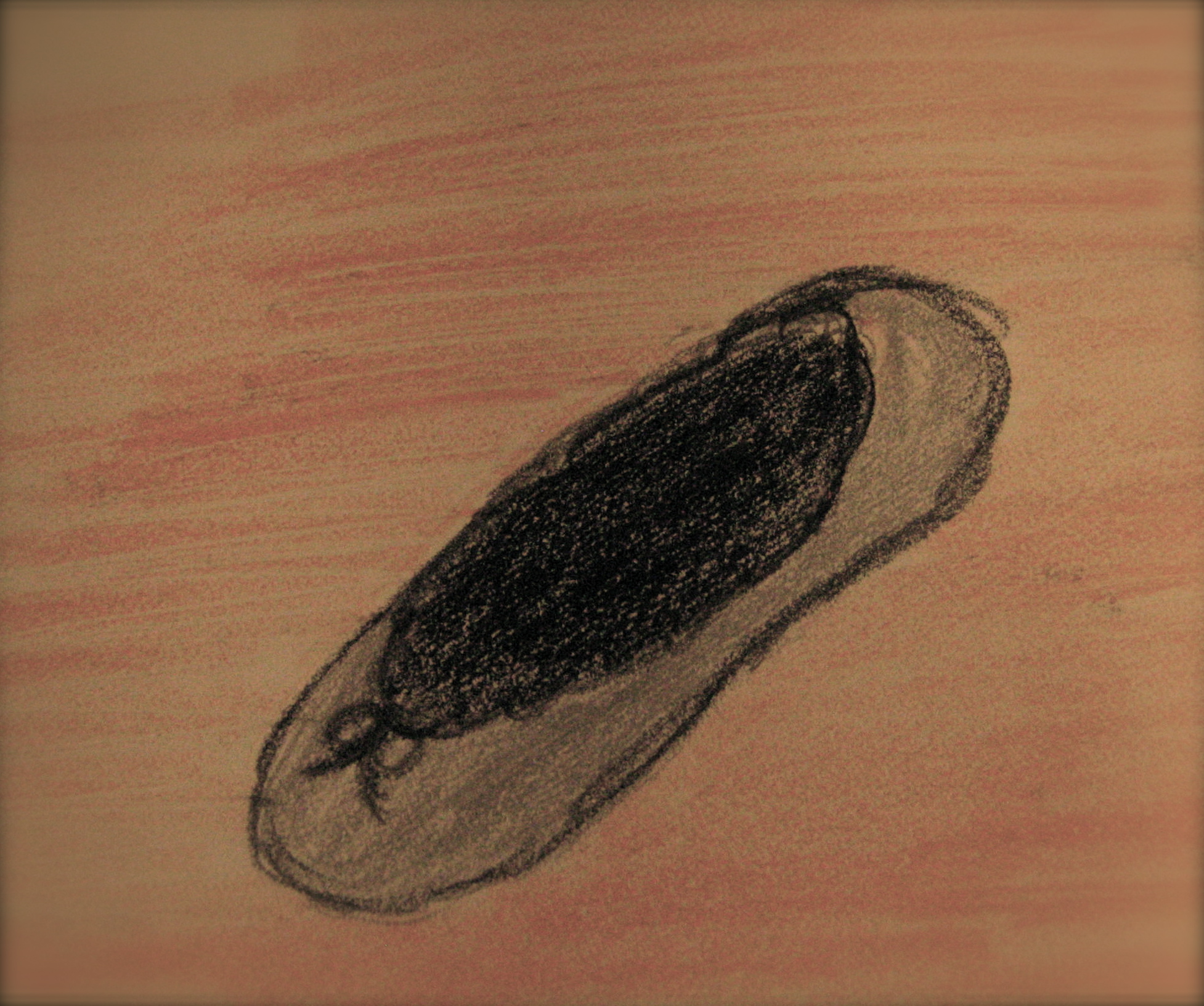
This is an older poem about the burning ghat in Varanasi (Benares), India.   The picture above is by Diana Barco, from a book of my poetry called Going on Somewhere.    I am posting it for dVerse Poets Pub open link night as well as the Poetry Palace Poets Rally and for Victoria C. Slotto’s blog, liv2write2day (for a prompt about memory.)  All are great resources for poets and those who love poetry.

After it’s fallen

In Benares, the tenders rake the fallen feet back into the flames.
The first time we watched them, I was horrified.
How you would know that foot, I kept thinking,
your father’s soft purply big-veined foot.
My father’s feet have always seemed too small to me.
When he walks he seems to go on edge, as if they
can hardly carry him.
The toes of his shoes turn up strangely,
even after he’s had them just one week,
Something from the war, he’s always said.

In Benares, the feet are the last parts to be burned.
They overhang the pyre and simply
wait there, smoking slowly
until the shins are completely charred.
Their full flesh too heavy for the burned legs,
they fall, eventually, to the ground.
They never fall together, but one first, pointing randomly,
the other still flexed in the air.

When one of the tenders notices, he
pushes the fallen foot back into the flames.
He uses two long poles, the
green bamboos of the bier.
Sometimes he has to lever the foot
to reach the flames again, crossing the poles
like huge chopsticks.

They have dark feet in Benares,
darker than my father’s would be,
smooth and brown.
I couldn’t stop looking at them, thinking how you would know
that foot on the ground there, that foot.
Not smelling one’s best

January 2, 2012

20120102-095138.jpg

20120102-095156.jpg

20120102-095207.jpg

20120102-095217.jpg

20120102-095230.jpg