Archive for October 2010

Mid-October? What’s Happened? What’s Coming? National Novel Writing Month!

October 14, 2010


Blank Page


It is mid-October already.  Mid-October!

This means a variety of pleasant and not-so-pleasant things:

1.  That, since I can’t remember what in the world I was doing at the beginning of October, I must be getting… (I don’t want to use the o-word or the s-word or the A-word)…. forgetful.

2.  Leaves must have already changed in Upstate New York, or even fallen.  ( I seem to have some vague memory of red and yellow.  Is that where I was a couple of those lost days?)

3.  Your last chance for last year’s tax return is about to expire.  (Oops!)

4.  Didn’t the World Series use to be over by now?

5.  I’m not going to say anything about upcoming mid-term elections.  (I’d like this to be post to be cheerful.)

6.  Nanowrimo–National Novel Writing Month (the month of November) is just around the corner!

Nanowrimo was the conception of Chris Baty, a writer in the San Francisco Bay Area, who realized in a brainstorm that the one thing non-professional writers lack that professional writers have is a deadline.  He also postulated that the imposition of a deadline (a firm deadline, even if arbitrary) could be an important step to blocking writer’s block, i.e. getting the old fingers/pen/keyboard working.  Fast.

Nanowrimo gives would-be writers a very public start date and end date–November 1 to November 30–to write a novel of approximately 175 pages (50,000 words).

The goal (remember you only have a month!) is quantity.

I urge all of you to go to the Nanowrimo website–www.nanowrimo.org–to learn more about this endeavor/torture.  All I can say is that if you can commit to it, it’s a lot of fun/torture.  There is something wonderful/torturous about writing madly with the virtual company of thousands of other crazed/tortured people, all of you racking your brains and up your word count.  (Yes, I too can sense a theme developing.)

I haven’t quite decided how to handle the blog this November.  There’s the temptation to post current Nanowrimo output, but I will resist that.  If you are writing a novel in a month, you need to be free to be ridiculous.    (There’s a limit to how much torture can be borne!)

More soon.

Rescuing Miners/Minors

October 13, 2010

Thank you Chile, and you Chilean (and Bolivian) miners for an inspiring story of stamina, hope, organization.  Thanks too for heartwarming imagery–you and your loved ones weren’t only sincere and brave, but wonderfully photogenic!

Now, trying to piggy-back on that wonderful Chilean glow (sorry!):

1. In the U.S., we are going through an election where (despite the collapse of much of the private sector about two years ago), many are touting the absolute superiority of private (for-profit) efforts to accomplish virtually any task.  It’s interesting to note, in this context, that it was the Chilean government that arranged the massive rescue effort of the miners, though the San Jose mine is privately owned.  Also worth mentioning is the fact that the mine-owning company, Empresa Minera San Esteban, had a poor safety record even before the current mine collapse, receiving 42 fines for safety violations between 2004 and 2010.   (Sound familiar?)

I’m not mentioning this because I’m against private enterprise!   I’m just not sure that, in a dire situation, I’d want my health and safety to rely primarily on the efforts of a large company which is closing watching its P and L.

2. As part of the speechifying after the rescue, Chilean President Piñera said that the most important celebration “is the one in our hearts, in our conscience.”  This was a situation in which people could feel both that something right had been done and that something had been done right.

Human beings seem to like to save other human beings; people crave heroism,  especially when it happens relatively quickly.

In contrast, the slow, trudging, mundane types of rescue seem often to sap the conscience, even as more commonplace victims fail to get the benefit of national adrenaline.  I’m thinking now of minors, as opposed to miners–kids whose families are stuck in a cycle of poverty; whose teachers labor in schools with few supplies and less support.

A massive and coordinated effort, one involving organization and stamina and courage, is sadly needed.  Unfortunately, an increasingly large number of Americans seem to have convinced themselves that you can’t rescue other people, even young ones, at least, not with their tax dollars.

There are legitimate questions as to how adequate funds for education are best spent, but the bigger question at the moment is one of adquacy,  a question of conscience.

I don’t mean to diminish the truly wonderful, and well-handled, rescue effort in Chile.  But, I do sometimes wonder whether the fact of it having been made is as extraordinary as has been presented.  When it was discovered in August that the miners were alive, but trapped, what was Chile to do?   Could the country really just stand by under those circumstances?  Try to forget that the minors were still there (until they died)?

Again, there is a lesson.  Those minors trapped in poverty and poor education in the U.S. are not going to disappear just because we don’t feel like dealing with them.  Even if we try to keep them out of our hearts, we will not be able to just put them out of mind.

Joan Sutherland – Between Steel and Sky (A Child’s Introduction to Opera)

October 12, 2010


Not such a great drawing of the young Joan Sutherland


I felt almost unaccountably sad to hear of the death of Joan Sutherland.  I say, almost unaccountably.

She was a great singer; she was a wonderful mentor for another great singer, Luciano Pavarotti;  her death, in some ways, is like the passing of an age. So much seems to be expected of opera singers today–that they be beautiful, slender, good actors, and physically dextrous–able to sing from prone positions (lying on the stage.)

I admire modern singers.  But I feel a different connection with Miss Sutherland, more personal than simple admiration of her incomparable voice.  As a fairly young child, I was given a record player one Christmas.  I know I was fairly young because it was the Christmas at which it was finally confirmed to me that there was no Santa Claus.  I bugged my mother into confession with endless cross-examination:   “I really do know already.  I mean, how could there be a Santa Claus?  So just tell me, okay, just tell me.”

When my mother finally admitted that I was right, I was crushed.  Of course, I had known the truth (I wasn’t that young), but to have her admit it–to have her not even keep the charade of childhood–felt like an abandonment, as if I were alone in a world that not only did not have magic, but without parents who would allow me to believe in magic.  (Sorry, Mom!  I know you didn’t mean it.)

And then, on Christmas morning, I was given a record player.  It was a blue record player, something between steel and sky.  I also got an album called “A Child’s Introduction to Opera”.    (My parents were very big on “improvement”.)

Of course, we had other LPs in the house, but this was the only one I remember as truly mine.  Joan Sutherland was featured, singing Sempre Libera from La Traviata.

It is a showcase aria (even more than most), filled with trills, lilts, high notes, runs, and I was absolutely captivated.  It seemed almost impossible to me that the human voice could do what Joan Sutherland’s did, could sound the way she did.  It was magic all over again; a deep and wonderful magic that I knew grew from both tremendous discipline and tremendous talent, something between steel and sky.

I listened to her aria down in my basement, lifting up the record arm to play it over and over again. I could not sit still when listening (maybe I was pretty young), but would dance around, leaping up and off the downstairs bed and twirling about the linoleum.

It was not a dank basementy kind of room, but had several casement windows, one several feet off the ground, others just at grass level.  How strange and private and grown-up it seemed to listen to the light and airy (but passionate) in a room which was, at least in part, buried.  Anything seemed possible, anything in this world.

As I’ve become a little more sophisticated in my listening, I’ve come to learn that if Ms. Sutherland had a flaw as a singer, it was her perfection, which some may think makes here singing a bit sterile.  (Perfection, though, seems a rather minor flaw.)

Frankly, her recordings of more emotional arias (from Tosca, for example) move me, at least, to tears.  It’s beautiful music; she’s true to it.

Blocking Writer’s Block – A Beautiful Day (Oh No!)

October 11, 2010

It was a beautiful weekend in New York City.

This can be a real trial for a would-be writer, especially one with a day job, a family, and at least one hamper of dirty laundry.

Most writers do not like waste; they carefully save scraps of scribbled paper, notebooks, drafts.  Only a terrible mishap, or true epiphany (sometimes one leads to the other), induces most writer-types, artist types generally, to discard.

A beautiful day, a free day, a three-day weekend, is something you want to savor.   As a writer, you feel you are supposed to be experiencing the beauty of the world; as a person, you want to experience the beauty of the world; as a job holder, an office worker, you are desperate to be carefree, outdoors, enjoying a sunny sky.

One problem is that most would-be writers work on computers (they save their scribbles in notebooks, but they really would prefer to avoid having to re-type) ; and most computers really don’t function well under sunny skies.  Computers, even laptops, tend to be curmudgeonly homebodies; grinches who love grey; cloud-seekers.

But it’s your one free day!  But you want to work!  But it’s beautiful outside!

You feel guilty for staying indoors working; guilty for hanging outside not-really-working.  (I confess this guilt may plague me more than the average would-be writer–I was raised, after all, as a Lutheran.)

Some thoughts:   Try a notebook, even if you will have to re-type.

Or take your laptop into the shade.   Deeper Shade.

Try just walking and thinking for a while.

And then, finally, bite the bullet, and work indoors, hopefully by an open window.

Here’s the gist of it:  if you are a would-be writer; and have a day job, and a family, and dirty laundry, you really can’t live your life quite like other people–those lucky less-fragmented souls who can, for example, just lay out in the sun or play tennis much of the day.

If you want to do your work, you simply have to devote some of your free time to it, even when the day is beautiful.

You might, however, put off the laundry.

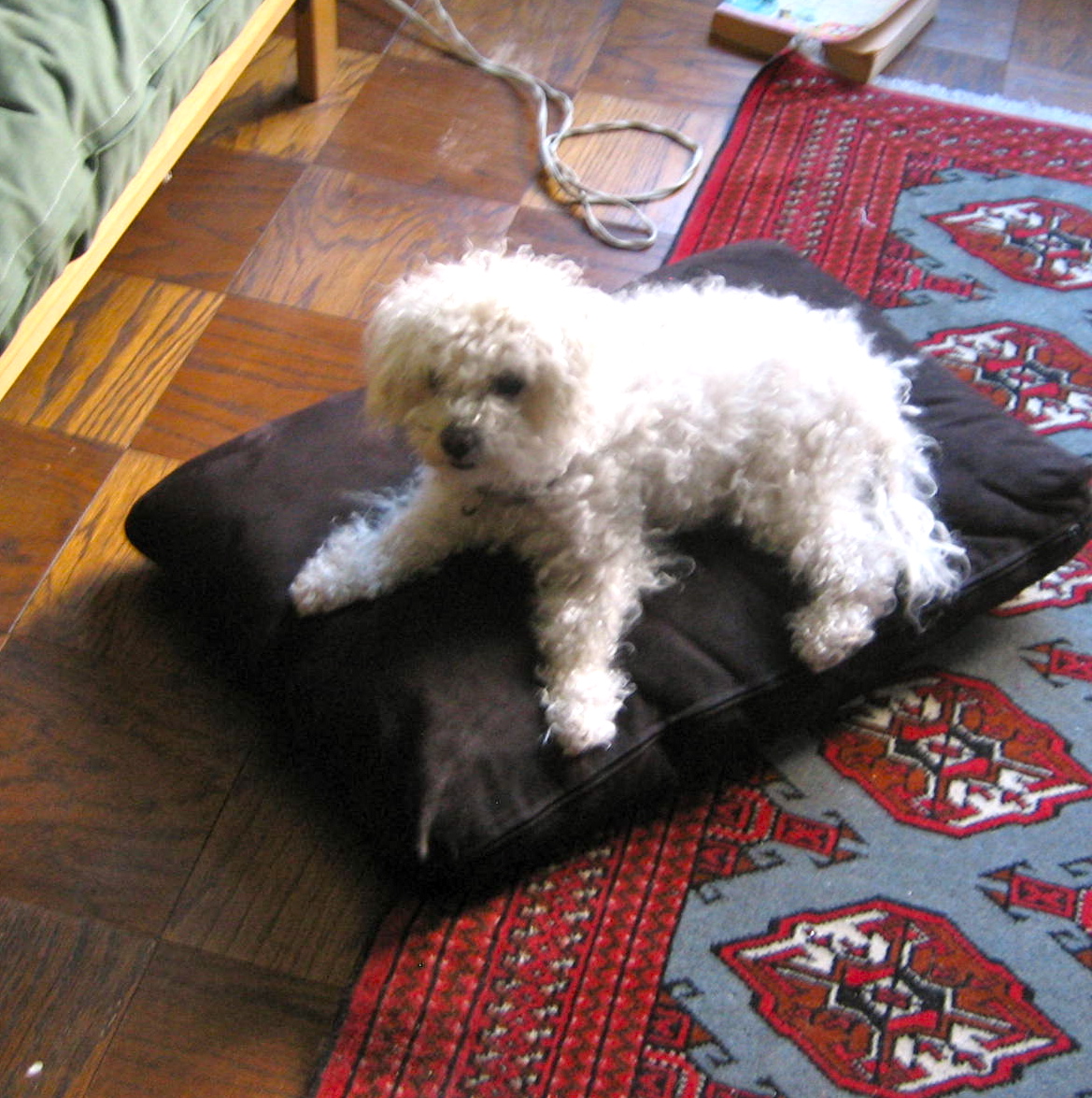
(PS – once again I take inspiration from my dog, Pearl, shown above, enjoying the outdoors but not fixated on it, knowing that she has to get home to do her one of her true jobs.)

PPS–the titles of two videos above don’t seem to be coming out–first –“Pearl Nonplussed by the Hudson”, second–“Pearl Doing One of Her True Jobs”.

Paula Geller, Andy Warhol – How A Blogger Gets “Hits”

October 10, 2010


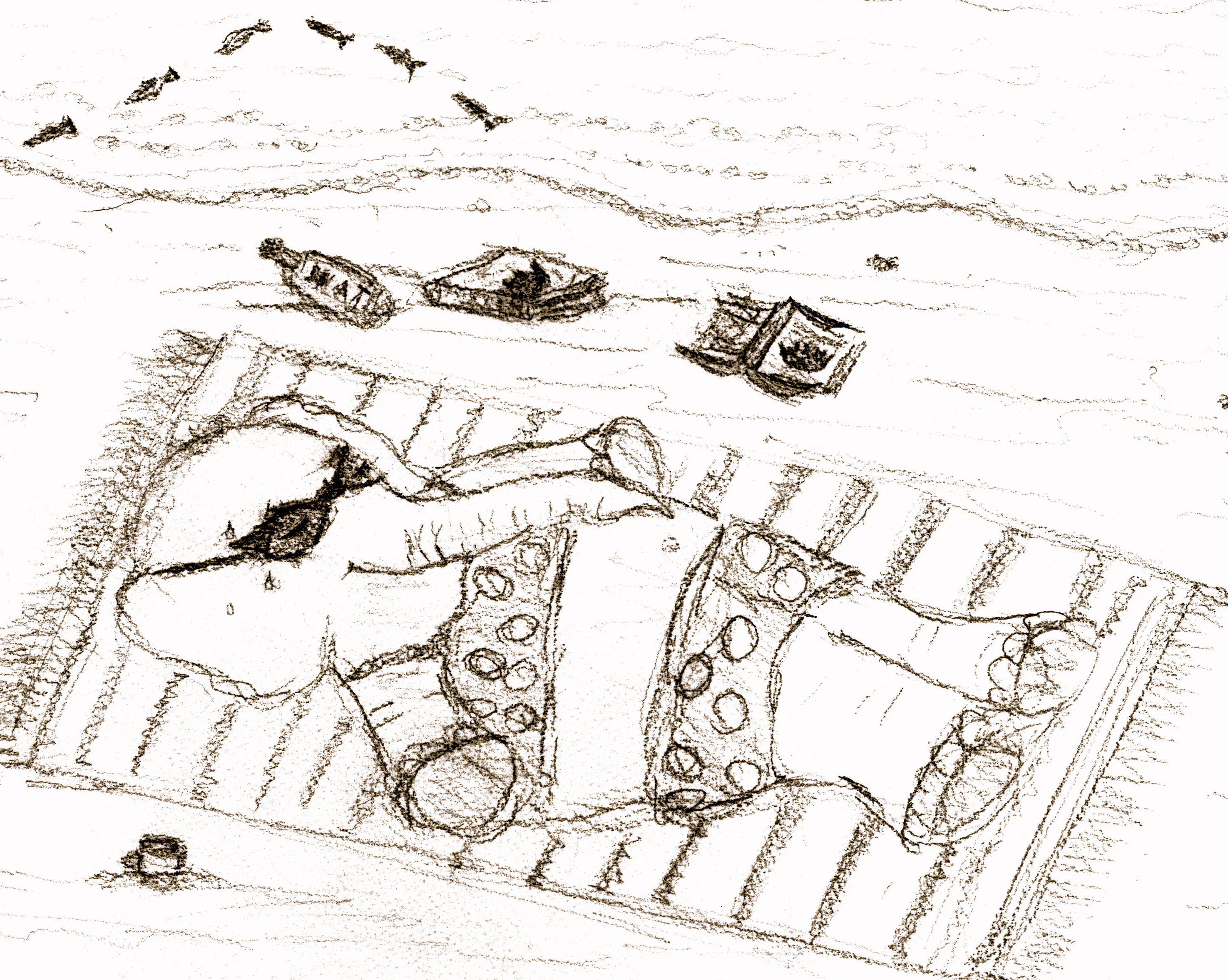
I even tried a bikini.


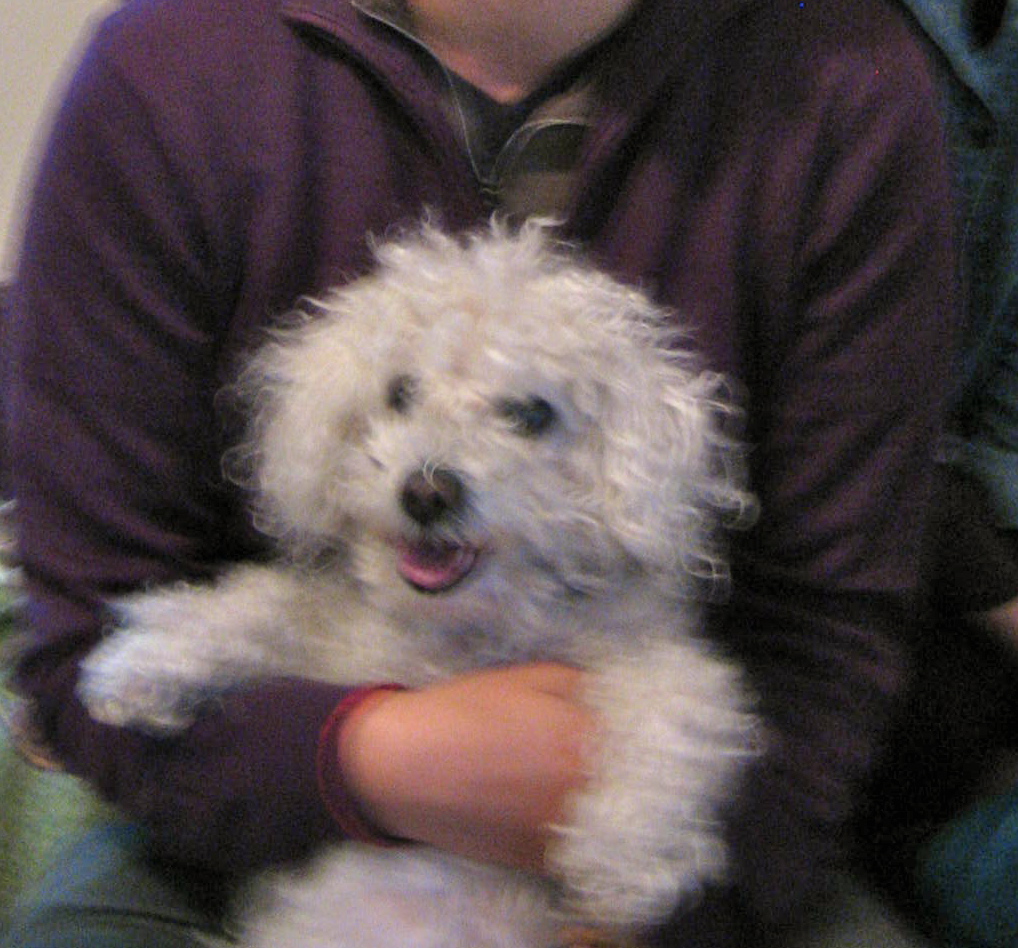
Why didn’t I get it?  Of course, I knew that a poetry/writing blog was probably not going to take the world by “hits”, not even if it occasionally featured a cute little white fluffy dog.

I figured some Robert Pattinson would help–and it did–especially before the first three Twilight movies came out.

I even mixed in a dose of bikini (although, granted, it was worn by an elephant.)

What I did not fully comprehend is that if you really want to ratchet up your blog numbers, you need to regularly post a huge amount of knee-jerk anger, prejudice, and misinformation,  highlighted by heavy doses of mascara, mosque, and… um… more misinformation.

Someone who has understood all of these facets of popularizing a blog is Pamela Geller, the extreme anti-Muslim blogger profiled in today’s New York Times; the woman who, through a variety of inflammatory tactics,  has spearheaded the fight against Park51.

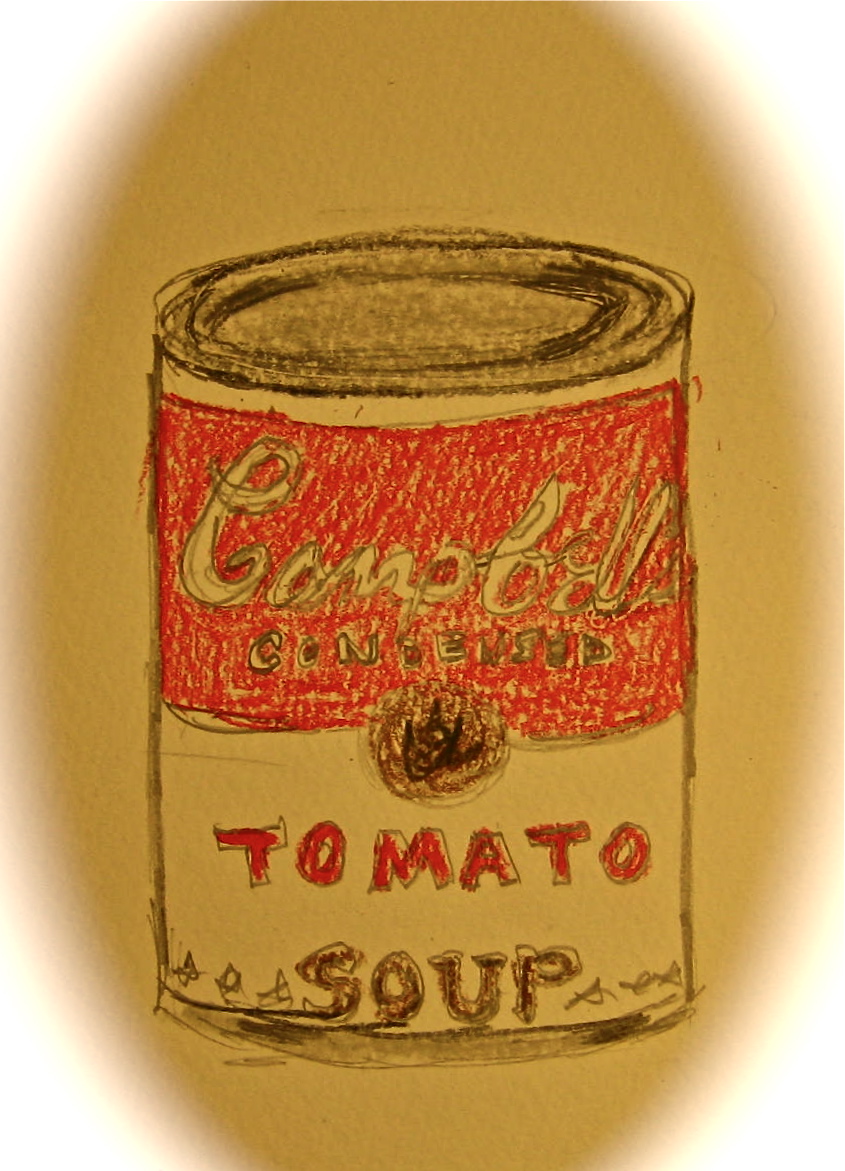
I don’t really want to comment here on Ms. Geller’s various stances, only on a particular one-liner which I found especially intriguing.  Calling for a boycott of Campbell’s because of its marketing of certain products as halal: “Warhol,” she said, “is spinning in his grave.”

Hmmm….

Of course, no one can truly say what Andy Warhol is doing post-morten.  To me though, he does not seem like a grave-spinning kind of guy.  It’s simply hard to imagine him, a life-long student of commercialism, to be shocked by the idea of any company trying to expand its market.

I also can’t think of Warhol as particularly anti-Muslim–he did portraits of the Shah of  Iran and his sister.  (Though I have to confess, I don’t quite know what that reflects other than their willingness to pay Warhol’s portraiture fees.)

Still, there’s a certain irony here.  Warhol, after all, was a master of self-promotion,  a manipulator of outrage (as well as mascara), the person who coined the phrase “fifteen minutes of fame.”   It seems he might have understood Geller better than she does him.


ManicDDaily Warhol Campbell's Soup


A Pearl For the Blocked Writer: Let Go of The Bad News; the Grandiosity; Just Do What You Do.

October 9, 2010

I woke up today feeling terribly depressed.  Yes, it’s probably my chemistry (the down side of the m-word), but, as I browsed through the online New York Times, I also felt that I had every right to blame my hopelessness on the world in general.

Everything seemed to bring up Reagan’s old (deficit-producing) supply-side economics;  they seemed not just to have been swallowed by the American people but to have become an integral part of the body politic–its eaten-out heart (as in “eat your heart out’);  the idea that compassion is bad while greed is good (for society as well as the greedy), almost a moral imperative.

There was the article about the refusal of politicians to support improvements in infrastructure despite the terrible need both for the improvements and the jobs the improvements would provide.  Then the negativity towards healthcare (in one, a Florida politician whose company was indicted for massive medicare fraud.)

Then there were the  little children bullying other little children, seemingly egged on by parents who are happy, primarily, that their kids are at the top of the popularity heap.

I don’t want to detail the stories of truly horrific brutality, stories where even the words “lack of compassion” can’t be squeezed in.

Normally, I try to spend Saturday re-writing one of my old children or teen novels.  (I have a few that for years have seemed sort of finished, and yet still aren’t quite “done.”)  But, suddenly, my little fictional tales seemed ridiculously trivial.   Sure, they all promote compassion; but they are also, due to my lack of talent and vision, not particularly life-changing, society-changing.  Not even, perhaps, life or society-nudging.

Of course, one would like to write life-changing books!  But what if you just don’t/can’t.

Feeling grandiosely whiney, I looked over at my very conveniently located muse–that is, my good old dog Pearl, snoozing at the bottom of my bed.

Talk about a lack of grandiosity!  Talk about forging ahead!

Pearl might very well like to be a noble dog, a celebrated dog (a Balto!) even just a big, strong dog. But she was born cute and fluffy and a little bit clownish.

Pearl might even like to be young again, with fully functioning limbs.

Nonetheless, Pearl presses doggedly through life each day, doing what she does as best as she can.   And not doggedly just in the sense of persistently and dutifully–but with a joy us non-canines (and blocked writers) can only wonder at.

Seasons Collide – The Clogged Gears of the Organizationally Blobby

October 8, 2010


Pearl luckily doesn't mind "C" things.


Blog plus job plus dog, and even adding in yoga, can make you feel a bit of a blob sometimes–not a physical blob so much as an organizational blob.  (“S” could probably substitute for the first letter of that last word.)

It’s not a lack of external neatness; it’s what’s behind the external neatness — i.e.  clutter, chaos, catastrophe (looming).  Enough “C” things that your Consciousness begins to feel like a Computer Clogged with Cookies (Commercial); a Closet Clotted with Clothes (Crumpled);  a Cupboard Clustered With Cups (Chipped).

This kind of Clutter becomes especially Complex as seasons Change, and one set of expectations Collides with another.  (All that summer Cotton; all that autumn….um….non-Cotton.)

One approach–don’t Care so much.

But wait–you’ve already tried that one.  And even though you say you don’t Care–so much–you’re getting really tired of looking for that paper, that sweater, that thought–

Alternative approach–Care a little more.  Take the time to make more time.

Do a little less of all the frenetic, what-you-tell-yourself-is-productive, stuff and a little more of the slow, steady, sorting, supportive stuff, i.e. Clear the decks.

P.S. But don’t spend too long setting up systems you’ll maintain.  (I think you know why.)

Play-Off Season

October 7, 2010


New Style of Fan?


I am remiss with this blog tonight because I went out to dinner (to dinner!), where they had a silent TV tuned to the Yankees game (the Yankees game!), which I really didn’t watch (honestly!), but couldn’t help being drawn to at moments, like when the Yankees seemed to zip the ball around the field and the Twins, looking dejected, trudged out from their dug-out,  and then, of course, when Mariano Rivera was up on the mound, which is a sure “tell” for any Yankees’ fan that good things have been happening.
“Oh, Mariano,” the people at my table said.  “So then they’ve won.”

More on Writer’s Block, Yoga, Pearl–Weaning Yourself From the Dependence on Acknowledgement i.e. Pats

October 6, 2010


Writing Beside Pearl (Only She Usually Maintains A Slightly Bigger Private Space.) (Also, sorry for Apple plug...)


Yesterday, thinking about yoga and my dog Pearl, I wrote about blocking writer’s block through finding a seat in your blank page.  Mulling over these issues further made me think about the time, some years ago, when I stopped going to yoga classes.

I practice Astanga yoga and had gone to six or seven classes a week for some years.  Then suddenly, it all got too expensive, and more importantly, too stressful.

It is very easy in a Guru-oriented practice like yoga to fixate on your teacher–to obsess over whether you are pleasing him or her, to (on the inside) constantly beg for approval.  It is easy to fixate on your fellow students too.  (Why are they getting all the assists?  Does my teacher even like me?  Is it the sweat?)

These types of thought patterns can turn one literally into a downward dog, sniffing constantly for a simulated treat.  (Think “spaniel”.)

Now, Pearl, my fifteen-year old dog, is a very different kettle of canine.  She is not averse to pats, but she won’t perform for them.   (It’s cheese or nothing.)   She likes to be quietly near her human; but she doesn’t grovel.  (Except, that is, if there’s cheese, and, perhaps–if you start it–the occasional belly rub.)


Perhaps A Belly Rub


Doing yoga to score points with a cool teachery type (at least two earrings in one of his ears, one nose stud for the female nostril)  is clearly unyogic, but doing yoga in isolation is also pretty difficult.   Often I feel sluggish and apathetic.  Even so, I generally can make myself go through the motions because of three basic reasons: (i) it is what I do;  (ii) it makes me feel good, and (iii) it is one of my few clear channels to a greater Self.

Writing is very much like that (if you leave out the sweat.)  It is fun to take a writing class; it is fun to write with a buddy–but how do you keep going without the pats of your colleagues; without acknowledgement, and no certainty of an audience.

First, you have to tell yourself that writing is simply what you do.

Secondly, you have to focus on the physical pleasure of writing–the flow of energy through your arms, the dance of your fingertips.  You have to let yourself understand that even writing “tada tada tada” can be a sensual experience.  (Much less the word “sensual.”)  And what about the elation of scribbling off that last sentence?   (Tada!)

Three–you have to let yourself enjoy your greater Self–the mind’s eye that reads what you write before you even get it down.

Finally, find your inner Pearl–that part of you which will not shy from a pat, but won’t perform a trick for it.  This is hard, but recognize that when you just let your self write–the physical pleasure, the verbal company, and the sheer satisfaction of doing what you do–will be enough to carry you forward.

(And, probably, to maintain integrity, you should maintain a safe distance from…cheese.)


Cheese!


For more on blocking writer’s block, click here or check out the category from the ManicDDaily homepage.

Blocking Writer’s Block – Find Your Asana (Like Pearl)

October 5, 2010

Pearl Precarious.

I’m back to blocking writer’s block today, inspired by two main muses–yoga (my practice) and Pearl (my dog).

The Sanskrit term for a yoga posture is “asana,” meaning seat.  As many yoga teachers will tell you, to get into a posture–even a standing pose–you need to find your seat.  This does not mean to find the spot where you are at ease, but a spot where, over time, you may find ease–that is,  a posture that you steadily maintain for that time.

Pearl, my fifteen-year old dog, is a master of finding such ease even in the most precarious of positions–the edge of a bed, the center of a stack of clothes folded into a suitcase, the bag that we jam her into when we are trying to sneak her into some dog-free zone.

Despite her adaptability, however, Pearl can be quite particular about her chosen “seat.”  If left to her own devices, she will almost always seek out the softest spot–the one place on the bed where she can get down to some high thread-count sheets, the piece of paper or pillow that has  inadvertently dropped onto the floor.

Pearl Left To Her Own Devices

Neither Pearl nor many great yogis suffer much from writer’s block.  Their presence alone tends to be their message, their written words immaterial.   Nonetheless, they offer valuable lessons to the struggling writer: learn to make yourself comfortable wherever and whenever you are.  Your seat is your page.  Settle into it without too much regard to external circumstances–in a subway car, for example, or train;  while waiting in line or for a doctor’s appointment;  whenever you have a moment–even when you are not sure whether you have an idea.

In the midst of your openesss to circumstance, however, be choosey!  Like Pearl, exercise a certain discrimination as to where you and your page physically plant yourself within the parameter of anywhere.  On the subway, for example, if one seat feels better than another–for me, it’s the ones at the ends of the cars–sit in that seat.  If one side of a cafe isn’t working, change to the other.

Up to a point, that is!  The yogi takes his asana slowly, careful of alignment and placement, and then, when all that’s as good as it will get,  the yogi makes, through his breath, space.   (BTW, by his, I mean, her.)

Use your writing as a kind of breath to open up your physical and mental space, as a breath to make your page a place where you can survive.

(If you feel like someone is looking over your shoulder, congratulate yourself on finding a reader.)

In Her Preferred Position