“Dry Spring” For 16th Day of National Poetry Month (No Sirocco Up North)
(
Dry Spring
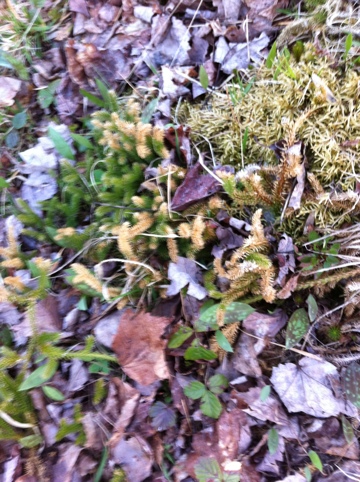
It’s the brownest Spring I’ve ever seen,
as grass, jaded in all but hue, bends down
in pale pre-drought submission above small green
that tries to poke and thrust as if the ground
held melted snow–it doesn’t–instead, cracks
beneath our weight, a crust of old leaf
and lichen crunching what should ooze tracks.
Still heat so sweet, we try not to believe
in anything but the wondrous good
of being able, in April, to swim
in water that should freeze, at least should
rush; till evening brings warm wind, I turn to him–
“A sirocco?” “No, it’s a zephyr,” he says.
The breeze, re-labeled now, delightful, plays.
***************************************************
Agh! The above is my 16th draft poem this month. I’ve played with it until it’s too late to go on! Must post or keep making it worse! A sorry sonnet of sorts!
Tags: Dry Spring, manicddaily, poem about brown spring, poem about impending drought, Spring Sonnet, when in doubt go for sonnet
You can comment below, or link to this permanent URL from your own site. ManicDDaily
April 17, 2012 at 6:32 am
Much enjoy the content of this English Sonnet – having some difficulty with the meter though. The iambic pentameter is skew in most lines. Your last line is perfect iambic pent –
Re-labeled breeze on guilt-free faces plays.
re LA | beled BREEZE | on GUILT | free FA | ces PLAYS
shall I | com PARE | thee TO | a SUM | mer’s DAY?
You can almost always jiggle the syntax/word choices/variants of the root to fit the iambic pentameter matrix. Counting ten syllables is a deathtrap. It’s almost irrelevant that tere are ten syllables per line. Think in five sets of iambs (unstress/stress)
di-DUM | di-DUM | di-DUM | di-DUM | di-DUM
Apologies if you didn’t appreciate being given crit on the meter:) Thanks for your recent visits.
April 17, 2012 at 7:13 am
Hi Luke–and now I changed the last line! No, I don’t mind the crit at all on meter–though I’m not really trying for iambs in these but for something more conversational. Perhaps I should not even characterize as a “sort of sonnet.”. I don’t really like the sing-song of the traditional form so much these days as my content is not that profound and the whole thing gets too pat when applied to the sentiments I typically express. This one, written to meet my commitment to poem a day last night was more musical at first and then I started mucking around in ways that were not truly improvements but different poems as it got later and later. But I do appreciate your points. K.
April 20, 2012 at 1:15 pm
I think you took that pretty well! hehe.. I some times get pretty bad reactions to crit in any form on the blogs… points fully taken, of course, my friend. Personally I find that iambs can still be utilised and the sonnet/whatever else it is may feel as modern/unorthadox/post-post-old-school as you could imagine. Neologisms, enjambment all over the place, modern diction/phrasing, a total eschewing of any flowery/icky ‘love-sonnetish’ language (gag). I quite enjoy the challenge. The iambs ensure the flow is smooth. within the lines. They lilt… for a more propulsive/aggressive meter, trochees are useful. Ok I’m blithering now. Have a lovely day 🙂
April 20, 2012 at 1:24 pm
No, you’re not! (Blithering.) You are absolutely right. And I love iambs. (And lambs.) That just isn’t a very good poem! (What can I say–I’m doing one a day, and I, unfortunately, have too much else on my plate.) I did do this weird framed couplet one which worked out better–it has 14 lines and a bit more meter, but I did not attempt to call it a sonnet.
But, of course, I know what you mean.
For me, it’s also the Shakespearean rhyme scheme that’s part of the problem. Hard not to have a final couplet that does not sound way too pat.
I’ve done one where I added two extra words at end==a partial 15th line–but of course, I’m not sure you could call it a sonnet at that point. K.
April 21, 2012 at 8:35 am
you could try non-Shakespearean sonnets. Personally I find them the most boring. Italian sonnets do not have a rhyming couplet to end on. Much more interesting rhyme-scheme altogether.
April 20, 2012 at 1:25 pm
The thing is, Luke, I always consider myself a PROSE writer! I don’t quite know how I’ve gotten into all this poetry stuff except that there is such a great online community, and nobody wants to read chapters of books. K.
April 21, 2012 at 8:33 am
haha! I always considered myself a prose writer too…
April 17, 2012 at 2:26 pm
Karin–this is my first read and to the uninitiated (as in I know NOTHING about writing a sonnet), it’s just as lovely a picture in words as your paintings. I could feel the breeze/zephyr.
well done.