Taboo/Provocative Sonnet? (“Spy Games” )
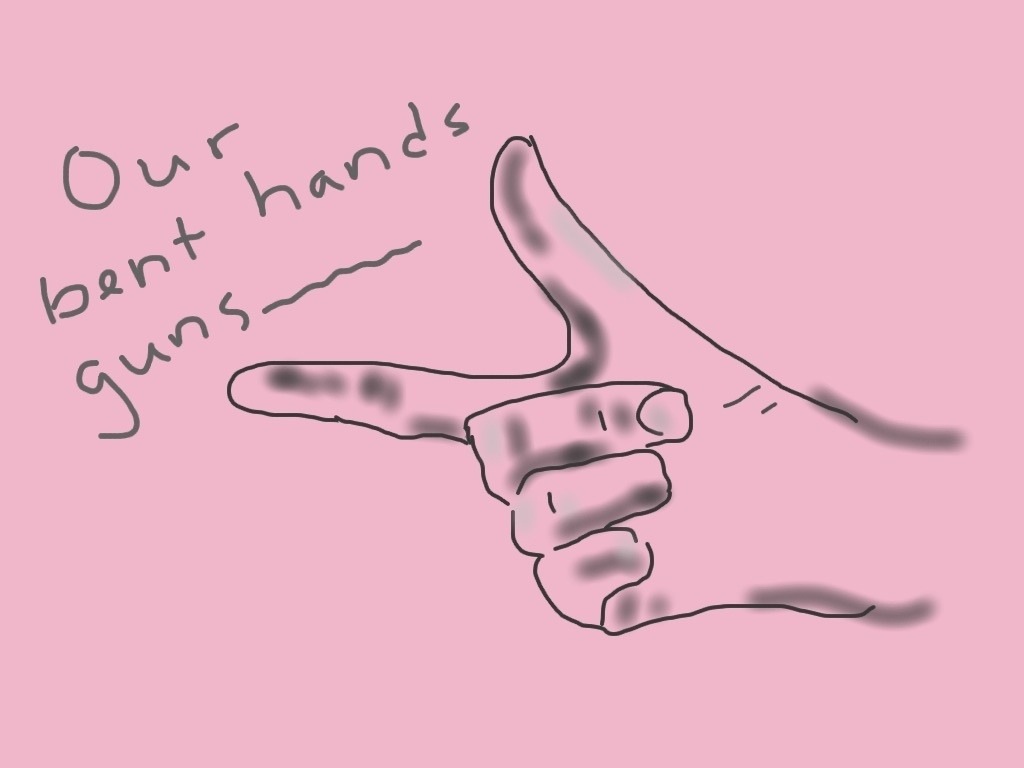
One of my (many) faults is a tendency to second guess myself. In the world of online poetry sites, this tends to arise in the context of ‘why did I post that poem, link, story, or picture?’ when I should have posted a completely different one. (The different one, of course, would have been much more cool, likeable, wowie-zowie.)
This past weekend, dVerse Poets Pub, a wonderful online poetry site, urged poets to post something taboo or provocative. Needless to say, I spent all weekend castigating myself for the poem I put up (about an important seaside activity.)
So, here it’s Tuesday, dVerse Poets “open link” night, and instead of moving on, I’m going to post another “taboo” poem, a sonnet, in, I think, a Spenserian format. I am also posting this poem for the Poetry Palace’s poetry rally. Here goes:
Spy Games
We played spy games galore in the basement.
Running spy games with the boys, our bent hands
guns, till sweating we lay down on cold cement,
shirts pulled up, chests hard. Not much withstands
the leaching chill of earth, the buried sands
beneath a downstairs’ room, except perhaps
the burn of nipple, the future woman’s
breasts. Our spy games just for girls had traps—
some of us played femmes fatales, poor saps,
while the leader girl was Bond—0-0-7.
She hung us ropeless from the bathroom taps,
then tortured us in ways that felt like heaven,
the basement bed our rack, what spies we were,
confessing neither to ourselves nor her.
The poem is published in Going On Somewhere. (The header is a detail from the cover by Jason Martin.) Check it out!
Explore posts in the same categories: poetry, UncategorizedTags: dVerse Poetry Pub, Going On Somewhere, iPad art, Karin Gustafson, manicddaily, ManicDDaily poetry, poem about children's sexual games, Spy Games poem, taboo poem, war games poem
You can comment below, or link to this permanent URL from your own site. ManicDDaily
October 18, 2011 at 2:25 pm
oo la la wow…yeah this worked well taboo…childhood imagination and curiousity can lead to some interesting places….
October 18, 2011 at 2:31 pm
a cool write and I agree with Brian childhood imagination can lead to interesting places.
October 18, 2011 at 2:51 pm
I thought the seaside poem was absolutely charming… But so is this one. Childhood is all about learning and discovering things…. and oursleves. I think what you described here is as much a part of life as any other, and just as sensuous and beautiful. And endearing, which is what your ocean poem left me feeling….. So much that I think it stood far above wowie zowie…. at least to me…. But I like wowie zowie Too!
October 18, 2011 at 2:58 pm
Thanks so much. I realize I have a lot of “taboo” poems. (Ha.) But I’m sure that anyone who writes poetry does.
October 18, 2011 at 3:03 pm
ha – brought me back to some of that games of my own childhood..curiosity and experimenting without really knowing…can lead to some weird places indeed – well penned
October 18, 2011 at 3:58 pm
Good storytelling, yeah a bit taboo, but more over it is a piece that keeps you, as the reader, continuing on, needing to see how it finishes.
As for your intro, second guessing is a condition of mankind, or so I believe because I do it all the time, so I hear you on that one 100%, thanks for the read
October 18, 2011 at 4:13 pm
brilliantly done…nothing really ever compares to the imagination of youth.
October 18, 2011 at 4:26 pm
Childhood and the imagination really can take on whole other meanings and just have such fun, nicely done bringing such feelings back.
October 18, 2011 at 5:42 pm
Happy days indeed.
Great piece commenting on the joys, trials and tribulations of our childhoods.
October 18, 2011 at 7:52 pm
Some of those childhood games go terribly wrong. Not sure if that’s what you’re saying, but it’s just what came to mind. On the other hand, I had my fair share of fun playing cowboys and indians with the neighborhood boys – all in innocent fun, though. Sometimes we came close to exploring the wrong things 🙂
October 18, 2011 at 8:05 pm
This is an enthralling poem– left a comment but it didn’t take for some reason. Just intricately woven as if it were easy–xxxxj
October 18, 2011 at 8:07 pm
BTW I see the synchronicity in our poems this time– I too was in that earthy, mushroomy sensual basement room…and the exquisite torment of the taps! xxxj
October 19, 2011 at 8:06 pm
Yes!
October 18, 2011 at 11:32 pm
so well done and your story telling is excellent brings back some memories of childhood enjoyed this so much
http://gatelesspassage.com/2011/10/18/farewell-my-three-legged-friend/
October 19, 2011 at 7:02 am
Love this! There was a basement in my childhood, too. You have inspired me to dare with yet another taboo poem.
October 19, 2011 at 8:44 am
Simple innocence and imaginations, young ones just playing and coming across pleasure, but guiltlessly enjoy it as they have yet the knowledge of what is taboo. I remember my grandma freaking out because she thought me and a boy were about to “explore”. I didn’t understand why in those early years but it stuck in my mind, when I was older I understood why. But there was really nothing back then. We were eight or nine, so we were too young to know of such things nor care of it yet. Funny. Thanks for your poem and a funny recall. 🙂
October 19, 2011 at 10:51 am
My cousins and I got up to some similar things amongst the Barbies–AND I was not a doll person even then–playing spies seems like it would have a lot more scope. I was always a cowboys and indians kind of girl, but the guns and holsters were much the same. ;_) Enjoyed this much–and a well written sonnet, also, just by the by.
October 19, 2011 at 10:21 pm
Thanks! I never had a Barbie! (Well, not completely true. I did have a Midge, I think. Or Tammy? Barbie’s cousin?)
October 19, 2011 at 11:31 am
eloquent and beautiful.
your words sing, well done,
October 19, 2011 at 12:14 pm
Evocative and provocative.
October 19, 2011 at 10:42 pm
Julia, I was looking for your link to check out your piece. Sorry, couldn’t find it!
October 19, 2011 at 4:57 pm
spy games! there was some real role playing going on, though..LOL.
so double aught seven was double naught heaven, heh? funny.
your…anecdotal poem..is very good and very interesting. great take off on the ‘taboo’ stuff which still malingered in your conscious from last week…and I’m glad it did, too. we got to read this. Nice.
thank you for posting. good work.
October 19, 2011 at 5:15 pm
Thanks.
October 20, 2011 at 12:25 am
This piece was very well written. Thank you.
October 20, 2011 at 3:58 pm
Nice sonnet, Spenserian rhyme-scheme indeed. Assuming you’re omitting the sonnet meter intentionally for a modern take?
Regards
Luke
October 20, 2011 at 4:01 pm
No, I’m trying to have some kind of meter! If I omit it, it is only by laziness/accident/poor craft. I do try to keep five feet in a line, but I tend to do things syllabically so they don’t always work out exactly right.
October 27, 2011 at 10:58 am
Sonnets are written in iambic pentameter – this is five iambs in a line. An iamb is an unstressed syllable followed by a stressed one. So a line of a sonnet, metrically, sounds like this –
di-DUM di-DUM di-DUM di-DUM di-DUM
or
shall I | com PARE | thee TO | a SUM | mer’s DAY?
The poet can’t force a syllable/word to fall into this stress matrix out of where it naturally wants to be when we speak it normally. So your first line –
We played spy games galore in the basement.
has ten syllables, but is not in iambs. It’s a trap to think in syllables. It trips everyone up. It’s about stresses and unstresses.
That line currently looks like this –
we PLAYED | SPY GAMES | ga LORE | in the | BASE ment
[or ‘SPY games’ for the second foot]. Only the first and third are iambs. The fourth is pyrrhic (double unstress) and the other two trochees (or the second a spondee/double stress, which is acceptable in an iambic line). You cannot end an iambic line on an unstressed syllable (just as you can’t start one on a stressed syllable), so ‘basement’ isn’t working for the meter, even though it is for the rhyme.
Disregarding the rhyme for a moment, the line could be made iambic with a little tweaking, for example –
We played our spying games down in the vault.
we PLAYED | our SPY | ing GAMES | down IN | the VAULT
OK you may not like the phrasing, it was just an example of the kind of thing needed to satisfy the meter.
Sonnets are probably the most difficult forms to write properly; when people ask me which form to try first, a sonnet certainly not it. Hope this is helpful; I don’t mean to patronise – you seemed interested in perfecting the meter.
Kind regards, liking your words my friend
Luke
October 27, 2011 at 5:00 pm
Dear Luke, I had not seen this before somehow. Thanks so much. You are absolutely right in all respects. I do understand that syllables don’t work, and I don’t do a strict syllabic count–but I do try, I think, to get five stresses more or less in the line–sometimes thinking of spondees, anapests, trochees (I may have that word wrong there) , etc., but, to tell the truth, I do it all by feel rather than actual count (except on a more or less syllabic level.) Because I cheat, I find sonnets relatively easy! Ha! (Of course, you are right–they are not real sonnets.) But I’m thinking of the form more as a kind of musical framework, and also as a guide to keep me on course, and not too digressive. I really appreciate your time and consideration of this. K.
October 28, 2011 at 6:51 am
Once you have the iamb thing in your body, really feeling it, it becomes very musical and you just know when it’s there and when it isn’t. Iambs became so popular because they are the closest to how we speak in English. We use them all the time without even thinking about it. The rhythm is often likened to teh heartbeat (weak-STRONG weak-STRONG, or a horse galloping in the distance, I prefer). Saying something like, “I want to go straight to the shops today” is almost certainly iambic pentameter –
i WANT | to GO | straight TO | the SHOPS | to DAY
Basically it’s about feeling an alternation of unstressed and stressed syllables for the whole line, beginning with an unstress. Sub-dividing into five sets of two iambs is useful to start with but you’ll soon see that you don’t even need to do that anymore, you’ll feel when the line ends.
October 28, 2011 at 7:14 am
Hi Luke! Yes, I do feel like you get iambs in your blood. AND I agree about the heartbeat. But I think you are being a bit strict, or otherwise pronunciation differences may intrude. For instance, I would say: i WANT/ to GO/ STRAIGHT to/ the SHOPS/ toDAY. There is no way I’d put the emphasis on the TO, in that line! (Ha!) This may be American speech. At any rate, it’s an interesting inquiry, but I still find myself more concerned with the feet, and I kind of like the idea of throwing in anapests and dactyls and spondees. I do agree, however, that one needs to have an innate sense of where the line ends or where to put the rhyme.
I wonder if you have ever read Terry Pratchett–I think it is Wyrd Sisters, in which he does a wonderful take off on iambic pentameter in Shakespeare. He’s specifically parodying Macbeth, but has the witches confound the actors in a similar play, making up their own tumpty tumpty tumpty dialogue. (If you haven’t read it, I heartily recommend.)
Thanks much.
October 28, 2011 at 12:05 pm
Yes, people pronounce differently, of course, and in different contexts we might stress a particular word that wouldn’t normally be for a particular reason. ‘straight’ would be debatable… but there are official stressed and unstressed syllables in each English word – but it can vary between American English and British English. Dictionary.com will give you the American pronunciation (with soundbite), and thefreedictionary.com will give both American and English (if different), with audio example. There are instances where it can make it work (like the ‘straight’ example), and other times it just doesn’t want to be stressed/unstressed, no matter how you try to swing it. For example, ‘I’m percolating coffee, see?’, at least in British English, is unequivocally
i’m PER | col AT | ing CO | fee, SEE?
unless for some unusual context you wanted to stress that it was YOU that was doing that, rather than somebody else, in which which case the ‘I’m’ becomes stressed. I’d have the ‘I’m’ in italics so it’s obviously stressed, but it couldn’t then be the first syllable in an iambic line of poetry.
cos I’M | not PER | col AT | ing CO | fee, SEE?
I had to add an unstressed syllabi to the beginning and slip one in between ‘I’M’ and ‘PER-‘ which would both be stressed. ‘percolating’ cannot be anything but ‘PER col AT ing’, in British English anyway. I would have to check to see what the US pronunciation of that word is.
October 28, 2011 at 12:17 pm
Well, I drink tea (like a good American) so I am saved that difficulty! I do see, of course. But I think I am unlikely to change my ways. I have a bunch of sonnets, that I know may not be real, but that I have a certain affection for. I even have a summer’s day one, but now maybe should call it something else–fourteen line poem.
In fact, looking at it, it’s definitely not right as one line ends with “suture”. Not an iamb in any pronunciation I think.
But in the end, I don’t mind.
October 21, 2011 at 12:11 pm
Definitely reminds me of some childhood curiosities…innocent in some ways with a hint of naughtiness
October 21, 2011 at 1:57 pm
Hi, it’s me again. this time for the Poet’s Rally…and I’m glad to comment again on this provocative piece. I like it.
this reminds me of a poet I’d hear this past week interviewed on Terri Gross’s Fresh Air…can recall the poet’s name, but her poem was called ”Practicing” …if you get the chance, you’ll love it, for it falls into the same idea you put forward here. Girls Practicing!
I know we boys didn’t do that…thank God! LOL
October 22, 2011 at 10:04 pm
well conveyed story.
🙂
October 27, 2011 at 11:26 am
Hi again – if you’re looking for somewhere to get constructive feedback/crit, here is where you’ll get it –
http://www.facialexpressionpoetrycircle.com/
you’re welcome if it interests you my friend
October 27, 2011 at 4:34 pm
Thanks so much. Will check it out.